What is an MP3-CD Audiobook, Part 2 – Why We Still Love Our LPs

My blog post about MP3-CDs several years ago generated an unexpected interest – what was different about an MP3-CD audiobook? Did I need a special player? And how did they get an entire book onto one single disk? I answered the questions, but it bugged me that I didn’t answer them enough. And when I dug just a little deeper, I realized the answer might be why there’s such a resurgence in old-fashioned vinyl LP records (kids, ask your grandparents).

Format Development

Back in the 1980’s, as CD and digital technology was taking off, committees were formed to create the format, so that the technology could be used anywhere. JPEG, that familiar photo tag, was formed first, the Joint Photographic Experts Group (1986), and they set the coding and standardization of digital transfer and storage of still photographs. MPEG-1 committee followed a year later, the Moving Picture Experts Group, Phase 1, which included both video and sound. It remains the most widely compatible audio-visual format in the world, and we all know the MPEG-1 Layer III by its short form of  .mp3.

When CDs hit the market, they took off like wildfire. You didn’t have to worry about compact discneedle and dust scratches ruining the fidelity of a record, and even better, you could carry that music with you wherever you went, just like a tape cassette but without all the mess and rewinding. Not all musicians jumped on it, though. Just as John Phillip Sousa hated the invention of the record, Neil Young was one of the earliest critics of CDs and delayed putting his music onto digital format, as is David Crosby, two men who know just a bit about music and the recording industry.

The Battle for Quality

high res vs. low res imagesAnd here’s why: MP3-CDs use what’s called lossy compression, a form of psychoacoustics (your gold-star word of the day). What it does is reduce or eliminate sounds that the system thinks the human ear can’t hear, either because they’re out of normal frequency or other sounds might be louder and keep you from hearing them. Once all that “useless” noise is gone, the audio files are a LOT smaller – enough to fit that whole audiobook onto one or two discs. Of course, in doing so, you lose a lot of sound quality, like when you send a low-resolution photo over the internet, or use a cell phone inside a tunnel.

The Return of the LP

And for all those people who said LP records were dead, here’s why more than 14 million of them were sold last year (14% of ALL album sales).  By the early 1900’s, when records became a thing, they were made of shellac (that bug resin), had a wide, noisy, grinding groove (think of those 1920’s recordings), and at 78 rpm (the speed they spun at), you could get no more than 5 minutes of play to a side – no American Pie, no Thriller, and forget In a Gadda Da Vida. That lasted until 1949, when Long-Playing (LP) records came out on vinyl (good ol’ PVC). At a speed of 33 rpm, with a finer groove that runs almost a third of a mile, they played more than 20 minutes of music per side, with a much higher sound quality. Stereo, which recorded two channels and put one on each side of the same groove, giving you that left and right sound, came in 1957. In a vinyl record, the sound waves from the microphone are transferred directly by needle to a core, which is transferred to a metal master, which is then pressed into vinyl. A needle then rides the groove, transferring those same exact soundwaves to the speakers. With proper speakers and tuning, the result is a rich, deep, acoustic sound much more like live music. Listen to enough LPs, and you really can hear the canned music effect on a CD recording. There is no comparison if you are a music purist.

Vinyl is Final

So, what’s playing on modern LPs? Ed Sheeran’s Divide was a top seller in 2017, and the old/new sound track to Guardians of the Galaxy, Awesome Mix No. 1, but so were the classics – Sgt. Pepper’s by the Beatles, Abbey Road, Thriller, and still, forty five years later, the champion of staying power, with more than 1,000 weeks on the top-200 best-selling albums, STILL selling more than 8500 albums a week, Pink Floyd’s 1973 Dark Side of the Moon.Pink Floyd - Dark Side of the Moon album cover

For audiobooks, where one or two voices may recite a book in a calm, steady voice, you might not notice just how much sound is missing when you listen to it – enough to cut out six or seven discs worth. For music, I urge you to find a friend or a library that still has music LPs and players. Listen to the album (Dark Side of the Moon is amazing with serious headphones and a very dark room), and then listen to the digitally compressed MP3 files, missing highs and lows and the depth they provide. It might take a few tries, but you will start to hear the differences, and while MP3s are so fabulously convenient and almost foolproof, it just can’t compare to a good LP.

Fun fact: There is a gold-plated LP traveling the galaxy. Sent aboard the Voyager spacecraft in 1977 with recordings of Earth music, it is now more than 11 million miles away. MP3s only made it as far as the Space Station.
Tracking Black Panther

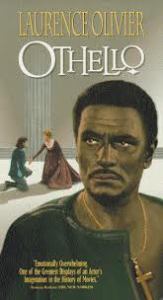
One of the more controversial topics in Hollywood is the concept of whitewashing – casting a white actor in a role meant to be Black, Asian, Native American, Latin, or other ethnic group. Some of the more egregious examples are Laurence Olivier (and Orson Welles) playing  Othello – in blackface, Ralph Fiennes playing Michael Jackson; Mickey Rooney (Breakfast at Tiffany’s), Katharine Hepburn (Dragon Seed), and John Wayne (The Conqueror) as Asians; Johnny Depp as Tonto (Lone Ranger); Tilda Swinton as an Asian man (Dr. Strange), or the one that ruined my childhood: finding out that Native American Iron Eyes Cody of the 1970’s Keep America Beautiful campaign was actually a man of Italian descent.

Big-Budget Black-Lead Films

In fact, serious big-budget black films are hard to come by. Indeed, most of the highest-grossing black-lead films are comedies (Eddie Murphy has 5 of the top 7, not including Beverly Hills Cop), despite some very top-quality dramas (The Color Purple, Fences, Moonlight, The Help, Soul Food). Yet Samuel L. Jackson – I’ll see anything he’s in – ranks number TWO on the list of actors with top box office revenues, pulling in a combined domestic gross of more than 7 BILLION dollars for his 126+ films (#1 is Stan Lee. He has a cameo in every movie he makes). Even Hollywood protested the lack of serious roles for black actors, and stirred a controversy over a glaring absence in Oscar nominations despite worthy black films, a problem starting to be rectified in 2017. Not great if you’re a black kid looking for role models. The Adventures of Pluto Nash just doesn’t cut it.

A New Superhero

Now, Hollywood may be on the verge of a true black superhero blockbuster with the release of February’s Black Panther, Marvel’s 18th release into its megahit superhero franchise. Following his debut in 2016’s Captain America: Civil War, T’Challa – holding the title Black Panther – is the king of the fictional African country of Wakanda, who gains superpowers from a heart-shaped herb and connections to a mystical Panther God. When his father is assassinated in Civil War, T’Challa returns to Wakanda to discover his claim to the throne being challenged. T’Challa must team up with a CIA agent and the Wakanda Special Forces to prevent a world war.

The History of Black Panther

Black Panther was the first black comic book superhero, ever (1966), so early he predates the political party. Chadwick Boseman does a phenomenal job as T’Challa, and the movie promises to have the same serious craft and attention as the rest of the Marvel films. The previews are visually stunning, with rich ethnic textiles and cultural details that leap off the screen, drawn from no fewer than five different African cultures. Not only a superhero, but a culturally relevant one as well – which of course, immediately started another controversy whether or not the movie is celebrating African culture or trying to appropriate it. The movie was originally green-lighted in 2011, and the script approved in 2015. Hollywood doesn’t get better than this.

Of course there are now other black superheroes. Luke Cage’s TV series has had luke-warm reviews. As the XMen movies progressed, Storm played less and less of a role. Sam Wilson is a great sidekick, but no Captain America. Iron Man’s buddy Rhodey Rhodes/War Machine/Iron Patriot may be Don Cheadle, but he’s still just a sidekick called in when an extra guy is needed (at least, in the films). In Black Panther, black youth – and everyone else – may finally have found a superhero they can look up to, in full, serious, big-screen, big-budget glory, and he is Marvel-ous.

What Kind of Services Can You Find at the Library? (You might be surprised.)

Most people know that libraries provide books, magazines, movies, music, audiobooks and ebooks. What many may not realize are all the other ways libraries support their communities. Here’s a sample from the librarians of the Cheshire Public Library.

“An appreciative patron had these flowers delivered to me for helping her on the computer & with her gmail to locate and print some important personal documents. It made my day!”

“A woman came in this afternoon and wanted to print some coupons from her email. English was not her first language, she did not have computer skills, and she did not know her email provider or her password! Our technology coordinator saved the day and was able to help the woman print her coupons. The really nice thing: it was the woman’s birthday and the coupons were for free coffee and other things that she could enjoy on her special day.”

“A senior who wanted to learn how to add minutes to her flip phone came to tech help yesterday. When she left, she noted that this is the only place in town to get answers to these types of questions and that her kids yell at her when she asks for them for tech help. She said she’s going to tell all of her friends to start coming here because they also have grouchy kids/grandkids…”

“An older man approached me a few weeks ago to say how glad he was to have our library. He comes in most days to read the papers and to visit with other regulars. He said it makes him feel more connected with the community.”

Email from patron: I just saw the Positive Discipline class recently on the events calendar and am super excited about it. I’ve read some of the Positive Discipline books and would love to do a better job actually incorporating it into our lives. I’ve looked into workshops before, and it just wasn’t realistic for us financially. I already have it on my calendar to sign up when it opens.

“I had a patron come to the circ desk this week saying the last two books her book club (not associated with the library) read were duds. Since they buy their books, she wanted to be sure to pick a good book this time. I brought her over to the Reader’s Advisory bulletin board and let her peruse the content. She happily found four titles, and all were on the shelf for her to check out. She was so happy and commented that she wished she had come to the library sooner.”

“A patron whose husband recently passed away came to drop-in today. She wanted to know how to use email so she could email people in a support group she’s been attending. She never used her husband’s laptop before, and English is not her first language, so she was nervous about coming in today for help. I got her all set up, and she’s going to come back next week and report how it’s going. She was very appreciative that we’re providing this service.”

“A few weeks ago, a woman was looking for tutoring help for seven children from two families newly arrived from Saudi Arabia.  Our teen librarian had a contact in the high school for a teacher who arranges peer tutoring, so I got the teacher’s email and contacted her. She emailed to let us know that she has arranged peer tutoring for the 5 younger children (in the library!) and is arranging help for the older ones. It was great that the needed resources exist in our community. I was especially touched by the fact that the woman who made the initial contact thought of the library as a place to go for help. Yay us!”

Want to know more about the Cheshire Public library? Click here for our website.

Colorful Workplaces

If you have been following our adventures in color, you may recall a previous post showing off the bright colors in the children’s room.  Well, the color revolution is continuing at Cheshire Public Library. Recently, we bid goodbye to the dull beige walls (dubbed “library paste white” by the staff) of the hallways around our offices  and added some color.

Our offices are in the basement of the library and windows are few. These wonderful colors have perked up the place considerably. Mint green. Golden yellow. Light blue. It’s a big improvement! Who says workplaces have to be dull?

Before

After


Join the color revolution! Whether you are decorating your office or your home, you can get started with these titles:

A Colorful Home: Create Lively Palettes for Every Room by Susan Hable.
Create dynamic palettes, and translate them into stunning interior spaces.

Color: The Perfect Shade for Every Room by Lisa Cregan.
Select the perfect hue for any room, create modern twists on traditional colors, experiment with colors you might never have considered, and more!

1001 Ideas for Color and Paint by Emma Callery.
Ideas range from contemporary treatments to traditional looks, in everything from bold colors to pretty pastels.

Crafting a Colorful Home: A Room by Room Guide to Personalizing Your Space with Color by Kristen Nicholas.
Learn how to make your home sing through handmade crafts and a bold use of color.

The Right Color by Eve Ashcraft.
The science of color, the language of color, finding your home’s palette, where to begin, inspirations for a palette and more!

What is the Next Book in This Series?

whats-nextIt is extremely frustrating to read a book only to discover it is part of a series, and there is no clear list of reading order. While some series are loosely tied together and allow for skipping around and reading out of order, others can only be fully enjoyed when read in order. To help ease your frustration, I am going to share the tools that I use to help determine the correct reading order. There are several routes to find the answer to this question, some are simple and easy, others require a little work.

The first way to find the answer of reading order is to find the author’s website. Many internet savvy authors, or their publishers, maintain websites with series listings in order and, in the case of multiple series, the suggested reading order for everything. Not all authors do this, but some have very helpful lists to help out their readers. Many include printable lists so you can easily keep track of titles you have read and what you should read next.

Some examples of authors that offer comprehensive lists or tools on their websites to find the reading order include Nora Roberts, Gail Carriger, James Patterson, Janet Evanovich, Charlaine Harris, and many more. I highly suggest checking with the author’s website first before branching out and trying other avenues, because who better to explain the best reading order than the person that wrote them?

goodrdsIf the author fails you, do not lose heart! My second choice for series order, and further reading suggestions, is Goodreads. If you search for a book title, Goodreads will give you a wonderful amount of information. On the book’s page you can follow links to the author page or a list of book in that series (both published and sometimes books that have not been released yet) in order. The bonus is you get suggestions for books that might appeal to you because some authors list what they are currently reading or their own recommendations. For instance, on the author page for one of my current favorites, Maria V. Snyder, you can see her books listed by series, in order, and what she is currently reading.

There are also a few websites dedicated to helping readers find the next book in a series, or the complete reading order of any given series.  One website that I often use is well titled as: Book Series in Order which you can search by author or character name.  Order of Books is a second site that can help you find the reading order of different authors and series. This site allows you to search by author or main character. If you are looking specifically for children’s series check out Juvenile Series and Sequels, and if you need young adult series listings I would suggest using Series and Sequels. whats-next-in-series1

If  you still are not sure about the series order of the books you are reading or want to read, please stop in and visit our Welcome Desk or give  the library a call. We are here to help.