Recent Reads for Hesitant Historians

I am surrounded by history lovers. My husband is a history professor who uses me as a sounding board when he’s talking through new articles. A good friend does deep dives into English monarchs, and she shares memes that mash current events together with Medieval art. And I have to confess: I have no idea what they’re talking about.

I’m very useful when you want to assemble some IKEA furniture, or if you want to differentiate between an American crow and a common raven, but listening to me explain the American Revolution is like watching an episode of Drunk History (and sadly, without the negronis). I don’t dislike history. It’s just that the kind of history you get in school – politics, wars, rich people – does nothing for me. What I want is an exhibit of decorative arts, a reconstructed peasant house, a display of medical instruments. Maps of migrations laid over topography or ecological changes. A poster. A piece of metal. I want something that’s alive with meaning and has a story to tell.

If a relaxing evening involves hooks, needles, or rippers:

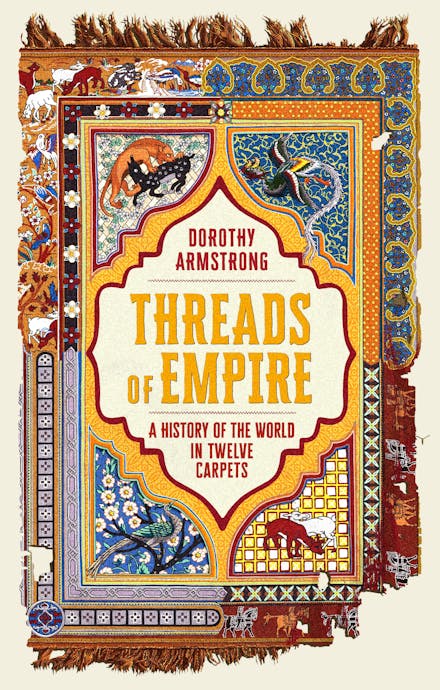
Threads of Empire: A History of the World in Twelve Carpets by Dorothy Armstrong (2025)

I can’t get through biographies of monarchs, but give me a book on how their clothing was constructed and I will drink it up like a chocolate fountain in Versailles. Threads of Empire tickles the same part of me that loves dresses and chain mail at art museums. This isn’t just about who owned history’s beautiful rugs, but the people that made them, the materials and techniques they were working with, and what was going on in their world.

Related read:

Silk: A World History by Aarathi Prasad (2024)

This is another great read that takes a close look at how a prized textile is made, then zooms out to examine its place in time and geography.

If you never got past your childhood fascination with pirates:

The Wager: A Tale of Shipwreck, Mutiny, and Murder by David Grann (2023)

We’re attracted to stories of things gone wrong, whether it’s hikes or music festivals. As you can guess from the subtitle of this book, there are quite a few things that went wrong with the HMS Wager in 1741. This is a true crime novel, a survival tale, and a look into 18th century British naval life – did you know expeditions routinely sailed with dedicated scientists on board? – with a little dusting of world politics. Grann crafts an engaging narrative well worth the hype. 

Related read:

The Wide Wide Sea: Imperial Ambition, First Contact and the Fateful Final Voyage of Captain James Cook by Hampton Sides (2024)

If you can’t get enough of the British Navy, you can circumnavigate again with Hampton Sides’ bestseller from last year. Sides’ narrative doesn’t move with the same momentum as Grann’s book, but it’s a voyage well worth taking.

If you can’t look away from technological disasters:

Challenger: A True Story of Heroism and Disaster on the Edge of Space by Adam Higginbotham (2024)

Nobody synthesizes story and science quite like Adam Higginbotham. Last year he released this book on the Challenger space shuttle, which exploded during liftoff in 1986. He’s on par with the best thriller writers in terms of building suspense, and he’s just as adept at breaking down complex engineering concepts.

This book has haunted me: not only in its emotional impact, but in how amazing it is that we’ve accomplished space travel at all. It compelled me to make a pilgrimage to the Intrepid Museum in Manhattan to get an up-close look at the Enterprise, the very first orbiter NASA made for the space shuttle program.

Related read: 

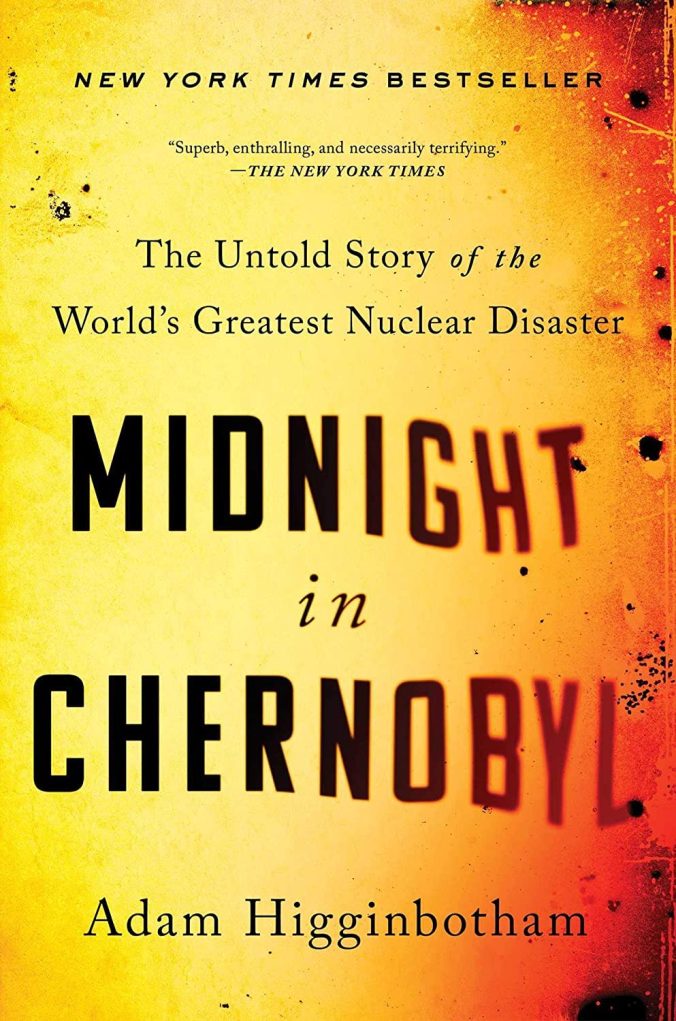
Midnight in Chernobyl: The Untold Story of the World’s Greatest Nuclear Disaster by Adam Higginbotham (2019)

Higginbotham is making quite a name for himself writing about 1980s technological disasters. His award-winning debut focused on the Chernobyl nuclear meltdown, and it’s just as good (and horrifying) as Challenger.

If you’re a news junkie:

Looking at Women Looking at War: A War and Justice Diary by Victoria Amelina (2025)

“I have just bought my first gun in downtown Lviv,” starts the diary of this Ukrainian novelist and mother turned war documenter. Amelina’s diary tells the story of how she and other women – librarians, lawyers, writers – were experiencing the war in Ukraine and participating in the resistance. She was killed by a Russian missile in 2023, and this book collects her unedited and uncompleted notes. It’s a chilling reminder that her life was suddenly cut short at 37 years old.

Related read:

Secondhand Time: The Last of the Soviets by Svetlana Aleksievich (2017)

Alexievich is well-known for her oral histories of the Soviet Union, and this book is an accessible look at how people in Russia experienced the fall of the Soviet period and the emergence of a new Russia. The experiences and viewpoints are as diverse as if you’d selected a random group of Americans and asked them how they viewed the 2024 election. If you’re looking to understand modern Russia, this is a really great place to start.

If David Attenborough narrates your inner thoughts:

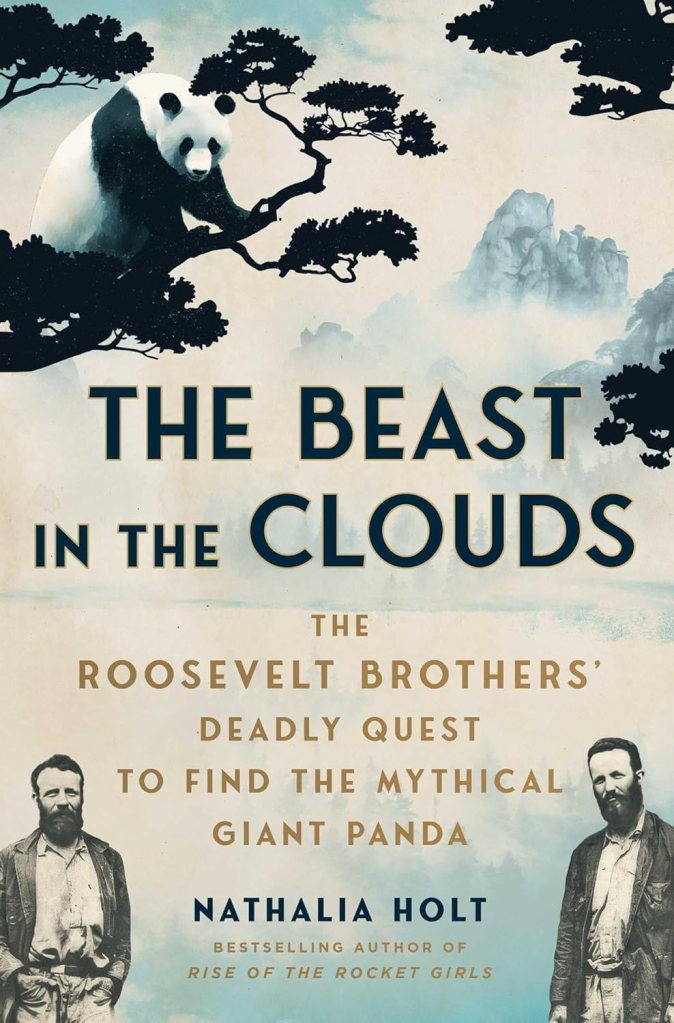
The Beast in the Clouds: The Roosevelt Brothers’ Deadly Quest to Find the Mythical Giant Panda by Nathalia Holt (2025)

Can you imagine a world in which people think pandas are imaginary creatures? Apparently, it was only a century ago. This book chronicles the sons of Teddy Roosevelt (who lent his name to a different type of bear) as they explored the Himalayan mountains in search of this very real animal.

Related read:

Every Living Thing: The Great and Deadly Race to Know All Life by Jason Roberts (2024)

You’ve probably heard of Carl Linnaeus, one of the most famous Enlightenment-era catalogers of the natural world. But have you heard of mathematician and fellow naturalist Georges-Louis Leclerc, Comte de Buffon? There are reasons for one man’s obscurity and the other’s fame, Roberts argues, including the convenience of Linnaeus’ theories of racial hierarchies and Leclerc’s aristocratic status (probably not the best thing to be in 1780s France).

If you’re fascinated by architecture and buildings:

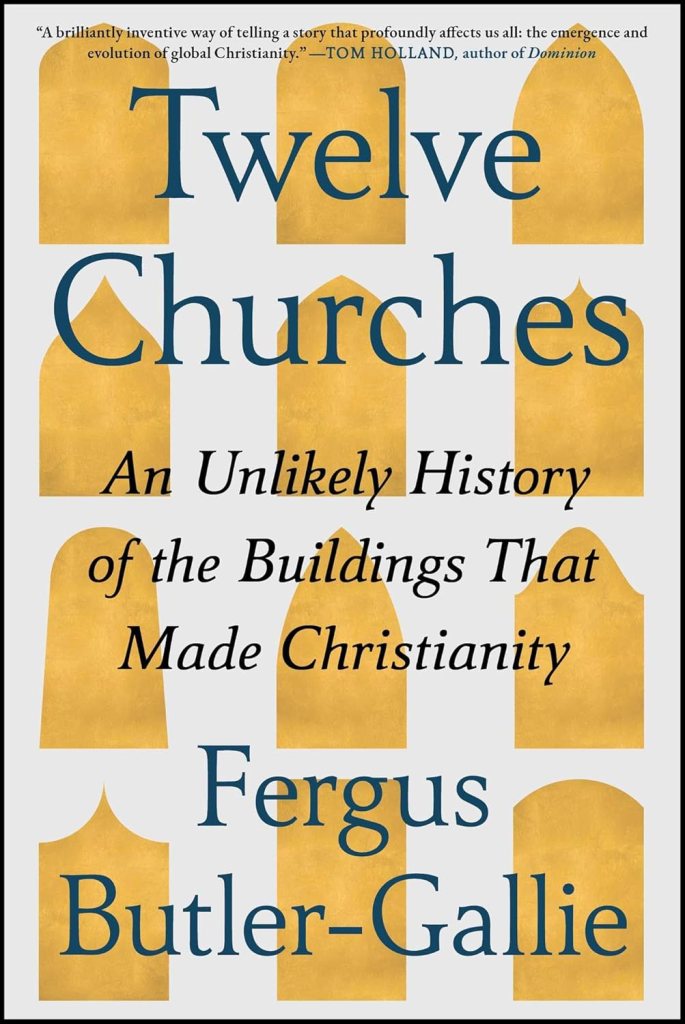
Twelve Churches: An Unlikely History of the Buildings That Made Christianity by Fergus Butler-Gallie (2025)

Butler-Gallie presents a fun and often funny history of the world’s largest religion by focusing on twelve buildings in particular. You’ll visit an amazing church complex in Ethiopia that was carved into volcanic rock with medieval tools, Japan at the cusp of its isolationist Edo period, and the site of a tragic bombing during the Civil Rights movement. Religion is a fascinating way to view world history, and this book has something for everyone regardless of your personal faith.

Related read:

The Bookshop: A History of the American Bookstore by Evan Friss (2024)

From the publisher: “Evan Friss’s history of the bookshop draws on oral histories, archival collections, municipal records, diaries, letters, catalogs, and interviews with leading booksellers to offer a fascinating look at this institution beloved by so many–not just as a merchant, but as a gathering place for like-minded people who cherish books.”

If you held onto your science textbooks from college:

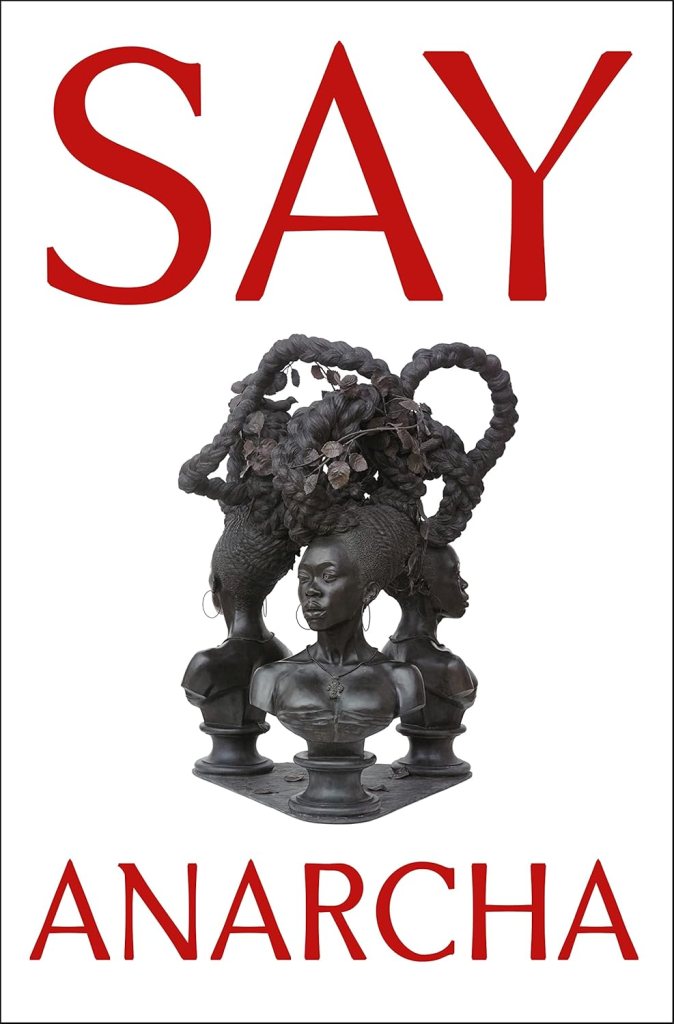
Say Anarcha: A Young Woman, a Devious Surgeon, and the Harrowing Birth of Modern Women’s Health by J. C. Hallman (2023)

If you enjoyed Rebecca Skloot’s The Immortal Life of Henrietta Lacks or the many fistulas in Mary Roach’s Gulp, then this one is for you. Modern gynecology and obstetrics are relatively recent innovations, and their development was due to experimentation on poor and enslaved women, such as Anarcha. This books covers what we know about her, including her life beyond the operating table.

Related read: 

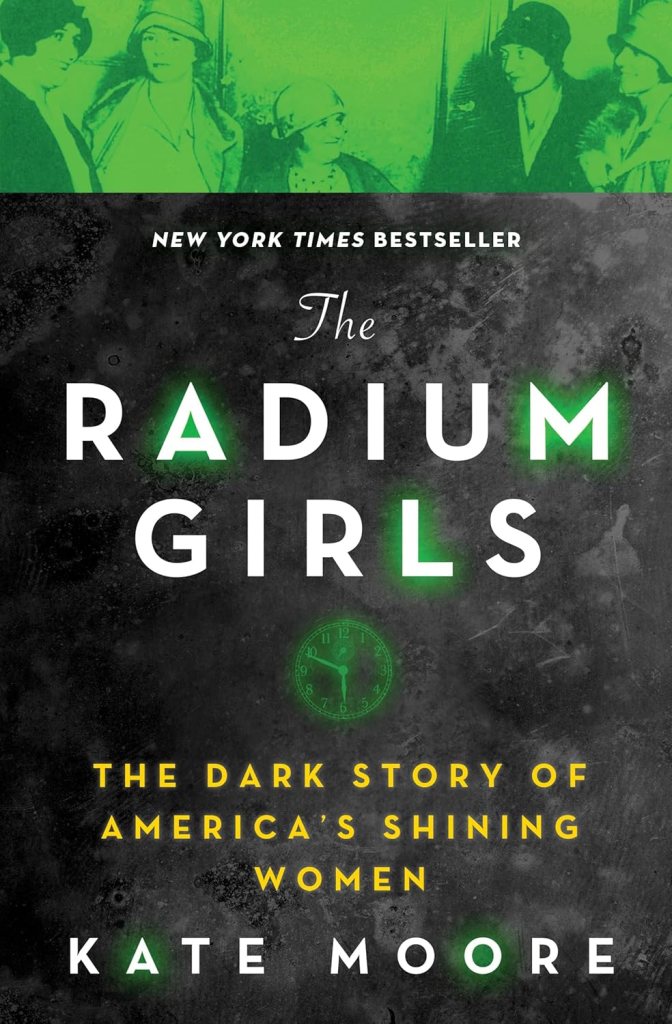
The Radium Girls: The Dark Story of America’s Shining Women by Kate Moore (2017)

Imagine you’re a young woman who just found a great-paying job painting glowing watch faces in Waterbury. Now, imagine you and your coworkers start getting too sick to work – and your employers try to paint you as a promiscuous partier. This is the horrifying true story of the radium girls, factory workers in the early 20th century who were exposed to radioactive material while business owners looked the other way. It’s also the story of the uphill battle for worker protections and safety standards.

And another one just for fun:

A People’s History of the United States by Howard Zinn (1980)

Instead of a triumphant story of great mens’ achievements, Zinn’s history looks at everyday people, such as workers in early factories, immigrants, women, native Americans, slaves, and servants – those whose exploitation arguably fueled the power of those great figures. It’s been republished several times since its release in 1980, and it has influenced hundreds of works (including titles on this list) that take a more critical look at our national narratives.

Able and Willing

Disability is a loaded word. 

I won’t debate the semantics of the term, what the current politically correct term is, or how to make your workplace more variant friendly.

Let’s talk about something far more inflammatory. The rights of the disabled to carry out adult relationships. At best, a disabled person is able to find a partner despite their difficulties, marry (or not), and live a happy adult life together, with or without kids (popular example: the TV show Little People, Big World). Sometimes, it’s disabled people fighting in court for the right to marry or raise their own children (the movie I Am Sam). At the very worst, it’s vulnerable people being preyed upon, taken advantage of, or controlled to the point of involuntary sterilization.

I grabbed the book Hunchback, partly because it was short, and partly because I’ve been in the field of disabilities for 40 years. Hunchback, a novella by Saou Ichikawa, was not the book I’d expected, despite winning multiple awards. Ichikawa’s character, Shaka, suffers from congenital myopathy (same as the author—write what you know), which has left her with progressively weak muscles. Her back is so hunched over she can’t breathe when holding a book, and she spends half the day using a ventilator. She can walk short distances, but her body is twisted and one leg is far shorter than the other. She has a tracheostomy, which makes talking difficult, so she uses a lot of alternative communication devices. Shaka spends her time writing erotica online, the money from which she spends on food for poor people and women. 

Winner of several Japanese awards, Hunchback calls out ableism on many levels. Ichikawa considers it political: Disabled people are hidden away by society, never considered because they’re never seen. People in wheelchairs are rarely mentioned in literature at all, unless they’re being “cured,” like in Heidi or A Secret Garden. Disabled people are portrayed as a drain on society, dependent on charity, so by making a wealthy disabled character (who generates income through pornography), she pokes a hornet’s nest.

Another book that touches on the subject of sexual autonomy is James Cole’s Not a Whole Boy. Cole was born in the 60’s with a severe case of exstrophy – most of his organs were born outside his body, and his pelvis malformed. Most babies with this condition do not survive. Due to Cole’s mother’s determination and a great team of doctors, Cole managed to thrive despite severe obstacles. While he seemed more or less normal to other kids, Cole hid the fact that he had double ostomies – all his waste was collected in bags, as he didn’t have the needed parts and couldn’t use a toilet. As he got older and puberty kicked in, it became necessary to undergo multiple surgeries just to have a sense of comfort, normalcy, and proper biological function. Cole’s book documents his struggles with medieval children’s hospitals, lack of pain management, and his eventual success with a career in art and film – certainly not hidden away.

A book that took me by complete surprise was Riva Lehrer’s Golem Girl, a golem being a creature formed from dirt or clay. Riva was born with Spina Bifida in 1958, a time when most afflicted infants did not survive, and almost certainly didn’t walk. She suffers dozens of painful surgeries to keep her mobility, most of which do nothing to ease her issues – she’s just a guinea pig for the surgeons. Although she attends a grade school for the disabled (disability laws hadn’t been written yet), she attends a mainstream high school, then university, where she gets a degree in fine art, all while dealing with surgeries and intense feelings of revulsion toward herself. Amplifying it is her mother’s overprotective codependency, spitting out helpful comments such as “You don’t need a nose job. No one wants to marry a cripple,” and “You shouldn’t have children; pregnancy will just mess up your spine worse,” – culminating in an involuntary hysterectomy at 15 on the mother’s order. 

Riva goes on to have multiple affairs with both men and women. While some relationships work out, many times she’s still hit with prejudice – “I can’t love a cripple.” Riva remains unstoppable. She becomes more comfortable with herself through meeting up with other people – often activists – with disabilities. As an artist, she gains renown (and awards) through her paintings of disabled people (and others) she has met. 

This book was so hard to put down, and read like you were in the middle of a conversation with her. Lehrer doesn’t go into detail on her disability or surgeries; she talks about herself, not her medical issues. After doing time as an anatomical artist, she sees people not so much as disabled, but as human variants – no one is “normal,” there is no “normal,” just human variations. But everyone has a right to love and happiness.

At the heart of it, people with physical disabilities are still people. It doesn’t mean they don’t have the same dreams, desires, or feelings as people who aren’t. All of these books will give you deep new insights into the strength of humanity.

Solving Cheshire Mysteries at the Library

A couple of months ago, I fielded a reference question about 1410 Highland Ave, the current location of The Butcher Bros Steakhouse. This patron wanted to know which restaurant was there about 35 years ago.

Questions like these are not uncommon, but there’s usually enough information online to find a quick answer. Searching online, I uncovered what many Cheshire-ites already know: 1410 Highland Ave became The Butcher Bros in 2023, Bone in Prime opened there in 2021, and Perfectly Prepared Catering had a run from 2018-2020, closing due to COVID-19. At some point before Perfectly Prepared, that location was Cugino’s Pizza (a fact some helpful staff members were able to help me out with). Everything before Cugino’s was a dead end, so I turned to our local history collection on the library’s lower level. It was time for some good old-fashioned research!

My reference resources of choice were the local directories. These directories were published yearly and our collection includes most editions from 1965 to 2020, covering Cheshire, Hamden, North Haven, and the entire New Haven County at various points in its publication history. These books, and our entire local history collection, are available for anyone to use in-library on the lower level.

The directories are filled with all kinds of fun information. Did you know Cheshire had 3,253 telephones in 1956? And 8,404 telephones by 1968?! Okay, maybe not the best example of how fun this information can be… Still though, quite a few telephones!

But back to the research question: What’s the history of 1410 Highland Ave? I flipped to the Cheshire section of these directories and searched by street name. I was thrown for a loop in 1984 and 1983, which is when that portion of Highland Ave was still called Milldale Rd. You’ve got to be on your toes with this kind of thing.

I narrowed my search between the years of 1983 and 1997 to get a comfortable range around the “35ish years ago” goal. Even within this 15 year period, there’s a lot of action!

I got in touch with the patron who requested this information and we decided the restaurant they remembered was likely Vigilio’s. The best kind of mysteries, however, only lead to further questions—this one is no different. What happened between 1991 and 1993 when there was no information submitted to the directory? What is Spindrift? Where is Michael Anthony now? And most importantly, what is Twilight Zone? A coworker vaguely remembers a club called Twilight Zone, but I can find no information to back that up. Whatever the case, this research shows that even the most unassuming of questions can be an adventure.

Optimism for Earth Day

I’d say I think about death more than your average sub-40-year-old. I could blame my high school English teacher for introducing me to existentialist thinker Albert Camus, or childhood Don Bluth films, but I probably just came out this way. Saying somebody “passed” feels strange in my mouth, inaccurate, as if the total and unequivocal departure from this plane of existence is akin to expelling a kidney stone. When I was pregnant, instead of choosing color palettes for a nursery like many expectant mothers, I went shopping for life insurance and wrote detailed directions for the disposal of my body (with relevant phone numbers).

“This is a great start to a post about optimism,” you might be thinking. But my acute awareness of mortality isn’t a pool I sit and wallow in. Instead, it spurs me to use my brief time to make a positive impact in this world. That’s how I feel about climate change. We’re inundated with data on warming temperatures, declining wildlife populations, more frequent severe weather events. We could collectively sit and wallow in a pool of doom. Or, we can arm ourselves with hope, draw up an imperfect plan of action, and try our best to leave whatever mark we can in the time we have.

If you’re stuck in the doom-pool and need some help, let one of these books be a hand extended to pull you out.

What If We Get It Right?: Visions of Climate Futures by Ayana Elizabeth Johnson (2024)


In the throes of the terrible summer of 2020, a tiny bright spot emerged: How to Save a Planet, a cheery podcast that discussed tangible solutions to the problem of climate change. The podcast and its parent company were swallowed up and digested by Spotify, but biologist and policy wonk Ayana Elizabeth Johnson continues to spread the gospel of actionable solutions, most recently in this book.

Saving Us: A Climate Scientist’s Case for Hope and Healing in a Divided World by Katharine Hayhoe (2021)


We all have a stake in the health of our planet. Instead of assailing you with facts about why you need to act on climate issues, Hayhoe gives you strategies to help you start conversations with almost anyone who isn’t on board (yet).

Cheaper, Faster, Better: How We’ll Win the Climate War by Tom Steyer (2024)


Streyer is excited about the future of clean energy, to the point where he left a lucrative job at an investment fund to start – well, another investment fund, but one dedicated to climate solutions. You’ll learn how investors, inventors, and entrepreneurs are harnessing the power of capitalism for the good of the planet.

How Can I Help?: Saving Nature with Your Yard by Douglas Tallamy (2025)


Stand on the corner of gardening and conservation long enough, and you’ll run into Doug Tallamy. He’s published on the importance of native plants and the virtues of oak trees. His newest book gives property owners and gardeners a host of actions that they can take in their own yard to help the environment.

Holy Ground: On Activism, Environmental Justice, and Finding Hope by Catherine Coleman Flowers (2025)


Flowers advocates for the rural poor in areas where a lack of infrastructure, paired with climate change-related flooding, makes it difficult for families to access sanitary water. This book is a series of essays on her work and personal experiences with environmental and racial justice, and it’s an inspiration for others to join in the fight for a safer, healthier future for our neighbors.

Hope Dies Last: Visionary People Across the World, Fighting to Find Us a Future by Alan Weisman (2025)


Previous books in the list have looked at specific solutions and people, but Weisman’s upcoming book (which conveniently comes out right on Earth Day) takes a wider approach to see what the fight against climate change means for us as human beings. He talks with architects, scientists, artists, and religious leaders to ultimately paint a portrait of hope.

Islands of Abandonment: Nature Rebounding in the Post-Human Landscape by Cal Flyn (2021)


Years ago, in the middle of a long hike in the Sierra Nevada mountain range, I looked down at the rocks beneath my feet and realized I would be very happy if, many thousands or millions of years from now, the elements in my body were to become part of a rock underneath a foot as someone or something moved through a beautiful place. Everything alive is going to die. But nature and the processes of the physical world will go on. In Scotland, rare flowers grow on a heap of 19th century waste. Elk and wolves wander the irradiated exclusion zone around Chernobyl. With beautiful prose, this book travels to places ravaged by war, pollution, and human-made disaster to show how life continues in our absence. With or without us, Earth will eventually heal itself, and I find that deeply comforting.

Save Money at the Library

There are several ways to save money at the Cheshire Public Library. If you want to learn budgeting, investment, and retirement skills, come browse our large collection of personal finance books, magazines, and e-books. For more immediate savings, check out our museum passes. We offer discounts and free admission to some of the best museums in the state.

But today, I’d like to zoom in on our Research page, where you can get free access to websites that normally require a paid subscription. A recent CNET study found that the average US adult spends $91(!) on subscription services each month. We can’t help with Costco or Netflix, but you may find something here that will come in handy…

The New York Times

Normally $24.99 per month, free from the library

You can access the digital version of The New York Times both inside and outside the library. This means access to articles, reviews, podcasts, recipes, and games (so you can impress your friends with a Wordle streak). If you’re more of a “print” kind of person, we have both The NYT newspaper and magazine available on the lower level of the library.

Click here for to access to the New York Times:

*Note: Only the “News” portion of the website is available outside the library

Consumer Reports

Normally $10.00 per month, free from the library

Consumer Reports is a nonprofit organization that helps consumers gauge the value, quality, and authenticity of goods and services. It’s a trusted resource for unbiased reviews of cars, appliances, electronics, and lots more. Like The NYT, we also have the print version of the Consumer Reports magazine on the lower level of the library.

Click here to access Consumer Reports

Ancestry

Normally $24.99 per month, free from the library

Ancestry allows users to access a massive database of genealogical and historical resources. Search through Census records; military records; court, land, and probate records; vital and church records; directories; petitions for naturalization… The list goes on and on. This service is only available at the library itself so make sure to visit our public computers on the lower level.

Mango Languages

Normally $19.99 per month, free from the library

Chances are you’ve heard of Duolingo. I use it myself and like that it keeps me responsible for learning every day. On the whole, though, it feels somewhat lacking in actual education. Duolingo’s focus is on gamification can make it feel more like Candy Crush than French 101. Mango Languages is a great alternative that provides structured lesson plans that cover vocabulary, grammar, and culture. What’s more, Mango Languages boasts 70+ world languages and courses for English learners as well.

Click here to access Mango Languages

Also available through our Research page are:

  • Free digital editions of local newspapers (Cheshire Herald, Meriden Record-Journal, New Haven Register)
  • Morningstar Investment Research Center
  • LearningExpress Library: College and career readiness tools
  • NoveList: A subscription only readers advisory tool