Myth-ing Persons : Heroes of Myth and Legend

January began as one of the last months of year, not the first.  The start of the Roman calendar (and the astrological one) was March. Back then there were only ten months to the year, totaling 304 days. Between was a miasmic 66 monthless days of “winter.” According to legend, Numa Pompilius, the second King of Rome (after Romulus himself), added January and February to codify that winter term (along with a catch-up month every other year of 22 days).

Was Numa a real figure? History leans toward yes, born around 753 BC. Both Plutarch and Livy (major Roman writers) wrote about him. He codified Roman laws and religion, so we know he actually lived, but like many legends, there are stories about him that are most likely fable.

Every culture has their grandiose heroes of myth and legend. Some we know are fantasy (Beowulf), while others we know are fact (Jesse James). Let’s look at some famous heroes that history can’t make up its mind about.

Mulan

Disney’s Mulan is based on a Chinese poem called The Ballad of Mulan. She is believed to have lived somewhere between 386 CE and 620 CE (if you’re not up on your history, Common Era has replaced the Anno Domini). She takes her aging father’s place in the army, and serves for twelve years without her fellow soldiers realizing she’s a woman. Depending on the source, her name might be Hua Mulan, Zhu Mulan, or Wei Mulan. Although she’s first mentioned by the 500’s, historians can’t decide if she’s real or just an interesting story.


John Henry

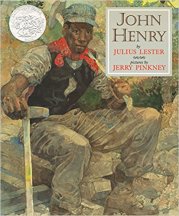
The steel-driving African American of song fame who managed to hammer more rock than the new-fangled steam drill before collapsing and dying was likely a real man. In the 1920’s, sociologist Guy Johnson tracked down not only people who claimed to have worked with John Henry, but one man who claimed to have seen the showdown. The front runner for the actual location is during the cutting of the Big Bend Tunnel in Talcott, West Virginia, around 1870, but no one has definitive proof.


William Tell

A folk hero of Switzerland, Tell was an expert bowman. When Switzerland fell under control of the Habsburgs, a magistrate put his hat on a pole and demanded all citizens bow before it, or be imprisoned. While in town with his son, Tell refused to bow, was arrested and sentenced to death – though, since he was such a marksman, the Magistrate would let him go if he could shoot an apple off his son’s head. Tell did so, was arrested anyway, escaped, and the people rose up in rebellion, in an act considered the founding of the Swiss Confederacy, around 1307. Some historians believe Tell is merely a new twist on an old Danish fable.

Robin Hood

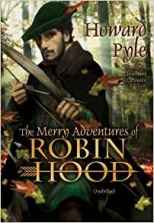
     The story of Robin Hood, Maid Marian, Prince John, King Richard, and the Band of Merrymen has been told for almost a thousand years. We know King Richard and Prince John are real (Richard took the throne in 1189), but there is debate about Robin Hood. Most likely a yeoman, not a noble, the name Robin was about as common as fleas, and the word Hood (sometimes Wood; the Old English were creative spellers) simply meant a man who made or wore hoods – more common then than hats. History’s been singing about him since the 1300’s, but his true identity isn’t known. If you can, check out the BBC series Robin of Sherwood.


King Arthur

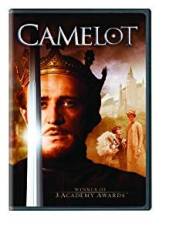
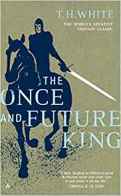
Oh, Arthur! How we want to believe! Of all legends, yours is perhaps the most influential of any! Your mage Merlin/Myrrdin is the direct ancestor of Gandalf, Dungeons and Dragons, Dumbledore, and more.  “Arthur” (depending on spelling) is believed to have actually been a military leader who fought battles against the Saxons around the end of the 5th century. The earliest possible references to him date to the 600’s, though some discuss a Battle of Badon but give no mention of a king named Arthur.  Geoffrey of Monmouth was the first to give a romanticized version in the 1100’s, then Thomas Malory came along in the 1400’s and standardized the legend. T.H. White called him the Once and Future King, and Lerner and Loewe put it all to music so we could remember it easier. Arthur was probably real, but not quite as mystical as we’ve been made to believe.


January’s a harsh month, but 31 days is sure better than 66, so curl up with a legendary figure, real or possibly not, and decide for yourself.


How to Find a Read-alike

If you are like me, when I find a series I love I burn through it in record time and then am left mourning that I have finished the series. Finding a new series can be difficult, so invariably I turn to NoveList for help.

NoveList is an online database available through Cheshire Library’s website (for other libraries, check your local library’s website to see if NoveList is offered there) that offers recommended reading lists. You can sort by age and genre and even by topics such as “fast-paced and amusing” or “moving and haunting” and even “snarky and compelling”. However my favorite part of NoveList is the Read-alike links.

If you type in a book title or author, NoveList will produce a list of results that include three very handy links: Title Read-alikes, Author Read-Alikes and Series Read-alikes.

What is a Read-alike?

A read-alike is a book, author, or series that shares some of the basic characteristics  of another book, author, or series. It means that if you enjoy, say, author Marcia Muller, you may also like books by Laurie R. King, Kate Wilhelm, or Iain Pears,

For example, type in  Lord Peter Wimsey (one of my favorite British mystery sleuths), click on Series Read-alikes, and you will get a list of recommendations that include the Phryne Fisher mysteries by Kerry Greenwood (stories that have also been turned into a wonderful BBC drama: Miss Fisher’s Murder Mysteries) and the Adam Dalgliesh mysteries by P.D. James, among many others.

Bingo! Two more series just waiting to be devoured.

Try NoveList. It works! Cheshire Library cardholders can link to NovelList from the Reading Resources page on the CPL website. Scroll down and you’ll find a Reading Resources link on our homepage or click on How Do I…? in our upper left menu and click the Find a Good Book link.

This Year’s Best Crime Novels So Far

Today we are featuring a guest post by Cassie Peters:

Crime novels offer glimpses into the minds of those who choose to either take the law into their own hands or ignore it entirely. Through the author’s words, we are able to contemplate, observe, and judge the motivations that make the criminals tick. If learning about the underworld is within your literary interests, here are some of the best crime novels of 2018. Following a long tradition of crime-based literature, many of these novels are brilliant subversions of the well-known and popular genre. Get ready to take a harrowing leap into the minds of 2018’s fictional criminals.

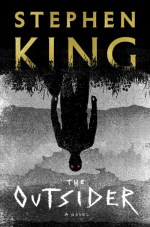
The Outsider by Stephen King

Terry Maitland is a Little League coach, family man, and all-around beloved pillar of the community who was arrested for the mutilation and murder of a young boy. Honest cop Detective Ralph Anderson struggles with deciphering all available evidence for fear of convicting the wrong suspect, until his wife Jeannie asks all the right questions that leads the investigation to the truth. Meanwhile, time-warping details both obscure and provide glimpses into hidden, deeper truths. Stephen King’s The Outsider is a masterful twist on the classic crime genre. A smooth and effortless tale of modern day crime with just the right amount of noir, politics, and psychedelics. Not a lot of writers can so pleasurably disorient readers like King.


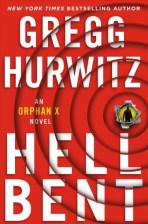
Hellbent by Gregg Hurwitz

An orphan who at 12 was enrolled in a top-secret government training program for assassins escapes to become an unlikely vigilante in Hellbent. The novel is the latest in author Gregg Hurwitz’s international bestselling series of books in the Orphan X series. It’s a sordid look into the all-too-fragile lives that evolve on their own amid government motives and conspiracies. Crime and conspiracy take on a humanitarian form via bullet train-paced prose. 

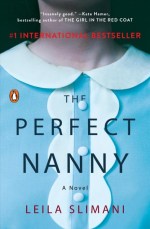
The Perfect Nanny by Leila Slimani

What if Mary Poppins was a sociological suspense-thriller that didn’t hold anything back? There’s nothing mystical or magical about Leila Slimani’s The Perfect Nanny, but she manages to masterfully subvert expectations via her sublime prose. It’s no secret that the lives of the characters in the story are in danger, including young children.  The mystery is whether or not you’ll be able to make it through the slow simmer of how a wholly trustworthy figure can transition into a rationally irrational monster. Library Journal says, “What initially feels like routine, unremarkable women’s fiction morphs into a darkly propulsive nail-biter overlain with a vivid and piercing study of class tensions”.  Peppered with social realist truths amid subtle but constant mounting dread, The Perfect Nanny submits a poverty-stricken view of Paris that culminates in one of the most satisfyingly horrible endings yet.

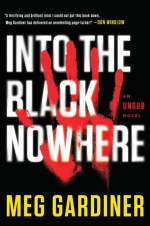
Into the Black Nowhere by Meg Gardiner

FBI rookie Caitlin Hendrix is assigned to the FBI’s elite Behavioral Analysis Unit to find a serial killer who leaves behind grisly clues. In this  dark, disturbing portrait of murder from the perspective of a career forensic psychologist, Agent Hendrix works with the FBI’s serial crime unit and a legendary FBI profiler to dissect the motivations behind a killer based on the available evidence. Into the Black Nowhere is a gripping novel that doubles as a crash course in sociology, critical thinking, crime research methodology, psychological testing, and criminal theory. Based on the exploits of the infamous Ted Bundy, Gardiner’s novel succeeds at a creating a realistic depiction of how serial killers function that is horrendous and unflinchingly educational at the same time. Don’t worry – you won’t need an actual degree in forensic psychology to enjoy this book. However, you should be prepared to learn a thing or two about the criminal mind – insights that might be too dark or true to be forgotten. Watch your step.

This feature post written for Cheshire Library Blog by Cassie Peters.

Devil in the White City

NOTE: This post deals with a difficult subject matter, serial killers, so if you’re easily disturbed, you might not want to read any further.

A book kept passing through my hands and it seemed intriguing – psychopath, history, award-winning – probably good, and I read it at last. The Devil in the White City  by Erik Larson tells the true story of the great Chicago World’s Fair of 1893, a celebration of Columbus’s 400th anniversary of discovering the new world and an attempt to outdo the 1887 Paris World’s Fair, which amazed the world with the new Eiffel Tower, the tallest structure in the world. The fair covered more than 600 acres – almost six times the size of Disney’s Magic Kingdom – and attracted more than 27 million visitors in its 6 month-run (versus 20 million visitors to Magic Kingdom in 2016). It also chose Tesla’s AC electric current to power it because it was cheaper than Edison’s DC current, cementing the road for America’s future electrical grid.

Chicago was no charming city, known for stink (stockyards), grime (trains and soot), crimes and vice. And in this mix lurked a serial killer, H.H. Holmes. Holmes’s background was a perfect mix of known factors of psychopathic development – strict, cold, abusive parents with severe religious obsession. By the age of 6, Holmes liked to dismember animals, and by his teens was implicated in the death of a young boy but cleared due to the pitiful state of investigations. He fled to Chicago, where he became a con artist, bilking insurance companies, furniture companies, and drug supply stores. He also charmed single ladies, killed them, reduced them to skeletons, and sold them as medical supplies. He built an elaborate hotel nicknamed “The Castle,” complete with gas jets in the rooms, soundproof rooms, and a personal crematorium in his basement. When finally cornered for killing his long-time assistant, Holmes confessed to 29 killings, though only 9 could be proven, but his total might have been as high as 200. He was hung for his crimes. Leonardo DiCaprio bought the film rights to the book, and a film is in production with Martin Scorsese as director (it had a tentative 2017 date, but is still in process).

Serial killers – those that kill large numbers of victims over time – are rare as far as murder goes, but the extent of their crimes garners a lot of press. Connecticut has its own serial killer in Amy Archer Gilligan of Windsor, who killed as many as 48 of her nursing-home patients for insurance claims between 1885 and 1917. Some of the more notorious American serial killers include:

Jeffery Dahmer (1991), who killed (and ate) at least 16 young men and boys. Not a high count for a serial killer,  it was the cannibalism that made him famous. He was beaten to death in prison not long after his conviction. Some things scare even murderers.

John Wayne Gacy (1978), who dressed as a clown for kids’ birthday parties and killed more than 33 men.  Stephen King said “It” was fiction.

Charles Cullen (2003), convicted of 40 murders while he was a nurse, but possibly responsible for up to 400, making him the most prolific not only in New Jersey, but the USA. Carl Watts (1982) was also a nurse, convicted of six murders but possibly as many as 130.

Ted Bundy (1975), one of the most famous and perhaps sickest, who killed more than 30. He decapitated at least 12 victims and kept the heads in his apartment, and often performed sex acts on rotting corpses (I warned you). He was executed in Florida.

Gary Ridgeway (2001)  the “Green River Killer”, with 49 proven deaths, 71 confessions, with a probable total closer to 90.

Ed Gein (1957)– Gein was convicted of only two murders, but if you’re looking at psychopaths, Gein is King. Gein had a bizarre attachment to his mother (back to that cold/abuse/super-religious thing), and would go to graves and dig up women’s bodies, skin them, and save parts attempting to wear his mother. Gein was the inspiration for Psycho, The Texas Chainsaw Massacre, and Silence of the Lambs. He was diagnosed as schizophrenic, incompetent, and died in a mental facility.

What predicts a serial killer? Most professionals look for early abuse, neglect, brutality, bullying, and mental illness. Animal cruelty, especially in young children, is a warning sign. Killers are often charismatic (Holmes, Bundy, Jim Jones, too) and manipulative, gaining friendship and trust.  Lack of empathy for their victims is  always present. Some do it for attention, especially media attention. One interesting point: 70% of serial killers had experienced significant head trauma as children; with what we now know about violence among football players and boxers who receive blows to the head, could this be a risk factor?

So hug your kids. Be patient. Be kind to them and to others, and teach them to be kind as well. Take bullying and animal cruelty seriously, and report it to authorities. You don’t know how many lives you might save.

Summers of Scandal

astonished faceIf you’re like me, you’re cringing every time you turn on the news, open a newspaper, or stare at the tabloids in the checkout line. No matter which side of the political spectrum you fall on, this country’s politics are a mess. While we keep reminding ourselves this isn’t normal, scandal IS more normal to the office of the president than we think.

Remember Watergate?

Sure, if you didn’t suffer living through NixonAll the President's Men by Carl Bernstein and Bob Woodward and Watergate, you at least have heard the story (or seen the movies) of the break-in at the DNC headquarters at the Watergate Hotel, how cash was traced to the Committee to Re-elect the President (Nixon), and how President Nixon was caught lying about the fact he knew about it. A president lying under oath was grounds for impeachment, but Nixon resigned on August 9, 1974, before he could be impeached, giving us the never-elected Gerald Ford. That’s the biggest official Presidential Scandal to date, but by far it’s not the only one.

SMarilyn Monroe with John F. Kennedyure, Clinton’s affair caused a major row, but flings among presidents are almost as common as presidents eating cheeseburgers. John F. Kennedy’s affairs were kept out of the press, but half the country was winking at his activities.  Harding, FDR, Eisenhower, Jefferson, and Lyndon B. Johnson were all known to have had affairs of heart while in office, and not one of them was ever brought up on charges. Cleveland, however, had not only one but two scandals that caused an uproar.

Yes, But Did You Hear About That Cad Cleveland?

The first was a secret surgery to remove a cancerous growth on the roof of his mouth.Grover Cleveland political cartoon America in 1893 was caught in a severe Panic – the pre-1930 name for a Depression. Cleveland felt that a president with a potentially life-threatening issue could further destabilize the people and the economy, so he chose to have the surgery in secret – on a boat traveling the shores of Long Island! Because it caused a bit of disfigurement, he attributed it to having two bad teeth removed (I saw a display on it at the Mutter Museum once). That wasn’t the worst though.

Cleveland was president during the Victorian era, whose straight-laced propriety and denial of anything related to sex, including body parts, haunts us in a weird duality to this day. And in that era of moral decorum, Cleveland was routed out as having had a love child in 1874, before he married his wife. Not only an illegitimate child, but he had the mother locked up in an insane asylum, and farmed the baby out to another couple! Even though it made a huge scandal at the time, he freely admitted it, and it didn’t stop him from being elected not just once, but twice, proving that moral flexibility is nothing new, either.

Abraham Lincoln quote: "Nearly all men can stand adversity, but if you want to test a man's character, give him power."Men of power get to the top position by wielding their power, and the office of the president is no different (I suppose we could let Jimmy Carter off the hook. He’s an anomaly to the rule, and no doubt why he was a somewhat wishy-washy President and often considered not strong enough during the Hostage Crisis. People just wanted to get away from Watergate). It doesn’t matter what party platform you’re running on, mainstream or not, chances are somebody somewhere is going to dig up a scandal on someone, and if not, the elected just might create one of their own (such as Reagan and Iran-Contra). It’s nothing new, and it’s not likely to go away again in the future. So grab some popcorn, and school yourself on these hot-button scandals of the day (Check out the movies of All the President’s Men, Frost/Nixon,  Argo, and Mark Felt ) :