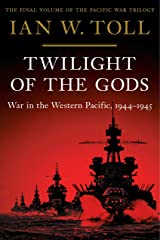
Twilight of the Gods, Ian Toll

Media has changed warfare. Thanks to Matthew Brady, photos of the brutality and hopelessness of war affected people in an entirely new way. At the time, the Civil War was the most documented war in history - yet it had nothing on World War II, just 75 years later. Movie film captured every last horror of that war, by both those who wanted to document the atrocities and those who wanted to bask in what they saw as glory. By Viet Nam, with Kodak Instamatics fitting in a soldier’s pocket, the grit was documented by everyone, not just official sources. In today’s internet era, conflicts are documented and uploaded to the world live, before officials even know they’ve happened. It will take decades to sort through available data and make viable conclusions on modern conflicts.

Media has changed warfare. Thanks to Matthew Brady, early photographer, photos of the brutality and hopelessness of war affected people in an entirely new way. At the time, the Civil War was the most documented war in history – yet it had nothing on World War II, just 75 years later. Now movie film captured every last horror of that war, by both those who wanted to document the atrocities and those who wanted to bask in what they saw as glory. By Viet Nam, with Kodak Instamatics fitting in a soldier’s pocket, the grit was documented by everyone, not just official sources. In today’s internet era, conflicts are documented and uploaded to the world live, before officials even know they’ve happened. It will take decades to sort through available data and make viable conclusions on modern conflicts.

German Sub U-755 is sunk by an RAF rocket, 1943

But World War II was no slouch. In doing a bit of research the other month on my grandmother’s little-known younger brother (they were 16 years apart), within 10 minutes, my sister and I were able to pull up information that stunned us. All anyone knew had been “Uncle Laurie was on a Coast Guard ship that was presumed lost at sea, possibly due to a German Sub, during World War II.”  Well, thanks to unfailing documentation, we found out that Laurie had been a radioman on the USS Muskeget, a weather ship, which was shot at 3 times by the German sub U-755 at 3:15 in the afternoon of September 9, 1942. Two torpedoes hit, killing all aboard. They even had the coordinates off Greenland. Not only that, but there’s a photo of U-755 being sunk by an RAF plane several months later!  No one in the family had ever known any of those facts.

With that type of minutiae now available, Ian Toll brings together his final tome on the history of the Asian Theater in WWII, Twilight of the Gods (I know, I just switched from the European front to the Asian one, but our family knows less about the Asian front: Uncle Art was a Marine at Iwo Jima, but not the famous flag raising, and my psychiatrist grandfather was stationed in California as a Navy Captain treating shell-shocked soldiers returning from the lines). In his third installment of the war, Toll covers the months between  June of 1944 and the Peace Treaty in 1945, after the dropping of the bomb. 

The Asian theater is an anomaly: this is the part of the war that actually attacked US territory, the act of aggression that finally drew us into the war despite the incomprehensible acts going on in Europe, and yet, we tend to teach only the European aspect of the war, beyond the two facts of 1) Pearl Harbor was attacked by the Japanese, and 2) we dropped the first (and only) nukes on them in retaliation. Is it because of the difference of a Navy war vs. an Army land war? It’s easy to follow Maginot lines on a map, but ships bouncing from island to island around a massive ocean isn’t as visual: We can understand where France is, but where exactly is 7.1315° N, 171.1845° E? (It’s the Marshall Islands. Can you picture them? Neither can I.) How can people fight over water, which has no country? Far more people had relatives affected somewhere in Europe, vs no one was taking up collections to send to Vanuatu. Yet the battles were the largest naval battles in history, and the cruelty and aspirations no less than that of Hitler. 

Toll spares no fact from his relentless research, and the brutality and heartbreak can inure the reader – much as it did those who lived through it. He covers the infighting among leaders – no one thought highly of Admiral Halsey – and the waste of young men literally being thrown at ships as kamikaze pilots – a tactic that eventually wore thin even among the Japanese. Good or bad, Toll covers it in a narrative style that will give you a far greater appreciation for the lesser-known side of a war that literally covered the world.  Whew.

If you don’t have time to sit and read a thousand pages, Twilight of the Gods is now available at CPL on audiobook, to make that commute just a little more interesting!

Twilight of the Gods

Audio book Print

The Conquering Tide

Audio book Print

Pacific Crucible

Passing the Bechdel Test

Have you given anything a Bechdel test? Have you ever heard of the Bechdel Test?
I’d never heard of it either (and I went to a women’s college!) until it popped up on an internet group I belong to, and I had to look it up.

The Bechdel test (or Bechdel-Wallace test) is a measure of representation of women in fiction. It first appeared in Allison Bechdel’s 1985 cartoon strip, Dykes to Watch Out For (I didn’t name it) commenting on films, brought on by a quote from Virginia Woolf, in that women in fiction might sometimes be mother and daughter, but rarely are two women friends in literature. Almost always, women were viewed by their relationship to men – wanting a man, chasing a man, depending on a man, chasing off a man, etc. (Hence Jane Austen, “It is a truth universally acknowledged, that a single man in possession of a good fortune, must be in want of a wife.”). Real women in real life talk to other women about more than just men (even if it’s only about their cat or dog).

Therefore, Bechdel gave three commandments for films to be considered women-friendly (and by default, TV and books):

  1. It must have at least two women in it (preferably with names)
  2. Who talk to each other (preferably for at least 60 seconds)
  3. About something besides a man

And the off-hand comment in a sarcastic lesbian cartoon strip surged until it’s become an almost a standard metric for the industry.

Seems pretty simple, right?

Various groups have researched more than 8000 films, and concluded that 42-50% of films cannot pass the test, and half of those that do pass do so only because two women are discussing marriage or babies. Being a female-oriented show about women does not mean the film or program can pass the test. Even female-cast TV shows such as Sex in the City don’t pass, because almost all the discussion is about men. Big-budget female-lead action films such as Lucy or Atomic Blonde or Salt fail, because the secondary characters are almost always men – there are no other women. Star Trek, which broke many TV taboos, can’t pass the test – there are many women, and they talk quite a bit, but almost never to each other. Lost in Space had three women trapped in a tin can together, and they almost never spoke to each other for more than one or two lines, occasionally. Firefly, for its very brief run, hits the mark more often than not. Okay, I Love Lucy wins for most realistic female friends ever, as does Gone With the Wind, thanks to Miss Melly, so time period is not a decisive factor. We haven’t necessarily gotten better with age, despite feminism.

Various groups have researched more than 8000 films, and concluded that 42-50% of films cannot pass the test, and half of those that do pass do so only because two women are discussing marriage or babies. Being a female-oriented show about women does not mean the film or program can pass the test. Even female-cast TV shows such as Sex in the City don’t pass, because almost all the discussion is about men. Big-budget female-lead action films such as Lucy or Atomic Blonde or Salt fail, because the secondary characters are almost always men – there are no other women. Star Trek, which broke many TV taboos, can’t pass the test – there are many women, and they talk quite a bit, but almost never to each other. Lost in Space had three women trapped in a tin can together, and they almost never spoke to each other for more than one or two lines, occasionally. Firefly, for its very brief run, hits the mark more often than not. Okay, I Love Lucy wins for most realistic female friends ever, as does Gone With the Wind, thanks to Miss Melly, so time period is not a decisive factor. We haven’t necessarily gotten better with age, despite feminism.

Not passing the Bechdel test does NOT make a film bad, nor does it make it not worth watching. Not every movie is going to center around women – Dunkirk, for example, a splendid movie about a specific battle in World War II. Women were just not involved in that. Stand By Me – a magnificent story of four young boys on a quest. Girls aren’t in the story, and if you skip this movie because of that, then you’re missing one of the best American movies. Nor is every film required to pass the Bechdel test. Casino passes two of the three qualifications, but women are mistreated throughout the film. Inclusion is just that – inclusion, not a judgment of how women are treated by the story, not a judgment of female competence, not a judgment of feminism (Gravity, with a female astronaut who saves the day, can’t pass the test, though The Martian, with a male lead, does). A woman may love a movie that can’t pass the test, and a man can certainly love a film that does. Movies of every genre pass or fail; there is no specific type of film to look for.

All the Bechdel test does, really, is point out films in which women – a full 50% of the population – are a larger focus of the story, and even if they aren’t, they’re portrayed as real, well-rounded people who speak to each other about real subjects, even if it’s about burning a roast, not just love-starved buttercups who are nothing without a man. So, if you’re on the lookout for films that show women – important or background characters – in a more realistic light, here are 15 various films that do pass the Bechdel test:

The Finest Hours

Little Miss Sunshine

Wonder Woman

Mad Max: Fury Road

The Last Jedi

Girl, Interrupted

Hidden Figures

Kill Bill

Thelma and Louise

The Exorcist

Chicago

Frozen

Birds of Prey

Bill and Ted Face the Music

Knives Out

May is Mental Health Month

One in every five people in the US carry some sort of “mental Illness” diagnosis – 20% – making it almost twice as common as killer heart disease, yet people hear the term “mental illness” and pictures of unshaven, alcohol-soaked homeless men and babbling old women with uncombed hair and too many cats come to mind (Don’t judge me!).

In reality, that’s far from the common truth. The umbrella term of “mental illness” includes everyone from your depressed cousin, your churning anxiety over political situations, and Uncle Louie, who served in Iraq and spends most days with his friend Jack Daniels. It includes the teen with autism who works down at the laundromat (don’t jump on me; a strong majority of autism includes OCD and anxiety, with phobias topping the list at 30%), the hoarder you drive past on your way to work, that girl on the cheerleading team who wears a baggy size 0, and that guy at work who stays four hours later than anyone else and talks so fast you can’t follow him. It includes celebrities, like Robin Williams, Margot Kidder, Robert Downey Jr, Brittney Spears, Carrie Fisher, Brooke Shields, and so many more.

“Mental Illness” is more common than COVID.

While some introverts have fared well through the pandemic and quarantines, many people have not. Rates of depression in adults went from 8% pre-pandemic to 28% – almost one in three – after. For those who lived alone, the rates approach 40%. Isolation, job loss, poverty, loss of loved ones, anxiety, and long-haul COVID symptoms all play their part in feeling crushed by a microbe. Among children, who can’t always understand the details of what’s going on, rates of depression and anxiety straddled 40%.

Unfortunately, our image of “mental illness” is tainted by historic images of schizophrenia, the king of all mental illnesses, and often the most resistant to treatment. We watch movies such as One Flew Over the Cuckoo’s Nest and I Never Promised You a Rose Garden, while not remembering that these movies depict mental illness treatment from as much as 70 years ago, when diagnoses were vague, medications were ineffective and dangerous, people believed in insulin comas and the disaster of lobotomies, and there were no PET or MRI scans to show exactly what the problem was. There was a time not very long ago when the number one treatment for syphilis was mercury. Times have changed, and chances are there’s actual help for that now.

How can something affecting 30% of the population be abnormal? Here’s a fact: it’s not, but our refusal to admit it keeps people feeling ashamed and afraid to seek treatment. If you feel down, if the social distancing and anxieties are getting to you, if your child is fearful and withdrawn and having trouble sleeping, reach out! Help is just a phone call away. No insurance? No worries. There are places to help you get medical coverage, and places that work on a sliding scale. There IS help, for everyone. Don’t be afraid to ask.

If you feel like life is overwhelming you, if you are worried about a loved one, if you are struggling with just getting through your day, CALL the CT ACTION line (Adult Crisis Telephone Intervention and Options Network). It’s available 24 hours a day, because the worst thoughts usually happen during the night.  1-800-467-3135,  or just call 211, which is the general help line for state services.

Don’t want to feel like you’re the only one on the planet feeling down? Check out these popular books and films on people having difficulties. Chances are, yours aren’t that bad.

Twisting Tornadoes

Our first exposure to tornadoes is often watching The Wizard of Oz as a child, though no one but Dorothy has ever reported being transported to a magical land beyond the rainbow. I was 9 when I read the Reader’s Digest account of the April 3-4, 1974 Night of 100 tornadoes, a horrific Super Outbreak of 148 confirmed tornadoes in 24 hours – more than 30 F4/F5’s – which devastated the town of Xenia, Ohio, among others. That kind of thing leaves an impression, even in a magazine.

April is in the middle of tornado “season,” which runs from March to June, when the biggest outbreaks of tornadoes are likely to occur. The United States has more tornadoes, and more violent tornadoes, than any other place in the world – killing an average of eighty people a year, despite our best efforts at early warning. Can they occur in other months? Of course they can. It all depends on the weather, and the weather, as we are aware, has been kind of wacky lately, from extreme drought in California to paralyzing snow and ice in Texas.

Why the US?  When we talk of “tornado alley,” we usually mean a massive stretch of flat land in the center of the country, from Colorado to Pennsylvania, and from Texas to the Canadian border. This is where the majority of tornadoes are born. Can they occur anywhere? Of course they can – CT has had memorable destructive tornadoes (such as the EF1 that wiped out Sleeping Giant in 2018) as well as Florida, Nevada, and Portland, Oregon. Pennsylvania holds the record for the only F-5 tornado east of the Appalachians – that’s winds of 300 mph.

Why do tornadoes form? Thunderstorms form when warm, moist air (such as from the Gulf) collides with cool dry air (such as comes down from Canada). When the two fronts meet, warm air rises up through the cold, creating storms. If the winds start to rotate in the process, a tornado is formed. Spring is when the warm air starts coming north from the Gulf of Mexico, colliding with the cold Canadian fronts, setting up a highway for storms until summer’s heat chases the cold air back north.

In modern times, with doppler radar, we know when a storm is likely to be powerful enough to cause a tornado (the Wallingford tornado of 1898 killed 34 people, but they had no warning system). If you’re faced with a severe storm, or a tornado warning, if the sky gets that sickly green, get to shelter. Go to a basement if you can, away from windows, under a staircase is a bonus. If you have no basement, go to a place away from windows – a large closet, or a bathroom – many people have survived in bathtubs. If you can, take shelter under a table or something sturdy. Cover yourself with a blanket, to avoid debris or flying glass. If you’re in a car, stop and get to shelter as fast as possible – don’t try to outrun a tornado; you can’t.  And no, hiding under a bridge isn’t safe – those 200 mph winds will blow you right out from under there. Please don’t leave your animals chained outside. They’re scared, too.

Whether you’re an armchair weather-watcher, or like reading about disasters, here’s a number of tornado-related stories and films you might enjoy – with one eye out the window (No, there has never been an actual Sharknado. Frogs and fish, but no sharks. Sorry).

Books:

Videos:


Indoor Sprouting

I’m no gardener. Sure, I have flowers all over my yard, I grow enough vegetables to bother canning, but I consider that a miracle of nature, not anything I do. I throw some plants in the ground, and if they’re lucky I remember to water them in the heat of summer. If they’re REALLY lucky, I may actually fertilize them. The only thing I try hard to remember to keep fertilized is my tulips, because my soil is two steps shy of toxic, and tulips like sunlight and fertilizer, and my tulips are spectacular (my soil is so bad that the only reason my flowers look good is because in our second year, we scraped away all the soil and replaced it with 5 cubic yards of new soil. Move away from the new soil, and the plants don’t do well).

But hope, like the seasons, springs eternal, and every year I start out hoping my gardens will outdo themselves (Not likely. I planted 150 croci, and 8 survived). I pour over the catalogs and dream of a yard landscaped out of a high-end advertisement, wanting to buy 50 of those beautiful flowering plants, only to sigh when the ad says they cost $30. A plant.

If you don’t want to sink huge coin into plants that, like my azaleas and pink dogwood (who else manages to kill a pink dogwood?), are likely to croak before the end of the season, there is always the elusive task of growing your own from seed.

Yeah, right.

That always works for other people, who, when the weather warms, bring out trays and trays of robust seedlings ready for transplant, when, despite the best potting soil and grow lights and care, I have spindly little fragile things in half my pots, wishing they could die and end their misery. I repeat, the beauty of my gardens is a mystery.

I prefer to purchase my seedlings from local nurseries – they have a much better shot at living – but I dutifully fill a tray or two of seeds with the kids in late winter, hoping to inspire a love of nature, and maybe a greener thumb. It doesn’t take much – a $2 packet of carrot seeds, a glass container, and you can watch roots grow as well as green leaves. Sadly, planting seeds and watching them grow doesn’t always inspire kids to eat that vegetable. Plants can be started in egg cartons, yogurt cups, red Solo cups, even eggshells – seeds, as you can tell from the cracks of pavement, aren’t fussy on where they sprout, though you may have to move them to a bigger cup if you’re using eggshells. If nothing else, it gives the kids something to do on a dreary day.

But seeds take time, and kids aren’t patient, so what are the easiest seeds to grow? The cheapskate in me says plant seeds for the most expensive plants you want to grow, but that doesn’t mean the seeds will take. I’ve planted enough catnip seeds for a jungle, and just five plants finally grew – outside, not in a pot. I could mention morning glories, but morning glories are a lifetime commitment; they can be invasive, and even if you plant them only once, you might be yanking up sprouts for the next 10 years. These are some of the best seeds to grow with kids, and some books to help you once they’re past their leafy infancy. Give it a try!

Marigold
Zinnia
Peas
Bush beans
Tomatoes
Peppers
Watermelon
Cat grass
Nasturtiums
Sunflowers
Corn (or better yet, try your own popcorn.
Even if the ears are 2″ long, it’s fun!)

Want to learn more about starting a garden? Check out the 635 section of non-fiction books in both the Adult and Children’s sections at the library:

Nitty Gritty Gardening Book

New Gardener’s Handbook

Sowing Beauty

Backyard Herb Garden


High-Yield Vegetable Gardening

Super Simple Kitchen Gardens

Starting and Saving Seeds

Seed Sowing and Saving


Epic Tomatoes