Susan reads: The Autistic Brain by Temple Grandin

[Cover]I avoid books on autism. I don’t like the terminology of the “autism spectrum” and the snake oil cures that celebrities like to flaunt.  I have worked with the seriously autistic for more than 25 years – the hard-core institutionalized kind – and have little tolerance for someone who thinks their child is autistic simply because he’s an introvert.  And for the last 30 years I’ve had a profoundly impaired autistic foster son, and all that happy information for the mainstreamed four year old who might have Asperger’s does not apply to hard autism. Thus, I have avoided reading anything by Temple Grandin, the Holy Saint of autism.

My bad.

In The Autistic Brain, Grandin discusses very rationally the numerous scientific studies done on communicative autistics, how they often have an inner thinking self and an outer acting self, and how the two don’t often interact. The current psychiatric labels, she feels, do autistics a huge disservice by lumping so many people under one umbrella no one can tell who is who – and leads to misdiagnoses and disproportionate numbers. She discusses how functional MRI imaging shows the different ways different autistics perceive the world, and that one type of treatment will not work for all, and that it’s the brain that’s the issue, not the psychoanalysis. That reiterated some serious studies I had read years ago.  She talks about the part genetics plays, and how research has shown some links, but no answers at all.  Grandin stresses that education for autistics – whether the high-functioning Aspie who will find success in Silicon Valley or the non-verbal autistic who cannot dress himself independently – needs to focus on what strengths the person has, not what deficits, and that deficits can be improved by using strengths, and that these children, no matter what the functioning level, need to get out into society and learn even rudimentary social skills, for that is the only way they will ever progress.

Grandin’s discussion of picture-thinkers, pattern-thinkers, and word-fact thinkers set my mind reeling to the hundred or so autistic children I have worked with, and the lightbulbs went on over my head. I thought about things I have tried, things that have worked, and things that have failed in a whole new light, and cannot wait to try new trajectories w/ my son. Grandin made me feel good that we have defied the “experts,” taking my son – whom no group home would touch because his behaviors were so severe – to places like Manhattan, Baltimore, Boston, boats, trains, weddings, and more – with a 90% success rate.  She made me understand how J. can do things no “autistic” is supposed to be able to do. I cannot recommend this book enough to anyone dealing with an autistic person of any functioning level.  Thank you, Temple, for understanding.  You’ve taught this old dog some new tricks without all that quick-cure quackery, and made a believer out of me.

If you’re dealing with an autistic child, I also highly recommend Barry Neil Kaufman’s book Son-Rise, about his own autistic child. If you can, read the original version.  His later version (The Miracle Continues) delves too deeply into his new-age self-help foundation while the original deals only with his son.

Susan Picks: Foreign Films

I like foreign films as a form of foreign language practice.  The people speak at a normal rate and use conversational words as they would if you went to their country. But, like most people, if it’s a language I don’t know well, I tire of the gibberish after five minutes, and I rarely have time to sit and watch subtitles. On the other hand, I like foreign films because they aren’t the same repetitive formulaic Hollywood boredom.  They often rely heavily on character development, less on action, and are hard on irony.  The sceneries are often exotic and intriguing, ways of life (like collapsible yurts and nomadic circles) so very different – yet oddly similar – to America in all its forms. You sympathize with the main characters and feel their pain.  Here’s a weekend’s worth of films that you probably haven’t heard of and are well worth your trouble:

Since Otar Left – a Georgian film about three generations of women who haven’t heard from their bread-winning relative in ages, and imagine how well he’s doing as they wait for him to call.  Kind of like Waiting for Godot in Sochi.

Tulpan – a Kazakhstani film about a young nomadic sheepherder named Asa who returns after serving in the Russian Navy and wants a wife – but try and find one on the empty steppe. Then there are the crazy traditional courting rituals to be conquered … 

[Cover]

Combination Platter – a story about an illegal Chinese immigrant trying to live out the American promise while working like a slave in a Chinese restaurant and dodging the terror of immigration.


9th Company – a modern Russian film about their futile 1980’s war in Afghanistan, a no-holds-barred action thriller every bit as good as any American movie.  You might have hated them in 1980, but you will cheer for them now.

[Cover]Vitus – a sweet Swiss film about a little boy whose parents help push him to be a brilliant concert pianist by the age of nine – but all he really wants to be is a little boy.

Travel the world from your recliner and give one a try today!

Allons-y! To the Foreign Language Books!

Did you know the Cheshire library has a wonderful collection of books printed in foreign languages? From Histoire de la Mafia by Gaetano 20130522-140621.jpgFalzone, to Charlotte Link’s Das Haus der Schwestern, there is a wide variety of both fiction and non-fiction books in French, German, and Spanish. These are located in a special area of the upstairs Moss Room; just ask and we’ll be happy to open it for you.

In the children’s room, there are beginning storybooks and alphabet books in Russian, Spanish, Latin, French, and Chinese. We are also able to request books in Russian, Polish, and more from surrounding libraries.

world-map

If listening to language is more your style, check out an audiobook to learn a new language or improve your skills in Spanish, Italian, Russian, Mandarin, Japanese, Hebrew, and more (Dewey number 468). Are you a foreign speaker trying to learn English? We have discs for that as well. There are audiobook language sets geared for children, too. Prefer an online approach where no one can hear you stumble? Check out the free on-line language programs on our website.

Grab your dictionary, dust off your skills, and with a little practice, you’ll be ready to take on our foreign films without subtitles!

One to Watch: After Earth

After Earth is a big-budget ($130 million) science-fiction adventure film starring Will Smith and his son Jayden as a father & son who crash-land on Earth a thousand years after man has abandoned it, and the adventure they have trying to escape the dangerous wild habitat the Earth has become. Smith himself came up with the basic story, and worked with screenwriter Gary Whitta to carry the idea further.  Due for release on May 31, 2013, it is expected to be a blockbuster.

Will Smith, acting as producer, hired director M. Night Shyamalan (Unbreakable, The Sixth Sense, Signs) for the film. This was the first time in twenty years that Shyamalan accepted a project based on someone else’s screenplay (the final screenplay was done by Stephen Gaghan). This would also be Shyamalan’s first digital film.

Science-fiction adventure stories come and go, but what makes After Earth a [Cover]unique film is the backstory. Normally, a film is scripted, filmed, and then if it is successful, writers are hired to create backstory, a “Bible” from which movie tie-ins, novels, short stories, and future scripts can draw material to make a unified vision of that world.  After Earth is the first film to flesh out its backstory before the scripting was even finished. Three expert writers were hired for that task: Peter David, Robert Greenberger, and Michael Jan Friedman, all of whom were well-versed in writing not only successful science-fiction and comics, but media tie-ins as well. All three collaborated in creating the “universe” in which the story takes place, the what, why, where, when and how, working on set with Smith, Shyamalan, and the scriptwriters to make the story as cohesive and believable as possible.

As told to me by Bob Greenberger, the three authors worked from the original Whitta script, taking tiny open references and creating minute details that would answer any questions the production team might have as to what cataclysms sent man from Earth, why Nova Prime, and what happened in the intervening years. Over a period of two years, this background encyclopedia grew to more than four hundred pages! If you’ve seen anything about the film in print, on the internet, or in film references, you can pretty much guarantee that information came from their work.

Of course, such detail and planning spawns stories on its own. Several novels centering around the movie are poised for release: After Earth, the novelization of the[Cover] film by Peter David, The Perfect Beast (After Earth: Ghost Stories) by Peter David, Robert Greenberger, and Michael Jan Friedman, and After Earth: United Ranger Corps Survival Manual by Robert Greenberger, as well as several short e-stories available for Kindle Purchase, with more to come in the ensuing months.

With a top-notch cast and writing crew like that, how can After Earth be anything but a hit? Check out these other books by these great authors, (or meet them in person at the Shoreleave Science Fiction Convention in Baltimore this August).

[Cover]   All Good Things...  [Cover]

Richie Havens, 1941-2013

6a00d8341c5f6d53ef01901b82b727970b-500wiRichard Pierce “Richie” Havens was an American singer-songwriter guitarist who passed away on April 22, at the age of 72.  His music appealed to a wide variety of listeners,  encompassing elements of folk, soul, and rhythm and blues.  His career was amazing and wide-reaching, and chances are, with 29 albums to his name, even if you don’t know his name, you’ve heard his work.

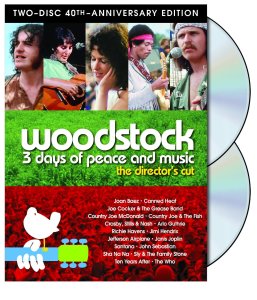
            Havens began his career in Brooklyn, organizing neighborhood street-corner singing by the age of 16, moving on to gospel, folk, and signing on with Bob Dylan’s manager in the mid-60’s. By 1969, he was the opening act for Woodstock, taking the stage for nearly three hours. He ran out of material woodand wound up improvising the folk-song inspired “Freedom,” which became one of his most famous hits. In the 70’s, he branched out into acting, both on stage and in films such as Greased Lightning. He made popular television appearances on both Ed Sullivan Show and Johnny Carson. While his albums climbed onto the Billboard charts, Havens began writing and performing highly successful commercials for Amtrack, Maxwell House Coffee, the cotton Industry (“The Fabric of Our Lives”), and others.

            Havens was a firm supporter of various ecological and charitable concerns.  He founded the Northwind Undersea Institute, an oceanographic children’s museum on City Island in the Bronx, which led to the creation of the Natural Guard,  to teach children how they can help the environment.  He was a performer at The Benefit Concert for The Longest Walk, an American Indian spiritual walk, the Tibetan Freedom Concert, the fundraising concert for Pete Seeger’s 90th birthday, and many others.  He was honored with the Peace Abbey Courage of Conscience Award, the American Eagle Award by the National Music Council, and was inducted into the Long Island Music Hall of Fame in 2006. He played the Cannes film festival, and President Clinton’s inauguration.

Havens died suddenly of a heart attack, following several years of kidney issues. His cremated remains are scheduled to be scattered across Yasgur’s farm this summer, where the original Woodstock took place.

            You can check out some of the superb Richie Havens legacy at Cheshire Public Library with the following CD’s:

Product Details             Product Details