Susan Reviews: The Last Ship

Sting (born Gordon Sumner) is one of those hold-overs from the last golden age of music.  His career took off as lead singer for the band The Police, whose pop singles such as “Don’t Stand So Close to Me” scored gold even when re-released. Since the break-up of The Police in 1986, Sting has had his share of solo chart-topping success with power albums such as Dream of the Blue Turtles, but I’m not sure his latest endeavor, The Last Ship, will do as well.

Don’t get me wrong – the album is lovely and showcases Sting’s wide range of talents in a heavy northern accent we didn’t hear during his Police years.  The songs – his first after a ten-year writing hiatus while he dealt with the deaths of his parents – are soft, almost melancholy, exploring the closing of the shipyards in the town he’d grown up in.  It’s a long, long way from “Roxanne” or “King of Pain.” Instead, we’re left with an album that vacillates between traditional-sounding folk tunes (the haunting title track, “The Last Ship,” which never seems to want to leave your head) and soft Sunday-brunch jazz (“August wind”).  If there’s a bad side to the album, it’s that it lacks the wider scope of variety we’ve come to expect from Sting as he has explored various types of music, from pop to rock to jazz to symphony.

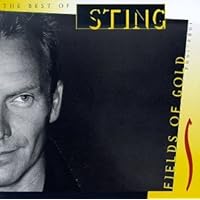
If you love soft music, or ballads, or folk music, you’ll enjoy this album, The tunes are haunting, the lyrics thoughtful, with a presence so strong you feel as if you’re walking the streets through an old British-Isles sea town.  If you’re looking for chart-climbing pop singles, go back to Fields of Gold.

I Hate Orchestra – Except Maybe This

I’ve tried.  I’ve tried to like pure orchestral music, whether it’s Mozart, the Boston Philharmonic or the soundtrack to Amadeus, but sitting in a chair in what looks like a theater for two hours watching a musician sawing a cello without a movie to keep my brain busy is the fastest way to put me to sleep.  I love Beethoven and Brahms and Bach as background music when I’m thinking, but they are not my main idea of entertainment.

BUT…

            I stumbled upon a truly fabulous CD that chases the ho-hum factor right out the window.   A Classic Case: The London Symphony Orchestra Plays The Music Of Jethro Tull is exciting, dynamic, and I cannot get my car to crank it as loud as I’d like. They nail the flute solos on Bungle in the Jungle (well, they are an orchestra), but bang out the drums and electric guitars on Aqualung in a manner worthy of an Indiana Jones soundtrack. You completely forget you are listening to the stuffy London Philharmonic. Maybe it’s because Tull is one of those bands that can cross the barrier between rock and New Age, and transfers very nicely to the lute, (yes, medieval lute, not just flute) but the London Philharmonic truly knows how to rock!

  If you find orchestral Tull to be tolerable, try these other albums which twist at the roots of “classical” or orchestral music:

David Garrett, Rock Symphonies:  Where else can you get Kashmir, Kurt Cobain, or Metallica blasted from an electric violin?  That’s right – violin, otherwise known as a fiddle. This is another incredible album that will have you headbanging around the room. It is as fabulous and frenzied as the classic originals, and the perfect introduction of “classical” concepts in musical themes for your kids.  They will be amazed. Also check out his new cd, Music.

Rockabye Baby: a wonderful series of hard rock classics – from Pink Floyd to AC/DC and Nirvana, turned into lullabies on unusual instruments such as marimba and harp.  If you want to start your kids on “classic” rock early, or simply prefer to relax to favorites in a calm manner, you’ll want to give these a try (the Pink Floyd is awesome).


Not in the library but fully worth pursuing is also Symphonic Pink Floyd – Us and Them, by the London Philharmonic Orchestra.  Yes, Pink Floyd is often heavy on orchestration to start with, but hearing it this way is truly superb. With a little practice – and a lot of familiar instrumental rock – you might just learn to like orchestral music!

In Memorium, Ann C. Crispin 1950-2013

Just barely a month ago, I was sitting on a panel next to writer Ann Crispin hashing out issues with the film, Star Trek: Into Darkness. I’d known she’d been battling cancer for some time, but I was surprised how well she seemed.  I guess she was very good at hiding it, for she passed away on September 6, 2013, just 3 days after posting to her fans that she was not doing well after all. She was 63 years old.

Ann was a gifted science fiction and fantasy writer.  She wrote Star Wars novels, V novels, the StarBridge series, and created novels and backstory for Pirates of the Caribbean, but her Star Trek novels, Yesterday’s Son, and later, Sarek, are often regarded as among the best Star Trek novels ever written; they are certainly in my top ten, and I’ve read hundreds. Ann knew and truly loved her material, and it showed in her clever and conscientious works.  Earlier this year, she was named the 2013 Grandmaster by the International Association of Media Tie-In Writers.

A native of Connecticut, Ann served as Regional Director and later Vice-President of Science Fiction and Fantasy Writers of America. She cofounded Writer Beware, a subgroup of the SFWA, to help writers avoid the myriad con artists and scams aimed at them, and prosecute the people running them. At her workshops she would drill into her students, “Money flows to the writer, never away. If someone is asking you for money up front to publish your work, run. It is a scam.”

Ann was a frequent guest at science-fiction conventions, often running workshops for writers, one of which I attended perhaps 15 years ago. Ann was a tough teacher and a tough editor, which was not unreasonable. Like Hollywood, the writing industry is a tough business, and it’s best to get the stars out of your eyes at the start. While I felt gifted for not getting her “You need to go back and take a class in basic grammar and sentence structure” speech, my hands shook for the next year with every word I put to paper. She helped greatly, but at the time it felt like getting pushed off a cliff.

Ann’s books will survive, but they are a shadow to such a brilliant and talented writer.   

           [Cover]           [Cover]

Susan Reads: Retribution Falls

WoW!  That’s all I can say.

Who doesn’t love the TV series Firefly?  Who doesn’t want to see Firefly come back?

Retribution Falls is about as close to a Firefly clone as you can get.  Better yet, Firefly crossed with League of Extraordinary Gentlemen, in a rough-and-ready blend of space faring steam punk. From almost the first chapter, the parallels, whether planned or endemic to the genre, are uncanny at times.

Have I got your attention yet?

Darian Frey is the captain of the Ketty Jay, a second-rate ship he won on a bet, but it’s the only home he’s got. Frey is a minor-stakes air space pirate, picking up small legal jobs here and other illegal ones there, hoping to make enough to keep his ship running and his crew fed, with a few coins of profit left over (sound familiar yet?).  His crew is made up of a rag-tag group of misfits, each one on the run with secrets they’d prefer to keep hidden, from the secretive but aristocratic Crake (my mind cast Paul Bettany in the role) to the quirky navigator Jez, who can manage to fake death a little too easily (I can picture Angelina Jolie here), and more.

When Frey and his crew are framed for blowing up a ship during a petty robbery, he finds himself on the run for his life – but are the Century Knights after him, or one of his crew? Frey’s attempts to unravel the mysteries lead him down a trail of old flames and bad memories, while the secrets of his crew slowly come to light. The path of salvation appears to lie in a pirates’ haven called Retribution Falls, a place of myth no ship has ever returned from. Frey must make hard choices – entrust his beloved ship to someone else in case of emergency, or run the risk of execution if captured. In the end, Frey and crew find that being an oddball among a group of oddballs makes you nothing but normal, and that to get trust you also have to give a little.

I read one review of the book that nit-picked every line of dialogue and every motivation of every character until there was nothing left. That really irked me. Even as a writer, I don’t read a fiction book to beat the story to death. I want a good story that holds my attention, characters that I can relate to whether through abhorrence or camaraderie, and a thread of believability – I’ll believe your unicorns can fly, but don’t tell me they have dainty little shoulders. Beyond that – I don’t care that females or mermaids or talking parrots are underrepresented. I don’t care if air pirates are passé. I don’t care if you think mechanical golems are cliché. This is the way this story goes. The characters and situations read like the first of a series, and in a good series, it takes time to fully develop all the characters – otherwise, what’s the point of a series?  If you put all the food out at a banquet at once, who cares about the next course? 

If any book deserves to be made into a film – or better yet, TV series – this is the one.Read it. Enjoy it. It’s worth every page.

Susan Reads: The Immortal Game: A History of Chess

[Cover] People have been doing it for more than 1300 years.  James Bond did it. So did Kirk and Spock.  Ben Franklin was addicted to it. Harry Potter did it the wizard way, but never once did Doyle ever directly say Sherlock Holmes did. I picked up The Immortal Game: A History of Chess, expecting it to be the dorkiest book ever written, a checkered feather in my Nerd cap.  I expected it to be boring and confusing, full of that chessy shorthand I can’t seem to follow despite its simplicity, and I never expected to actually finish it.

            I was so wrong.

            Author David Shenk presents a surprisingly fascinating history of the game, starting with its roots in India in the 600’s, played in similar fashion on a squared but monochrome board. The game spread to the Middle East just as Mohammad was gathering his followers, and the spread of Islam throughout the Mediterranean carried the game to Spain, where it spread upwards all the way to the Vikings. Chess underwent several incarnations as different kings and clerics tried to ban it, adding the familiar two-toned board to make it easier to follow.  In the late 1400’s, the king’s minister became the all-powerful queen, in response to the presence of several very strong queens in Europe at the time, such as Isabella of Spain and Mary, Queen of Scots. It was during this renaissance that our current game was born.

            Chess has been used throughout the ages as a teaching tool of the masses, from teaching peasants their place in society, to teaching the peasants that they are just as powerful as kings and helping to fuel revolutions (Ben Franklin allegedly told a player who check-mated him to go ahead and take his king; America had no need of kings and he would continue to play without it), to teaching battlefield strategies, to almost freeing the imprisoned Napoleon, but the man sent to tell him of the rescue plans stored in the game died en route.

            Shenk alternates his chapters of history with play-by-play explanations of one historic game, explaining why each move was important. This breaks up the history with examples of strategy, without delving too deep into QH4/BH3 shorthand, and makes for an enjoyable and educational read. Shenk argues that chess masters are made, not born (reiterating M. Gladwell), and that any person can become a Grand Master at any age, if enough practice is given. I am no chess master, playing on an entertainment level in a very random and haphazard fashion and doing rather well at it. However, after reading the book, with very little thought effort on my part, I was able to beat my computer chess program – four times in a row.

            A very painless and interesting book whether you actually play or just want to read about it. As Spock would say : Fascinating.