One to Watch: After Earth

After Earth is a big-budget ($130 million) science-fiction adventure film starring Will Smith and his son Jayden as a father & son who crash-land on Earth a thousand years after man has abandoned it, and the adventure they have trying to escape the dangerous wild habitat the Earth has become. Smith himself came up with the basic story, and worked with screenwriter Gary Whitta to carry the idea further.  Due for release on May 31, 2013, it is expected to be a blockbuster.

Will Smith, acting as producer, hired director M. Night Shyamalan (Unbreakable, The Sixth Sense, Signs) for the film. This was the first time in twenty years that Shyamalan accepted a project based on someone else’s screenplay (the final screenplay was done by Stephen Gaghan). This would also be Shyamalan’s first digital film.

Science-fiction adventure stories come and go, but what makes After Earth a [Cover]unique film is the backstory. Normally, a film is scripted, filmed, and then if it is successful, writers are hired to create backstory, a “Bible” from which movie tie-ins, novels, short stories, and future scripts can draw material to make a unified vision of that world.  After Earth is the first film to flesh out its backstory before the scripting was even finished. Three expert writers were hired for that task: Peter David, Robert Greenberger, and Michael Jan Friedman, all of whom were well-versed in writing not only successful science-fiction and comics, but media tie-ins as well. All three collaborated in creating the “universe” in which the story takes place, the what, why, where, when and how, working on set with Smith, Shyamalan, and the scriptwriters to make the story as cohesive and believable as possible.

As told to me by Bob Greenberger, the three authors worked from the original Whitta script, taking tiny open references and creating minute details that would answer any questions the production team might have as to what cataclysms sent man from Earth, why Nova Prime, and what happened in the intervening years. Over a period of two years, this background encyclopedia grew to more than four hundred pages! If you’ve seen anything about the film in print, on the internet, or in film references, you can pretty much guarantee that information came from their work.

Of course, such detail and planning spawns stories on its own. Several novels centering around the movie are poised for release: After Earth, the novelization of the[Cover] film by Peter David, The Perfect Beast (After Earth: Ghost Stories) by Peter David, Robert Greenberger, and Michael Jan Friedman, and After Earth: United Ranger Corps Survival Manual by Robert Greenberger, as well as several short e-stories available for Kindle Purchase, with more to come in the ensuing months.

With a top-notch cast and writing crew like that, how can After Earth be anything but a hit? Check out these other books by these great authors, (or meet them in person at the Shoreleave Science Fiction Convention in Baltimore this August).

[Cover]   All Good Things...  [Cover]

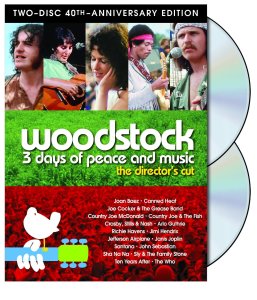
Richie Havens, 1941-2013

6a00d8341c5f6d53ef01901b82b727970b-500wiRichard Pierce “Richie” Havens was an American singer-songwriter guitarist who passed away on April 22, at the age of 72.  His music appealed to a wide variety of listeners,  encompassing elements of folk, soul, and rhythm and blues.  His career was amazing and wide-reaching, and chances are, with 29 albums to his name, even if you don’t know his name, you’ve heard his work.

            Havens began his career in Brooklyn, organizing neighborhood street-corner singing by the age of 16, moving on to gospel, folk, and signing on with Bob Dylan’s manager in the mid-60’s. By 1969, he was the opening act for Woodstock, taking the stage for nearly three hours. He ran out of material woodand wound up improvising the folk-song inspired “Freedom,” which became one of his most famous hits. In the 70’s, he branched out into acting, both on stage and in films such as Greased Lightning. He made popular television appearances on both Ed Sullivan Show and Johnny Carson. While his albums climbed onto the Billboard charts, Havens began writing and performing highly successful commercials for Amtrack, Maxwell House Coffee, the cotton Industry (“The Fabric of Our Lives”), and others.

            Havens was a firm supporter of various ecological and charitable concerns.  He founded the Northwind Undersea Institute, an oceanographic children’s museum on City Island in the Bronx, which led to the creation of the Natural Guard,  to teach children how they can help the environment.  He was a performer at The Benefit Concert for The Longest Walk, an American Indian spiritual walk, the Tibetan Freedom Concert, the fundraising concert for Pete Seeger’s 90th birthday, and many others.  He was honored with the Peace Abbey Courage of Conscience Award, the American Eagle Award by the National Music Council, and was inducted into the Long Island Music Hall of Fame in 2006. He played the Cannes film festival, and President Clinton’s inauguration.

Havens died suddenly of a heart attack, following several years of kidney issues. His cremated remains are scheduled to be scattered across Yasgur’s farm this summer, where the original Woodstock took place.

            You can check out some of the superb Richie Havens legacy at Cheshire Public Library with the following CD’s:

Product Details             Product Details

The Savvy Shopper

dress5I am the antithesis of a fashion guru. I spent twelve years in sweats and T-shirts as stay at home mom. If I don’t like the colors of the year, I don’t buy clothes. I wear what I like, whether it’s gypsy skirts, rhinestones, boatnecks, or a tiara. I have a 20-year old bridesmaid’s dress that has more miles on it than my “regular” clothes, and a 15-year old coat with a broken zipper that I repaired with velcro and folk-art trim. I go to a mall maybe twice a year, when I can’t avoid it. I have a hoard of patterns I’ll pull out and whip up shirts or shorts or skirts from old clothes or sheets. So I am at a total loss about why I like reading books about fashion and purchasing. Maybe because it’s so foreign to me, it becomes a peep-show into another world.

My curiosity began with the book Deluxe: How Luxury Lost its Luster by Danalouis-vuitton-luggage-psd453544 Thomas. Thomas traces the rise of super-elite fashion items, from Vuitton to Chanel to Burberry and more – names I know only from magazine ads. What began as high-quality, individually hand-crafted merchandise, as was almost inevitable, is now made almost exclusively overseas to boost profits. The quality has decreased along with it, but not the price. After reading how these super-designers began as simple sewers who went home and made their own creations, I pulled out my sewing machine, designed and sewed my own custom-tailored handbags, and vowed never to purchase someone else’s design again.

[Cover]In Overdressed: The Shockingly High Cost of Cheap Fashion, by Elizabeth Cline, Cline focuses on how the clothing industry has taken a dive since the 1990’s. By 2000, almost all clothing production has moved overseas in an attempt to maintain high profits and offer low, low prices. The 2000s saw the rise of Fast Fashion, meaning stores try to be in perpetual production, having new items every week instead of seasonally at the sacrifice of quality, style, and size, with some companies able to follow trends from concept to store in as little as six weeks. The marketing scheme of low, low prices is disastrous for the environment and for the economy, balanced on people who compulsively buy more than they can afford and possibly wear, items that fall apart after three washings and then are thrown away at the rate of hundreds of tons per month – mostly polyester, which is uncomfortable, not recyclable, and not even useful as rags – and no, neither the Salvation Army nor the poor of Africa want these useless third-rate garments. It creates the sweatshops and child labor of Asia, where the focus is on ever-cheaper labor costs to maintain profit – modern slavery. It has destroyed the US garment industry, and put thousands of US workers out of jobs.

In Cheap: The The High Cost of Discount Culture, by Ellen Ruppert Shell, Shell [Cover]covers much the same idea but in the concept of our press-board, Ikea-Walmart-Dollar Store culture. Instead of buying fewer high-quality goods that may last decades, our instant-gratification society is held up with super-cheap garbage that might last a year, if lucky. As forests are cut away to make the pulp that goes into throw-away furniture, as the demand for metals goes up to furnish wire or aluminum for lamps and chairs, the ecology of entire communities can be laid waste – let alone trying to find landfill space for all the broken cheap items. Cheap is nowhere near as cheap as you think it is. While Shell makes many interesting and valid points, at times her book slipped into heavy economics, which made my head spin. Skip the numbers, read the rest of the book.

In Priceless: The Myth of Fair Value and How to Take Advantage of It, William Poundstone discusses the psychology involved in pricing items and making [Cover]purchases. Do you remember the gas crises of the ’70’s, when gas stations waged war by dropping to 48 6/10ths, or 54 and 3/10ths instead of 9/10ths?  And we rushed to save a quarter of a penny? Do you wonder how stores can afford to give  60% sale and stay in business?  Or why you jump for joy when you snatch an item at Marshall’s that reads $59 – Compare at $135 and think you’re getting the steal of the century? Did you know that people will work for chocolate with the same behaviors as for money? Poundstone discusses how consumers are manipulated by very precise, controlled, and deliberate pricing strategies meant to maximize profit and induce you to buy – and how you can avoid those traps.

Nothing in this world comes without a price. Fashion, art, craftsmanship, and superb quality are becoming lost to generations in our quest not for beautiful items that will last years, but for more, more, more, more, an unsustainable chant fueled by governments that don’t know what else to say, most of which winds up in landfills where it may take more than a century to degrade. Choose wisely when making purchases, think about where the product is made, is it made with fair trade wages, is it good for the planet.  If you do buy, no matter what quality or price, always remember: reduce, reuse, recycle.

A Different Drummer

Do you ever listen to a song and have the wrong words go through your head?  Do your kids substitute different words to Achy Breaky Heart?  If you think that’s funny, you or your kids may enjoy listening to ‘novelty music,’ or a parody band.  Parody bands take popular songs and twist the words to make a new song, or they may write original songs that are amusing but not your average “commercial” material.  Many people may familiar with the vocal antics of Spike Jones, or songs like “The Purple People Eater,” “The Monster Mash,” Kip Addotta’s fish tale “Wet Dream,” or the “Chipmunk’s Christmas Song” – all once popular radio plays.  The TV show Chicago Hope made frequent use of Tom Lehrer’s song “Poisoning Pigeons in the Park.”  If you listened to WHCN in the ’80’s, they often played Barnes & Barnes’ “Fish Heads.” (Trivia fact: Barnes & Barnes is the band name of actor Bill Mumy and his best friend.  Bill is best known as the young Will Robinson in Lost in Space, or Lennier on Babylon 5.)

Product DetailsPerhaps the most popular parody musician is three-time Grammy winner Al Yankovic.  Yankovic boasts such hits as “White and Nerdy,” “Eat It,” “Smells Like Teen Spirit,” and other ear-catching twisted tunes.  Like many parody musicians, Yankovic got his first airtime on the Dr. Demento radio show, which has been running sinc e1974.  Dr. Demento plays parody and comic songs that may or may not make it into popular culture.  Yankovic’s “Yoda,” a parody of The Kinks’ “Lola,” was first played as a basement tape on Dr. Demento, as was “Grandma Got Run Over by a Reindeer.” (Personally, I like the basement tapes better than Product Detailsthe commercials versions.).  The aforementioned Fish Heads remains the number one requested song on his program.  Dr. Demento is no longer in syndication, but can still be found streaming on the internet.

If you like songs that are a little off kilter, you might try some filk music.  Filk?  Don’t you mean folk?  Filk is a term that came from a typo sometime before 1955, and it refers to fandom – usually but not always science fiction or fantasy – folkmusic.  If you like a book series or a movie or a TV show, chances are someone somewhere has written a song about it.  A song about Game of Thrones?  Oh yes.  Batman?  Him, too.  Want to hear Homer’s Odyssey encapsulated to fit the tune from Gilligan’s Island?  The Boogie Knights have got you covered.  Filk music is serious Memories of Middle Earthbusiness, with several large conventions in the U.S., Canada, Germany, and England, resulting in the Pegasus Award for Excellence given at the Ohio Valley Filk Fest every year.  For a sampling, check out The Brobdignagian Bards “Memories of Middle Earth,” filed among CPL’s folk music, or their Fairy Tales, for their awesome Jedi Drinking Song.

Our music selections include a wide variety of creative music you won’t find on the beaten path, including Yankovic, Lehrer, Dr. Demento, Brobdingnagian Bards, The Chromatics (excellent a capella performed by real rocket scientists), Monty Python, Harry and the Potters, and more.

Product Details

[Cover]

Eat them up, Yum!

James Cromwell films

james cromwellYou may not know his name, but chances are you know his face. James Cromwell is one of those lucky actors who never seems to want for work, with more than 163 film and television credits to his name.  At 6′ 7″, he is the tallest actor ever nominated for an Oscar. Born in 1940, educated at Middlebury College and Cal Tech, Cromwell has been cropping up everywhere since the early 1970’s, and is still going strong.  A staunch vegetarian, he was once arrested for protesting a Wendy’s in Virginia.  Total Film ranked him 56th of the Top 100 Greatest Movie Villains for his role as Captain Dudley Smith in L.A. Confidential, which many people think he should have won an Oscar for. Whether you remember him as Farmer Hoggett in Babe (his Oscar nomination), Zephraim Cochrane in Star Trek: First Contact, or Archie Bunker’s loading d0ck buddy Stretch Cunningham in All in the Family (yes, that was James Cromwell), you’ve probably seen his work. Whether funny, serious, or villainous is your style, get that popcorn going, sit back, and check out some of these great Cromwell performances!

[Cover]        [Cover]