Susan vs. the Wizards + Warriors

      The long-bearded ancestor of all wizard, warrior, and chivalrous knight stories is arguably Le Morte d’Arthur, compiled by Sir Thomas Mallory and first published in 1485 – not bad, considering the printing press was only invented in 1450. These tales of King Arthur and his Knights of the Roundtable was later worked by T.H. White into The Once and Future King, published in sections between 1938 and 1958, and taken up by Disney in 1963 as The Sword in the Stone.  In the same time period (1937-1954), J.R.R. Tolkien was busy pounding out The Lord of the Rings, his infinitesimally detailed trilogy (The Fellowship of the Ring, The Two Towers, The Return of the King) that set the bar for most fantasy novels to come, so massive in scope that ten hours of movie magic can’t encompass it all.

Tolkien helped shape Dungeons and Dragons (1974), the endlessly successful fantasy game – wizards, warriors, dwarves with their battle axes, elves, orcs, checking for traps and spells – they all started with Tolkien.  Dungeons and Dragons, however, is directly responsible for creating several lines of worthy novels, perhaps the best being the two original Dragonlance trilogies, Chronicles (Dragons of Autumn Twilight, etc) and Legends (Time of the Twins, etc). While some have complained that “you can hear the dice rolling in the background,” these are the novels that set my brain on fire.  I had the misfortune to read them as they were being released, having to wait anxious months for each delicious installment. While Chronicles sets up the characters and sends them off on a very D&D-type adventure, Legends runs with the developed characters and explodes with adventure.  These trilogies are clean enough for the 11-15 year old crowd, and a great place to send them after (or in preparation for) Lord of the Rings. There are more than 200 novels under the Dragonlance umbrella (and a film), so let them read!

The modern crown of medieval fantasy, however, must go to George R. R. Martin (what’s with all those R’s?).  His Song of Ice and Fire series, better known as Game of Thrones, the first title of the series, is Tolkien grown up dark and twisted (yes, darker than Mordor, where evil is only ever alluded to). Dragons, kingdoms, sex, murder, warfare, dwarves, incest, murder, swords, traitors, child brides, sex, murder, backstabbing, murder, sex, murder – Game of Thrones is nothing short of a massive soap opera set in a fantasy world of medieval powerstruggles.  While the HBO series consists heavily of nudity and violence, it is not a tenth of the amount of extreme brutality and sexual depravity of the books – these are NOT chivalrous tales for the young, but bloody and too-realistic horror stories of warfare. Yet, they will suck you in with compelling characters in a story that is too painful to read further, and too engaging and dramatic to ever put down. Each volume runs 800-1200 pages, so unless you can clear your schedule (you won’t want to stop), you may want to check out the audiobooks instead.

Read them. Savor them. Imagine them.  Then go beat up a tree with a sword. Just make sure it’s not an Ent first.
What’s an MP3-CD Audiobook?

cd

Many of our newer (and a few of our older) audiobooks are labeled “MP3-CD AUDIOBOOK – THIS WILL ONLY PLAY ON AN MP3-CD PLAYER”. This label often creates instant panic and confusion – “I want this audiobook, but I don’t think I have an MP3 player.”

Without getting into the deep technicalities of it, chances are, you probably do.  As Blu-Ray is just a little different than a DVD (bandwidth, essentially), so MP3 (short for MPEG) discs are almost, but not quite, the same as a regular CD. It’s the same files, just squishedrealtight.

Anyone familiar with putting music on an iPod (or an MP3 player, which is any iPod-like music player that isn’t made by Apple) is familiar with MP3 files. When you listen to your iPod, you are generally listening to an MP3 file. An MP3 file is merely the same sound file found on an audio disk, squished tighter, so you can fit more into a small space.  That’s why a regular audiobook may have 12 discs, but the MP3 audiobook only has one or two.  Technically, the sound quality is a little poorer on the MP3 disc, but unless you have an extremely expensive, high-tech system, you will never notice the difference. Audiobooks aren’t listened to over subwoofers and boomboxes, cranked to the max.

   Like the BluRay disc, not all players can handle this tight format.  Your computer can. Any new CD player probably can.  A new DVD player or Blu-Ray player can probably handle it. The biggest problem is with older CD players in older cars – if your car is more than 7-8 years old or so, its CD player may not be able to read the discs.  Look carefully at the CD player – it will probably tell you right on the dashboard, as my 2007 Honda does. (note:  WMA, or Windows Media Audio files are Microsoft’s attempt to create their own MP3 monopoly.  Just know that if you used the Microsoft Windows Media Player, the built-in music system on your computer, to make discs, the player can handle them).

What can yo011u do?  If you have a computer, you can download the discs to the computer and listen to them there.  You can load the discs onto an iPod or MP3 player (which is what they’re designed for).  If you’re desperate, you can download them to the computer, download a program to change them back, and then burn them to many disks – just don’t expect the highest quality. The alternative is to buy a newer CD player that will handle them.

Give one a try. If it works, great!  You’re all set.  If it doesn’t, check the manual for your car or ask your mechanic if the player supports MP3’s. If not, then try a different player you may have.

PS – Don’t forget your DVD player also plays CDs!  Just remember, you have to turn the TV on if you want to hear the sound.


Susan Reviews: The Last Ship

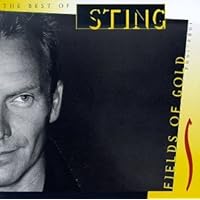
Sting (born Gordon Sumner) is one of those hold-overs from the last golden age of music.  His career took off as lead singer for the band The Police, whose pop singles such as “Don’t Stand So Close to Me” scored gold even when re-released. Since the break-up of The Police in 1986, Sting has had his share of solo chart-topping success with power albums such as Dream of the Blue Turtles, but I’m not sure his latest endeavor, The Last Ship, will do as well.

Don’t get me wrong – the album is lovely and showcases Sting’s wide range of talents in a heavy northern accent we didn’t hear during his Police years.  The songs – his first after a ten-year writing hiatus while he dealt with the deaths of his parents – are soft, almost melancholy, exploring the closing of the shipyards in the town he’d grown up in.  It’s a long, long way from “Roxanne” or “King of Pain.” Instead, we’re left with an album that vacillates between traditional-sounding folk tunes (the haunting title track, “The Last Ship,” which never seems to want to leave your head) and soft Sunday-brunch jazz (“August wind”).  If there’s a bad side to the album, it’s that it lacks the wider scope of variety we’ve come to expect from Sting as he has explored various types of music, from pop to rock to jazz to symphony.

If you love soft music, or ballads, or folk music, you’ll enjoy this album, The tunes are haunting, the lyrics thoughtful, with a presence so strong you feel as if you’re walking the streets through an old British-Isles sea town.  If you’re looking for chart-climbing pop singles, go back to Fields of Gold.

I Hate Orchestra – Except Maybe This

I’ve tried.  I’ve tried to like pure orchestral music, whether it’s Mozart, the Boston Philharmonic or the soundtrack to Amadeus, but sitting in a chair in what looks like a theater for two hours watching a musician sawing a cello without a movie to keep my brain busy is the fastest way to put me to sleep.  I love Beethoven and Brahms and Bach as background music when I’m thinking, but they are not my main idea of entertainment.

BUT…

            I stumbled upon a truly fabulous CD that chases the ho-hum factor right out the window.   A Classic Case: The London Symphony Orchestra Plays The Music Of Jethro Tull is exciting, dynamic, and I cannot get my car to crank it as loud as I’d like. They nail the flute solos on Bungle in the Jungle (well, they are an orchestra), but bang out the drums and electric guitars on Aqualung in a manner worthy of an Indiana Jones soundtrack. You completely forget you are listening to the stuffy London Philharmonic. Maybe it’s because Tull is one of those bands that can cross the barrier between rock and New Age, and transfers very nicely to the lute, (yes, medieval lute, not just flute) but the London Philharmonic truly knows how to rock!

  If you find orchestral Tull to be tolerable, try these other albums which twist at the roots of “classical” or orchestral music:

David Garrett, Rock Symphonies:  Where else can you get Kashmir, Kurt Cobain, or Metallica blasted from an electric violin?  That’s right – violin, otherwise known as a fiddle. This is another incredible album that will have you headbanging around the room. It is as fabulous and frenzied as the classic originals, and the perfect introduction of “classical” concepts in musical themes for your kids.  They will be amazed. Also check out his new cd, Music.

Rockabye Baby: a wonderful series of hard rock classics – from Pink Floyd to AC/DC and Nirvana, turned into lullabies on unusual instruments such as marimba and harp.  If you want to start your kids on “classic” rock early, or simply prefer to relax to favorites in a calm manner, you’ll want to give these a try (the Pink Floyd is awesome).


Not in the library but fully worth pursuing is also Symphonic Pink Floyd – Us and Them, by the London Philharmonic Orchestra.  Yes, Pink Floyd is often heavy on orchestration to start with, but hearing it this way is truly superb. With a little practice – and a lot of familiar instrumental rock – you might just learn to like orchestral music!

In Memorium, Ann C. Crispin 1950-2013

Just barely a month ago, I was sitting on a panel next to writer Ann Crispin hashing out issues with the film, Star Trek: Into Darkness. I’d known she’d been battling cancer for some time, but I was surprised how well she seemed.  I guess she was very good at hiding it, for she passed away on September 6, 2013, just 3 days after posting to her fans that she was not doing well after all. She was 63 years old.

Ann was a gifted science fiction and fantasy writer.  She wrote Star Wars novels, V novels, the StarBridge series, and created novels and backstory for Pirates of the Caribbean, but her Star Trek novels, Yesterday’s Son, and later, Sarek, are often regarded as among the best Star Trek novels ever written; they are certainly in my top ten, and I’ve read hundreds. Ann knew and truly loved her material, and it showed in her clever and conscientious works.  Earlier this year, she was named the 2013 Grandmaster by the International Association of Media Tie-In Writers.

A native of Connecticut, Ann served as Regional Director and later Vice-President of Science Fiction and Fantasy Writers of America. She cofounded Writer Beware, a subgroup of the SFWA, to help writers avoid the myriad con artists and scams aimed at them, and prosecute the people running them. At her workshops she would drill into her students, “Money flows to the writer, never away. If someone is asking you for money up front to publish your work, run. It is a scam.”

Ann was a frequent guest at science-fiction conventions, often running workshops for writers, one of which I attended perhaps 15 years ago. Ann was a tough teacher and a tough editor, which was not unreasonable. Like Hollywood, the writing industry is a tough business, and it’s best to get the stars out of your eyes at the start. While I felt gifted for not getting her “You need to go back and take a class in basic grammar and sentence structure” speech, my hands shook for the next year with every word I put to paper. She helped greatly, but at the time it felt like getting pushed off a cliff.

Ann’s books will survive, but they are a shadow to such a brilliant and talented writer.   

           [Cover]           [Cover]