Six Picks – Great Environmental Reads

Debating global climate change is as useful as debating whether a tomato is a fruit. The climate has changed before, without man’s help, and it is definitely showing signs of a bad mood swing again. The question we need to think on is how will we survive that change, and what can we do to calm the changes as quickly as possible. Here are six excellent books on a variety of ecological issues currently plaguing us.  You may not agree with all of them, but they are food for thought and quite worthy of debate.

Silent Spring  by Rachel Carson  The grandmama of them all, Rachel Carson’s landmark 1962 epic of how chemicals were destroying the planet. Her work led to a banning of DDT, which had nearly wiped out dozens of bird species such as the American Bald Eagle, by making eggs so brittle chicks could not survive. This is the book that started ecology, Earth Day, and so many other great causes. It was required reading in my high school; if you haven’t read it, it’s high time you did.

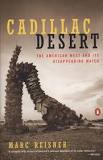
indexCadillac Desert: The American West and its Disappearing Water  by Marc Reisner   The American West has been settled for barely 150 years. It was desert then, and with massive amounts of finite water diverted from rivers and aquifers, we’ve pared back tiny portions to create oases like Phoenix, Reno, Los Angeles, and San Diego. Despite trillions of dollars to build dams, drill wells, and pump water thousands of miles in pipes, the west still remains one of the driest places on Earth.

Plastic: A Toxic Love Story  by Susan Freinkel       Plastic. It’s everywhere. Not only around us, but inside us as well. Freinkel shows us not only the impact plastic has on our daily lives  , but how all that pervasive plastic affects us in ways we don’t realize – such as the soft plastics that leach out of IV lines. Some plastics are more toxic than others: generally the softer the plastic, the more toxic it is.  And every time you heat your food in a plastic dish in the microwave, you put yourself at risk. No plastic ever degrades, it just crumbles, which creates hazards of its own. Plastics have their uses, yes, but at what cost to our health and environment?

Six Degrees: Our Future on a Hotter Planet by Mark Lynas    In 1816, the climate change from the eruption of Mount Tambora was estimated at seven degrees. For 18 months, global weather patterns were upended, resulting in relentless heat in the wrong areas, extreme drought in others, monumental flooding, and snow and freezing temperatures twelve months out of the year as far south as Georgia.  In Six Degrees, Lynas walks the reader through the changes the world can expect to experience with each degree of increase of average daily temperature. The picture is not pretty. If man has difficulty adapting to such major swings in such short times, how can we possibly expect plants and animals to adapt?

The Coming Plague: Newly Emerging Diseases in a World Out of Balance by Laurie Garrett.   Bad drinking water, misuse of antibiotics, deforestation, wars, refugees, poverty, and unsanitary living conditions all factor to create superbugs.  The diseases have always been with us, but it’s the close proximity to carrier animals that allows the diseases to pass to man. Garrett outlines the path these diseases take, and how it’s not too late to prevent another devastating global plague. This book will scare you in all the right ways.

The Lorax  by Dr. Seuss.    Ignore the dayglo movie. The Lorax, first published in 1971, is a wonderful way to introduce ecology and respect for nature to children. When the Trufula forests are in danger of extinction from overuse, it brings out the Lorax, who “speaks for the trees, for the trees have no tongues.”  The Lorax is a fable about caring for nature, sustainability, and never taking more than we need.

Pete Seeger, An American Bard

Pete Seeger, the granddaddy of American folk music, passed away peacefully in his sleep January 27, at the age of 94. Pete left Pete-Seeger-001a legacy of not only a tremendous contribution to American music, but of political activism and ecology with an emphasis on peace.

If you’ve ever heard The Lettermen sing “Turn, Turn, Turn,” if you’ve ever heard “We Shall Overcome” sung at a protest, if you ever listened to Bruce Springsteen belt out his We Shall Overcome album, you’ve been touched by Pete’s music.  If you’ve ever driven along the Hudson River in New York and noticed the lack of garbage floating in it, you’re looking at Pete’s work.

Pete began singing with the Almanac singers back in the 40’s, alongside the bedrock of American folk singers such as Woody Guthrie (who wrote the iconic and ironic song “This Land is Your Land”), Lee Hays, and Cisco Houston, among others. The Almanac singers morphed into The Weavers by 1950, with Lee Hays, Ronnie Gilbert, and Fred Hellerman, and enjoyed great popularity (including a number one hit in “Goodnight Irene”) until 1953, when they were blacklisted by McCarthyites as being 5123Z66NNXL._SX300_suspicious for singing about such things as worker’s rights and political oppression around the world.  This did not stop them from playing Carnegie Hall in 1955.  By the 1960’s folk music was only increasing in popularity, and Pete had a great influence on such upcoming folk singers such as Joan Baez, Bob Dylan, and Arlo Guthrie, Woody’s son, with whom he kept a life-long friendship. Seeger  – four of his six siblings are also folk singers – continued to influence music through the 80’s, 90’s, and 2000’s by working with mega-musicians such as John Mellencamp and Bruce Springsteen, who released a well-received folk album after mentoring from Pete.

If Seeger was anything, it was tireless. It was he who introduced Martin Luther King Jr. to the song “We Shall Overcome.”  In 1966 he became part of the Clearwater effort to clean up the toxic waste and raw sewage that was 51PP4Dc+wyL._SY300_destroying the Hudson River in New York, something he never stopped doing. He stood behind Occupy Wallstreet.  He played at President Obama’s inauguration, at the age of 89. He was still playing and giving concerts at 93. He was predeceased by Toshi, his wife of 70 years, just last summer.  He has been a part of, well, generations of American history, from WPA projects to serving in World War II to facing down the House Committee on UnAmerican Activities to the civil rights movement, ecology, founded music festivals, and more. He is truly an American Icon, one we can all be proud of.5175nuV6svL._SL500_AA280_

If you want to listen to classical truly American music, if you’re looking for great songs for singing or guitar, if you want your children to listen to some fun and rolicking children’s songs, check out some of Pete’s extensive legacy.  Bob Dylan and Bruce Springsteen walk in his shadow, but there is no one alive who can come close to filling Pete’s giant footprints.

Susan Reads: The Year Without Summer: 1816 by William Klingaman

Think winter’s lasting too long?  Imagine 18 straight months of cold and snow.

I’ve always liked books on natural disasters, and exploding volcanoes are about the biggest you can get. They spawn earthquakes and tsunamis, send pyroclastic flows racing down hillsides to poison and bury entire towns (Pele, Vesuvius, Pinatubo), blow entire islands away (Thera, Krakatoa), appear overnight (Parícutin), or ooze for years (Kilauea). They can also create spectacular sunsets for months afterward, or, if they’re really determined and throw huge amounts of ash too high into the air, they can change the climate of the entire Earth in a matter of weeks. This is what happened in 1816, when Mount Tambora, a fiery grumbling volcano, blew up in Indonesia, with the largest volcanic eruption in recorded history. The Year Without Summer: 1816 tells how this single volcanic eruption in the tropics had far-reaching effects around the world.

Mount Tambora didn’t just explode, like Krakatoa. It blew like a fountain, throwing so much ash into the air that it blackened the sky for thousands of miles and created a cloud of dust that blocked out the sun. This just happened to occur while the sun was at its coolest point in its cycle anyway (the Maunder Minimum). The resulting cooling of the ground (a 7-degree difference) brought on dire climate changes (parts of New Hampshire didn’t receive a drop of rain for more than 3 months, while Switzerland experienced horrific flooding), wild swings in temperature (July temps would hit 95 one day and it would snow the next), but mostly an unrelenting cold that prevented seasonal changes and destroyed most crops as far south as the Carolinas. It created dire famines and unrest through most of the British Isles and western and central Europe that lasted through 1818, beginning a wave of immigration that helped spread America westward.

Klingaman explores in great detail the effects of the climate change on political structures  in America and Europe, from the election politics of young America to disruptions in France, England, and Ireland. He spends a great deal of time discussing the travels of  Lord Byron, Percy Bysse Shelley, and Mary Wollstonecraft Shelley through Europe and Switzerland, who all wrote oodles of letters fretting about the weather. The darkness and seclusion caused by the weather gave rise to Mary Shelley’s famous masterpiece, Frankenstein.

Myself, I did not care for the book. Unlike Winchester’s Krakatoa, Klingaman barely discusses the volcano; it’s a cause for the book, not a main character, more like a shadowy villain behind the scenes. Instead, most of the book is about the American and European political fallout because of the climate change. I understand most of the voluminous information comes from primary sources, and because it’s 1816 there is a lot of relevant written information of the time, but I picked up the book wanting to read about a volcano. If you like history and politics, or biographies of Mary Shelley, you might enjoy the book.  If you’re looking for stories of volcanic glory and the birth and death of islands, go read Krakatoa.

Susan Reads: The Smartest Kids in The World

America’s schools are abysmal; in the world arena, our students barely break the top 20, ranking down there with Lichtenstein – and private prep schools aren’t significantly better.  In fact, America scores only seven points higher than dead center. We blame poverty, we blame spending, we blame teachers, parents, curricula, lack of diversity – but no one has come up with an actual plan that works.

               In The Smartest Kids in the WorldTime journalist Amanda Ripley follows three American exchange students of different backgrounds to some of the highest-scoring countries in the world – laid-back Finland (#3), the pressure-cooker of South Korea where students are in school more than 14 hours a day (#2), and upcoming Poland (#15), which, despite poor standing as a poverty-stricken, post-communist country, managed to climb from the bottom to the top ranks in only three years because of drastic and ongoing reforms.

                Not everything is rosy in all places; there are still pitfalls to each system, but one thing remains common to all good systems: value the education.  When anyone in America becomes a teacher because they want to be a sports coach, there’s a problem. All top countries made it extremely difficult to become a teacher – thus, only the top teachers actually make it to the classrooms.  Sports are not included in school; they are strictly extra-curricular.  Teachers are paid very well for making it that far – and if their students slide, they can be fired far easier than in America  – why keep a bad teacher?  Seriously – why do we do that? In most of these places, the teacher is not the focus. It is not about holidays, or length of day, or passing endless standardized tests: it’s about imparting learning to the child.  Education is about the child’s learning, and nothing else.

Ms. Ripley’s research illuminates what is wrong with our educational system, and lays out a course  to work towards fixing it. This book is a fantastic wake-up call to educators of all children, from Pre-K to college. It’s a fast, easy read that will leave you very angry with the status quo. – a must-read for anyone concerned about the state of education in America.

Go. Read it. And start bugging your schools.

Coming Soon on DVD

Missed it in the theater?  Saw it but can’t wait to see it again?  Trying to think of something to buy someone for a gift, or what to ask for?  Here’s a list of some of this year’s biggest films and shows being released on DVD just in time for the holiday season. Just remember, while the library orders items as fast as we can, we, too, are limited by the release date, so always allow at least two weeks AFTER the release for us to have the DVD’s out and ready for you to watch.  Until we enter the item into the computer, we cannot place holds on it. Still don’t see it in the computer?  Request that we order it!  We love to know what people are looking for.


To browse our online catalog for the latest DVDs, visit our website http://www.cheshirelibrary.org

and select “CATALOG” from the top navigation bar:

Screen_Shot_2013-11-20_at_2.27.29_PM

Then select “DVD/Video Search“, sort by “New to Old“, and click “Search

Screen_Shot_2013-11-20_at_2.23.31_PM