Return Ticket for the Orient Express

  Sometimes a literary character – and an author – just doesn’t quit, staying popular generation after generation. Sometimes we call that a classic – Scarlett O’Hara, Oliver Twist, Jane Eyre, Robin Hood and Maid Marian. Sometimes we call that Hercule Poirot.

Agatha Christie is the modern world’s most successful author (yes, even more than J.K. Rowling and Nora Roberts), third only to The Bible and Shakespeare, and has sold over two BILLION copies of her works (that’s 165 stories). Rowling only ranks ninth or so, with an estimated 500 million in sales. Sure, you can use the Gone With the Wind excuse that Rowling only hit big in 1997, while Christie’s first novel was published in 1920, so it has had a lot more years to gather sales (GWTW remains the highest-grossing film of all time, adjusted for inflation, due to its 1939 release date. Yes, more than Star Wars). Either way, there’s a reason for that.

Christie’s first and most popular detective is Hercule Poirot (the other being Miss Marple), a retired Belgian police officer with peculiarly meticulous habits and a brilliant mind for solving crimes, well-known for his thick black curling mustache – the only fictional character to ever have an obituary on the front of the New York Times. Poirot first appears in The Mysterious Affair at Styles (1920)and goes on for more than 33 novels, 50 short stories, and a stage play. You may have heard of his most famous case: Murder on the Orient Express.

Originally published in 1934, Orient Express tells the story of a murder (obviously) that occurs on a train going from Istanbul to Calais, France, which Poirot, a passenger on the train, slowly unravels. The Orient Express is a real train service that began in 1883 and ran from Turkey to France, ending its official run in 2009 – operating in three centuries!

Numerous film and television adaptions of both Orient Express and Poirot’s mysteries have been made over the years, most notably the 1974 film adaption of Orient Express starring Albert Finney – the only actor to receive an Oscar Nomination for playing Poirot, though he didn’t win (Ingrid Bergman won as Supporting Actress for the role of Greta Ohlsson). The library has many volumes of television adaptions of Poirot’s mysteries. If comedy and spoofs are more your style, check out 1976’s Murder by Death, with James Coco as Milo Perrier (Poirot), Elsa Lanchester as Jessica Marbles (Miss Marple) and a host of top-name stars poking fun at all the famous detectives.

Low and behold, Murder on the Orient Express is once again returning to the big screen on November 10, 2017, with a – dare I say it? – killer cast. Kenneth Branagh, British superstar of myriad films including Henry V, Harry Potter and the Chamber of Secrets, Dunkirk, Jack Ryan: Shadow Recruit and so many more, takes the lead as Poirot – not as short as Poirot is supposed to be, but ever since Hollywood ridiculously cast 5’6” Tom Cruise as 6’5” Jack Reacher, all rules are off. Add in Penelope Cruz, Dame Judy Dench, Willem Dafoe, Derek Jacobi, Johnny Depp, Leslie Odom Jr., Michelle Pfeiffer and more, and it’s worth the price of admission just for the cast and the gorgeous period costumes and vehicles. Of course there’s already a furor raging among the purists about his mustache.
Kenneth Branagh is a superb actor but an even superior director, and with him in the director’s seat  and the blessings of Agatha Christie’s estate, the film promises to be everything we want it to be. So prepare by reading a couple of Poirot’s mysteries, or check out a couple of other adaptions, and then watch the film. Or, give the movie a shot and then follow up with a binge of Poirot stories. When you run out, there’s always Miss Marple.

Versions and Duplicates (and Elvis)

I have a playlist on my iTunes called Versions and Duplicates. Here I stick all the various versions of songs I like by different artists – whether it’s Sons of Anarchy, Rod Stewart, or Bob Dylan singing Forever Young, or the Sons of Anarchy version of Bohemian Rhapsody vs. Queen, or six different versions of Hallelujah (I still like Leonard Cohen’s best from the soundtrack for Watchmen, followed by perhaps the Canadian Tenors, and a couple of on-line ones). I love Alice Cooper’s version of Eleanor Rigby almost as much as the original, so this file is actually kind of large.

Years ago, I’d read in the Book of Lists that Yesterday by the Beatles was the most-sung song ever, with more than a thousand people recording their version of it. Forty years later, it still holds the record, with more than 4,000 recordings. I only have two on my playlist.

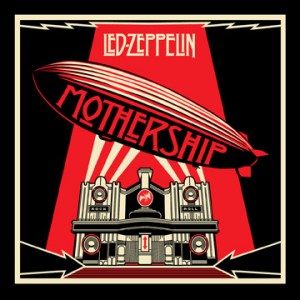
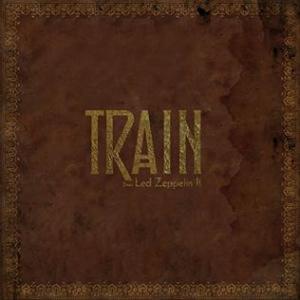
So when a disk came through my hands – Train Does Led Zeppelin II, I had to listen to it. I liked Drops of Jupiter, their biggest hit, and I liked Led Zeppelin. I love, love, love Iron Horse’s bluegrass version of Zep, Whole Lotta Bluegrass: A Vocal Bluegrass Tribute to Led Zeppelin (it really works, and you can understand the lyrics), and the Rock a Bye Baby lullaby series’ version, played on marimba of all things, is strangely beautiful and calming.

Although the first track, Whole Lotta Love, is perhaps the best of the album, it blew me away. Outside of a word or two, and perhaps the depth of a couple of riffs, Train nails the music dead on. It’s hard to tell it’s not Zep or Robert Plant himself. Truly, if you’re a fan, this is an album you should listen to.  Most of the criticisms of the album revolve around “Why did we need this album?” “Who is Train to think they can play Zeppelin?” I say, “Why not?” and “Who cares?” These are proficient musicians; if they want to play Zep, then let them play it.  Those critics have never heard me pick out Stairway to Heaven on the piano, the only two-handed piece I know.  And here’s why those critics don’t matter:

On the internet (stupid move) I wound up poking into a bee’s nest of Led Zeppelin tribute albums in a mind-boggling array of styles. If you don’t like rock music, if you don’t like screechy lyrics, that is absolutely no reason to skip Led Zeppelin. The music triumphs over the style, and the true genius appears.

Is banjo your favorite instrument? Check out Iron Horse’s album.

Just like bluegrass?  Try Pickin’ on Led Zeppelin, by the Pickin’ On series. A lot of harmonica mixed with banjo and fiddle. Yes, Led Zeppelin on the harmonica.

Prefer Metal? Dead Zeppelin: A Metal Tribute, by Dead Zeppelin. The Immigrant Song sounds like someone left the crypt open and all the demons are headbanging.

Classical tastes?  Chamber Maid: The Baroque Tribute to Led Zeppelin. Imagine you were invited to visit Louis XVI, and a quartet was playing in the corner, and you realized you knew that tune. Like that. Light and flutey, and always beautiful.

Prefer classical guitar? Richard DeVinck plays classical nylon strings on his album Going to California. Too plinky for me, but remember, Stairway to Heaven is a guitar song anyway, so it sounds lovely.

Celtic roots? High step to A Celtic Tribute to Led Zeppelin. The rhythm’s a bit faster, but it’s catchy!

Too laid back for rock? Prefer the reggae beat? Try Dread Zeppelin: Dejah Voodoo: Greatest and Latest Hits. This isn’t just a band that travels around singing Zep songs in reggae style, but with a lead singer who’s an Elvis impersonator.  Definitely a more funky beat, but the style, to me, was lacking, and sounded way too much like a guest star in a pretend cabaret on The Love Boat. I warned you.

Prefer to chill? Try Dub Tribute to Led Zeppelin, full of ethereal dub beats that will put you into a trance to familiar (or maybe not quite so familiar in this style) music.

And all that diversity doesn’t begin to touch on the number of top musicians paying tribute by cranking out serious Zeppelin tunes.  Troll elsewhere, critics.

Now, Zeppelin’s not the only band that attracts cover artists. I wouldn’t begin to count the number of Beatles covers, or Rolling Stones. Rock a Bye Baby covers everything from AC/DC to ZZ Top. Iron Horse does an amazing array of artists in bluegrass style, including Modest Mouse and Metallica. So dare to be different. Try a familiar song done in a new way, or by a new artist. You may just find a new favorite.

Childhood Horrors

Sometime ago in the mists of the last century, there were only three TV networks. On holidays, you usually had the choice of a football game, a different football game, or the longest movies the network could find – usually Chitty Chitty Bang Bang and The Sound of Music.  Chitty, an overly technicolor musical, scared the daylights out of me. As soon as that Childcatcher came prowling, I was behind the sofa holding my breath. Today’s kids would just send his photo to Instagram and beat him up.

Children see things differently. Some are easily spooked, some are skeptical from birth. Kids misunderstand and misinterpret things, and that alone can create unfounded horror.

Obviously, most children’s films try to avoid horror, but what’s marketed to kids is not always Barney and Big Bird – few Grimm’s Fairy Tales end happily ever after. Poltergeist –  ghosts, demons, peeling faces, and evil clowns in child-swallowing glowing closets – was only rated PG. PG, because PG-13 hadn’t been invented yet.

Young Sherlock Holmes (the food nightmare) scarred one of my children; to this day she won’t eat cream puffs. Tim Burton’s Mars Attacks! and its disembodied heads was another. Another didn’t trust Nazgûl (nor should you), and was terrified by Matilda. The 1971 Alastair Sim animated A Christmas Carol, with its writhing starving waifs and the faceless, voiceless Ghost of Christmas Future taints every incarnation I’ve seen since.

If your child likes spooky things and wants to be a part of the Addams family, here’s a list of kid’s films – honest! – that just might give your kid the shivers. If you have a child with a more sensitive nature, you might want to wait a few years on these:

Toy Story – Oh, doll-headed spider and hook-bodied Barbie, how we hate you! You may be Pixar, but you’re scary!

Coraline – Creepy button-eyed fake parents trying to steal a child?  Hmm….

Labyrinth – Sure, we adore Bowie, but these are Muppets who steal babies, chase girls with drill bits with intent to kill, and drop people into pits lined with talking disembodied hands. ‘Nuff said.

Something Wicked This Way Comes – Disney likes to whistle and pretend this isn’t theirs, but Ray Bradbury didn’t edit the scariness out of his novel of two boys and an evil carnival run by Mr. Dark, complete with electrocutions and freakshow.

Who Framed Roger RabbitBut this is a comedy! you cry – and it is, until crying Toons get faced with The Dip. Be prepared for a talk on death.

Return to Oz – if the flying monkeys didn’t scare you, perhaps Dorothy’s electroshock treatments will.

Jumanji – sure, it’s a game, but a deadly one. Floors that swallow people are just some of the issues; the intensity and situations may be too much entirely for young viewers.

Harry Potter series – yes, the first one is a charming tale of an orphan boy who learns he’s a wizard, but the stories get darker, and major beloved characters start dying. By the third film, Voldemort is embodied evil and believably out to get Muggles. Like your child.

The Dark CrystalFraggle Rock it’s not. It’s a dark Muppet film with lots of dark themes. Preteens maybe, but there’s no Elmo to lighten it for the little kids.

Gremlins – another movie made before PG-13, so it was stuck with PG. Gremlins are cute little things until you feed them, and then they become psychopathic demons out to harm and kill.  If preteen horror films was a separate genre, this would be one of their cornerstones, along with perhaps The Witches, Watcher in the Woods, and Jaws (which is also only PG).

Willy Wonka and the Chocolate Factory – let’s face it, Roald Dahl is almost never nice to children. Here alone, he sucks them up pipes, dumps them down garbage chutes, and has them cornered by very scary men in dark alleys asking them to sell their souls for money. But the crowning touch cited by many critics is the boat ride  scene, all psychedelic and threatening – but that’s the way it is in the book, too – a disorienting journey where everyone believes Wonka’s looney.

Every parent knows their child best. Some kids like a scary movie, some kids will wind up sleeping in your bed for a week with all the lights on. If your kid shows interest in scary movies, these might be a gentler introduction over, say, The Exorcist. Just be aware that even a seemingly wholesome, kid-marketed movie can have some really scary moments when you least expect it.

Man-Oh-Manilow

Not everyone can keep a career going for fifty years. Desk workers get bored, factory workers get sold out, artists get stuck in a groove and lose inspiration (et tu, Thomas Kincade?) Musicians are not immune, either – anyone remember a recent hit song by Rupert Holmes, B.J. Thomas, or Debby Boone?

Thought so.

Some talents, however, can’t be squashed. Paul McCartney, Rod Stewart, Robert Plant, and Tom Petty are just a few of the extremely talented musicians who are still pumping out music in various new forms, rock, classical, jazz, or folk, after more than fifty years.

So is Barry Manilow.

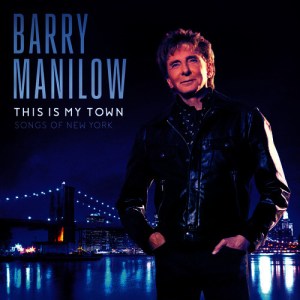
Barry Manilow first hit the charts forty-four years ago. An easy two generations. And with his latest album This is My Town: Songs of New York, Manilow shows he’s still at the top of his game.

Sure. Manilow isn’t for everyone. Say his name and images of white disco suits, sunshiny bright smiles, and Dr. Pepper come to mind (Manilow wrote or sang the hottest 70’s jingles for Dr. Pepper, McDonald’s, Band Aids, and more). Say you’re a Manilow fan and people smile politely and take a step sideways. But whether you like him or not, he’s a musical powerhouse.

In This is My Town, Manilow gives tribute to New York City. Maybe it’s refinement, maybe it’s age – he’s now 74, but his voice has gained a maturity, a deeper tenor that says he’s in command and making a hit is easier than crossing a New York City street. The album is short – just ten songs – and contains a variety of styles.  The first track, This is My Town, is breathtaking, a huge, glorious, Broadway-esque song that begs to be turned into an entire musical. Unfortunately, putting your best first means the rest of the album tends to fade.

Not that the tracks are bad; they just aren’t my style. Manilow drops into several tracks of smooth jazz, more in line with a Las Vegas lounge act than a hot New York club scene. While Manilow is no Petula Clark, his mashup of “Downtown/Uptown” is quite likeable. My only issue with the closing track of “NYC Medley” is that he starts with a cut of Billy Joel’s “New York State of Mind”; I wish he’d sung the entire song. He does end with a vibrant rendition of “New York, New York,” which is both fitting and energizing, reminding  you exactly why he is so popular.

Listen to it, even just for the first track. Barry, team up with a good playwright, and get that song made into a musical. It needs it. If you like smooth jazz, Broadway, cheerful music that is easy on the ear, New York City, or even just Barry Manilow, this is an album you won’t want to miss.

Which brings up the question – can Manilow write a song that isn’t upbeat? Sure, Could it Be Magic is in a minor key, and Mandy isn’t exactly a cheerleading tune (replace Tony Basil’s Mickey with Mandy?), but it’s not a throw-yourself-in-the-grave tearjerker like Goldsboro’s Honey or Clapton’s Tears in Heaven (written on the death of his five year old son). Chase Holfelder’s a musician who takes upbeat songs (like Girls Just Wanna Have Fun, or Disney’s Kiss the Girl), works them in a minor key, and turns them into haunting pop tracks. Maybe Manilow should be the next thing he tackles.

Food Fraud

The unofficial nickname of Connecticut is “The Nutmeg State.”  This stems from a story dating back to the mid-1800’s, whereby a southerner called foul that his order of nutmegs were made of wood – and they do look similar. One thought is that shrewd Yankee traders were cheating by carving wooden nutmegs to pad out a sale and thus increase  profit at the expense of the consumer, but another assumption is that the ignorant southerner didn’t know nutmegs had to be grated, and tried to eat them like a walnut.

Either way, the practice of substituting one food – or non-food – substance for another has probably been around since the dawn of man. Egyptians did it. Romans complained about it. And all the way up until Victorian England, food adulteration could kill you.

That’s the subject in Swindled: The Dark History of Food Fraud, by Bee Wilson. The book was far more interesting than I thought, chronicling the history of food cheats, such as substituting chicory or wood shavings for ground coffee, or adding alum to cheap bread to make it whiter. The medieval guild system helped keep staple foods clean, but England gave up the guilds earlier than Europe, and suffered more malnutrition for it. Poisonings and deaths were common, as bad food was often colored with copper and arsenic to make it prettier. Finally, the microscope helped discern without a doubt what was real and what wasn’t, starting the “pure food” campaign that continues today. It wasn’t until World War II’s shortages that people began to embrace modern chemical foods, and the decline of modern health can be clearly linked to it.

A similar book is Death in the Pot: The Impact of Food Poisoning on History, by Morton Satin. Satin, a retired expert in microbiology and food-borne illness, traces several turning points in history that were likely caused by accidental or deliberate food poisoning, from the Great Plague of Athens to the Salem Witch trials, right through modern day KGB tactics. Satin also reiterates Wilson on discussion of the “Poison Squads” of the early 20th century, human guinea pigs who consumed chemicals to see if they were safe to put into foods.

Perhaps the Granddaddy of the entire subject, dredged up in almost any conversation on food safety and purity, is the novel The Jungle by Upton Sinclair, the seminal book from 1906 that sent such shock through America that the Pure Food and Drug Act followed just five months later.  Sinclair, a socialist pushing for unions in the horrific meat-packing industry in Chicago, slipped inside the factories to investigate the situations for himself, and what he found was chilling, from rats mixed into the meat to allegedly men themselves that fell into the rendering vats. When President Roosevelt sent men to investigate, they, too, were appalled that it was true.  While he  didn’t bring many converts to socialism, he cleaned up the food supply as well as working conditions in the meat packing plants. As Sinclair said, “I aimed at the public’s heart, and by accident I hit it in the stomach.”

More modern – and thus frightening – is Eating Dangerously, by Michael Booth and Jennifer Brown, a balanced book which discusses modern food safety in the wake of so many deaths from salmonella, E coli O157, and other bacteria, that kill people, especially children and elderly, every year. Nothing makes you scrub your hands like reading about deadly germs, and, outside of undercooked meat or that dire warning to never eat your raw cookie dough, most of the deadliest food poisoning outbreaks have centered on produce that is eaten raw: lettuce, spinach, sprouts, cantaloupe, and peanuts. The authors acknowledge what farmers and the government already know: producers can’t wash every leaf of spinach adequately, even in the best scenario. Animals walk through fields. Birds poop in flight. Flies are everywhere. WASH YOUR PRODUCE. It grows in dirt. Wash it. The biggest problem with US Food Safety? Continuous cuts to the CDC, inspectors, and FDA, lawmakers afraid of industry lobbyists, and unclear departmental responsibilities. And the huge demand for out of season produce shipped from other countries, where growing practices aren’t as clean as the US.

It’s hard to separate sensationalism from fact when it comes to health. Today’s fact is tomorrow’s proven gimmick. Poisoned food, however, is a reality we live with each day, from undercooking our meat to leaving that mayonnaise sitting out, or the grim fact chickens are BORN positive for salmonella. Wash your food. Wash your counters. Wash your hands. Watch your food temperatures. Know what’s in your food – remember, cellulose can mean wood pulp, too. Still love raw cookie dough? Make it with Eggbeaters, which is pasteurized, and you won’t have to worry.