
Every year there’s some tech gadget that seems to be the “in” gift, whether it’s an iPod, a Kindle or cousin, or, with the prices continuing to fall, it could very well be an Amazon Echo, also known as Alexa – available for as little as $99.
What is an Echo? It’s an artificial intelligence billed as a virtual personal assistant, and overall it can do some pretty entertaining things. One thing to understand – an Amazon Echo Dot, and the Amazon Echo, are THE SAME THING. The difference (besides $50) is that the Echo comes with its own speakers; the Echo Dot has to use bluetooth technology to feed off a blue-tooth capable speaker you provide,  whether your phone or boombox or clock, etc. That’s it. So treat them interchangeably, because they are.
Inspired by the Enterprise computer on Star Trek and built on the Android platform, Echo sits in your house and by request can immediately tell you the weather forecast, the news, the time, the sports report, play games with you, set an alarm, play an audiobook, play a perfect mix of music as a personal radio, power smart devices like the Nest thermostat, stream podcasts, make you a list, provide recipes, find your phone, call an Uber, tune your guitar, order take-out, and even send messages and email to other Echos. There are currently more than 1500 downloadable apps to allow it to do quite an array of useful things for you, hands-free. The programmers have thought up just about any way an Echo could be abused – swear at it, and it will correct you. Ask it if the CIA is listening, it will give you a wise-crack answer. Ask it to Beam Me Up and it will give one of several replies. Ask it to do the fandango, and it will reply appropriately.
 Of course, nothing is without controversy. Unless you hit mute, rendering it “deaf” and unable to function, the Alexa/Echo sits in your house listening 24/7 for its wake-up word (“Alexa, …”) and a command. Those commands are recorded so that the Echo “learns” what you ask most and can process your commands quicker. It learns how to interpret your personal pronunciation. Amazon swears it is not recording what happens around your house, only the commands that follow the word “Alexa.” Sometimes it will “hear” something on a TV that sounds like a command, and respond. There was an incident of a child asking Alexa for a dollhouse, and a $170 dollhouse was sent by Amazon (moral: don’t leave one-click ordering engaged).
In another incident, a woman asked Alexa to dial 911 in the middle of a domestic dispute; the police arrived in time to save her life. Problem is, Alexa isn’t supposed to do that. Not only is it not connected to any call system (unless it’s another Echo), but communication rules prevent it from being able to call out unless it’s also able to receive calls in. Nonetheless, somehow, somewhere, something in the home called 911, because in the 911 recording, the woman is screaming for Alexa to call 911. It remains a mystery. In my own case, we’ve had the Echo suddenly awake for no reason and give the news or weather or just “I didn’t hear that,” as if it forgot it was supposed to be seen and not heard unless spoken to. Just a little creepy.
If a slim possibility of wiretapping freaks you out, then simply hit the “mute” button when you don’t want the Echo “hearing,” effectively turning it off. Unmute it when you want to use it.
While there are outside apps (like Ask My Buddy) that can connect your Alexa/Echo to a phone, I think it’s silly to put regulations on any capable device from calling 911. A cellphone will call 911 without a paid plan; why can’t a virtual assistant? How many elderly fall while their help button is sitting on the bathroom sink? Having a voice-activated 911 in the home for a disabled or elderly person can be lifesaving. Period.
Still don’t like your commands being recorded? Go into your Amazon account and erase them. Is it possible to hack the Echo? Not easily – the entire system would have to be hacked. But as we know with hacking, nothing is impossible, so it’s best not to chain sensitive accounts to your Echo, and again, if you’re worried, turn the Echo off (mute) when not in planned use. Yes, you can unplug it, too, but then you have to wait a minute for it to reboot and get its bearings again.
In my family, 99.8% of the Alexa/Echo use is for a commercial-free personal radio, with great playlists from Rush to Raffi. By far, we under-utilize its capabilities. As a gadget it has a multitude of uses, especially for any physically disabled person or shut-in. Does it do anything you can’t do with a computer or a radio? No. But it’s easy to move from room to room or take with you if you go somewhere (with wifi. It must have wifi to work.) It’s easy enough for Aunt Betty to learn to use. If it’s for someone who is tech-savvy, they’ll discover a world of things they can do with it.
As far as sale-priced gadget gifts go, yeah, this one is probably worth it.
For more on Artificial Intelligence, check out these titles, and more:
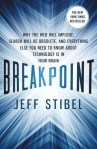
Breakpoint: Why the Web Will Implode, Search will be Obsolete, and Everything Else You Need to Know abour Technology is in Your Brain by Jeff Stibel
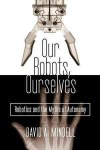
Our Robots, Ourselves: Robotics and the Myths of Autonomy by David Mindell
Final Jeopardy: The Story of Watson, the Computer that Will Transform Our World by Stephen Baker
Thinking Machines: The Quest for Artificial Intelligence and Where It’s Taking Us Next by Luke Dormehl
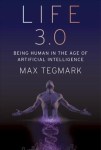
Life 3.0: Being Human in the Age of Artificial Intelligence by Max Tegmark


 Sometimes a literary character – and an author – just doesn’t quit, staying popular generation after generation. Sometimes we call that a classic – Scarlett O’Hara, Oliver Twist, Jane Eyre, Robin Hood and Maid Marian. Sometimes we call that Hercule Poirot.
 Marple), a retired Belgian police officer with peculiarly meticulous habits and a brilliant mind for solving crimes, well-known for his thick black curling mustache – the only fictional character to ever have an obituary on the front of the New York Times. Poirot first appears in
  Numerous film and television adaptions of both Orient Express and
  screen on November 10, 2017, with a – dare I say it? – killer cast. Kenneth Branagh, British superstar of myriad films including
 liked Drops of Jupiter, their biggest hit, and I liked Led Zeppelin. I love, love, love Iron Horse’s bluegrass version of Zep,



 won’t eat cream puffs. Tim Burton’s Mars Attacks! and its disembodied heads was another. Another didn’t trust


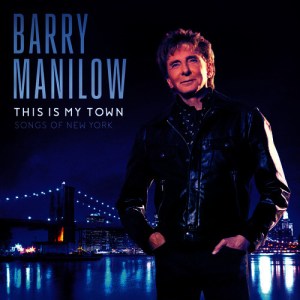


 of smooth jazz, more in line with a Las Vegas lounge act than a hot New York club scene. While Manilow is no Petula Clark, his mashup of “Downtown/Uptown” is quite likeable. My only issue with the closing track of “NYC Medley” is that he starts with a cut of Billy Joel’s “New York State of Mind”; I wish he’d sung the entire song. He does end with a vibrant rendition of “New York, New York,” which is both fitting and energizing, reminding you exactly why he is so popular.
