 January began as one of the last months of year, not the first. The start of the Roman calendar (and the astrological one) was March. Back then there were only ten months to the year, totaling 304 days. Between was a miasmic 66 monthless days of “winter.” According to legend, Numa Pompilius, the second King of Rome (after Romulus himself), added January and February to codify that winter term (along with a catch-up month every other year of 22 days).
Was Numa a real figure? History leans toward yes, born around 753 BC. Both Plutarch and Livy (major Roman writers) wrote about him. He codified Roman laws and religion, so we know he actually lived, but like many legends, there are stories about him that are most likely fable.
Every culture has their grandiose heroes of myth and legend. Some we know are fantasy (Beowulf), while others we know are fact (Jesse James). Let’s look at some famous heroes that history can’t make up its mind about.
Mulan
Disney’s Mulan is based on a Chinese poem called The Ballad of Mulan. She is believed  to have lived somewhere between 386 CE and 620 CE (if you’re not up on your history, Common Era has replaced the Anno Domini). She takes her aging father’s place in the army, and serves for twelve years without her fellow soldiers realizing she’s a woman. Depending on the source, her name might be Hua Mulan, Zhu Mulan, or Wei Mulan. Although she’s first mentioned by the 500’s, historians can’t decide if she’s real or just an interesting story.


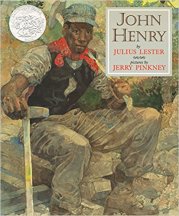
John Henry
 The steel-driving African American of song fame who managed to hammer more rock than the new-fangled steam drill before collapsing and dying was likely a real man. In the 1920’s, sociologist Guy Johnson tracked down not only people who claimed to have worked with John Henry, but one man who claimed to have seen the showdown. The front runner for the actual location is during the cutting of the Big Bend Tunnel in Talcott, West Virginia, around 1870, but no one has definitive proof.

William Tell
A folk hero of Switzerland, Tell was an expert bowman. When Switzerland fell under control of the Habsburgs, a magistrate put his hat on a pole and demanded all citizens bow before it, or be imprisoned. While in town with his son, Tell refused to bow, was arrested and sentenced to death – though, since he was such a marksman, the Magistrate would let him go if he could shoot an apple off his son’s head. Tell did so, was arrested anyway, escaped, and the people rose up in rebellion, in an act considered the founding of the Swiss Confederacy, around 1307. Some historians believe Tell is merely a new twist on an old Danish fable.
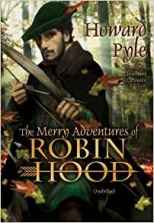
Robin Hood
 The story of Robin Hood, Maid Marian, Prince John, King Richard, and the Band of Merrymen has been told for almost a thousand years. We know King Richard and Prince John are real (Richard took the throne in 1189), but there is debate about Robin Hood. Most likely a yeoman, not a noble, the name Robin was about as common as fleas, and the word Hood (sometimes Wood; the Old English were creative spellers) simply meant a man who made or wore hoods – more common then than hats. History’s been singing about him since the 1300’s, but his true identity isn’t known. If you can, check out the BBC series Robin of Sherwood.


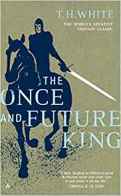
King Arthur

Oh, Arthur! How we want to believe! Of all legends, yours is perhaps the most influential of any! Your mage Merlin/Myrrdin is the direct ancestor of Gandalf, Dungeons and Dragons, Dumbledore, and more. “Arthur” (depending on spelling) is believed to have actually been a military leader who fought battles against the Saxons around the end of the 5th century. The earliest possible references to him date to the 600’s, though some discuss a Battle of Badon but give no mention of a king named Arthur. Geoffrey of Monmouth was the first to give a romanticized version in the 1100’s, then Thomas Malory came along in the 1400’s and standardized the legend. T.H. White called him the Once and Future King, and Lerner and Loewe put it all to music so we could remember it easier. Arthur was probably real, but not quite as mystical as we’ve been made to believe.





January’s a harsh month, but 31 days is sure better than 66, so curl up with a legendary figure, real or possibly not, and decide for yourself.

 of 2000, he admitted to being a cross-dresser while drinking in a bar. When he left the bar, five men beat him so badly that he spent nine days in a coma, and forty days in the hospital relearning how to walk, talk, and behave. He had permanent memory loss of everything before the beating, and severe post-traumatic stress. His entire life before that night had been erased. Insurance cut off his therapy after a year, and he could not afford to continue on his own.
 Instead, Hogancamp turned to fantasy art. Outside his home in New York State, he created Marwencol, a fantastically detailed Belgian town caught up in World War II, and populated it with excruciatingly detailed 1/6-scale figures (that’s Barbie-sized, if you don’t know. Before his injury, he’d painted miniature aircraft as a hobby, but now his hands shook too much) – including both himself and his attackers. In Marwencol, a safe place populated by women, grisly acts do occur (it’s WWII), but women are the heroes. Through the scenes he set up, Hogancamp worked out a lot of his rage and anger by “killing” his attackers over and over, his own form of therapy to deal with the loss of 38 years of

 Hogancamp’s photos are a child’s dream: proof that your dolls/action figures are having a rich life when you aren’t looking, a voyeuristic peek into a place where anyone can be the hero, the bad guys always lose, and Mom is there to save the day. His photos are eerie in their realism, down to pen-tip bullet holes and nail-polish blood, a dream gone creepy where department store mannequins have replaced people but you can’t always tell at first glance. Take a look at some of his works




 Westerns are not my bag. They cover a very short piece of history (usually post-Civil War to the early 1900’s), they’re often trite, and too many of them bore me. You can run down a checklist for almost every one: Horse? Check. Damsel? Check. Angry Indian? Check. Sheriff? Check. Big shootout? Check.
 never seen the entire



 crimes and vice. And in this mix lurked a serial killer,
 bullying, and mental illness. Animal cruelty, especially in young children, is a warning sign. Killers are often charismatic (Holmes, Bundy,
  If you’re like me, you’re cringing every time you turn on the news, ope
 ure, Clinton’s affair caused a major row, but flings among presidents are almost as common as presidents eating cheeseburgers. John F. Kennedy’s affairs were kept out of the press, but half the country was winking at his activities.
 America in 1893 was caught in a severe Panic – the pre-1930 name for a Depression. Cleveland felt that a president with a potentially life-threatening issu
 Men of power get to the top position by wielding their power, and the office of the president is no different (I suppose we could let Jimmy Carter off the hook. He’s an anomaly to the rule, and no doubt why he was a somewhat wishy-washy President and often considered not strong enough during the
