 On July 21, it will be FIFTY years since mankind first walked on the Moon.
Although the Russians – with superior rocket power – managed to get not only the first satellite in space, but the first man in orbit, first woman in orbit, and smash the first man-made object into the moon, it wasn’t until May of 1961 when President John F. Kennedy gave his famous speech, challenging America that “this nation should commit itself to achieving the goal, before this decade is out, of landing a man on the moon and returning him safely to the Earth.”
United for the Cause
Perhaps no other statement since Roosevelt’s “Date which will live in infamy…” speech has done more to stir an entire nation in a single united direction. Congress allotted funding. The infant technology industry ramped up. Mylar was invented. Velcro found a use. Manufacturing learned to miniaturize (in a time of bulky tubes and transistors, when each reel of magnetic computer tape could hold a whopping 184 Kilobytes of memory  [for reference, an MP3 recording of the Star Spangled Banner runs around 900 Kb – half your memory]). The entire country surged forward with that dream, no doubt spurred on as an homage to Kennedy following his assassination. TV picked up the dream with serious and non-serious programs like Star Trek, Lost in Space, Dr. Who, and more. Movies gave way to huge spectacles, such as 2001: A Space Odyssey, Planet of the Apes, and a few thousand campy pulp films. Food wasn’t left out: the need to eat in space gave us the use of TANG, dehydrated ice cream, and Pillsbury Space Food Sticks.
The Final Frontier
The road to the moon was littered with failures – we d idn’t even manage to smash a probe onto the moon until 1962. We made it through the Gemini program, only to learn that some things couldn’t be rushed or corners cut when the Apollo 1 crew – Gus Grissom, Ed White, and Roger Chaffee – burned to death in an oxygen fire in a test module, because the pressurized doors opened the wrong way. This led to a pause – there was no Apollo 2 or 3, and 4-5-6 were all unmanned. If ever there was a lot of pressure on a crew, Apollo 7 was the first 3-manned crew to blast off Earth, period. Missions 8-10 looped the moon, giving us the famous Earthrise photo.
Apollo 11 pulled it all together. With less computer capability than an Apple watch, the  lunar lander settled on the moon, Armstrong sent out the famous words, “The Eagle has landed,” followed shortly by Armstrong’s historic “One small step for man, one giant leap for mankind.” At the end of an incredibly violent, divisive, depressing decade, the entire world came together for a few brief moments to rejoice.
Fifty years later, we sit back on our Tempur-pedic cushions with our cell phones, tablets, LED lights, and flat-screen TVs, watching through scratch-proof lenses or LASIK-fixed eyes (all outgrowths of the space program), and marvel at a time when space exploration was our future.
Deniers
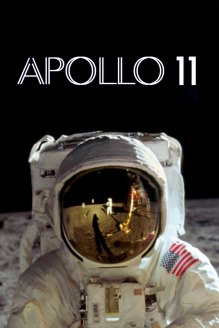
How do we know it wasn’t faked? Like everywhere Man goes, we left our garbage behind – landing modules, rovers, flags and plaques – more than 400,000 pounds worth, and though they can’t be seen by any telescope on Earth (you’re talking a 10-foot object from 239,000 miles away), they can by orbital satellites around the Moon. The path to space is far too complex for a blog post, so grab a good book, watch a good film (join us for a viewing of the documentary Apollo 11 at CPL on July 18), and think on just how different our lives would be if we never tried to reach for the Moon.
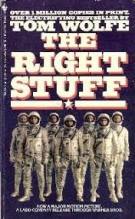



 Legend has it “It” girl Lana Turner was “discovered” at a soda counter in 1937. Outside of perhaps Hedy Lamar, who invented some heavy military tech in WWII, most of the actors in the “glory days” of Hollywood were not known for smarts but for looking glamorous. Hollywood was the way for good-looking people from the back fields of America to break free and become wealthy and “cultured.” They had to speak well, dress well, stay thin, know their lines and marks, and obey the studio.
 who have never been considered heart-throbs (Steve Buscemi, Clint Howard, Vincent Schiavelli, Mike Smith, Linda Hunt, etc). Hollywood may have its mega-cash flow (A-listers make $15-20 million per film; Dwayne Johnson had 9 films 2016-2018), but many stars aren’t afraid to flaunt their smarts and get that college degree, knowing how fickle the acting business is. Jodie Foster has a degree from Yale, Natalie Portman from Harvard, Emma Watson from Brown, Mayim Balik has a PhD in Neuroscience, Gerard Butler a law degree, James Franco is finishing a PhD from Yale, and more.
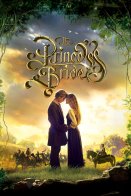
 speak and interviewing him briefly. Never heard of him? I’ll bet you have. Perhaps most famously he is known for the Inconceivable role of Vizzini in the cult classic,




 Spring is here! As we put those tender seedlings into the ground, up sprouts the constant question: should I go Organic, or should I show up my neighbors by using Miracle Grow? Will I poison my children if I use it on my tomatoes? Is my neighbor’s cancer due to Round Up™, and did it blow over into my yard? If a lawncare company treated my grass, are my grass clippings poisoning my compost?
 strewn with mulch and recycled orange peels, when in reality it just means the land cannot have been treated with synthetic pesticides, fertilizers (including Miracle Grow), or GMOs for three years. Sounds nice, right? Except that two of the three companies licensed by the USDA to certify organic farms are for-profit (Oregon Tilth is not). The farmer wanting to be certified pays the company to license them. That’s like paying a teacher to give you a grade. The problem is worse overseas: 100 countries export “organic” produce to the USA, and though they are supposed to abide by US law, the countries inspect and license their own. And let’s not forget that a good percentage of “organic fertilizer” in many countries is
  Won’t chemical fertilizers like Miracle Grow poison me? No. Plants don’t care where the nutrients come from, horse manure or a green and yellow box. Plants use them the same way. The issues with Miracle Grow are 1) the concentration of ammonium phosphate may be too high for some plants. MG makes different formulas for roses, tomatoes, azaleas, etc. Choose the one you need. 2) The greatest issue for chemical fertilizers is that heavy rains can wash a recent fertilizing away. If twelve homes get washout, and it flows into the brook behind them, too high a concentration in water systems can cause algal blooms that suck up oxygen and kill wildlife.
 (chemical: glyphosate), and while the courts have said yes, Round Up causes cancer, the US maintains it does not. And there’s the difference: In Europe, you must prove a chemical is safe before it hits the market, and that’s hard to do. In the US, chemicals are presumed innocent and you must prove they’re harmful – which is really easy to sidestep even with math and science. In America, it is up to the manufacturer to show their product is harmful, not the government (Got that? The man making and marketing the product must show that what he’s selling is harmful.) When the people with highest exposure to Round Up were studied (ie, farm workers), they had a
 So, is organic worth it? Depends on what you’re willing to pay. The
  growing your own, organic or not, is a fun (and tasty) experiment anyone can do anywhere. Try growing some popcorn, or a yellow or brown or purple heirloom tomato. Pole beans are great for kids, because they grow incredibly fast and are very prolific, as are grape tomatoes (so why are they so expensive?).
 able Gardens : 24 no-fail plans for small organic gardens
 101 Organic Gardening Hacks : eco-friendly solutions to improve any garden




 Northeast Fruit & Vegetable Gardening : plant, grow, and eat the best edibles for Northeast gardens

 So what does that mean? Are books working against girls? Do we perpetuate female stereotypes and patriarchal archetypes starting with early board books? Do we as parents set our children up for failure by gender-typing from an infant’s earliest days?


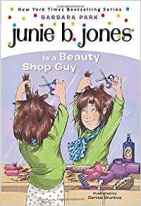
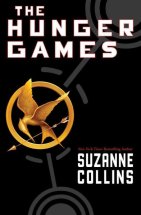


 Many people are aware that
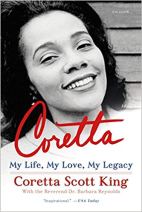
  the era. The need was great, her products worked, and she went on to become an American philanthropist.
 century has shown remarkable gains, with not only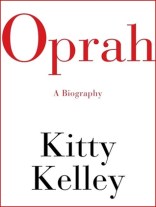




 The Cheshire Library Blog