Spring is here, and that means baby animals cavorting through backyards. Baby animals are about as heart-warming as mammals can get, and that’s a deliberate act on nature’s part. Round faces, big eyes, short noses, and large foreheads are the hallmark of babyness, and those features are deliberately meant to instill attraction and protection in adults so that we will attach and nurture those babies, ensuring survival of the species. We are genetically engineered to think babies are cute, whether they’re human or bunny. This is the entire rationale behind Persian cats and teacup dogs.
Dogs and cats we know and love, but what do we do when we find a wild baby  animal all alone? They’re no less adorable than that puppy or kitty, and no one on your street has a baby squirrel or fox or raccoon, so why not keep it and raise it as your own?
- It may not be abandoned
- It may be sick or carrying something harmful (squirrels and prairie dogs carry bubonic plague; groundhogs can carry hepatitis).
- You have no idea how to feed it to keep it healthy.
- It’s a wild animal. No matter how much you love it and how tame it might get, the call of the wild is too strong. It will try to return to nature but won’t know how, because it hasn’t been raised with others of its kind. They will not respond to it. Your animal won’t know how to fend for itself, find food, hide from predators, and has a high chance of dying miserably. Or it may attack you, your pets, or your children.
So what should you do if you find a baby animal all alone?

Different animals require different approaches. The best thing to do is just wait, and watch. Some babies are left alone during the day, and mom comes back every few hours to check and feed. Baby bunnies nest in tall grass, so finding them alone in brush is normal. While you shouldn’t randomly handle wild babies, few mothers will abandon them just because you touched them. The mother may not like your smell, but their need to nurture is too strong.
If you find a bird with no feathers, or the beginnings of them, put the bird gently back in the nest if possible. If it’s fluffy with feathers, leave it alone. Birds mature in 2-3 weeks, and it’s probably ready to leave.
Deer: If it is wandering around and crying, leave it alone. Mom will return. If it’s moving about and distressed, call rescue.
Squirrels: if it’s got a bushy tail and is playing and climbing,  leave it alone. If it’s tiny, give mom a chance to find it. If mom hasn’t returned by nightfall, put it in a warm box and call for help.
Fox: If they’re happy and playing, they’re fine. Call for help if they look weak or sickly.
Raccoons and skunks: DO NOT handle raccoons or skunks, as they have a very high rate of rabies. If in doubt, place a laundry basket over the baby and place a weight on top. Mom will flip the basket to get her baby back.
 Rabbits: Baby rabbits may be left alone for hours at a time. Mark the spot with an X of yarn. If mom comes back, she’ll disturb the string.
Possums: if a possum is more than 7” long, it’s old enough to be on its own. If smaller, call for help. Possums are marsupials, not mammals. They need pouches and don’t feed like a “regular” baby.
Do not attempt to rehabilitate wildlife by yourself. In many cases, it’s illegal to do so. Call the police department, or the Department of Energy and Environmental Protection Dispatch at 860-424-3333, and they’ll send someone out.
For a safer approach to wildlife and animal rescues, check out these books!
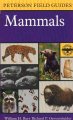
- Field Guide to Mammals, text and maps by William Henry Burt ; illustrations by Richard Philip Grossenheider
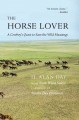
- The Horse Lover: a cowboy’s quest to save the wild mustangs by H. Alan Day with Lynn Wiese Sneyd
- Saving Simon: how a rescue donkey taught me the meaning of compassion by Jon Katz
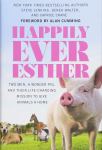
- Happily Ever Esther: two men, a wonder pig, and their life-changing mission to give animals a home by Steve Jenkins, Derek Walter, and Caprice Crane
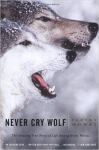
- Never Cry Wolf by Farley Mowat
- Babylon’s Ark: the incredible wartime rescue of the Baghdad Zoo by Lawrence Anthony with Graham Spence


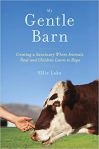



- My Gentle Barn: creating a sanctuary where animals heal and children learn to hope by Ellie Laks
- Animal Madness : how anxious dogs, compulsive parrots, and elephants in recovery help us understand ourselves by Laurel Braitman
- Father of Lions: one man’s remarkable quest to save the Mosul Zoo by Louise Callaghan
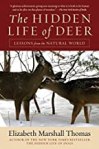
- The Hidden Life of Deer: lessons from the natural world by Elizabeth Marshall Thomas
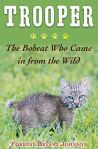
- Trooper: the bobcat who came in from the wild by Forrest Bryant Johnson
- Betty and Friends: my life at the zoo by Betty White
 Dance is one of man’s oldest forms of art and storytelling, with cave painting depictions going back 30,000 years. Dances occur around the world, in every culture. Some were used for storytelling. Others were used for religious purposes. Some cultures had dances for healing, for appeasing Gods, for weather control, for courting, for festivals and celebrations, and entertaining royalty. Dances were used to teach, as social commentary and rebellion, and sometimes as just plain exercise. Dances can be as low key as the Hokey Pokey, or as tightly regulated and choreographed as grand ballet, or worse, synchronized swimming dances.


















 released on a population that had little to no immunity. Measles has been around for millennia, but viruses mutate. Mutations are accidents during reproduction – like the first case of left-handedness, or blue eyes. Viruses can reproduce rapidly inside a cell; if they multiply every 20 minutes, and if you expect one accident every 1,000 generations, that’s 1600 mutations every eight hours. Some mutations can render a virus or bacteria weaker. But sometimes, they become more dangerous.
 I don’t know why, but I’ve read almost every book by anyone who’s worked on Ebola.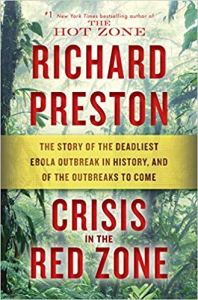
 However, there is now hope –











 Every novel must be edited, rewritten, checked, rechecked, spellchecked, polished, and inconsistencies and logic errors ironed out. Plot holes must be sewn shut. Grammar – please, oh please – must be fixed. No manuscript goes to an agent or publisher on the rough draft. Most writers doesn’t even let their beta readers – those friends whose opinions they trust – read their rough draft. You might slap that story together in 30 days, but the editing and rewrites are more likely to take months. And even when you’ve edited it twelve times, made the corrections of six beta readers, run it through grammar and spell check, there will still be some error that everything has still missed.
  . Learn editing. If you have a question, check it on the internet. Check your facts – if you aren’t sure an African Swallow can carry a coconut, look it up. Cross-reference to make sure your source is correct. Author