
I recently attended a conference in Atlantic City on the future of technology. Topics included self-driving cars, virtual and augmented reality, designer babies, nanobots, the implications of artificial intelligence, and more.
One session in particular really stayed with me: The Smart Phone.
Assuming you own one, have you thought much about your smart phone and how ridiculously powerful it is? It’s an equalizer for access to information. It’s an instant connection to the whole wide world.
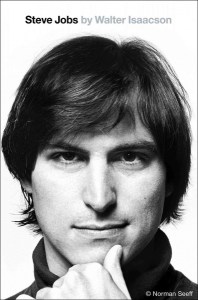
Exactly 10 years ago, the first iPhone was released. Steve Jobs introduced the iPhone as a combination of three devices: a music player with touch controls, a revolutionary mobile phone, and a breakthrough Internet communicator. The days of duck-hunting on a flip-phone keypad were over. Do you remember typing “222” for the letter C? Not very convenient! The first iPhone boasted a big responsive touch screen, a proper keyboard, and nimble navigation.
Fast-forward 10 years later: The new iPhone X has facial recognition and you can shop online using your FACE to make payment. It has photography and film capabilities that rival a professional studio. It can instantly connect you to millions around the globe and shoot stunning HDR video in 4k resolution. It’s trained to know your voice and only respond to you. Just think about it. Imagine everything you can actually do with your smart phone right now and it will boggle the mind. At first the microphone was dumb, and then we taught it to understand us. The camera just took photos and then we taught it to recognize us. Imagine what’s in store for the iPhone 2027! It’s both exciting and scary.
The iPhone X starts at $1,000, and many are complaining that this is much too expensive. Consider for a moment this revelation from esteemed economist, Brad De Long. He ran some numbers on the iPhone X’s 256 GB of memory and 4.3 billion transistors in its A-11 processor and discovered that building an iPhone X in 1957 would have literally taken all of the money in the world.
Specifically, it would have cost 150 trillion of today’s dollars, which is one and a half times today’s global annual product. The CPU would have taken up a hundred-story square building 100 feet high and 2 miles long and wide. And to power the CPU, it would have drawn 150 terawatts of power—that is 30 times the world’s current generating capacity!
Meanwhile, in 2017, we’re carrying this device in our pockets. Pretty wild, isn’t it? $1,000 doesn’t seem so astronomical when you think about it in those terms.
If you’re interested in learning more about the history of the iPhone, check out these awesome books below. And as always, if you have any questions on your devices whatsoever, come to CPL’s Drop-in Tech Help! We hold it every week.
 The One Device: The Secret History of the iPhone by Brian Merchant

 whether your phone or boombox or clock, etc. That’s it. So treat them interchangeably, because they are.
 Of course, nothing is without controversy. Unless you hit mute, rendering it “deaf” and unable to function, the Alexa/Echo sits in your house listening 24/7 for its wake-up word (“Alexa, …”) and a command. Those commands are recorded so that the Echo “learns” what you ask most and can process your commands quicker. It learns how to interpret your personal pronunciation. Amazon swears it is not recording what happens around your house, only the commands that follow the word “Alexa.” Sometimes it will “hear” something on a TV that sounds like a command, and respond. There was an
 a phone, I think it’s silly to put regulations on any capable device from calling 911. A cellphone will call 911 without a paid plan; why can’t a virtual assistant? How many elderly fall while their help button is sitting on the bathroom sink? Having a voice-activated 911 in the home for a disabled or elderly person can be lifesaving. Period.





 Technology changes faster than most of us can keep up. Almost all of us are familiar with regular DVD technology even if we can’t set the clock on it. Blu Ray, the next step up in DVD technology, is now thirteen years old, and not enough people have moved along with it. But you should, especially with Blu-Ray players, fully decked out, costing as little as $49. If you don’t have one, this should be on your Holiday list.
 picture clarity far superior, but with the right equipment (cameras, wifi, high-speed cables) you can Skype through it (make video phone calls), surf the internet (yes, order from Amazon right off your TV), access Netflix and other video programs, play music CDs, and flip items from your iPad or phone right onto your Smart TV for large-screen viewing. The downfall: your TV must already accommodate this. If you still have a hump-backed 100-lb picture-tube TV, you’re out of luck for almost everything.
 4K Ultra is the next step in television and DVD technology. 4K Ultra-High-Def (UHD) is mind-blowingly clear television – clearer than looking out your window. If you thought your high-definition TV was amazing, imagine something twice as fantastic – because it truly is working with twice the capacity (1080 pixels for the standard HDTV vs. 2160 for 4K). The picture is mind-blowing, and allows for monstrously larger screen sizes without losing clarity. Next time you’re out shopping, stop by Costco or Best Buy and take a look. If you thought blu-ray was amazing, just wait.
 bought) cannot play the 4K DVDs, a 4K DVD machine will play your regular blu-ray discs (no, they can’t play them as clear as 4K because the discs aren’t coded that way, but they can upscale them so it’s very close). They are absolutely affordable (you can pick up a 3-D 4K UHD disc player with wifi capacity for as little as $119; a 43” TV goes for as little as $379).
 The Cheshire Library Blog