Holler Rat: Kentucky Meets Connecticut in Anya Liftig’s Memoir

Meet the author! Anya Liftig will come to the library on Thursday, August 1 at 6:30 pm for a conversation about her memoir. Cheshire residents can borrow the audiobook with Libby, and physical copies will be available for sale at the event. Reserve your spot for August 1st!

Anya Liftig grew up in Westport and graduated from Yale. She was an artist living in Brooklyn before it was cool. You wouldn’t expect her memoir to begin with a relative lying dead in a shack in rural Kentucky, cleaved in half by a piece of construction equipment. But as I learned from my recent reading (audiobook listening, really) of her memoir Holler Rat, Liftig defies expectations.

Liftig’s mother hails from that ramshackle home in Kentucky, and her father is from an upper-middle-class Jewish family in Connecticut. When school ends each year in Westport, the family drives down to the holler to spend summers with Mamaw, the family matriarch. The book initially caught my interest because it straddles the vastly different worlds of rural poverty and New England affluence. I’ve got my own history between those worlds, so I wondered how much of this book would resonate with me personally. Liftig’s narrative was so engrossing that from the first paragraph, I completely forgot about my search for parallels and just settled in to enjoy the ride.

She details medical traumas, cringeworthy adolescent romances, and her family’s quirks (her father plays the bagpipes and her grandmother won’t sell the old Studebaker that’s decaying in the middle of a potato field). Also, there was that time she made out with a dead fish in front of an audience and then put it in a blender and drank it. If it sounds both horrifying and hilarious, that’s a pretty good way to describe the memoir. Liftig moves from story to story with a masterful sense of pace, and her brilliant placement of her performance art pieces within the narrative helped me interpret and appreciate this art genre, which I knew only from parodies. The lead-up to the last chapter is heavy, and you don’t know how it’ll end until you reach the very last word. It’s the best memoir I’ve read recently, and I’m really looking forward to having a conversation with her at the library program on August 1!

It’s worth mentioning a book by another Yale alum and descendant of poor Kentuckians: Hillbilly Elegy, the 2016 memoir by J.D. Vance. This Ohio senator was announced as Donald Trump’s pick for VP candidate only a few days ago. Hillbilly Elegy was a bestseller upon release, but it was criticized for painting broad generalizations and reinforcing negative stereotypes about the rural poor. Now in 2024, it’s not hard to see Elegy as a calculated move from an aspiring politician. (It’s standard political playbook – Barack Obama made a similar move in 1995 when he released his memoir Dreams from My Father right before he ran for senate in Illinois.) Vance’s book is great if you want to better understand his politics, but if you’re looking for a more sympathetic and arguably more accurate portrayal of Appalachia, Holler Rat’s tight personal narrative from a longtime artist is a better pick.
Susan’s Best Reads of 2019

I don’t read as much as I wish I could; I just don’t have time at the moment. It doesn’t help that I wind up with sometimes 600 page books in my hands, and those take longer.  I never know what I’ll read next, and I read a bunch of good ones last year. Here are some of my favorites:

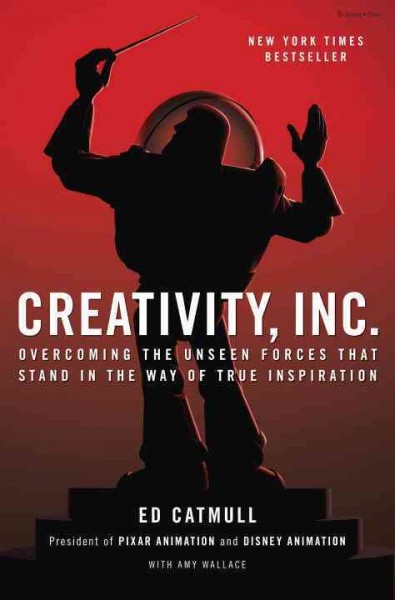
One of the two best books I read this year, I’ve already blogged about: Creativity, Inc, by Ed Catmull, was amazing. Not just a history of Pixar films, it’s also the best darned, most entertaining book on business and employee management you will read. Pixar is a 5-star company for a reason.

The second of my Best Reads this year is The Man from the Train: The Solving of a Century-Old Serial Killer Mystery by Bill James and Rachel McCarthy James.  From approximately 1898 to 1912, a serial killer traversed the US by train – coming through New Haven’s Union Station on the way – with an MO of bludgeoning his victims with the back of an axe. Because of communications at the time, few people were able to connect the murders. James painstakingly, with the utmost detail, traces the dozens of murders and examines them, deciding if they were likely by the same killer or not, and why. He traces the paths through the states and the seasons, chasing the trail to a man who was most likely the killer. By the time he’s done, you are convinced and amazed. I could not stop reading this book. I read it while waiting for the school bus. I read it while cooking. I would have read it in the shower if I could have. If you love a mystery, if you love history, if you love crime stories, this book is a must.

I’m only 30 years late in reading Neuromancer, the Hugo-winning cyberpunk novel by William Gibson. I can see why it is held as one of the greatest novels of our time. Gibson predicts and writes about today’s modern computers and internet and gaming – long before they existed. The scenarios he describes are both familiar and futuristic at the same time. While not only visionary, it’s written in  a flawless style and with realistic, interesting characters. If you loved Ready Player One or The Matrix (which has to have been influenced by this book), you will love Neuromancer.

If you’re aware of social and racial issues, I strongly recommend Survival Math, by Mitchell S. Jackson. A professor of writing, in achingly beautiful prose worthy of Martin Luther King Jr., with the voice of a preacher without being preachy, Johnson breaks down the issues faced in his own family, examining how he came to where he is, how racism played into it without even being visible, and how despite all the odds, it’s possible to thrive. He covers harsh topics without flinching. The book is brilliant, spellbinding, and a superb read from a voice that soars with truth.

Far more than I expected, I loved Total Recall, an older door-stop of a biography on Arnold Schwarzenegger. From his birth in a tiny town in Austria (which still has only 2500 people) to his divorce from Maria Shriver, Arnold is witty and candid and down to Earth. No matter what you think of his politics or his movies or his personal life, this book may be older, but it was highly entertaining. His best friend just died in September of this year.

Not my favorite, but worth mentioning because of its local importance, is Frog Hollow  by Susan Campbell. Campbell, a former reporter with the Hartford Courant, digs into the history of the notorious Frog Hollow section of Hartford, and through tireless research shows the former glory of the neighborhood as not only an important area in Colonial times, but once a major manufacturing center (in 1898, Pope automotive made half the cars in the US). I was hoping for a deep sociologic dissection of the issues, but instead Campbell gives us an upbeat view from street level about the good aspects of Hartford and the people who live there, not just the doom and gloom of ad-selling news clips.

Last but not least, I’ll throw in a kid’s series you probably missed; with 18 years between my last two kids, I certainly did, but my youngest is so hooked on the British easy reader series Urgency Emergency! by Dosh Archer, I wound up buying most of them. The series is so witty and enjoyable you don’t mind reading them over and over again. Doctor Glenda, Nurse Percy, and the Pengamedics, in predictable melodrama, assist the maladies of Humpty Dumpty, The Big Bad Wolf, the Itsy Bitsy Spider, and many more. They are a delight. The library has several of the stories; be sure to read them all!

One Million Steps

indexI read a an eclectic variety of books; I rarely set out to read a specific book, unless I have a reason. Books come into my hands; if they sound intriguing, whether neurology, biography, the history of Times Square, or a fantasy novel, I read them. As a writer, I may step outside my normal zone of interest as part of research for something I’m writing. Such was my current situation, researching background details for a fictional warrior culture I was developing.

I don’t follow military anything. Yes, my grandfather was in the Navy, my uncles and cousins in the army, Uncle Laurie was lost at sea in WWII, and Uncle Art was a Marine at Iwo Jima, but that’s not the same as being from a military family, where service is a way of life. No one in my family has seen combat in 50 years, so I needed a lot of research. I didn’t want a diatribe on why we did what we did, the politics involved, or a lot of technical jargon that was going to make my head spin. I needed to know what it was like in the trenches, how do you respond when pinned down by gunfire, how do you get yourself out? What do you do when the population you’re fighting for wants you dead?

And I found a number of books and films that were not just entertaining, but fascinating to read and watch.

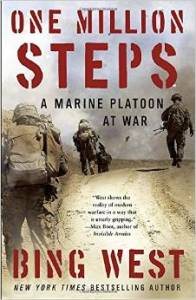
If you can read just one book on the subject – one – read One Million Steps: A Marine Platoon at War” by Bing West. West, a Viet Nam vet, embedded with Kilo Company, a Marine rifle company of the 3rd Battalion of the 5th Marine Regiment (3/5). This was exactly the book I was looking for. West takes you along with the Marines as they walk their daily walk in Sangin, Afghanistan, the worst sector for casualties. Each day’s walk was approximately 5,000 steps; their rotation was up after 200 days, or approximately one million steps, a million steps that could trigger a mine or a bullet from a mostly invisible enemy. In a country torn by war for decades, no one was welcoming them as liberators. West is actually critical of the war without being nasty about it, showing you how the policies over the years, the lack of unified vision from the uppermost tiers, the conflicting orders from above all kept the troops from doing what they were trained and equipped to do: take out the Taliban. This was a wonderful book, easy to read, easy to follow, and left you with deep respect for every man who who went over there.51zvSX4uIPL._AA160_

I also read “The Reaper: Autobiography of One of the Deadliest Special Ops Snipers” by Nicholas Irving. Although it’s simple to read, I would not rate it close to West’s book. His story – most likely ghost-written, rambles along like you’re sitting next to him at a bus station. He gives detailed accounts of one or two missions, but the rest – you might as well be talking to him at a birthday party while he tells you his life. He may be a very good sniper, but he’s not a great storyteller.

hornetsIf you don’t have time to sit and read, there are some great war films out there, both fiction and non-fiction, that will put you in the line of fire. The Hornet’s Nest is probably the most realistic of them, because it’s actual footage. A father and son journalism team go to Afghanistan to cover what is supposed to be a one-day strike that turns into a harrowing nine-day seige. If you want to see and feel exactly what goes on, this is your film. You will be riveted.

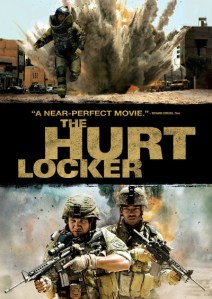
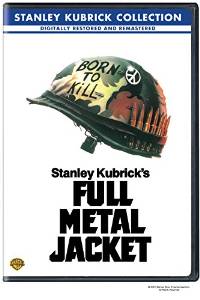
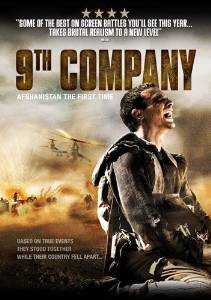
If you’re looking for more of a Hollywood polish, I recommend The Hurt Locker, starring Jeremy Renner as a bomb disposal expert addicted to the adrenaline rush he gets in the face of danger. It has the documentary style, and will keep you on the edge of your seat. An ex-Marine handed me Full Metal Jacket, which I’d only heard of. A serious and yet farcical film directed by Stanley Kubrick in the best of the 70s style, FMJ gives you all the grit of Viet Nam with the horrific insensibility of M*A*S*H*. For any Firefly fans, check out a very young Adam Baldwin toting an old-fashioned Vera. I watched it three times in one week. Another I recommend is 9th Company, which is a Russian film about battles the Russians fought in Afghanistan in the 80’s. If you don’t mind subtitles, it’s an action-packed film that gives a non-American perspective.

Sometimes you have to step away from your comfort zone to find something wonderful. This time, I hit the jackpot.


large_uToiRjgTYfGrXnMNxpyiGZPgvM0              FMJ               9th company