Our Head of Adult Services, Bill, has some Fourth of July facts for you:

The Fourth of July – also known as Independence Day – is the day we celebrate our country’s birthday. Think you know all there is to know about it? The library’s here to help you celebrate with some fun facts and other ways to learn about democracy and the founding of our nation!
Did you know?
“Yankee Doodle” is a well-known American song, the early versions of which date to before the Seven Years’ War and the American War for Independence. It is the official state anthem of Connecticut. The melody can be traced back to folk songs of Medieval Europe.
 In a bizarre coincidence, Thomas Jefferson and John Adams both died on July 4, 1826 — the nation’s 50th birthday. The two founding fathers and political adversaries died within five hours of each other.
Americans consume roughly 150 million hot dogs on the Fourth of July — enough to stretch from Washington, D.C. to Los Angeles five times!
More Fourth Fun Facts:
The Declaration of Independence:
 The Declaration of Independence wasn’t signed on July 4, 1776.
 On July 4, 1776, Congress officially adopted the Declaration of Independence, and as a result the date is celebrated as Independence Day. Nearly a month would go by, however, before the actual signing of the document took place. Most of the delegates signed on August 2, but several signed on a later date. (Two others, John Dickinson and Robert R. Livingston, never signed at all.)
One signer of the Declaration of Independence later recanted. On November 30, 1776, delegate Richard Stockton from Princeton, New Jersey was captured by the British and thrown in jail. After months of brutal treatment, a broken and sickly Stockton renounced his signature on the Declaration of Independence and swore his allegiance to King George III.
There is something written on the back of the Declaration of Independence.
In the movie “National Treasure,” Nicholas Cage’s character claims that the back of the Declaration contains a treasure map with encrypted instructions from the founding fathers, written in invisible ink. Unfortunately, this is not the case. There is, however, a simpler message, written upside-down across the bottom of the signed document: “Original Declaration of Independence dated 4th July 1776.” It’s thought that the text was added as a label.

Read more about it!
ADULTS:







- An Empire on the Edge : How Britain Came to Fight America by Nick Bunker
- The Expanding Blaze : How the American Revolution Ignited the World, 1775-1848 by Jonathan Israel
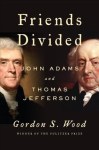
- Friends Divided : John Adams and Thomas Jefferson by Gordon S. Wood
- In the Hurricane’s Eye : The Genius of George Washington and the Victory at Yorktown by Nathaniel Philbrick
- Bunker Hill : A City, a Siege, a Revolution by Nathaniel Philbrick
- Revolution Song : A Story of American Freedom by Russell Shorto
- Valley Forge by Bob Drury and Tom Clavin
- The Penguin Guide to the United States Constitution : A Fully Annotated Declaration of Independence, U.S. Constitution and Amendments, and Selections from the Federalist Papers by Richard Beeman
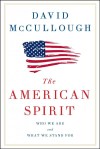
- The American Spirit : Who We Are and What We Stand For ; Speeches by David McCullough
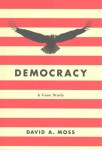
- Democracy : A Case Study by David A. Moss
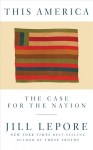
- This America : The Case for the Nation by Jill Lepore
- The Patriot’s Handbook : Songs, Poems, Stories, and Speeches Celebrating the Land We Love selected and introduced by Caroline Kennedy
KIDS:






- The Thrifty Guide to the American Revolution : A Handbook for Time Travelers by Jonathan W. Stokes
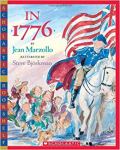
- In 1776 by by Jean Marzollo
- The Fourth of July Story by Alice Dalgliesh
- I Survived the American Revolution, 1776 by Lauren Tarshis
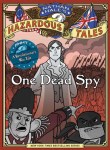
- One Dead Spy : The Life, Times, and Last Words of Nathan Hale, America’s Most Famous Spy [text and illustrations by Nathan Hale]
- Revolutionary War on Wednesday by Mary Pope Osborne
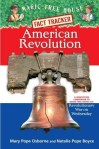
- American Revolution : A Nonfiction Companion to Revolutionary War on Wednesday by Mary Pope Osborne and Natalie Pope Boyce
- The American Revolution, 1763-1783 by Christopher Collier and James Lincoln Collier
- Liberty or Death : The American Revolution, 1763-1783 by Betsy Maestro
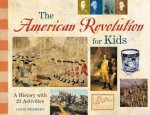
- The American Revolution for Kids : A History with 21 Activities by Janis Herbert
Cap off your Independence Day celebration with some fireworks! Here’s where to find them:
 The Cheshire Library Blog