Solar Punk/Lunar Punk

Blame Cyberpunk.

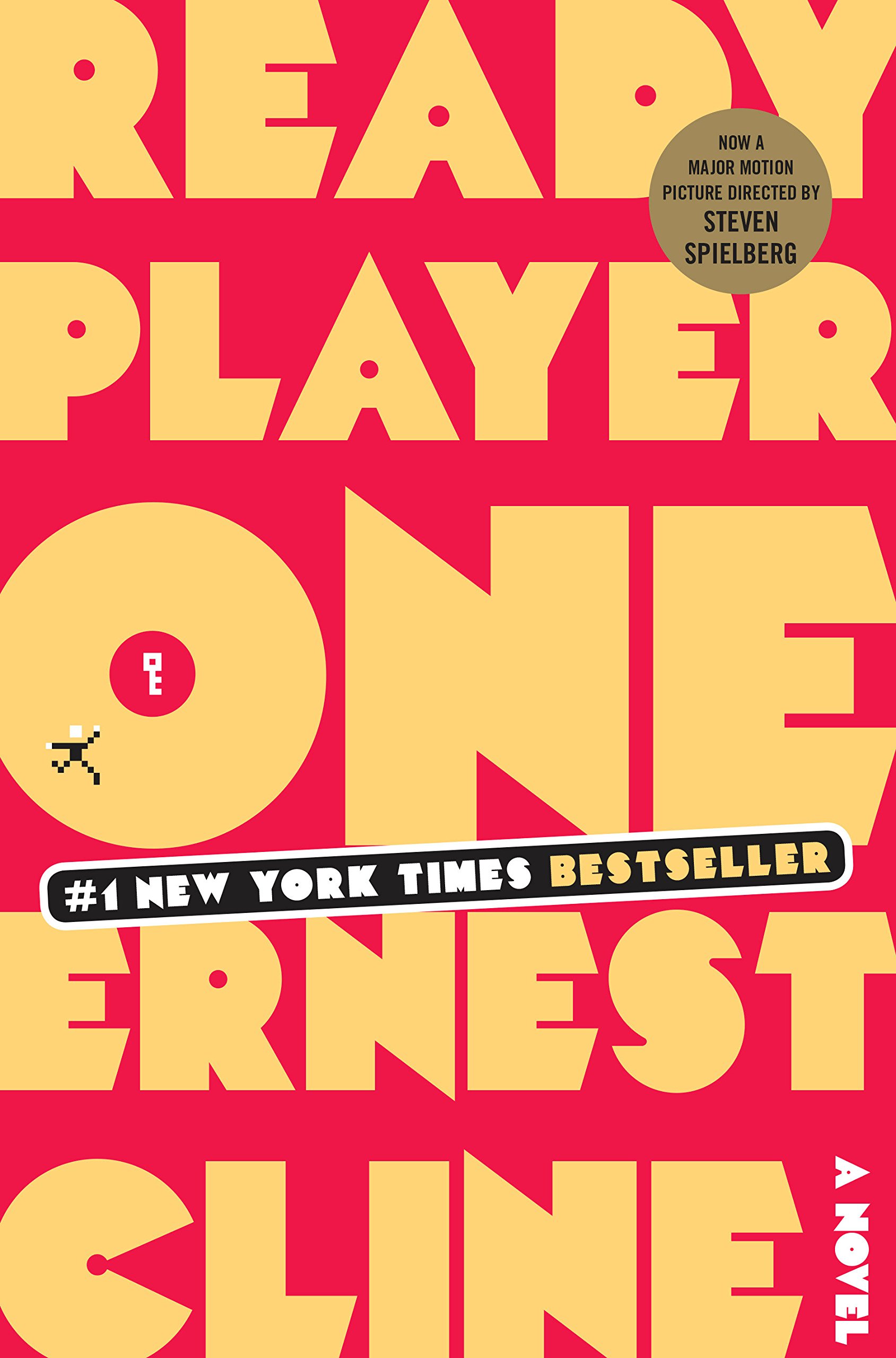
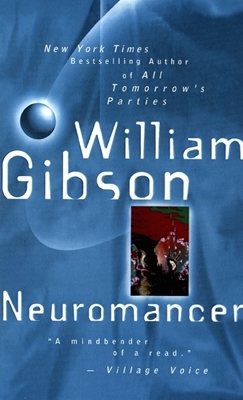
The novel Neuromancer is credited as kicking off the Cyberpunk genre. You may not have heard the term, but you probably know it  – a dark blend of high-tech in a crumbling dystopian world where the poor get poorer and the rich have all the technology – think Bladerunner, Ready Player One, Alita: Battle Angel, Real Steel, Elysium, Guardians of the Galaxy, even Hunger Games and Divergent (you could make a serious argument for Star Wars, as well). They’re gritty, dark, and sometimes disturbing, and paint a not-so-nice view of the future, with emphasis on classism, violence, famine, and a disturbing police state. 

Steampunk is also a well-established fantasy genre, carrying on as if the gasoline engine never materialized and the world was stuck in 1890 and using steam power and copper pipes for everything. They’re wildly imaginative and adventurous – check out Chris Wooding, Boneshaker by Cherie Priest, or Richard Preston Jr., or movies such as Chitty Chitty Bang Bang, League of Extraordinary Gentlemen, or The Golden Compass, among others.  

Since then, just like music has a thousand nitpicky subgenres (Simpsonwave, anyone?), fiction has also fractured into microgenres. Most are so nitpicky they’re pretty much covered under larger categories, but two more are becoming increasingly prominent: Solar Punk and Lunar Punk (Punk seems to be a word thrown in because someone is going against the establishment). Never heard of them? Neither have most people, but the genre is growing and defining itself.

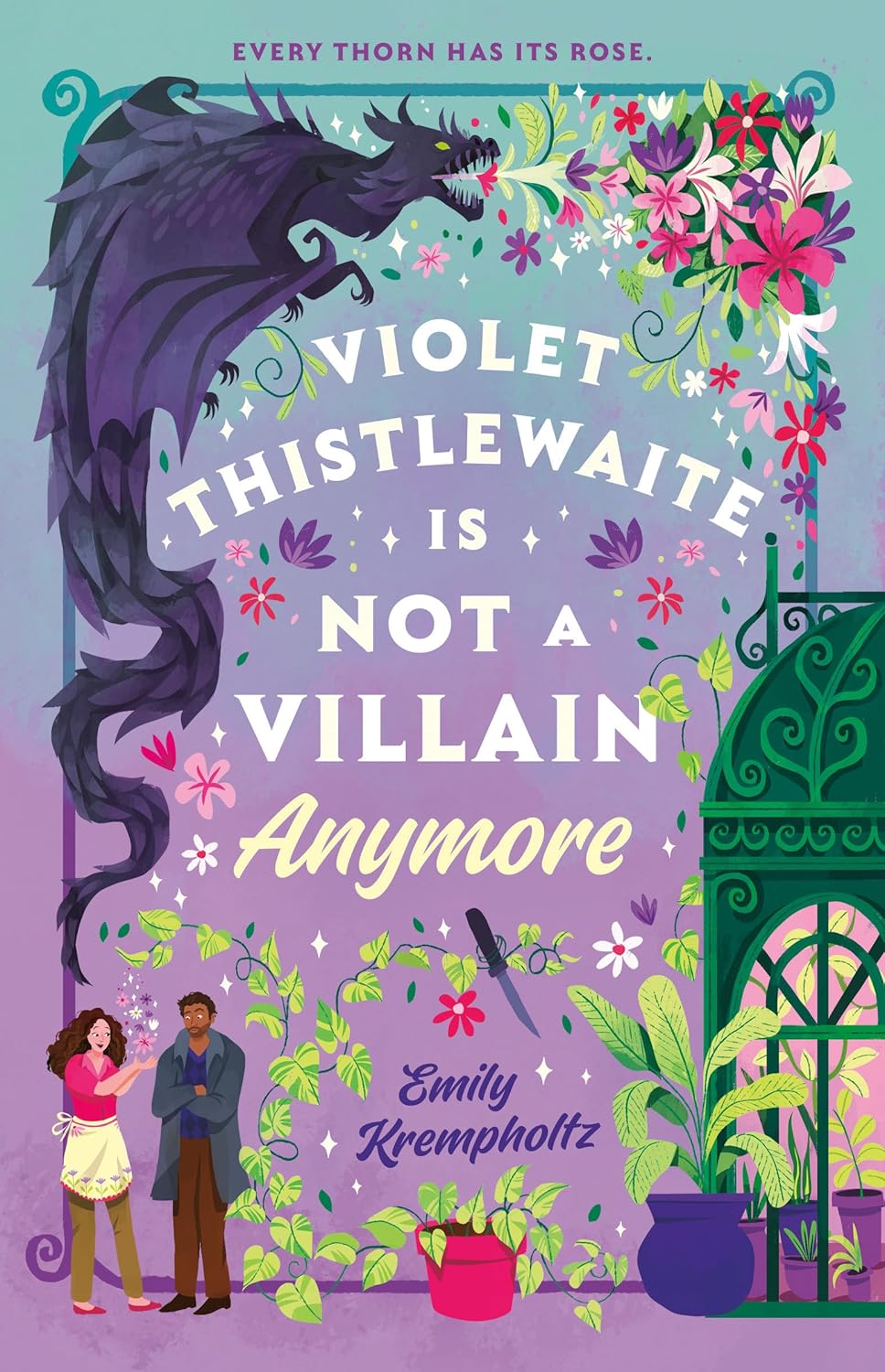
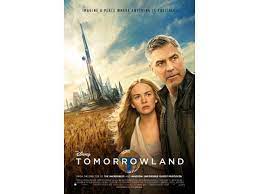
Solar Punk is a backlash against all that dreary doomsday cyberpunk. Solar Punk is full of hope and ecology. Everything is green spaces, clean power, civil rights, encompassing communities, anti-establishment, and personal choice. Renewable energy, harmony with nature, and spirituality are key themes. Solar punk is a view of the future where everything finally does work out, a world where everyone benefits from the progress of mankind, because they’re all in it together. If steampunk is Victorian, Solar Punk is art nouveau. Think Star Trek, The Disposessed by Ursula LeGuin, Ectopia, by Ernest Callenbach, Dune by Frank Herbert, Disney’s Tomorrowland, and Black Panther (is anything more Utopian than Wakanda?).

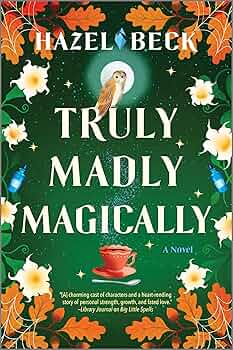
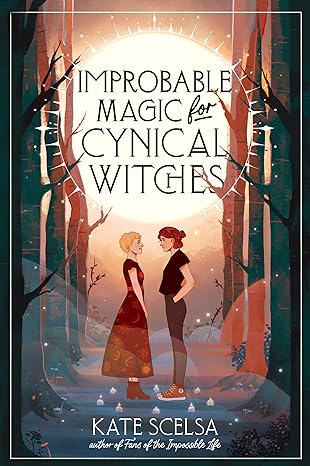
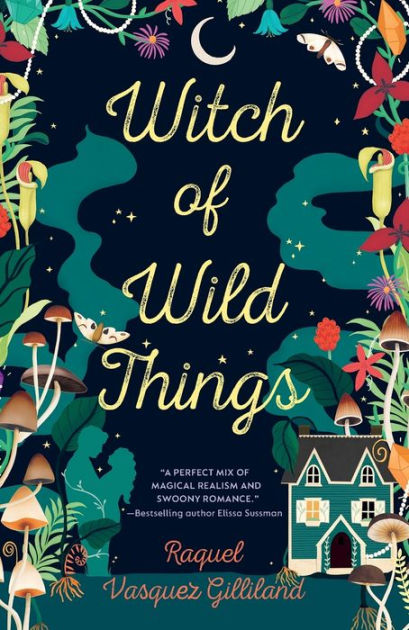
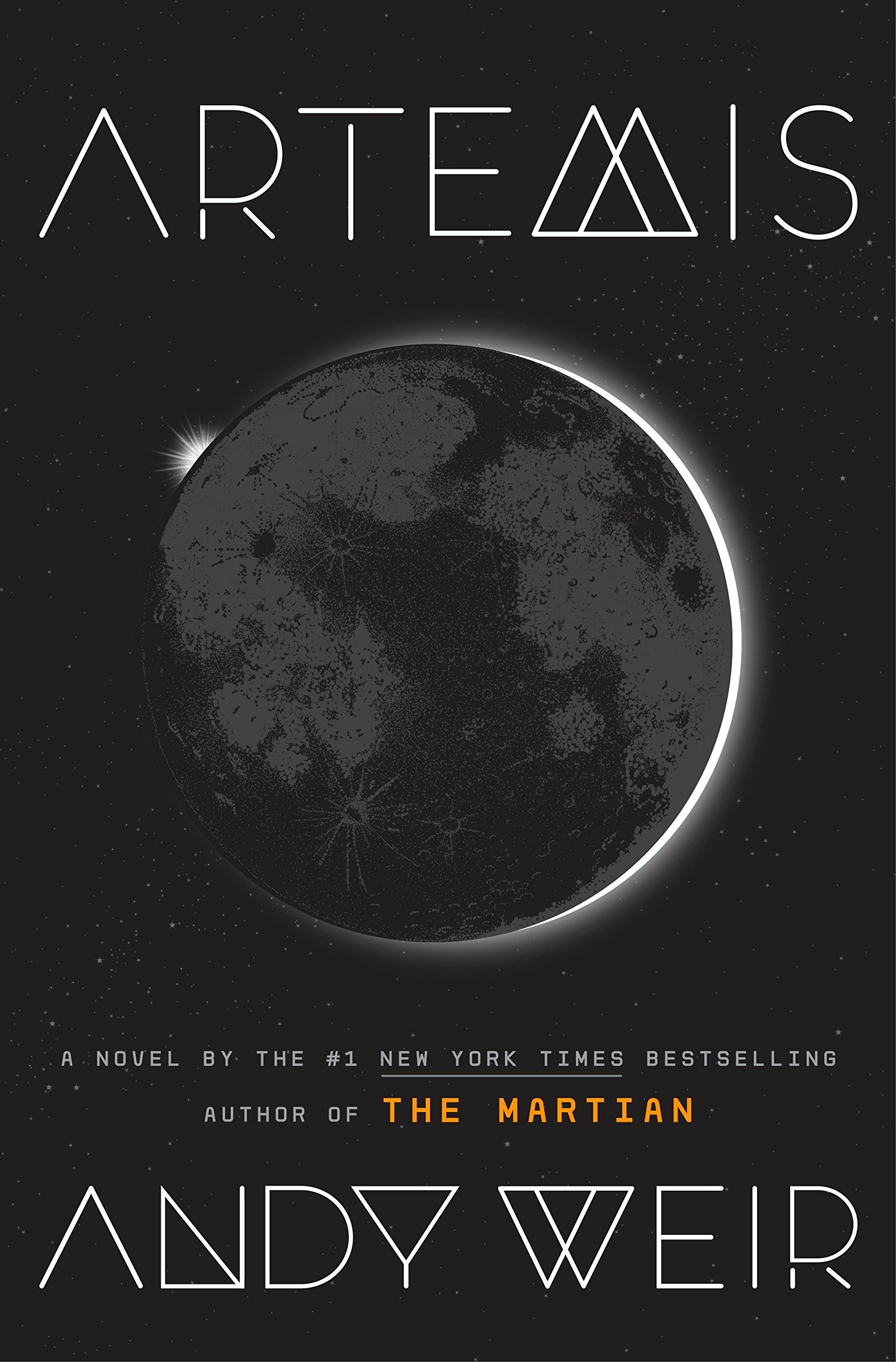
If Solar Punk is all bright lights and butterflies, Lunar Punk is Solar Punk when the sun goes down. It’s moths and the twinkling of fireflies. It’s night-blooming lilies instead of sunflowers. It may be dark but it’s not dreary, like your backyard party at night, with fairy lights everywhere. Lunar Punk often deals more in mysticism, spirituality, magic, and the occult. Their flowers are mushrooms, their light is moonlight, their colors are the blues and purples and silvers of twilight. They have no solar, so they use bioluminescence. Individuals are more important than the communities they live in. The movie Avatar – the world of the Na’vi – exemplifies Lunarpunk. Still utopian, still upbeat ecological fantasy, but out of the bright sunlight. Andy Weir’s Artemis can fall into this category. Many Anime series can fall into these categories.

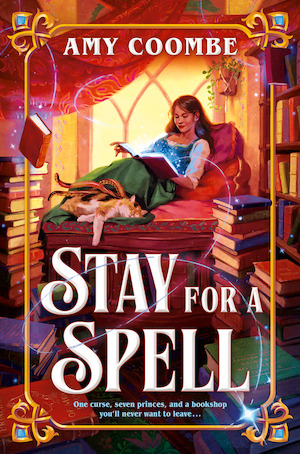
Solar Punk and Lunar Punk are often categorized together, both supporting the same type of ecologically based, optimistic utopian fantasies, a genre that is growing to match our current promises of renewable energy and inclusive societies. Many of the new teen novels have been exploring the genre. They are the generation who has grown up with recycling, solar chargers, zero-emission footprints and Bald Eagles back in the wild. For them, Solar Punk could very well be the future. Check out some of it today!

Shifting Dunes

When it comes to epic book series impossible to film, first came Lord of the Rings, (which was done marvelously at last but needed more than 10 hours of screen time).

Then came Dune.

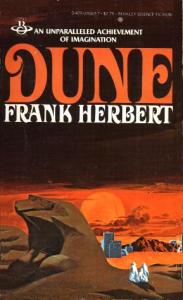
Dune, by Frank Herbert, is considered the best-selling Science-Fiction novel of all time (though it’s far more Game of Thrones than space ships), with more than 12 million copies sold in 14 languages. It tied for the 1966 Hugo Award. And like Lord of the Rings, getting it to film is a Holy Grail of filmmakers.

Dune tells the far-distant-future story of Duke Leto Atreides, who is given the stewardship of the desert planet Arrakis, also known as Dune. Dune is the only place in the universe where the spice Melange exists – a spice that not only can alter your mind, in some species it lets them fold time and space, creating almost instant space travel. “He who controls the spice, controls the universe.” Thus, Dune is a hotbed of politics and backstabbing. When the Duke is murdered, his son Paul, deemed an abomination by a powerful religious group, is seen as a prophesied savior by the natives of Dune. So begins the battle for control of Dune. The book is an immersive, detailed, visionary epic of grand scope (there’s a dictionary in the back). When you read the book, you are on Dune. This is a book that sticks with you for years to come.

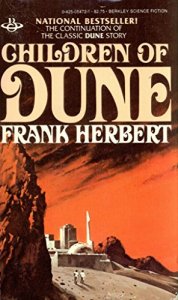
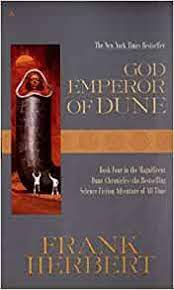
Herbert wrote five books to the series; his son Brian added another twelve after his death. Dune – even just the first installment – is a novel of such grand scope (like GOT and LOTR) that putting it to film has been almost laughable – think of Rankin Bass’s 90-minute adaption of The Hobbit. Game of Thrones took 8 years and more than 73 hours to tell – can you imagine it as a three-hour theater film and have it make sense? It was tried in the 70’s, but after 3 years of attempts, the budget just couldn’t be managed. In 1984, David Lynch did make it, condensing much of the book to ethereal voiceovers, changing major points to condense action, and adding some now-cheesy early computer effects (the blue contacts of the Fremen didn’t work, and every frame of the film had to be colored by hand). It’s a film you either love or hate, with musician Sting as Feyd Rautha famously flexing in a winged bikini.

In 2000, SyFy channel did two Dune mini-series, which were much better received, won several awards, yet seemed to fade into obscurity faster than Lynch’s version, with the chief complaint it stuck too close to the source material, and dragged. Now, thanks to Warner Bros and HBO, we have a $165 million dollar spectacle by Denis Villeneuve that covers – only half the book, with a sequel (hopefully the second half) due in 2023. 

While the film has been viewed favorably, the scenery and cinematography spectacular, Villeneuve took many liberties with the material that once again changes the focus and depth of the story. To modernize it, he gender-swapped characters (which goes against the society Herbert wrote) and changed the roles of other women (no, the Bene Gesserit. He left out much of the religious aspect, the mysticism, even avoided the word jihad, used by the Fremen. It gives a sanitized, whitewashed view of the story, afraid of offending anyone. Herbert believed that modern societies will always decay back to a feudalistic society, and that the desert cultures, especially those of the Middle East, were more prone to messianic complexes and religious wars (remember, he’s writing in 1964 or so, when the Middle East was still rather bland politically. Think Star Wars and Tatooine, or The Great Humongous in Road Warrior, etc. There’s a lot to be said for that theory). To remove the root of the story – is it still the same story? Can anyone ever make a decent, book-abiding video version of Dune?

If you can’t wait for the new film to come out on DVD (or, rather, the first half of the book), check out the book series itself. Few things are better than the source material.

I can give up Sting in his bikini (though I thought he was a perfect Feyd), but there is no better Gurney Halleck than pre-Captain Picard Patrick Stewart. That’s my opinion, and I’m sticking to it!

Dune

Dune Messiah

Children of Dune

God Emperor of Dune

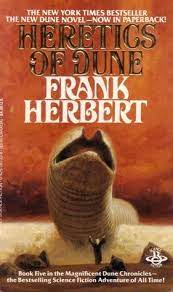
Heretics of Dune

Sandworms of Dune

Dune: House Atreides

Dune: House Harkonnen

Dune: House Corrino

Dune: The Machine Crusade

Dune: The Lady of Caladan

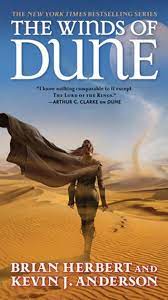
The Winds of Dune

The Sisterhood of Dune

Paul of Dune

Mentats of Dune

Navigators of Dune


Upcoming Books-to-Movies

Not every book becomes a movie; not every movie started out as a book, but the two feed off each other like peanut butter and chocolate. Many of the top Oscar-winning films started out as books (The Godfather, Lord of the Rings, One Flew Over the Cuckoo’s Nest, No Country for Old Men, Schindler’s List, and more). Some movies were better films than their book (in my opinion, Planet of the Apes, Poseidon Adventure, and Casino Royale are three). Some people want to read a book before they see a film adaption, while others see a great film and want to read the book to see if any good bits were left out.

If you’re of the group that prefers to read the book first, better get started! A whole new wave of book adaptions is readying for the coming year. Here’s a peek at some of them:

Old Possum’s Book of Practical Cats – that’s the collection of T.S. Elliott’s poem collection that became the musical CATS. Whether this is a filmed “stage” production or a cohesive musical film remains to be seen, but it stars Judi Dench and Ian McKellan, no theater slouches. Look for it at Christmas.

Death on the Nile – Kenneth Brannaugh’s second attempt to capture Agatha Christie’s Hercule Poirot in a mystery due out in October of 2020. It also stars Gal Godot of Wonder Woman fame.

Doctor Sleep – Stephen King’s sequel to The Shining stars Ewan McGregor as the adult Danny Torrence, due out in November 2019.

Dune – Yet another attempt to harness Frank Herbert’s cornerstone classic, most assuredly without the winged underwear. Although it bears an all-star cast, I loved the deep details of the novel, and I have a special affinity for the admitted mess of the 1984 Lynch adaption. Like Batman, all the reboots get tedious after a while. Sometimes you can’t capture greatness.

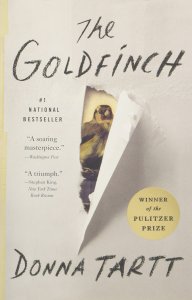
The Goldfinch Donna Tartt’s Pulitzer-Prize winning novel hits theaters in September of 2019. It has promised to be faithful to the book, a coming of age story of a boy whose life changes in an instant.

The Turning – A modern adaption of Henry James’s Turn of the Screw, it’s produced by Stephen Spielberg. Spielberg’s track record isn’t perfect, but still one of the best in Hollywood. The story is the one of the classic horrors of literature. Due out in January of 2020.

Little Women – The long-time classic of girl literature by Louisa May Alcott, it was first adapted for film in 1933, and most recently in 1994. A very strong cast (Saoirse Ronan, Emma Watson, Timothée Chalamet, Laura Dern, Meryl Streep, the list goes on) has given this move a lot of buzz. Now’s the time to catch up on the classic story you may have missed (it’s not as bad as you fear). Look for it at Christmas, 2019.


The Good Liar – Nicholas Searle’s novel will star Helen Mirren and Ian McKellan as a con man trying to steal from a widow who has more than one trick up her sleeve. Look for it in November of 2019.

The Woman in the Window – A.J. Finn’s #1 thriller of a woman who witnesses a crime will star Amy Adams, Julianne Moore, and Gary Oldman. Since Disney acquired 20th Century Fox, it’s technically a Disney film (with no princesses, no mermaids, and no singing), due out in October of 2019.

Bond 25: Ian Fleming wrote only 12 Bond novels, and two collections of short stories. The films have now exceeded the original material. The movie has been through a long list of issues from a revolving door of writers and directors to explosions on set, and the working title of Bond 25 gives away no details about the story, but you can get your fill on the original novels. The movie, purportedly the last for Daniel Craig, is set for April of 2020.

Deadpool 3, Black Panther 2, Black Widow, Wonder Woman 1984 : 2020’s crop of Comic-book Hero films, from Marvel and DC. Most of them still have current story lines, or track down the older versions online or in graphic novel compilations.

Motherless Brooklyn – Jonathan Lethem’s novel of a detective with Tourette’s Syndrome searching for the killer of his best friend won multiple awards for fiction and crime fiction. The all-star cast is headed by Ed Norton, who stars, directed, produced, and wrote the script. During filming, a set caught fire and a fireman died during the response, fueling accusations and lawsuits. It’s due out in November of 2019.

You Know You Love Sci-fi if….

You know you love sci-fi if…

1. You see the words “Travel Program” in an email and think it says “Time Travel Program”.  (Yes, I did this! Wouldn’t that have been a great library program?)

2. Your collection of cosplay costumes is larger than your regular wardrobe. (Guilty.)

3. You have a working knowledge of Klingon. (Did you know that Klingon translations of works of world literature have been published? Just saying…)

4. You have strong feelings about the Star Wars versus Star Trek debate. (In the interests of not offending anyone, I’m going to give this a miss.)

5. When someone mentions the number 42, you laugh. (Every time.)

If this sounds like you,  you’re in luck! The Cheshire Library has a great collection of science fiction. Check out some of our new sci-fi arrivals:

The Hike
by Drew Magary
When Ben, a suburban family man, takes a business trip to rural Pennsylvania, he decides to spend the afternoon before his dinner meeting on a short hike. Once he sets out into the woods behind his hotel, he quickly comes to realize he is falling deeper and deeper into a world of man-eating giants, bizarre demons, and colossal insects, and the path he has chosen cannot be given up easily.

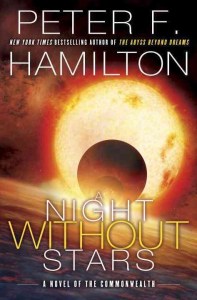
A Night Without Stars by Peter F. Hamilton
On a routine space flight, Major Ry Evine inadvertently frees a captive vessel that crash-lands on the planet of Bienvenido carrying the last, best hope for human survival: a baby. But a far from ordinary one. The child not only ages at a remarkable rate but demonstrates knowledge and abilities far beyond those of Bienvenido’s humans. Hunted by all, she is a crucial link to humanity’s lost past–and a  future already almost out of reach.

Take Back the Sky by Greg Bear
Marooned beneath the icy, waxy crust of Saturn’s moon, Titan, Skyrine Michael Venn and his comrades face double danger from Earth and from the Antagonists, both intent on wiping out their growing awareness of what the helpful alien Gurus are really doing in our solar system. Venn must  journey far beyond Pluto where he will finally understand his destiny and the destiny of every intelligent being in the solar system.

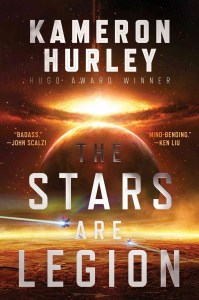
The Stars are Legion by Kameron Hurley
On the outer rim of the universe, a galactic war has been waged for centuries upon hundreds of world-ships. But these worlds will continue to die through decay and constant war unless a desperate plan succeeds. Anat, leader of the Katazyrna world-ship and the most fearsome raiding force on the Outer Rim, wants peace. To do so she offers the hand of her daughter, Jayd, to her rival.

Navigators of Dune by Brian Herbert
Navigators, mutated by spice into beings far superior to normal humans, have made space travel possible: their prescient awareness allows them to foresee safe paths through the universe as starships “fold” space. Only one man knows the secret of creating Navigators, and he intends to use them to build a commercial empire that spans the galaxy.  What could go wrong?

Spaceman of Bohemia by  Jaroslav Kalfar
Hoping to become a national hero, Czech astronaut Jakub Procha accepts a dangerous solo mission to Venus and faces unknown dangers, wavering sanity, Russian rivals, and a giant alien spider who engages him in philosophical conversations.