The Tiger in the Library

2014-09-02 09.35.24I am often the first one into the library on Monday mornings. The lights are off and I have to walk through the darkened Children’s Room to get to the light switches. Normally, not a big deal, but lately… Well, there is a tiger in the library.

It is quite startling to see him sitting there in the dark. He is often perched on one of the sofas, watching me as I enter the room. The first time I encountered him, I jumped because I had not expected to see him there. He did not even blink.

He wanders all over the room. Sometimes he can be seen lounging in front of the picture book shelves. Other times, he will be sharing one of the two sofas in the room with the alligator. And once, I saw him hiding beneath the Lego table, as if waiting for prey, or, perhaps, getting out of the bright overhead lights.

He is well-loved. He endures hugs and wrestling with equanimity. He hides inside the block forts that eager children build around him and he listens with attention as those same kids read him books. Often, I will see him at the back of a group of children, listening, as Mom or Dad reads a story. The kids snuggle in close during the exciting parts of the story and then pat him affectionately when it all turns out okay. For his part, he seems to enjoy both the stories and the pats.

If you would like to see our tiger, he hangs out in the preschool area of our Children’s Room. Stop by and read him a story. He likes all kinds but is especially fond of books about tigers.


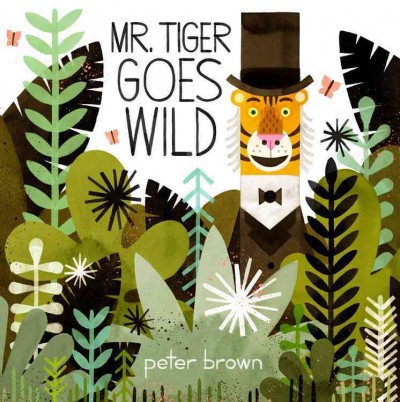
Mr. Tiger Goes Wild     Tigers by peter Murrary     Its a tiger     Tiger Sleep     Tiger's Story     Auntie Tiger


Recommended Books for Newly Independent Readers

If you have a young reader that is able to read independently (for the most part) and ready to make the change from the more difficult easy readers to chapter books then this is the list to take note of. When a child begins reading fluently their efforts are more automatic and exploring a wider variety of subjects and authors and showing less reliance of the illustrations to glean the meaning of new words and phrases. They are using more expression and taking pauses to coordinate with punctuation and the natural flow of language. Their energy is devoted to understanding, have good command and use of the various comprehension strategies, and can correct their own mistakes most of the time while still being willing to ask for assistance as needed.

Here are some suggestions, including some I brought home for my son this week. As usual, I am 20140303-164915.jpgsure I missed some perfectly wonderful books for this reading level, and if I missed your favorites please mention them in a comment so others can check them out. If you are browsing our fiction shelves in the children’s room looking for books for these readers, I can give you some quick hints to find even more. The transitional chapter books have a yellow dot sticker on the spine with the call number. This makes spotting one or two when you are browsing with no specific author in mind super easy. Do not rule out books in the Easy Reader or Easy Non Fictionsection at this stage either- some books here do have  vocabulary that can help your young reader continue to grow.

Ashanti to Zulu: African Traditions by Margaret Musgrove.
Explains some traditions and customs of 26 African tribes beginning with letters from A to Z.

Dinosaurs Before Dark (Magic Tree House, #1) by Mary Pope Osborne.
Eight-year-old Jack and his younger sister Annie find a magic treehouse, which whisks them back to an ancient time zone where they see live dinosaurs.

Fantastic Mr. Fox by Roald Dahl.
Three farmers, each one meaner than the other, try all-out warfare to get rid of the fox and his family.

Mrs. Noodlekugel by Daniel Pinkwater.
Nick and Maxine have a new babysitter–the eccentric Mrs. Noodlekugel who lives in the funny little house behind their drab high-rise apartment building along with her feline butler, Mr. Fuzzface, and three myopic mice.

Mercy Watson to the Rescue (Mercy Watson #1) by Kate DiCamillo.
After Mercy the pig snuggles to sleep with the Watsons, all three awaken with the bed teetering on the edge of a big hole in the floor.

The Case of the Lost Boy (The Buddy Files, #1) by Dori Hillestad Butler.
While searching for his mysteriously lost human family, Buddy the dog is adopted by another family and helps solve the mystery of their missing boy.

26 Fairmount Avenue  by Tomie dePaola.
Children’s author-illustrator Tomie De Paola describes his experiences at home and in school when he was a boy.

Other titles or series starters that I would recommend are: Ivy and Bean (Ivy and Bean, #1) by Annie Barrows, The One in the Middle Is the Green Kangaroo by Judy Blume, The Beast in Ms. Rooney’s Room (The Kids of the Polk Street School #1) by Patricia Reilly Giff, Never Glue Your Friends to Chairs (Roscoe Riley Rules, #1) by Katherine Applegate, Ruby Lu, Brave and True by Lenore Look, Ellray Jakes is Not a Chicken by Sally Warner, Nate the Great (and the entire Nate series) by Marjorie Weinman Sharmat, Snake and Lizard and Friends  by Joy Cowley, Wonder Kid Meets the Evil Lunch Snatcher by Lois Duncan, Stinky: a Toon Book by Eleanor Davis, Bink & Gollie, Best Friends Forever by Kate DiCamillo, and The Big Something by Patricia Reilly Giff.

Honoring Hans Christian Andersen and International Children’s Book Day

Hans Christian Andersen’s birthday, April 2, is celebrated as International Children’s Book Day. While he was wrote plays, travelogues, novels, and poems, Andersen is most remembered for his fairy tales. Andersen’s stories explore ideas and themes that transcend age and nationality. In fact, his stories  have been translated into more than 125 languages, become embedded in the West’s collective consciousness. They have inspired plays, ballets, and a number of films.

In honor of International Children’s Book Day and Hans Christian Andersen’s birthday, I would like to offer up a selection of the best fairy tale collections including Andersen and then some great books inspired by his work.

From Andersen:
1.Fairy Tales of Hans Christian Andersen

2. Little Mermaids and Ugly Ducklings: Favorite Fairytales

3. Tales of Hans Christian Andersen

4. The Snow Queen 

5. Eric Carle’s Treasury of Classic Stories for Children by Aesop, Hans Christian Andersen, and the Brothers Grimm

Tales retold or inspired by Andersen:
1. The Steadfast Tin Soldier retold by Cynthia Rylant

2. The Ugly Duckling retold by Jerry Pinkney

3. The Pea Blossom  by Amy Lowry

4. The Tinderbox by Stephen Mitchell

5. King Long Shanks by Jane Yolen

6. The Uglified Ducky by Willy Claflin

7. The Princess and the Peas and Carrots by Harriet Ziefert

8. The Red Shoes by Gloria Fowler

Do you have a favorite story from Andersen’s collections, or perhaps a favorite version or a classic tale? Share it in the comments and it might just becomes someone else’s new favorite!

What Kind of Reader is My Child? (Part 1)

The language dedicated to explaining reading development and skills can quickly become confusing. Part of the trouble is that there are a number of different systems available to measure reading skills, and they rarely translate to other systems very easily. I am going to do my best to explain some of the terms you are most likely to come across, and offer some resources to help you help your child master and enjoy reading.  Lets start with some of the basic terms that are almost universal about the developmental stages of reading. I will tackle the different systems for measuring the skills in a later post.tumblr_n04cig1apM1rmidh1o1_r1_500Aspiring readers, “Pseudo Readers”, or Pre-readers are just beginning to understand the basic ideas of book, print, and the joy of sharing of a book. They are gaining a command of the alphabet along with the ability to recognize and name letters. They are also developing many phonological awareness skills, such as recognizing phonemes, syllables, and rhyme.  They will often pretend reading and telling the story via the pictures on the pages. Reading picture books and board books to your child is a great way to help children in this stage develop their skills and learn to love books.

Early Emergent Readers are beginning to learn sound/symbol relationships,starting with consonants and short vowels,and are able to read consonant-vowel-consonant words, and a number of high-frequency words. Readers in this stage typically are in Preschool through Grade 1 and test to Guided Reading Levels (GRL) A-C, DRA Levels A-3. Picture books and some easy reader books are good choices to help continue your child’s reading development. Read to them and with them as often as you can.

Emergent Readers are developing a much better grasp of comprehension strategies and word-attack skills. They can recognize the difference between fiction and nonfiction, and recognize that reading has a variety of purposes. Readers in this stage have developed an understanding of the alphabet, phonological awareness, and early phonics. They have command of a significant number of high-frequency words. Readers in this stage typically are in Kindergarten through Grade 1 and test to GRLs D-G, DRA Levels 4-12.  It is time to really encourage your child to read to you and themselves, while continuing to read to them to help increase their vocabulary and comprehension.

For Early Fluent Readers or Transitional readers reading is more automatic, with more energy devoted to comprehension than word attack. Readers are approaching independence in comprehending text. These readers are experiencing a greater variety of text and are able to recognize different styles and genres. Independence often varies with the type of text being read. Readers in this stage typically are in Grade 1-2 and test to GRLs H-M, DRA Levels 14-28.  Your child can read to you and themselves more and more now. Encourage reading independence, but do not be afraid to keep reading to them.

Fluent Readers have successfully moved from “learning to read” to “reading to learn.” Their reading is more automatic and includes expression and proper pauses.  These readers read a wide range of text types and do so independently. For the most part, they are capable of improving their reading skills and selection of materials independently through increased practice. Readers in this stage typically are in Grade 3-4 and test to GRLs N-Z, DRA Levels 30 and higher. Keep encouraging them to read and let them explore a variety of books so that they can find the ones they enjoy in order to keep them interested in reading.


For more information about reading development and helping your child both enjoy and excel in reading check out some of these books: Silly Books to Read Aloud by Rob Reid, The New York Times Parent’s Guide to the Best Books for Children by Eden Ross Lipson, Read With Me: Best Books for Preschoolers by Stephanie Zvirin, How to Get Your Child to Love Reading by Esmé Raji Codell, Connecticut’s Blueprint for Reading Achievement: The Report of the Early Reading Success Panel by the State of Connecticut State Board of Education, Raising Confident Readers: How to Teach your Child to Read and Write by J. Richard Gentry, and Growing a Reader from Birth: Your Child’s Path from Language to Literacy by Diane McGuinness.

What is Middle Grade Fiction?

When shopping around for books to read for yourself, or your children, it is often hard to find books that fit exactly what you are looking for. Sometimes the labels publishers, bloggers, and marketing teams slap on books and there descriptions to help only make it harder because no one knows quite what they mean. Middle Grade fiction is one of those labels. Middle Grade fiction typically refers to books for the hard to please audience of eight to twelve-year-olds. Heavy readers in this age range are often bored with most books in the children’s room because of their reading ability but are often deemed too young to branch out into the young adult section because oft he content that can be found in those books. As a reader that was reading adult books while still in this age range, and learning about all sorts of things my parents might not have been thrilled about, I can understand the concern other parents might have when their book loving children hit this challenging in between stage.

Some people and groups chose the label of ‘Middle Grade’ by the age of the main characters. However, in many cases the themes and conflicts play a large role in whether a book is really better suited for the young adult or middle grade designation. For example, a book featuring a nine year old protagonist that faces harsh violence or abuse might be better suited for the young adult section while a book featuring a fourteen year old with a lighter, relate-able story might be better received by the middle grade set than teenagers. Like many genre and age group labels it is often hard to decide which label, or labels, are best suited for each book and help it reach the best audience. Thankfully, many attempting to label these books have been book lovers since they were that age as well are doing their best to get the right books in the hands of eager readers.

Here are some of the best ‘Middle Grade’ fiction books that I have seen in the last year:

Wonder by R.J. Palacio
Ten-year-old Auggie Pullman, who was born with extreme facial abnormalities and was not expected to survive, goes from being home-schooled to entering fifth grade at a private middle school in Manhattan, which entails enduring the taunting and fear of his classmates as he struggles to be seen as just another student.

Who Could That Be At This Hour? (All The Wrong Questions #1) by Lemony Snicket
Thirteen-year-old Lemony Snicket begins his apprenticeship with S. Theodora Markson of the secretive V.F.D. in the tiny dot of a town called Stain’d By The Sea, where he helps investigate the theft of a statue.

Liar & Spy by Rebecca Stead
Seventh-grader Georges adjusts to moving from a house to an apartment, his father’s efforts to start a new business, his mother’s extra shifts as a nurse, being picked on at school, and Safer, a boy who wants his help spying on another resident of their building.

Love in the Time of Global Warming by Francesca Lia Block
After a devastating earthquake destroys the West Coast, causing seventeen-year-old Penelope to lose her home, her parents, and her ten-year-old brother, she navigates a dark world, holding hope and love in her hands and refusing to be defeated.
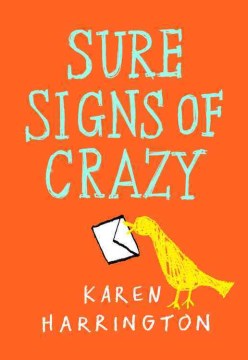
Sure Signs of Crazy by Karen Harrington
Twelve-year-old Sarah writes letters to her hero, To Kill a Mockingbird’s Atticus Finch, for help understanding her mentally ill mother, her first real crush, and life in her small Texas town, all in the course of one momentous summer.

There are many more great books in this little subsection of children’s literature. Some more of my favorite examples are; The Wishing Spell (The Land of Stories, #1) by Chris Colfer, A Wrinkle in Time by Madeleine L’Engle, Ghost Hawk by Susan Cooper, Bridge to Terabithia by Katherine Paterson,  The Graveyard Book by Neil Gaiman, The Lightning Thief (Percy Jackson and the Olympians, #1) by Rick Riordan,  Are You There God? It’s Me, Margaret by Judy Blume, and The Mysterious Benedict Society (The Mysterious Benedict Society, #1) by Trenton Lee Stewart.