Teen Book Reviews: We Were Liars and Michael Vey: The Prisoner of Cell 25

Teens: did you know that you can earn community service credit for writing a book review and submitting it to us? Today, we’ll hear from two teens who did just that. Find out more about how to earn community service hours from home at cheshirelibrary.org/teens/.

We Were Liars by E. Lockhart, reviewed by Kylee V.
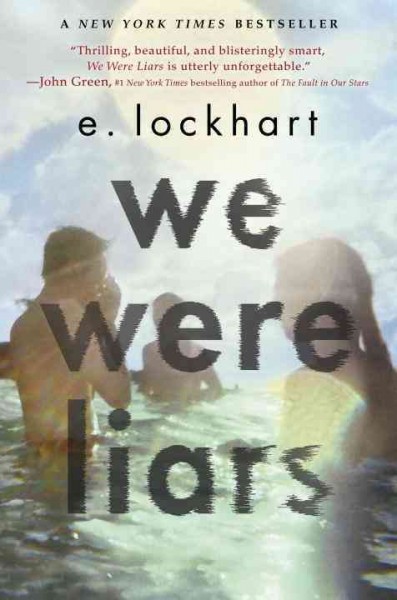
“We Were Liars” is set mostly on Beechwood Island, a private island owned by the Sinclairs. On this island, you can do water activities like boating and there are mansions all over the island as the Sinclairs are a very rich family. The main character, Cadence, is the oldest of her cousins and will most likely be the one to inherit her grandfather’s fortune. Cadence, her cousins, and Gat Patil (a friend) go to this island every summer and do everything together. This group is known as the Liars. The Liars have so much fun and romance starts to bud with two of these characters. However, with so much money, it can be expected that there will be conflict and jealousy. Cadence’s mom and her aunts are always getting drunk and fighting with each other, and this beautiful private island is dimmed by the ugly truth of wealth and power.

I have to say that this book was very good and forced me to try and come up with possible endings as I was reading. The ending is shocking and the little bits of information along the way that the reader gets will have the reader changing their mind over and over again on what might happen. An accident occurs when Cadence is 15 years old, and she (and the reader) must work out what happened on that specific summer vacation. I would give this book 4 out of 5 stars, because it was really engaging and made me get invested in the characters. There were so many unexpected twists that I almost couldn’t keep track of where I was in the story. Along with this, there are a good amount of flashbacks that occur in the story, so at times it may get a little confusing on what is going on. Even though it could get confusing with the flashbacks, these flashbacks also provided Cadence and the reader with information about the accident that occurred when she was 15. A problem for me was that I was always getting some of the characters or the places messed up, so like I said before it was hard to keep track and could get a little confusing. I appreciated how the book was a mystery that was written realistically and thought there were good lessons in this story. This book I think would be definitely popular among teens and I would highly suggest checking it out.

4 stars.

Michael Vey: The Prisoner of Cell 25 by Richard Paul Evans, reviewed by Kylee V.

I have read and reread this book countless times because I absolutely love the entire series. Richard Paul Evans does such a great job of developing the main character, Michael Vey, throughout the series. Michael Vey is this shy and bullied kid in high school that isn’t one to get much notice. He deals with Tourette Syndrome, which causes him in his case to blink uncontrollably and gulp for air when he gets nervous. I am a big fan of science fiction and always root for the underdog, so when it turns out that Michael, the scrawny kid, has been born with these electrical powers the story becomes even better.

Michael’s best friend, Ostin Liss, is a genius and will be supporting Michael throughout. Not to spoil too much but other people from Michael’s high school will play a role in this ongoing adventure of stopping Dr. Hatch, the villain, from getting too powerful. He is going to be faced with many challenges, be forced into a fight against evil, and go on a rescue mission to save someone he loves dearly. Throughout, the entire series there is a ton of action, plenty of twists, constant adventure, and even some romance. The characters in these books will never have the same life again once Dr. Hatch steps into their lives, and secrets will be revealed that have shocking conclusions.

This book has something for almost everybody and will want you to continue on in the series. However, if you are not the biggest science fiction fan I might read another book. I would recommend this book to boys and girls from 5th grade to high school, even though it may be an easier read for the older grades. I love this book a lot and had to rate it a 5/5 because it is one of my favorite books in the series and in general. The author does a great job of explaining characters and events, so it is very easy to connect with the character. The reader can clearly see what is going on in the character’s head, which I think makes it so much more enjoyable to read. Since this is the first book, be prepared for lots of surprises as the story progresses. Also, a small negative because this is the first book in a long series, lots of characters are introduced and reoccurring information is brought up kinda fast so I would highly suggest you pay close attention. To combat this, the author does provide a nice character list throughout the series and has a quick Prologue of what happened in the book before it. To further this point it can be at times a little rushed, but not too often. Even if you’re not the biggest fan of series, I would at least try reading the first book because I think after you read it, you would want to give the second book a shot. Heads up though the series is very long. I have read all of the books in the series so far, all the way to “The Final Spark”, and if it turns out you’re interested in this book I would highly suggest reading the entire series. Overall, if you are a big science fiction fan or wanna try something new where the main character is the underdog with POWERS definitely give this book a shot because you won’t regret it.

5 stars.
Teen Volunteer Book Reviews: One of Us is Lying and Dread Nation

Teens: did you know that you can earn community service credit for writing a book review and submitting it to us? Today, we’ll hear from two teens who did just that. Find out more about how to earn community service hours from home at cheshirelibrary.org/teens/.

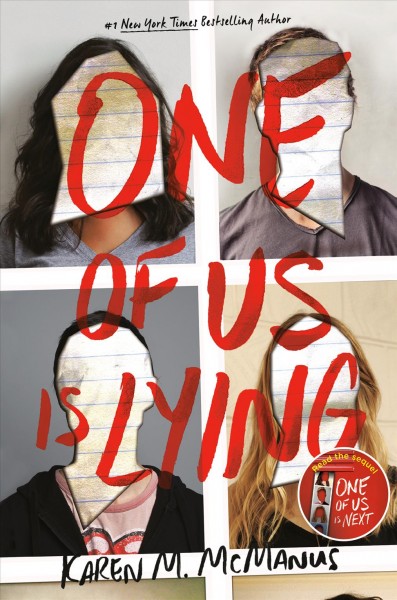
One of Us is Lying by Karen A. McManus, reviewed by Julia F.

If you enjoy a mix of realistic fiction, mystery, high school drama, and social media intrigue, One of Us is Lying, by Karen M. McManus, is for you.

Who murdered Bayview High School’s Simon Kelleher? Was it Bronwyn, the bright academic who wishes to attend Yale? Or could it have been the Cooper, the group’s “jock”? Maybe you will suspect Addy because she is popular and social? Or was it the troubled Nate who already has a checkered past? You may be wondering why someone would want to kill Simon in the first place. He ran the school’s widely followed juicy gossip app ABOUT THAT, which was set to reveal secrets about each of the suspects. All four had skeletons in their closets, but was someone’s secret devastating enough to warrant a murder?

We find out that Bronwyn has gone to interesting lengths to protect her academic future and her family’s legacy. Cooper has a baseball career in the balance, and his tangled web of lies threatens to take away his opportunity to be a star. Addy is not who she seems to those around her and now she stands to lose those closest to her. Nate doesn’t have as much to lose, but the post could land him in jail. Simon’s death causes new alliances to form between the suspects as they scramble to protect their secrets and prove their innocence. As you read this book you will find yourself suspecting each of the four students at one point or another.

This book will keep you on the edge of your seat until the very last page. If you are looking for an exciting thriller and quick read, be sure you have a chunk of time available because you won’t want to put it down! Good news— there is a sequel (One of Us is Next) that follows Bronwyn’s younger sister Maeve and it is just as captivating.

Dread Nation by Justina Ireland, reviewed by Stephanie D.

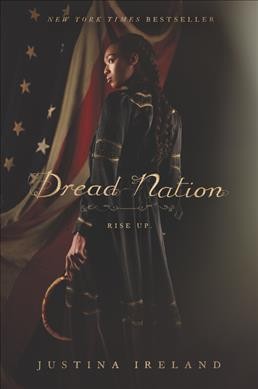
Dread Nation is a historical fiction novel that takes place during the American Civil War… with one important twist. In this alternate history universe, the fighting stops halfway through, around the year 1863. Why? The answer is simple but terrifying: the soldiers don’t stay dead anymore. The Civil War is postponed as Northerners and Southerners alike grapple with a zombie apocalypse, and our story focuses in on a teenage girl named Jane. Jane is sent from her mother’s plantation to one of the recently opened combat schools. These have been springing up around the country as African and Native American teenagers are forced to learn to fight zombies (or “shamblers”, as they are called in the book). Dread Nation follows Jane and her classmate Katherine as they are sent to defend Summerland, a frontier town under the constant siege of shamblers. Once in Summerland, Katherine pretends to be a wealthy white woman and Jane her Attendant (someone who is responsible for their employer’s life in the event of a zombie attack). Unfortunately for the inhabitants of Summerland, the town is soon overrun by shamblers, and Jane and Katherine must flee to save their lives.

I gave this book a solid four stars. I really enjoyed the universe building and detailed description of historical events, because I could compare it to the version of history I had learned in history class and the fictional zombie version. It was fast-paced, which I enjoyed, but I also felt that the pacing was rather inconsistent. The first part of the book felt much slower than the second, even though the latter seemed like it was supposed to be the focus of the story, as it contained a majority of the action. In short, there was too much build up to the climax of the book, and in the wrong places. I would have liked to hear more about Jane’s life on the plantation and the story of her family, which was revealed piece by piece throughout the novel and provided an interesting side plot. Additionally, I would have preferred a more complete ending. I understand that this is the first of a series, but the conclusion did not feel nearly concluding enough to tie up all the loose ends left by the big zombie invasion and battle of the final chapters. One final criticism is that I found the character of Jane to be a very typical YA heroine: a rebellious tomboy, always the best at everything, and generally “different from everybody else”. These characters can certainly contribute a lot to a story, but they seem to be everywhere and therefore Jane did not earn this book any points in the protagonist department.

Devil in the White City

NOTE: This post deals with a difficult subject matter, serial killers, so if you’re easily disturbed, you might not want to read any further.

A book kept passing through my hands and it seemed intriguing – psychopath, history, award-winning – probably good, and I read it at last. The Devil in the White City  by Erik Larson tells the true story of the great Chicago World’s Fair of 1893, a celebration of Columbus’s 400th anniversary of discovering the new world and an attempt to outdo the 1887 Paris World’s Fair, which amazed the world with the new Eiffel Tower, the tallest structure in the world. The fair covered more than 600 acres – almost six times the size of Disney’s Magic Kingdom – and attracted more than 27 million visitors in its 6 month-run (versus 20 million visitors to Magic Kingdom in 2016). It also chose Tesla’s AC electric current to power it because it was cheaper than Edison’s DC current, cementing the road for America’s future electrical grid.

Chicago was no charming city, known for stink (stockyards), grime (trains and soot), crimes and vice. And in this mix lurked a serial killer, H.H. Holmes. Holmes’s background was a perfect mix of known factors of psychopathic development – strict, cold, abusive parents with severe religious obsession. By the age of 6, Holmes liked to dismember animals, and by his teens was implicated in the death of a young boy but cleared due to the pitiful state of investigations. He fled to Chicago, where he became a con artist, bilking insurance companies, furniture companies, and drug supply stores. He also charmed single ladies, killed them, reduced them to skeletons, and sold them as medical supplies. He built an elaborate hotel nicknamed “The Castle,” complete with gas jets in the rooms, soundproof rooms, and a personal crematorium in his basement. When finally cornered for killing his long-time assistant, Holmes confessed to 29 killings, though only 9 could be proven, but his total might have been as high as 200. He was hung for his crimes. Leonardo DiCaprio bought the film rights to the book, and a film is in production with Martin Scorsese as director (it had a tentative 2017 date, but is still in process).

Serial killers – those that kill large numbers of victims over time – are rare as far as murder goes, but the extent of their crimes garners a lot of press. Connecticut has its own serial killer in Amy Archer Gilligan of Windsor, who killed as many as 48 of her nursing-home patients for insurance claims between 1885 and 1917. Some of the more notorious American serial killers include:

Jeffery Dahmer (1991), who killed (and ate) at least 16 young men and boys. Not a high count for a serial killer,  it was the cannibalism that made him famous. He was beaten to death in prison not long after his conviction. Some things scare even murderers.

John Wayne Gacy (1978), who dressed as a clown for kids’ birthday parties and killed more than 33 men.  Stephen King said “It” was fiction.

Charles Cullen (2003), convicted of 40 murders while he was a nurse, but possibly responsible for up to 400, making him the most prolific not only in New Jersey, but the USA. Carl Watts (1982) was also a nurse, convicted of six murders but possibly as many as 130.

Ted Bundy (1975), one of the most famous and perhaps sickest, who killed more than 30. He decapitated at least 12 victims and kept the heads in his apartment, and often performed sex acts on rotting corpses (I warned you). He was executed in Florida.

Gary Ridgeway (2001)  the “Green River Killer”, with 49 proven deaths, 71 confessions, with a probable total closer to 90.

Ed Gein (1957)– Gein was convicted of only two murders, but if you’re looking at psychopaths, Gein is King. Gein had a bizarre attachment to his mother (back to that cold/abuse/super-religious thing), and would go to graves and dig up women’s bodies, skin them, and save parts attempting to wear his mother. Gein was the inspiration for Psycho, The Texas Chainsaw Massacre, and Silence of the Lambs. He was diagnosed as schizophrenic, incompetent, and died in a mental facility.

What predicts a serial killer? Most professionals look for early abuse, neglect, brutality, bullying, and mental illness. Animal cruelty, especially in young children, is a warning sign. Killers are often charismatic (Holmes, Bundy, Jim Jones, too) and manipulative, gaining friendship and trust.  Lack of empathy for their victims is  always present. Some do it for attention, especially media attention. One interesting point: 70% of serial killers had experienced significant head trauma as children; with what we now know about violence among football players and boxers who receive blows to the head, could this be a risk factor?

So hug your kids. Be patient. Be kind to them and to others, and teach them to be kind as well. Take bullying and animal cruelty seriously, and report it to authorities. You don’t know how many lives you might save.

Minecraft: The Unlikely Tale of Markus “Notch” Persson and the Game That Changed Everything

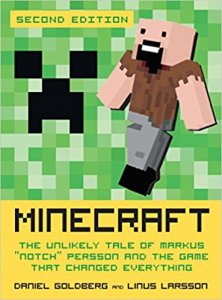
Minecraft: The Unlikely Tale of Markus “Notch” Persson and the Game That Changed Everything by Daniel Goldberg is a biography of Persson that focuses on how he came to be the creator of Minecraft, and how it changed his life. This book discusses how Persson was fascinated by programming since his early childhood. Despite a guidance counselor who did not support his career goals, a family that was breaking down, and a few jobs that limited his ability to program games freely, he began to brainstorm and program the beginnings of Minecraft. What started as a side job that almost no one knew about quickly developed into a company that was worth millions. Minecraft went from a game that was only played by a handful of people to a game that attracted thousands of people to conventions before it was even fully released.

Why did Minecraft have such sudden and overwhelming popularity? It is at least partly due to the creativity that the game allows. People are able to create their own goals and alter the game’s world in any way that they choose. The book goes even deeper into Persson’s life and the aspects of the game and is definitely worth reading. The book also paints a picture of the world of online gaming, gaming corporations, and indie developers, as well as certain aspects that contribute to designing a good game.

We also have several other Minecraft books for you to read!

Minecraft: The Survivor’s Book of Secrets by Stephanie Milton is a new book that contains many tips and strategies that have been tested by people who have played Minecraft since it was first released.


Minecraft: Top 35 Minecraft Mods You Should Know by Joseph Joyner is an unofficial guide to different mods that can be added to Minecraft.


Minecraft: Guide to Building by Josh Gregory is a guide to building materials,  locations, and ideas. There are also several other similar books that are guides on other aspects of Minecraft, such as animals, mining, and farming.


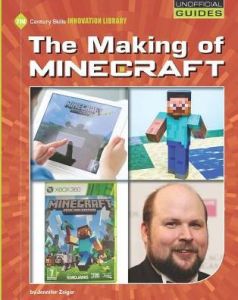
The Making of Minecraft by Jennifer Zeiger is a book on a similar topic to the one reviewed at the beginning of this blog. It discusses the beginnings of Minecraft, and how it quickly grew into the phenomenon that it is today.


Quest for the Golden Apple: an unofficial graphic novel for Minecrafters by Megan Miller is the first in a series about the adventures of Phoenix and her brother in the world of Minecraft.


Click here to view the second edition of the reviewed book above. This edition has extra content that focuses on Microsoft’s purchase of Minecraft, Persson’s last days at Mojang, and what happened to Mojang afterwards.

Chocolat by Joanne Harris

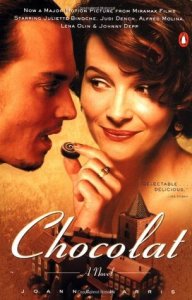
chocolatIn Chocolat, Vianne is trying to break  away from her mother’s nomadic way of life. Determined to make a new life for herself and her daughter Anouk, Vianne settles down in a French village and opens a chocolate shop. However, the villagers and priest are less than thrilled with her presence since she has very different ideas on life. She does not attend the local church, she was never married to Anouk’s father, and she seems set on bringing about changes that will affect everyone’s lives.

This book was well-written and very enjoyable. It mostly takes place from  Vianne’s point of view as she becomes a driving force in the changes that come to the town. The writing style keeps you involved from the beginning, and the characters are fully developed. As you progress through the book, you delve into the pasts of the characters, learning how they came to the positions they currently occupy. You learn why Vianne wants to settle down, why Jacqueline is trapped in her marriage, and why the priest is against everything Vianne stands for. In addition, the protagonist is an intelligent woman who is very independent and strong-willed, which is part of what makes this book so interesting. Note: You will crave chocolate while reading this.

Genre: Fiction, but it is not truly a romance, despite the cover.

Setting: Twentieth-century French village called Lansquenet.

Is this good for a book club? Yes. It is a good length and allows for plenty of discussion, including character analysis, recurring themes, and what could potentially happen to everyone after the book ends.

Is there a movie version? Yes, but it is different enough from the book that it would provide a good comparison. Personally, I did not enjoy the movie because I felt that it took the characters and overall tone in directions that the author did not intend. However, you should watch it to see what you think. Click here for the movie version.

Themes: Including, but not limited to, letting go and moving on with life, overcoming feelings of powerlessness, retaining one’s morality, religion, and friction between people of different classes and walks of life.

Objectionable content? Very little, and nothing explicit. Some people may not like that the antagonist is a Catholic priest. However, despite being the antagonist, he is not a villainous character.

Can children read this? Teens would enjoy this.

 Who would like this? Anyone who enjoys reading fiction that involves good character development and a non-traditional protagonist.

Rating: Five stars. I highly recommend Chocolat.