February is a month of opposites. Love (Valentine’s Day) and hatred (New England winters) and apathy (NFL championships). There’s also the forgetting of the very recent past (last month’s resolutions) and the remembrance of our longer past: presidential birthdays and Black History Month. For the latter, we celebrate the contributions of members of the African diaspora to the culture and history of the United States. There’s been a recent flurry of books related to African American history, and I’m excited to share them with you this month.
But first, I’m gonna tell you about something that is 1) not a book 2) not about America. It is the excellent BBC documentary series, A History of Africa, which you can view for free on YouTube. The African continent has a diverse and fascinating history that deserves way more attention than it gets. This documentary is a great starting point to enrich your knowledge of Africa’s diasporic daughters and sons.
If you prefer to start your journey in print, though, first on our list is the book equivalent of the aforementioned documentary.
An African History of Africa: From the Dawn of Humanity to Independence by Zeinab Badawi (2025)

Badawi (the host of A History of Africa) is a Sudanese-British journalist who worked for Channel 4 and the BBC before her current gig as President of the prestigious SOAS University of London. Her sweeping historical survey traces Africa’s rich legacy from prehistory to the present, exploring ancient civilizations, medieval empires and colonialism’s impact, while highlighting African voices and perspectives to offer a long-overdue account of the continent’s global significance.
Somewhere Toward Freedom: Sherman’s March and the Story of America’s Largest Emancipation by Bennett Parten (2025)
A groundbreaking account of Sherman’s March to the Sea—the critical Civil War campaign that destroyed the Confederacy—told for the first time from the perspective of the tens of thousands of enslaved people who fled to the Union lines and transformed Sherman’s march into the biggest liberation event in American history.

Sharks Don’t Sink: Adventures of a Rogue Shark Scientist by Jasmin Graham (2024)

You never forget your first shark. For Jasmin Graham, it was a little bonnethead, a type of hammerhead shark. Jasmin fell in love with sharks and with science, but the traditional academic path wasn’t for her. So, she joined with three other Black women to form Minorities in Shark Sciences (MISS), an organization dedicated to providing support and opportunities for young women of color who were pursuing the fascinating and environmentally essential work of marine studies. Jasmin became an independent researcher: a rogue shark scientist, learning how to keep those endangered but precious sharks swimming free – just like her.
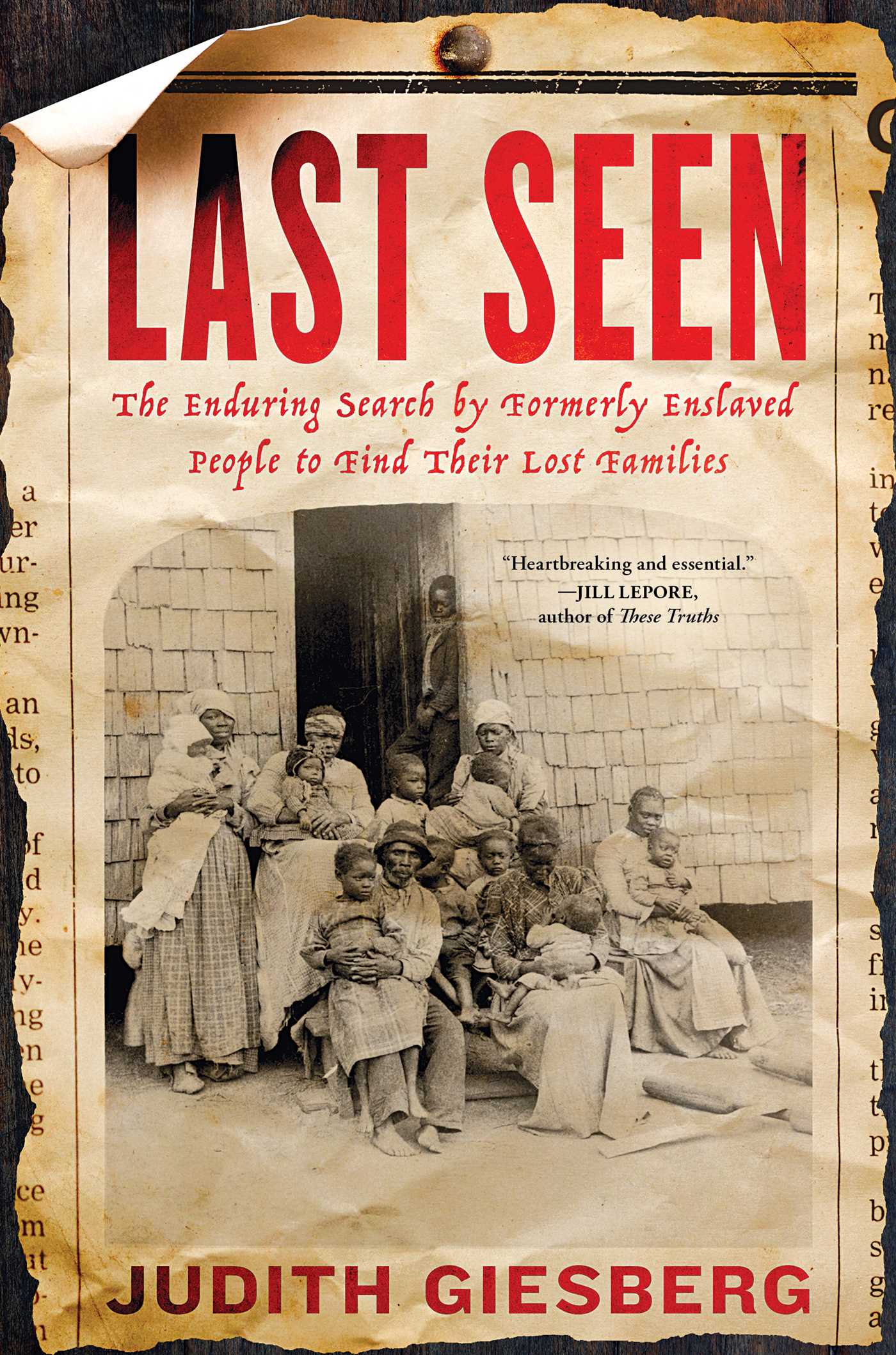
Last Seen: The Enduring Search by Formerly Enslaved People to Find Their Lost Families by Judith Giesberg (2025)
Drawing from an archive of nearly five thousand letters and advertisements, this is the riveting, dramatic story of formerly enslaved people who spent years searching for family members stolen away during slavery.
John Lewis: A Life by David Greenberg (2024)

Born into poverty in rural Alabama, John Lewis rose to prominence in the civil rights movement, becoming second only to Martin Luther King, Jr. in his contributions. Greenberg’s biography, a New York Times Book Review Top 100 Book of 2024, follows Lewis’s journey beyond the civil rights era, highlighting his leadership in the Voter Education Project and his ascent in politics.
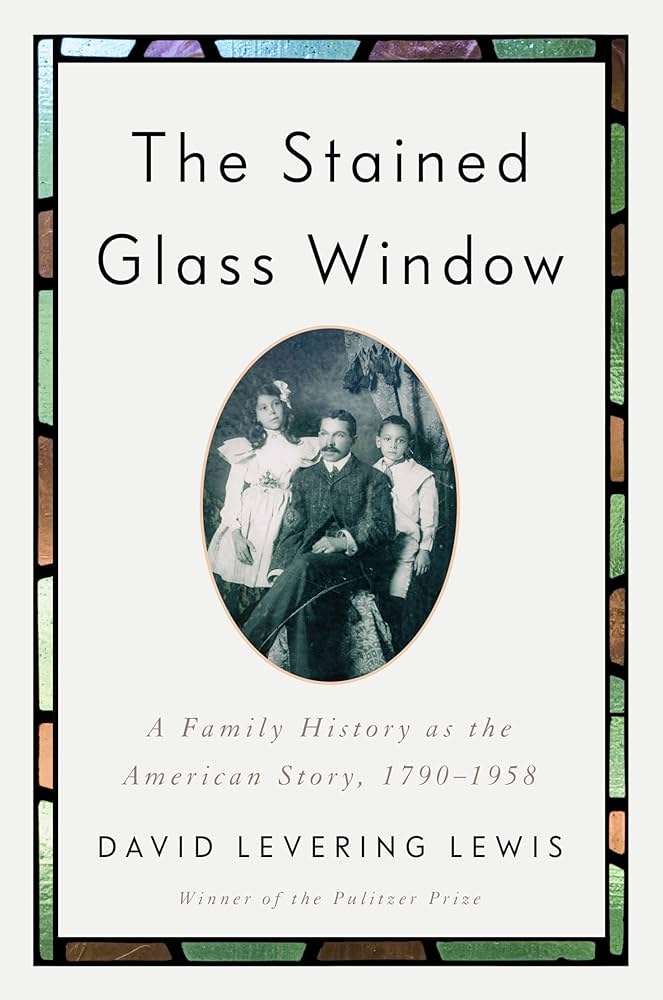
The Stained Glass Window: A Family History As the American Story, 1790-1958 by David Levering Lewis (2025)
Sitting beneath a stained-glass window dedicated to his grandmother in the Atlanta church where his family had prayed for generations, it struck Lewis that he knew very little about those ancestors. And so, in his mid-80s, the esteemed historian began to excavate their past and his own, from white slaveholding families to a mulatto slaveholding family to an up-from-slavery black family. Lewis previously won two Pulitzer Prizes, one for each volume of his biography of W.E.B. DuBois.
The First and Last King of Haiti: The Rise and Fall of Henry Christophe by Marlene Daut (2025)
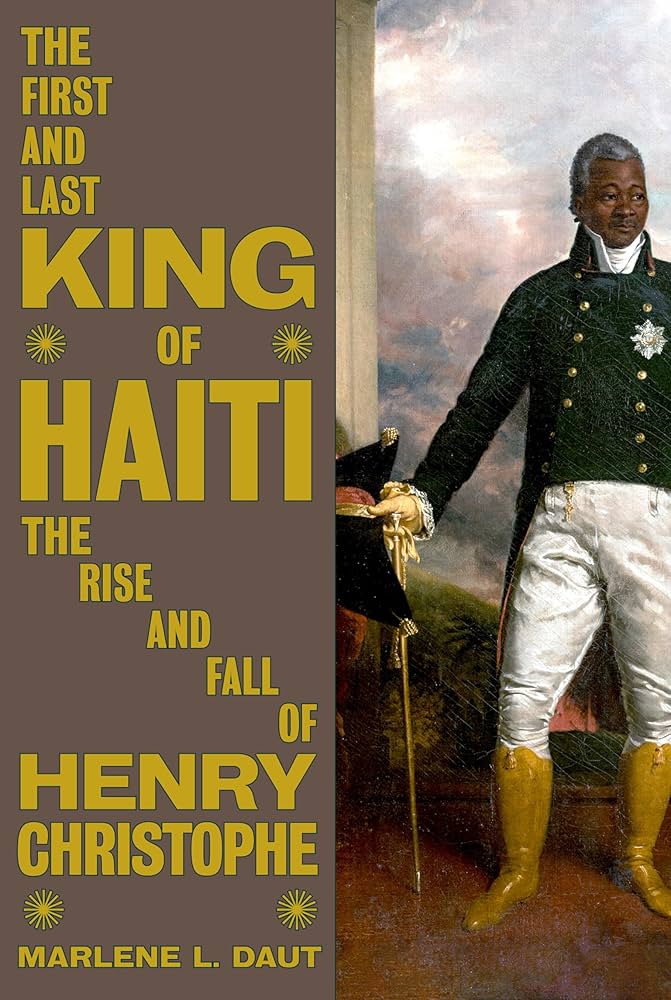
Haiti has the amazing distinction of being home to history’s most successful slave revolt, which led to its independence from France in 1804 and its establishment as a sovereign republic. Its significance looms large in the consciousness of African American thinkers and writers, with figures like Langston Hughes spending time on its soil. This book is the essential biography of the controversial rebel, traitor, and only king of Haiti, Henry Christophe (1767-1820).
Growing Up Urkel by Jaleel White (2024)
An incisive and insightful memoir by Jaleel White, the actor who portrayed Steve Urkel on the hit sitcom Family Matters. You may wonder what place this has among serious history books, but Family Matters remains one of the longest-running live action sitcoms starring a mostly African American cast. Join Jaleel as he invites you to relive the unforgettable ride of nineties nostalgia, while uncovering the personal growth behind the iconic suspenders and the lasting impact of his journey as one of America’s favorite sitcom stars.

Further Reading
Who Better Than You?: The Art of Healthy Arrogance & Dreaming Big by Will Packer (2025)
In Open Contempt: Confronting White Supremacy in Art and Public Space by Irvin Weathersby Jr (2025)
Talk to Me: Lessons from a Family Forged by History by Rich Benjamin (2025)
 Many people are aware that
  the era. The need was great, her products worked, and she went on to become an American philanthropist.
 century has shown remarkable gains, with not only







 January began as one of the last months of year, not the first. The start of the Roman calendar (and the astrological one) was March. Back then there were only ten months to the year, totaling 304 days. Between was a miasmic 66 monthless days of “winter.” According to legend, Numa Pompilius, the second King of Rome (after Romulus himself), added January and February to codify that winter term (along with a catch-up month every other year of 22 days).
 to have lived somewhere between 386 CE and 620 CE (if you’re not up on your history, Common Era has replaced the Anno Domini). She takes her aging father’s place in the army, and serves for twelve years without her fellow soldiers realizing she’s a woman. Depending on the source, her name might be
 The steel-driving

 under control of the Habsburgs, a magistrate put his hat on a pole and demanded all citizens bow before it, or be imprisoned. While in town with his son, Tell refused to bow, was arrested and sentenced to death – though, since he was such a marksman, the Magistrate would let him go if he could shoot an apple off his son’s head. Tell did so, was arrested anyway, escaped, and the people rose up in rebellion, in an act considered the founding of the Swiss Confederacy, around 1307. Some historians believe Tell is merely a new twist on an old Danish fable.


 The Cheshire Library Blog