 Many people are aware that Oprah Winfrey is the richest black woman in America, with a net worth of more than 2.8 billion dollars (which still doesn’t put her in the top 10 richest American women). She is, however, in the top 10 richest self-made billionaire American woman – and the only African-American woman to make the cut. But long before Oprah, there was Sarah Breedlove.
Success Started Early
Breedlove was America’s first self-made female millionaire. Born in 1867, she was an orphan by the age of 7, a domestic by the age of ten, and married her way out at 14. After several marriages that ended in widowhood or divorce, in 1905 Breedlove began her own line of beauty and hair care products for African American women (under the name Madame C.J. Walker), many of whom were going bald because of the harsh lye soaps of the era. The need was great, her products worked, and she went on to become an American philanthropist.
To a degree. Marjorie Joyner was one of her employees. Marjorie became the first African American woman to be issued a patent – for the first machine to permanently wave hair (no Toni kits back then!). However, she never saw a dime for her creation – the royalties and rights went to Madame C.J. Walker! Next time you go to a salon or use a home perm kit, remember to think of Marjorie Joyner.
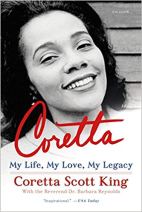
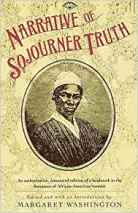
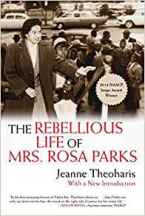
When we think of African-American women in history, we seem to get stuck on Harriet Tubman, Rosa Parks, Sojourner Truth, and Coretta Scott King, but they are just the very tip of the iceberg.
The Long Hard Climb for Recognition
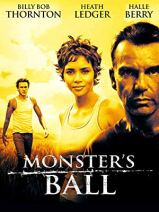
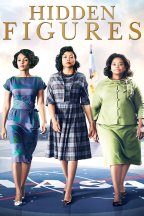
It’s been a slow, hard climb for African-American women. While Hattie McDaniel won a Best-Supporting Actress Oscar for Gone With the Wind in 1939 (the first African American to do so), a Best Actress award didn’t come until Halle Berry won in 2001 for  Monster’s Ball. That’s a long wait. While the first white woman to win the Nobel Prize for Literature was in 1909, the first African-American woman wasn’t until the great Toni Morrison won in 1993. Although actress Nichelle Nichols of Star Trek fame showed African-American women as educated members of space crews in 1966 (and gave television’s first interracial kiss), Mae Jemison, the first African-American woman astronaut, didn’t make it to space until 1992. To this day, African American women are disproportionately victims of more violent crimes than any other group of women – by more than double. While more African-American women are enrolled in college than any other group (9.7%), they make up only 8% of the workforce, and earn only 64¢ on the dollar compared to 78¢ for white women; 21% of African-American women live in poverty, compared to just 9% of white women. Only now, decades later, are we beginning to appreciate the remarkable contributions of African-American women in the fields of science and math, such as Katherine Johnson, Dorothy Vaughan, and Mary Jackson, who helped launch NASA’s space program by doing the math in their heads.
Making Strides
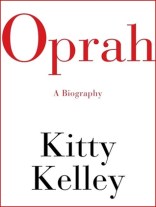
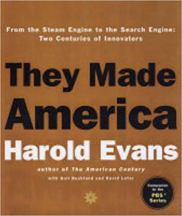
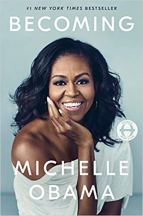
While there is still so far to go in equalizing opportunities for minority women, the 21st  century has shown remarkable gains, with not only Condoleeza Rice becoming National Security Advisor and then Secretary General under President Bush, but with Michelle Obama becoming the First Lady of the United States. African-American women continue to enter politics, with record wins in 2018, including the first African-American women elected to Congress from Minnesota, Massachusetts, and Connecticut. So grab a novel, a biography, a great DVD on the lives and achievements of African American women, and catch up on some of the great history you never learned about in school.






 Dramatic Reading : Darcy and Elizabeth
  Create Valentine’s Cards
 Tai Chi
 Library After Hours: Chinese New Year Celebration
 Sunday, February 10, 2019, 2:00 – 3:30PM
 The Romance of Jane Austen
 Create Zentangle
 The Importance of Tea in Chinese Culture
 Silk’n Sounds A Capella Concert
 Regency Dance Lesson
 Shades of Jane Austen
 the board and keeping track of piles of colorful money never really engaged me. In reality, I spent the next three hours curing diseases in Pandemic, creating train tracks that spread the globe in Ticket to Ride, and trading spices in Century: Spice Roads. I was floored that board games had evolved so much since I had played as a kid, the art was more engaging, the stories richer, and the play more involved. In the months following this revelation I’ve added over thirty board games to my list, and I’ve expanded my idea of what a board game can be.
 resources in a library that encourage community and collaboration. At a time when parents and educators are concerned about the rise in digital media and isolation, board games get people of different backgrounds engaging with each other across a table, solving problems, improving a number of practical skills, and having a good time. When you look at it that way, it’s no surprise that board games are a critical part of a libraries community, and a lifelong pursuit of learning.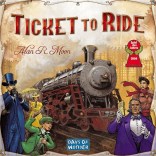


 The Cheshire Library Blog