Who or What Inspired Your Love of Books?

insp2I have been a reader for as long as I can remember. I have always loved the look, feel, and smell of books. Never mind the way books allow me to learn new things and escape into new worlds and take part in adventures. I was able to read while navigating hallways, no matter how busy they were, and am glad to say that my two elementary school age students are beginning to master that skill as well. I spent countless nights reading well past bed time via flash light, and still stay up way too late reading. How did this love of reading start? For me it was a number of things including seeing the examples of other readers and the easy access to a wide variety of books.

inspire1The library was a second home to me in elementary school. I still remember the stairwell to the children’s department, the cool round window that I would sit in and read while waiting on my mother and brother to pick their books.The library does not look that way now, since it was renovated while I was in junior high, but I am glad to say that I now work in the same building I frequented in my younger days. My favorite chapter books from my elementary school days were the Nancy Drew Mystery series (the original hard covers mind you), the Pern series and anything else by Anne McCaffrey, The Girl with Silver Eyes by Willo Davis Roberts, and the Young Wizard series by Diane Duane.
inspire2I was not, and am not, highly coordinated. While I attempted a few sports, singing and reading were the only two activities that I really felt at home doing. Getting lost in a book was much more attractive to me than trying to make it through a practice or game without getting hurt or embarrassing myself. As you might have guessed, I have always been an introvert and was shy as a kid. I found hiding in my books my best defense, and reading helped me do well in school. My favorites in junior high included: A Wrinkle in Time and the rest of the series by Madeleine L’EngleSomething Wicked This Way Comes by Ray Bradbury, To Kill a Mockingbird by Harper Lee, and the multiple series by David Eddings.
inspire3Growing up I saw my mother, grandmother, and various aunts and friends passing around bags of books. They would trade full paper grocery bags full of books that they have finished and pass them on to the next person. I thought this was great, and frankly delved into those romance novels, thrillers, and mysteries well before any of them intended me to. Having so many books in my grasp made me much more likely to read than watch television, a pattern I still hold to today. Some of the books I remember most from my high school days include; The Power of One by Bryce Courtenay, The God Project by John Saul, the Xanth series and more from Piers Anthony, and the Forgotten Realms series by R.A. Salvatore.
inspI think the combination of family that read, my personality, and the availability of books combined to make me a voracious reader. I have read a little bit of everything, and found something worth while in just about every genre and writing style. I still read children books, young adult books, and adult fiction and nonfiction as much as I can.  Too many books are passed on to the next person, added to the library collection, and/or published every single day. I know I will not get to them all, but it will not stop me from trying. Some of my most recent favorites include: Gail Carrier’s now three steampunk series, Jim Butcher’s Dresden Files series, and the multiple series by Tamora Pierce and Maria V. Snyder.

Who or what got you hooked on reading, or disinterested you from doing so? Do we have any favorites in common, or those that I listed that you hated? Do you have favorites that you remember fondly from your past?

Getting In On The Games – Fiction For and About Gamers

Video games, whether on computers, consoles, tablets, or handheld players are fun diversions for many people of all ages. For serious players the worlds within games offer an escape, communities of like-minded individuals, and mild (or not so mild) obsessions for the players. It is no wonder that authors have used video games as subject matter, setting, plot device, or even characters in their work. Here are some great novels, divided into children’s fiction and young adult fiction, that might particularly appeal to gamers and those that lose them to the games.gamerj1

Children
My Life as a Gamer by Janet Tashjian
Derek Fallon gets the chance of a lifetime when he is asked to test software for new video games, but he soon discovers that his dream job isn’t all it’s cracked up to be.

Game Over, Pete Watson by Joe Schreibergamerj4
When video game obsessed Pete Watson discovers his dad is not only a super-spy but has been kidnapped and is now trapped inside a video game, he has to use his super gaming skills and enter the game to rescue him.

Game On! by D.J. Steinberg
When Old Fogey escapes from prison and creates a video game that physically sucks the players into the game, it is up to Daniel, aka Loud Boy, and his friends to call upon their superpowers to rescue the captured players.

More children’s books that video game fans and players might really enjoy include:The Time Hackers by Gary Paulsen, Deadly Pink by Vivian Vande Velde,Close Encounters of the Nerd Kind by Jeff Miller, Only You Can Save Mankind by Terry Pratchett, Brainboy and the Deathmaster by Tor Seidler, Herbert’s Wormhole by Peter Nelson, and Game On! by Jennifer L. Holm & Matthew Holm.

This slideshow requires JavaScript.

Young Adults
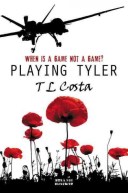
Playing Tyler by TL Costa
Tyler MacCandless feels trapped caring for his older brother in rehab and working at gamerya1McDonald’s, until he is introduced to a new video game that could earn him a place in flight school, but may also be very different than it appears.

In Real Life by Cory Doctorow
Immersing herself in an online role-playing game where she enjoys fantasy heroics, Anda confronts a difficult choice when she befriends a disadvantaged Chinese kid who works illegally to gamerya8collect valuable objects and sell them to other players for real money.

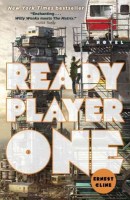
Ready Player One by Ernest Cline
Immersing himself in a mid-twenty-first-century technological virtual utopia to escape an ugly real world of famine, poverty, and gamerya4disease, Wade Watts joins an increasingly violent effort to solve a series of puzzles by the virtual world’s creator.

More young adult books that video game fans and players might really enjoy include: The Hitchhiker’s Guide to the Galaxy by Douglas Adams, Neuromancer by William Gibson, The Peripheral by William Gibson, For the Win by Cory Doctorow, Ender’s Game by Orson Scott Card,  In Real Life by Lawrence Tabak, The Eye of Minds by James Dashner, Erebos: It’s a Game: It Watches You by Ursula Poznanski, Epic by Conor Kostick, Insignia by S. J. Kincaid, The Improbable Theory of Ana & Zak by Brian Katcher, and Guy in Real Life by Steve Brezenoff.

What’s Trending at Cheshire Public Library

what's

Do you ever wonder what your fellow patrons are reading?  Or what’s getting checked out the most?  Well, welcome to our new What’s Trending feature! We’re starting off with authors: the top 10 most popular during the previous month and how many times their books circulated. Click the author’s name for a list of their books.

james patterson James Patterson – 145 circulations.  In 2011, it was estimated that one-in-four of all hardcover suspense/thriller novels sold were written by James Patterson. He is the first author to achieve ten million ebook sales, and he holds the Guinness record for the most #1 New York Times bestsellers of any author. And his success isn’t based solely on thrillers like the perennially popular Alex Cross, Women’s Murder Club, and Michael Bennett series. Patterson is now also the current bestselling author in the young adult and middle grade categories.

mary higgins clarkMary Higgins Clark – 52 circulations.  An author of over thirty-five suspense novels and four collections of short stories, each one of her books has been a best seller and many of them have been made into feature films or TV movies.  She has sold over 100 million copies and has eighteen honorary doctorates!


janet evanovichJanet Evanovich – 49 circulations.  Although she started out as a Romance author, she now known for her contemporary mysteries featuring Stephanie Plum.  She also writes the Lizzy and Diesel series,  the Alexandra Barnaby novels, as well as the Fox and O’Hare series with co-author Lee Goldberg. Note: Go read her bio on her website. It’s hysterical.

david baldacciDavid Baldacci – 47 circulations.  A best-selling author who writes thrilling suspense books.  He has carried over the suspense theme into several children’s books as well.  Several of his titles have been adapted for film and television.  He has over one hundred and ten million books in print.

nora robertsNora Roberts – 46 circulations.  This prolific author writes several genres within the Romance genre.  She also writes Mysteries under the pen name of J. D. Robb.  Her books are consistently on the top seller lists.  She was the first author inducted into the Romance Writers of America Hall of Fame.  See a previous post here.

debbie macomberDebbie Macomber – 44 circulations.   She is a #1 New York Times bestselling author and one of today’s most popular writers with more than 200 million copies of her books in print worldwide. In her novels, she brings to life compelling relationships that embrace family and enduring friendships, uplifting her readers with stories of connection and hope.

john grishamJohn Grisham – 43 circulations.   A former lawyer, he began his writing career as a hobby after hearing about a court case in 1984.  His hobby quickly became his career after he sold the film rights of his book, The Firm.  He started writing legal thrillers for children ages 9-12 in 2010.

danielle steelDanielle Steel – 39 circulations.   She’s currently the best selling author alive and the fourth bestselling author of all time, with over 800 million copies sold.   Her formula is fairly consistent, often involving rich families facing a crisis, threatened by dark elements such as jail, fraud, blackmail and suicide.

robert b. parkerRobert B. Parker – 37 circulations.   Long acknowledged as the dean of American crime fiction, he was named Grand Master of the Edgar Awards in 2002 by the Mystery Writers of America.  He was renowned for his Spenser novels, featuring the wise-cracking, street-smart Boston private-eye, which  was turned into the television series, Spencer: For Hire. He wrote 9 novels based on the character Jesse Stone and 6 novels based on the character Sunny Randall.

clive cusslerClive Cussler – 35 circulations.   An adventure novelist and underwater explorer, his thriller novels, many featuring the character Dirk Pitt, have reached The New York Times fiction best-seller list more than 20 times.


How’s this list stack up against what you’ve checked out recently?  Any of your favorite authors here?  Let us know who your favorite author is.

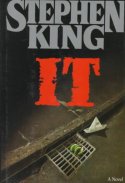
I (Finally) Read “It”

I am not a fan of horror. I would not shut the shower door for ten years because Kolchak: The Night Stalker scared the daylights out of me. My father’s description of the movie Killdozer made me terrified of construction equipment – as if I wasn’t already, from a preschool nightmare involving dump trucks. I watched the original 1931 Dracula and got a bloody nose in sympathy. I won’t sleep in a room with a vacuum cleaner thanks to Zenna Henderson. I like sleeping at night, and I don’t need any more anxiety in my life. I have kids for that.

ZX0AYe8 It was my mother who got me reading Stephen King. I was about twelve, sick in bed, and Night Shift, his book of short stories, came out. Wouldn’t you know it, the light from the bathroom at night struck every knob on the dresser at just the right angle so each one looked like an eye staring at me, just like the cover story. I only dared read half of them, and never enjoyed going to the dry cleaners again. But I read The Shining (I will NOT go into a hotel bathroom without a light on), read The Stand (his best, I think), Cujo, The Dead Zone (more my style), Firestarter (I needed a book for the train back from Canada) and Christine (Like I didn’t suspect that already). One thing you can say about King without ever reading his books: he doesn’t write short volumes.

Jacket.aspxBut by Christine, I was Kinged out. The books were were getting to be too similar, and I moved on. That was how I missed reading It, the book everyone seems afraid of. I avoided it for the longest time, but it popped up in a series of references this year, and I decided the time had come to tackle it. I’d re-read The Stand, and The Shining, but nothing new of King’s in 30 years.

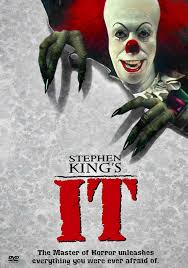
“It” tells the story of an evil presence that takes over4775612-3278691654-IT.jp the town of Derry, Maine, until a ragtag band of seven misfit children decide to take it on. Although the entity takes the shape of what scares a person most (werewolves, mummies, giant birds, etc), it often lures children to their deaths by taking the shape of a clown, Pennywise. I’ve never been afraid of clowns, though I understand the psychology behind it (like Daleks, you can’t read a clown’s frozen face, and it makes some people uneasy). I’m still not afraid of clowns; but I’m now nervous about balloons. Calling the evil “It” is a brilliant stroke of semantics – think of all the times you use the pronoun It: It was calling me. I tripped over It. It snuck up on me. I’m scared of it. You can’t help it; you can’t escape it. You talk about it all the time. Because you know it’s there. “It” can be anything, and you know it to be true.

But for everything anyone told me about the book, I think this is his worst that I’ve read. He’s written 55 novels, 200 short stories, comic books, films, has awards oozing out his ears – he knows what he’s doing. I don’t mind the back and forth nature of the story, bouncing between 1958 and 1985. The characters and style are classic King, but it is soooo long (1100+ pages), it really, really could have had sections of character description cut. It drags in places. It’s not the length: Game of Thrones is 1200 pages, scatmanbut I read it with more gusto. King’s name-dropping of characters from his other works grated on me. One is cool, but not several. Don’t stick Dick Hallorann in your book, a man with a strong sense of Shining (or, if you’re a Simpsons fan, Shinnin’), and have a catastrophe or a presence about that he doesn’t get ESP on. You laid Hallorann out in detail in The Shining; you let him drift in It. Sometimes the action is too cartoonish: having a victim’s head pop out of a box on a spring and go boing ruins my tension. I understand it might be appropriate to scare a child, but I’m not a child. Dolores Claiborne smashing my ankles with a sledgehammer makes me lie awake in a sweat all night. Cartoon boings don’t. I won’t tell the ending, but after fighting tooth and nail to wade through 1100 pages, I wanted more of a bang for my effort. The original Stand was 800 pages or so, and that ended with a nuclear explosion.

Yeah, yeah, I shouldn’t criticize King because he’s one of the most successful novelists images itof our time, and I don’t disagree with his talent. But perhaps he set his own bar too high. No one – not even Shakespeare – hits the nail of perfection every time. From the man who brought you Stand By Me, The Green Mile, Under the Dome, and so many, many wonderful tales, I just don’t think it’s his best.

What do you think is King’s best work – book or film?

Books for the Clone Club – What to Read After Orphan Black

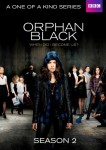
I recently discovered the BBC America series Orphan Black, somewhat by accident. In my job as Social Media Coordinator at Cheshire Library, I spend a lot of time on various social media networks, where I’d see Orphan Black referenced regularly. The show has a very vocal online fandom, particularly on Twitter and Tumblr, and I guess this is a good example of social media effectively surpassing traditional advertising in getting the word out about something. After the fandom’s outpouring of joy when the show’s lead, Tatiana Maslany, was nominated (finally! they exclaimed) for an Emmy, I decided to see what all the fuss was about.

Luckily we own Seasons One, Two, and Three here at CPL, which allowed me to binge-watch my heart out, and guess what? They got me! It’s a really riveting show that, not being a huge sci-fi fan, I normally wouldn’t have thought to watch. I have joined the masses in my awe of Tatiana Maslany’s “heavy lifting” as an actress, playing multiple clones in each episode and making them all identifiable and unique.

Season Four won’t premiere until sometime in 2016;  where to get our clone fix in the meantime? Fear not, Clone Club, I’ve found a few books to fill the genetically-engineered void until then. Surprisingly, to me anyway, most of these are considered YA (young adult) books, but they stand up to adult reading.  So if you like fiction with a clone-y twist, might I suggest:


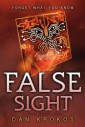
1False Sight by Dan Krokos. Resolving to move past the disturbing truths of her clone origins to enjoy time with Peter and her other friends, Miranda is compelled to follow her genetically programmed instincts when a member of her team turns rogue and triggers a humanity-threatening war.


2Project Cain by Geoffrey Girard. Jeff Jacobson learns that not only was he cloned from infamous serial killer Jeffrey Dahmer’s blood as part of a top-secret government experiment, but there are other clones like him and he is the only one who can track them down before it is too late.


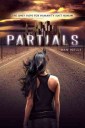
3Partials by Dan Wells. In a post-apocalyptic eastern seaboard ravaged by disease and war with a man made race of people called Partials, the chance at a future rests in the hands of Kira Walker, a sixteen-year-old medic in training


4Falls the Shadow by Stefanie Gaither. When her sister Violet dies, Cate’s wealthy family brings home Violet’s clone who fits in perfectly until Cate uncovers something sinister about the cloning movement.  Murder, morality, and a slow-burning romance fill the pages of this futuristic thriller.


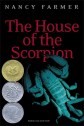
5The House of the Scorpion by Nancy Farmer. This modern classic takes on an iron-fisted drug lord, clones bred for their organs, and what it means to be human. Winner of the National Book Award as well as Newbery and Printz Honors.


7Never Let Me Go by Kazuo Ishiguro. Kathy grows up at a peculiar English boarding school called Hailsham, knowing that she and her classmates are “donors,” clones raised for organ harvesting. Kathy has deferred her fate by becoming a caregiver for dying clones, including her close childhood friends Ruth and Tommy. This award-winning novel straddles the YA and Adult Fiction genres, and takes the reader on a real emotional journey.