Jenn Reads: Shinju by Laura Joh Rowland

I’m a voracious reader, but my reading skills lately have been the pits. This cold winter weather getting anyone else down in the dumps?

I finally finished a book last night, from the stack of books that have yet to be finished. This particular one, Shinju, by Laura Joh Rowland, was supposed to be done for mystery book club two weeks ago. Ooops.

195979Shinju follows beginning investigating police office (of sorts, his official title is yoriki) Sano Ichiro in 17th century feudal Japan. Sano, a samurai/school teacher by trade, has been given this position by his supporter, a position he is initially unsuited for. He’s not bad at what he does- no, it’s that he’s a little too good at what he does, especially when things should be better left untouched, as his boss requests.

Sano is supposed to write a closing report on a shinju, or a double romantic suicide. Typically shinjus are when two people of different classes fall in love. Knowing their love will never survive and their families will not accept the relationship, the lovers commit suicide. This shinju looks like a suicide, but Sano is hesitant to close this case- and for good reason. Sano will risk everything: his job, his name, his parent’s reputation, and the lives of others, to solve this case.

The back cover of the book has a quote saying how “exotic” it is, and I suppose for some who are not familiar with the time period, it could be. My senior thesis for my history major in college was on a facet of Japanese history, so this particular era was familiar. For me, reading this book brought me back to my studies and I was thrilled to be immersed in 17th century Edo (now Tokyo). This is a world that is much different than ours, and much different than even 17th century Europe. Led by the Tokugawa regime, the government is a military dictatorship with strict rules. Religion, philosophy, and culture, for the new reader, may seem odd or strange. For several of our book clubbers, how Sano struggles throughout the book to justify his need for revenge and thirst to solve the mystery with his filial piety (extreme devotion to one’s elders, especially parents) and what is expected of him, was weird and unnecessary. But this is something a man of his time would have struggled with, and is realistic.

Many commented that the writing style was a bit elementary, but this is Rowland’s first published work, and will develop further in the series. Is this a masterpiece of mystery writing? No, but it was enjoyable for

what it was. More important to me than the mystery was the setting and time period, which I felt Rowland was spot on with.

Rating: 3 of out 5 stars. Enjoyable, but unnecessarily dense in some places where the plot line could have moved faster. Loved the time period and setting.

See you in the stacks,

Jenn

Jenn Reads: A Tale of Two Cities

In general, I have a rule when it comes to selecting items for our Cheshire Cats Classics Club to read: it has to be something I have never read before.

There are a couple of reasons for this. First, I like to read something fresh and new along with my clubbers. If I selected something that I’ve read in the past, I likely would not take the time to reread it. Second, the classics I have read are likely those my clubbers have already read, and one of my goals is to introduce

A Tale of Two Cities by Charles Dickens

them to titles and authors they may have never read before. It’s a formula that has worked for 3 1/2 years.

For our March pick, I broke that rule.

A Tale of Two Cities by Charles Dickens is a book I was *supposed* to have read as a senior in high school. Let’s rewind 10 years: It’s April, senior year. I’m in my AP English class and we’ve already read at least 10 books this year. The end of this high school experience is near, and simply say to Charles Dickens: “Nah.” Totally not in my nature as a student to do this, but alas, I had had enough (sorry Mr. M.). So I Sparknoted it.

When I put together the set for the first quarter in 2014 for the Classics Club, I looked back at Tale and thought I should give it another shot. At least this time, I could truly say that I read it and if I didn’t like it, well, then I didn’t like it.

A Tale of Two Cities, written in 1859, was serialized from April to November of that year. Dickens was a master at serialization and was one of the few authors of his time to make money off his books in his lifetime. In general, the story deals with the French Revolution through the eyes of both British and French citizens. Just about everyone, even though who have never read the book before, can quote you the opening line, “It was the worst of times, it was the best of times…” Dickens’ friend and biographer, John Forster, wrote that Tale had the least humor and least remarkable characters of all his novels. Well, at least he was honest.

Writing about the French Revolution during Victorian England was a topic writers used often, and readers were likely sick of it by the time Dickens wrote Tale. Dickens specifically chose the French Revolution for the background of his story because  it fit with the overall message he was trying to convey about social justice in England. His initial inspiration came from (or was stolen from, however you see it) his acting experience in friend and fellow author Wilkie Collin’s play The Frozen Deep, which is about two men, one of whom sacrifices his life so the other can be with the woman they both love. Sound familiar?

There are many parallels to Dickens’ own personal life throughout Tale, including the inspiration for Lucie Manet/Darnay. At the time of writing Tale Dickens had begun an affair with actress Nelly Tiernan, who has a strong resemblance to Lucie. As well, it has been hinted that Charles Darnay and Sidney Carton, who are almost the physically the same person, are Dickens himself.

So what did I think about A Tale of Two Cities? I’m glad I finally slogged through it. In typically Victorian fashion, there is too much time spent on the minutiae, with loooonnnnggg descriptions. In the first half there is little movement or action, and dare I say, no character development. When Lucie and Charles get married, the storyline starts to pick up. However, at that point, we’re almost halfway through the novel.

There was a lot I liked about the book: the end (no spoilers here), the villains (loved to hate them), and the setting. This is a book that takes lots of time to get where it’s going, so it’s something that a reader needs to stay with. Dickens writes with purpose, meaning he is one of those authors who inserts definite themes- he wants you to pick them out.

If you get a chance, check out the new movie which highlights this time in Dickens’ life and his affair with Tiernan called The Invisible Woman.

Rating: 3 stars out of 5 (it’s a hearty 3)

See you in the stacks,
Jenn

Linda Reads: Do or Die (Reluctant Heroes) by Suzanne Brockmann

do or dieDo or Die (new series, Reluctant Heroes) by Suzanne Brockmann is a heart pounding, non-stop action, suspenseful, character driven, romantic, passionate, emotional, wonderfully written story that, despite it’s long length, you won’t be able to put down.

It is a spin-off of Ms Brockmann’s very popular Troubleshooters series and I must say, she takes this book to a whole new level.

The story centers around a supposedly dishonored Navy SEAL, Ian Dunn, who is in prison under suspicious circumstances, and his feisty lawyer, Phoebe Kruger, who is determined to get him out.  It’s a complicated story with multiple sub-plots, but told with clarity through Ms Brockmann’s exquisite writing and a cast of interesting, multi-dimensional characters.  The FBI wants Ian to lead a covert operation to rescue some kidnapped children from their ruthless father, but Ian has family issues that cause him to refuse.  Phoebe is determined to find out what Ian’s issues are so they can rescue the children.   Characters from the Troubleshooters series cross over to add support to this story.  There are great surprises when some of the characters’ full stories are finally revealed.  There are multiple love stories, but the book is more suspenseful than romantic.  It’s infused with humor and  the characters are written with such delicious detail, you can imagine yourself inside their heads.

The book is quite lengthy and I was hoping to skip parts here and there, but it was so well written, so entertaining, I just had to read every word!  Great characters were introduced in this book that are going to lead to an exciting series!

Music Review: Scratch My Back/ And I’ll Scratch Yours by Peter Gabriel

Which came first, the chicken or the egg?

Are you more loyal to a particular song, or to the artist who sings it? Does one artist “own” a song, is it destroyed when someone else sings it? Or can a different interpretation make it better – maybe worse – or just ‘different.’

                That’s the question put forth by Peter Gabriel’s pair of albums, Scratch My Back (which was originally released in 2010) and And I’ll Scratch Yours, the just-released companion. In the first release, Gabriel sings the songs of other artists, putting an often-times melancholy spin on popular songs. In the second release, other artists sing songs Gabriel made popular.

                I must say, while I have several collections of a single song done by many artists (I have at least five different major artists singing the Mama’s & the Papa’s California Dreaming, and I love all of them), I’m of the artist-loyal group. Sometimes an artist can really rock a song (can you really say who sings Proud Mary better – Tina Turner or Creedence Clearwater?), other times they destroy it so painfully you want to cry (Willie Nelson, I love you, but please, for the love of Arlo, don’t – just don’t – sing City of New Orleans ever again). Yet, on the two albums combined, there was only one song I did not care for.

                Do not expect this to be an album you will get up and dance to, unless it’s a slow, hypnotic pas de deux. Gabriel’s songs are backed up by full orchestration, with chirping violins beautiful in tone, making the album slide back and forth between the sounds of symphonic Pink Floyd and soft Dire Straits a la Brothers in Arms. The songs are slow, aching, haunting, jazzy, and gorgeous, as if Gabriel had stopped by, started playing around with your piano, and tapped out some random torch songs from the top of his head, and you caught them on tape. No shocking monkeys here. While I still prefer Springsteen, Philadelphia would seem to have been written for this album, this style, and this singer.

                In the second half, And You Scratch Mine, the songs are a bit more upbeat, but still in that somewhat aching, torch-lounge style, while each artist still twists the songs to fit themselves. Arcade Fire’s Games Without Frontiers remains strong, if not particularly inventive. Randy Newman leaves his mark on Big Time, so much that it’s hard to believe he didn’t write it. Paul Simon cannot be anything but mellifluous on Biko. The only song I did not care for was Lou Reed singing Solsbury Hill. I’m all for twisting things up, but it’s a light, sweet bouncy melody; Reed seems to unroll the song, pound it flat, and leave it wounded in the gutter. I tried twice, but could not finish listening to the end of it. If you really like Reed’s style, you may love it, but to me it was a bad fit.

                This was planned and released as a concept album pair; it is a type of experiment, and in all experiments, some things will hit the mark and some won’t. Is it the song that propels a singer to fame, or does a singer pull a particular song into the history books? Would we love Stairway to Heaven as much if it were sung by Britney Spears? Would we even remember Love Me Tender if it were sung by anyone but Elvis? What would The Scream look like if it had been painted by Rembrandt? That’s the question to ponder as you explore this fascinating piece of musical concept art.

Six Picks – Great Environmental Reads

Debating global climate change is as useful as debating whether a tomato is a fruit. The climate has changed before, without man’s help, and it is definitely showing signs of a bad mood swing again. The question we need to think on is how will we survive that change, and what can we do to calm the changes as quickly as possible. Here are six excellent books on a variety of ecological issues currently plaguing us.  You may not agree with all of them, but they are food for thought and quite worthy of debate.

Silent Spring  by Rachel Carson  The grandmama of them all, Rachel Carson’s landmark 1962 epic of how chemicals were destroying the planet. Her work led to a banning of DDT, which had nearly wiped out dozens of bird species such as the American Bald Eagle, by making eggs so brittle chicks could not survive. This is the book that started ecology, Earth Day, and so many other great causes. It was required reading in my high school; if you haven’t read it, it’s high time you did.

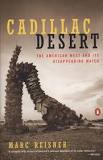
indexCadillac Desert: The American West and its Disappearing Water  by Marc Reisner   The American West has been settled for barely 150 years. It was desert then, and with massive amounts of finite water diverted from rivers and aquifers, we’ve pared back tiny portions to create oases like Phoenix, Reno, Los Angeles, and San Diego. Despite trillions of dollars to build dams, drill wells, and pump water thousands of miles in pipes, the west still remains one of the driest places on Earth.

Plastic: A Toxic Love Story  by Susan Freinkel       Plastic. It’s everywhere. Not only around us, but inside us as well. Freinkel shows us not only the impact plastic has on our daily lives  , but how all that pervasive plastic affects us in ways we don’t realize – such as the soft plastics that leach out of IV lines. Some plastics are more toxic than others: generally the softer the plastic, the more toxic it is.  And every time you heat your food in a plastic dish in the microwave, you put yourself at risk. No plastic ever degrades, it just crumbles, which creates hazards of its own. Plastics have their uses, yes, but at what cost to our health and environment?

Six Degrees: Our Future on a Hotter Planet by Mark Lynas    In 1816, the climate change from the eruption of Mount Tambora was estimated at seven degrees. For 18 months, global weather patterns were upended, resulting in relentless heat in the wrong areas, extreme drought in others, monumental flooding, and snow and freezing temperatures twelve months out of the year as far south as Georgia.  In Six Degrees, Lynas walks the reader through the changes the world can expect to experience with each degree of increase of average daily temperature. The picture is not pretty. If man has difficulty adapting to such major swings in such short times, how can we possibly expect plants and animals to adapt?

The Coming Plague: Newly Emerging Diseases in a World Out of Balance by Laurie Garrett.   Bad drinking water, misuse of antibiotics, deforestation, wars, refugees, poverty, and unsanitary living conditions all factor to create superbugs.  The diseases have always been with us, but it’s the close proximity to carrier animals that allows the diseases to pass to man. Garrett outlines the path these diseases take, and how it’s not too late to prevent another devastating global plague. This book will scare you in all the right ways.

The Lorax  by Dr. Seuss.    Ignore the dayglo movie. The Lorax, first published in 1971, is a wonderful way to introduce ecology and respect for nature to children. When the Trufula forests are in danger of extinction from overuse, it brings out the Lorax, who “speaks for the trees, for the trees have no tongues.”  The Lorax is a fable about caring for nature, sustainability, and never taking more than we need.