Sherlock Holmes’ Younger Sister

Did you know that Sherlock Holmes has a younger sister? Me, either, until I encountered the amazing Enola Holmes.
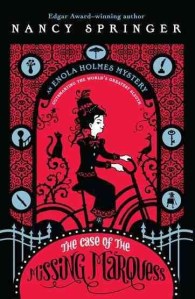
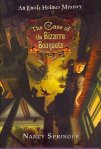
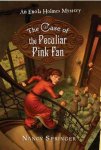
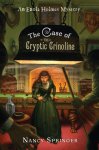
Author Nancy Springer has written an intriguing children’s series about the exploits of Enola, a girl left on her own on her fourteenth birthday when her mother walks out of the house and disappears. Once her two much older older brothers Mycroft and Sherlock Holmes, learn what has happened, they decide that the best thing would be to place Enola into a boarding school.

The free-spirited Enola has other ideas. Her mother has left behind codes and clues, leading Enola to hidden stashes of money. Once she has enough, she slips away and travels on her own to London, where she turns her talents to becoming a perditorian, a finder of the lost. Having mastered the art of disguise, Enola manages to stay two steps ahead of Sherlock and Mycroft while solving crimes in London.

I confess, I love reading children’s books. This series in particular is entertaining for adults as well as kids because it is not over-simplified. Enola frequently uses terms such as “proboscis”  and “perditorian” and the solutions to the mysteries are not obvious. London’s social rules are humorously and sometimes  poignantly viewed through the eyes of Enola, who often is outraged at the restrictions society places on women. The darker, crueler side of London is also depicted in sobering scenes of poverty, filth, crime, and disease.

It was also announced this year that Millie Bobby Brown (of “Stranger Things” fame) will be starring in a film series based on the Enola Holmes series.

Kids will love the clever Enola, who can disguise her self so well, she often walks right past her two older brothers without them even recognizing her! Adults will delight in Enola’s interactions with her brother Sherlock, which are written with wit and humor. As a Sherlock Holmes fan, I greatly enjoyed this portrayal of the world’s most famous fictional detective. He genuinely cares for what he views as his wayward sister and comes to respect her intelligence and courage. He and Enola have some very amusing adventures before the ending of the series.

There are six titles in all, and I wish there were more. Highly recommended for all readers interested in mysteries, Sherlock Holmes, and Victorian London.

Isle of Dogs

I’m aware Studio Ghibli is a big deal, with assets worth more than 15 billion dollars, five Oscar nominations and a win to their name (2003, Spirited Away), and my kids love them, but I don’t much care for Japanese Anime, or Japanese animation in general. Steeped in the beauty of classic Disney and Warner Bros., I hate the minimalist design style of Pokemon, Power Rangers,  Howl’s Moving Castle, and others of that genre. So, when I started seeing previews for Isle of Dogs, a stop-motion animation set in Japan, I was really confused as to why I wanted to see it.

A Multi-cultural Film

In truth, it’s hard to call Isle of Dogs a Japanese film, no matter what it seems like it should be, based on content and style. It’s written and directed by American Wes Anderson (Grand Budapest Hotel, Fantastic Mr. Fox), co-produced by Germany, takes place in Japan, and contains a fair amount of Japanese conversation and several Japanese actors (including Yoko Ono, who mercifully does not sing). If anything, it’s an homage to Japanese films. The story takes place in the fictional city of Megasaki, where a dog flu has taken hold and there is worry it could transfer to humans. The corrupt Mayor banishes all dogs to Trash Island – starting with the dog of his ward, 12 year old Atari Kobayashi, despite the assurance of a scientist that he has a cure. Atari sets out immediately to get his dog back, and the story begins.

Incredible Animation

The draw for me was that the film is dependent on stop-motion animation, not any style of art. This is dolls come to life – the dogs were filmed with animatronic heads, giving a life-like range of facial movements. Characters have a living translucence that is often achieved with wax over porcelain, but here was done with special resins and computer programs to coordinate freckle movement. Having grown up on Art Clokey’s Gumby, and Davey and Goliath, the dominating force in claymation from the 1950’s through 1989, and all those Rankin-Bass Christmas specials such as Rudolph, claymation and stop-motion animation have a very fond place in my heart. The animation in Isle of Dogs is superb, right down to blowing fur, and watch for it come Oscar season. If you doubt it, just watch the sushi-making scene.

That’s fine, but what about the story? Giving Dogs a PG-13 rating seems harsh (especially when the highly controversial Show Dogs was given a PG) – there’s no sex, no major swearing, some mildly upsetting scenes of experimented dogs and threatening robots, implied violence but not graphic, but I would consider it appropriate for ages 9 and up – some of the themes could be upsetting to younger children (such as euthanasia, and a dog that starved to death). Overall, Isle of Dogs is a sweet, caring story about a boy who loves his dog and will go to any lengths to get him back. It’s endearing, heartwarming, cheer-worthy, with several good laughs – well-worth a movie admission price.

Controversy

Of course, nothing, nothing today is without controversy and because this is not an actual Japanese film, there was an outcry of cultural appropriation and insensitivity, that the culture is seen through American eyes and is more caricature than accurate. However, when shown to native Japanese, the reactions were positive.

Isle of Dogs was released on DVD and Blu-ray on July 17, 2018. Although it’s a wonderful animated film about a boy and his dog, it is not a sensitive-child’s movie. If you love animation, if you love rebellion, if you love dogs, be sure to give it a try.

Turtles All the Way Down

It’s been almost six years since YA uber-author John Green has published a new book (something we wrote about a while back). That’s almost  generation’s worth of his target audience – many teen readers will have been too young for his last book, The Fault in Our Stars, when it was published in 2012. The rocket-like success of that book (and subsequent movie) was both a blessing and a curse for Green: his books were being read by millions more people, but that success resulted in a period of crippling anxiety for the author. The expectations for his next book felt so overwhelming, that for a while he could not write at all.

Green has not made a secret of the fact that he’s wrestled with Anxiety and Obsessive-Compulsive Disorder most of his life, and what it’s like to live with mental illness is the overriding theme of Turtles All the Way Down. Aza Holmes, the narrator of the book, struggles mightily to control the obsessive thoughts that often consume her, which she calls “thought spirals” that grow more and more tightly coiled until she is driven to a compulsive behavior to quiet them.

The ostensible plot of the book is a mystery: the famous father of a childhood acquaintance has has skipped town to avoid legal troubles, and Aza’s BFF Daisy is convinced the two of them can figure out where he is and collect the $100,000 reward.  TATWD has all the John Green-isms we’ve come to expect: the quirky best friend, the seemingly impossible task, the sweet love story, and everyone’s got a poem or literature quote ready to go at a moment’s notice, (John Green characters are a bit more well-read and well-spoken than the general teen-aged public). But the real journey the reader is taken on is what it’s like to live in a hijacked mind.

Aza has a dread of germs. One of the first compulsions we witness is Aza forcing open a wound on her fingertip, so that she can clean and sanitize it before covering it up with one of her constant supply of band-aids, a ritual she performs so often that the wound never completely heals. Hand sanitizer is used combatively –  at one point she even starts drinking it.  Aza’s helplessness in the face of these thoughts and compulsions can be painful to read, and there’s no “all better now” resolution at the end – the prevailing takeaway is it’s ok not to be ok sometimes. Green has managed to paint a picture of mental illness that is more matter-of-fact than sensational, and the writing is evocative and mature. It’s a thoughtful novel that will appeal to adults as well as teens, and well worth the six-year wait.

Five stars.

Versions and Duplicates (and Elvis)

I have a playlist on my iTunes called Versions and Duplicates. Here I stick all the various versions of songs I like by different artists – whether it’s Sons of Anarchy, Rod Stewart, or Bob Dylan singing Forever Young, or the Sons of Anarchy version of Bohemian Rhapsody vs. Queen, or six different versions of Hallelujah (I still like Leonard Cohen’s best from the soundtrack for Watchmen, followed by perhaps the Canadian Tenors, and a couple of on-line ones). I love Alice Cooper’s version of Eleanor Rigby almost as much as the original, so this file is actually kind of large.

Years ago, I’d read in the Book of Lists that Yesterday by the Beatles was the most-sung song ever, with more than a thousand people recording their version of it. Forty years later, it still holds the record, with more than 4,000 recordings. I only have two on my playlist.

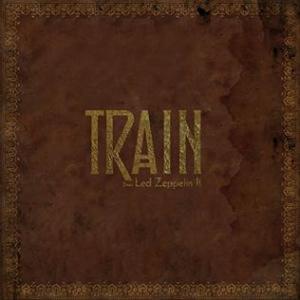
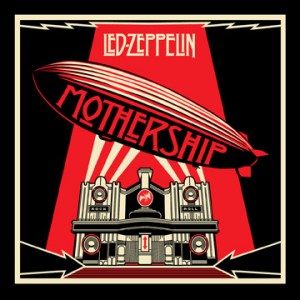
So when a disk came through my hands – Train Does Led Zeppelin II, I had to listen to it. I liked Drops of Jupiter, their biggest hit, and I liked Led Zeppelin. I love, love, love Iron Horse’s bluegrass version of Zep, Whole Lotta Bluegrass: A Vocal Bluegrass Tribute to Led Zeppelin (it really works, and you can understand the lyrics), and the Rock a Bye Baby lullaby series’ version, played on marimba of all things, is strangely beautiful and calming.

Although the first track, Whole Lotta Love, is perhaps the best of the album, it blew me away. Outside of a word or two, and perhaps the depth of a couple of riffs, Train nails the music dead on. It’s hard to tell it’s not Zep or Robert Plant himself. Truly, if you’re a fan, this is an album you should listen to.  Most of the criticisms of the album revolve around “Why did we need this album?” “Who is Train to think they can play Zeppelin?” I say, “Why not?” and “Who cares?” These are proficient musicians; if they want to play Zep, then let them play it.  Those critics have never heard me pick out Stairway to Heaven on the piano, the only two-handed piece I know.  And here’s why those critics don’t matter:

On the internet (stupid move) I wound up poking into a bee’s nest of Led Zeppelin tribute albums in a mind-boggling array of styles. If you don’t like rock music, if you don’t like screechy lyrics, that is absolutely no reason to skip Led Zeppelin. The music triumphs over the style, and the true genius appears.

Is banjo your favorite instrument? Check out Iron Horse’s album.

Just like bluegrass?  Try Pickin’ on Led Zeppelin, by the Pickin’ On series. A lot of harmonica mixed with banjo and fiddle. Yes, Led Zeppelin on the harmonica.

Prefer Metal? Dead Zeppelin: A Metal Tribute, by Dead Zeppelin. The Immigrant Song sounds like someone left the crypt open and all the demons are headbanging.

Classical tastes?  Chamber Maid: The Baroque Tribute to Led Zeppelin. Imagine you were invited to visit Louis XVI, and a quartet was playing in the corner, and you realized you knew that tune. Like that. Light and flutey, and always beautiful.

Prefer classical guitar? Richard DeVinck plays classical nylon strings on his album Going to California. Too plinky for me, but remember, Stairway to Heaven is a guitar song anyway, so it sounds lovely.

Celtic roots? High step to A Celtic Tribute to Led Zeppelin. The rhythm’s a bit faster, but it’s catchy!

Too laid back for rock? Prefer the reggae beat? Try Dread Zeppelin: Dejah Voodoo: Greatest and Latest Hits. This isn’t just a band that travels around singing Zep songs in reggae style, but with a lead singer who’s an Elvis impersonator.  Definitely a more funky beat, but the style, to me, was lacking, and sounded way too much like a guest star in a pretend cabaret on The Love Boat. I warned you.

Prefer to chill? Try Dub Tribute to Led Zeppelin, full of ethereal dub beats that will put you into a trance to familiar (or maybe not quite so familiar in this style) music.

And all that diversity doesn’t begin to touch on the number of top musicians paying tribute by cranking out serious Zeppelin tunes.  Troll elsewhere, critics.

Now, Zeppelin’s not the only band that attracts cover artists. I wouldn’t begin to count the number of Beatles covers, or Rolling Stones. Rock a Bye Baby covers everything from AC/DC to ZZ Top. Iron Horse does an amazing array of artists in bluegrass style, including Modest Mouse and Metallica. So dare to be different. Try a familiar song done in a new way, or by a new artist. You may just find a new favorite.

Man-Oh-Manilow

Not everyone can keep a career going for fifty years. Desk workers get bored, factory workers get sold out, artists get stuck in a groove and lose inspiration (et tu, Thomas Kincade?) Musicians are not immune, either – anyone remember a recent hit song by Rupert Holmes, B.J. Thomas, or Debby Boone?

Thought so.

Some talents, however, can’t be squashed. Paul McCartney, Rod Stewart, Robert Plant, and Tom Petty are just a few of the extremely talented musicians who are still pumping out music in various new forms, rock, classical, jazz, or folk, after more than fifty years.

So is Barry Manilow.

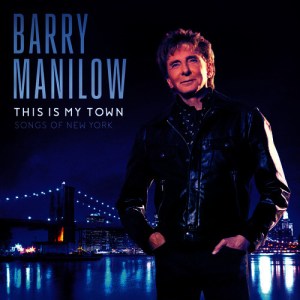
Barry Manilow first hit the charts forty-four years ago. An easy two generations. And with his latest album This is My Town: Songs of New York, Manilow shows he’s still at the top of his game.

Sure. Manilow isn’t for everyone. Say his name and images of white disco suits, sunshiny bright smiles, and Dr. Pepper come to mind (Manilow wrote or sang the hottest 70’s jingles for Dr. Pepper, McDonald’s, Band Aids, and more). Say you’re a Manilow fan and people smile politely and take a step sideways. But whether you like him or not, he’s a musical powerhouse.

In This is My Town, Manilow gives tribute to New York City. Maybe it’s refinement, maybe it’s age – he’s now 74, but his voice has gained a maturity, a deeper tenor that says he’s in command and making a hit is easier than crossing a New York City street. The album is short – just ten songs – and contains a variety of styles.  The first track, This is My Town, is breathtaking, a huge, glorious, Broadway-esque song that begs to be turned into an entire musical. Unfortunately, putting your best first means the rest of the album tends to fade.

Not that the tracks are bad; they just aren’t my style. Manilow drops into several tracks of smooth jazz, more in line with a Las Vegas lounge act than a hot New York club scene. While Manilow is no Petula Clark, his mashup of “Downtown/Uptown” is quite likeable. My only issue with the closing track of “NYC Medley” is that he starts with a cut of Billy Joel’s “New York State of Mind”; I wish he’d sung the entire song. He does end with a vibrant rendition of “New York, New York,” which is both fitting and energizing, reminding  you exactly why he is so popular.

Listen to it, even just for the first track. Barry, team up with a good playwright, and get that song made into a musical. It needs it. If you like smooth jazz, Broadway, cheerful music that is easy on the ear, New York City, or even just Barry Manilow, this is an album you won’t want to miss.

Which brings up the question – can Manilow write a song that isn’t upbeat? Sure, Could it Be Magic is in a minor key, and Mandy isn’t exactly a cheerleading tune (replace Tony Basil’s Mickey with Mandy?), but it’s not a throw-yourself-in-the-grave tearjerker like Goldsboro’s Honey or Clapton’s Tears in Heaven (written on the death of his five year old son). Chase Holfelder’s a musician who takes upbeat songs (like Girls Just Wanna Have Fun, or Disney’s Kiss the Girl), works them in a minor key, and turns them into haunting pop tracks. Maybe Manilow should be the next thing he tackles.