I had no idea that there was an entire month dedicated to my favorite pastime (aside from reading of course). March is apparently National Crochet Month! I use crochet to relax and unwind while at the same time making something. I often find myself saying “just one more row”, or “as soon as i finish this color” when I should really be getting up to cook dinner or go to bed at night. A bonus is that while working on something simple or very comfortable for me I can read or watch television as I work away.
Are you a fellow crocheter, or someone that wants to learn or pick it up again after a long hiatus? Do you want to learn from scratch,  pick up some new stitches, or help someone else learn? Well, thankfully the library has a variety of books to help regardless of skill level. There are even books in our children’s section to help teach the younger generations how to love yarn and hooks as much as I do.
Here are some great books to get you started, help you brush up on the basics, and learn some new stitches and techniques in the process:
1. The Crochet Answer Book by Edie Eckman
2. How to Crochet: the Definitive Crochet Course, Complete with Step-by-Step Techniques, Stitch Libraries, and Projects for your Home and Family and Pauline Turner
3. Ultimate Crochet Bible: a Complete  Reference with Step-by-step Techniques by Jane Crowfoot
4. Rowan Presents Crochet Workshop: the Complete Course for the Beginner to Intermediate Crocheter by Emma Seddon & Sharon Brant
5. Crochet-opedia: the Only Crochet Reference You’ll Ever Need by Julie Oparka
6. 200 Crochet Tips, Techniques & trade Secrets by Jan Eaton
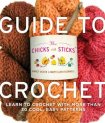
7. The Chicks with Sticks’ Quide to Crochet: Learn to Crochet with More than Thirty Cool, Easy Patterns by Nancy Queen and Mary Ellen O’Connell
 8. Donna Kooler’s Encyclopedia of Crochet
9. Teach Yourself Visually Crochet by Cecily Keim
10. Not Your Mama’s Crochet: the Cool and Creative Way to Join the Chain Gang by Amy Swenson
Looking for some unique or comprehensive pattern col lections or more advanced instruction? Well, then you might want to check out: Crochet Master Class: Lessons and Projects from Today’s Top Crocheters by Jean Leinhauser and Rita Weiss, Crochet One-Skein Wonders: 101 Projects from Crocheters around the World edited by Judith Durant and Edie Eckman, Hip to Crochet: 23 Contemporary Projects for Today’s Crocheter by Judith L.
  Swartz, The Big Book of Weekend Crochet: Over 30 Stylish Projects by Hilary Mackin and Sue Whiting, 200 Crochet Blocks: for Blankets, Throws, and Afghans by Jan Eaton, Couture Crochet Workshop : Mastering Fit, Fashion, and Finesse by Lily M. Chin, Calamity-Free Crochet: Trouble-shooting Tips and Advice for the Savvy Needlecrafter by Catherine Hirst, The Ultimate Sourcebook of Knitting and
 Crochet Stitches, Big Book of Crochet Afghans: 26 Afghans for Year-Round Stitching, Knit-and-Crochet Garden , or Candy Crochet: 50 Adorable Designs for Infants & Toddlers by Candi Jensen.






 Are you one of the lucky ones who got a large-screen TV for the holidays this year? Did you just replace an aging (and heavy) old picture-tube with a nice, light digital flatscreen, or did you go all-out and get that giant 50, 60, or even 80” monster that feels like you’re at the movie theater? Aren’t those digital cable channels amazing crystal clear?
 ng out and making it look – well, not like a TV picture? There’s a reason for that. “Normal” TV pictures, those we’ve all grown up with, “refresh” or “run” at a speed of 60 frames per second (if you’ve ever seen a reel-to-reel movie, maybe in school, think of all those still frames whipping through the machine to make the movie move, and think of sixty of those still pictures every second, or 3600 of them every minute). That’s what our brains can process as smooth motion, and makes our TV look like TV.
 A little, but not necessarily much. Go to your TV’s “settings” selection. There will be a setting that addresses “motion,” “motion control,” or “motion smoothing,” or some other term usually with the word motion – Google your exact TV model number for the term your TV uses. Most TVs come from the factory with the motion smoothing default setting to ON. Find your TV’s setting and simply turn the control to OFF. Yes, sometimes it’s easier said than done, and in my case it helped a little but not a lot.
 e you do. Some are better at it than others, and it is more bothering to some people than others; it’s really a personal preference. I’m learning to live with it, trading in the awe of seamless clarity on special effects (watching the SHIELD helicarrier lift off from the water in The Avengers was jaw-dropping incredible) for the weird teleplay of people speaking. Unfortunately it’s the shape of things to come, and eventually we’re all going to have to adjust.
 The Cheshire Library Blog