Susan Reads: The Year Without Summer: 1816 by William Klingaman

Think winter’s lasting too long?  Imagine 18 straight months of cold and snow.

I’ve always liked books on natural disasters, and exploding volcanoes are about the biggest you can get. They spawn earthquakes and tsunamis, send pyroclastic flows racing down hillsides to poison and bury entire towns (Pele, Vesuvius, Pinatubo), blow entire islands away (Thera, Krakatoa), appear overnight (Parícutin), or ooze for years (Kilauea). They can also create spectacular sunsets for months afterward, or, if they’re really determined and throw huge amounts of ash too high into the air, they can change the climate of the entire Earth in a matter of weeks. This is what happened in 1816, when Mount Tambora, a fiery grumbling volcano, blew up in Indonesia, with the largest volcanic eruption in recorded history. The Year Without Summer: 1816 tells how this single volcanic eruption in the tropics had far-reaching effects around the world.

Mount Tambora didn’t just explode, like Krakatoa. It blew like a fountain, throwing so much ash into the air that it blackened the sky for thousands of miles and created a cloud of dust that blocked out the sun. This just happened to occur while the sun was at its coolest point in its cycle anyway (the Maunder Minimum). The resulting cooling of the ground (a 7-degree difference) brought on dire climate changes (parts of New Hampshire didn’t receive a drop of rain for more than 3 months, while Switzerland experienced horrific flooding), wild swings in temperature (July temps would hit 95 one day and it would snow the next), but mostly an unrelenting cold that prevented seasonal changes and destroyed most crops as far south as the Carolinas. It created dire famines and unrest through most of the British Isles and western and central Europe that lasted through 1818, beginning a wave of immigration that helped spread America westward.

Klingaman explores in great detail the effects of the climate change on political structures  in America and Europe, from the election politics of young America to disruptions in France, England, and Ireland. He spends a great deal of time discussing the travels of  Lord Byron, Percy Bysse Shelley, and Mary Wollstonecraft Shelley through Europe and Switzerland, who all wrote oodles of letters fretting about the weather. The darkness and seclusion caused by the weather gave rise to Mary Shelley’s famous masterpiece, Frankenstein.

Myself, I did not care for the book. Unlike Winchester’s Krakatoa, Klingaman barely discusses the volcano; it’s a cause for the book, not a main character, more like a shadowy villain behind the scenes. Instead, most of the book is about the American and European political fallout because of the climate change. I understand most of the voluminous information comes from primary sources, and because it’s 1816 there is a lot of relevant written information of the time, but I picked up the book wanting to read about a volcano. If you like history and politics, or biographies of Mary Shelley, you might enjoy the book.  If you’re looking for stories of volcanic glory and the birth and death of islands, go read Krakatoa.

Staff’s Favorite Books of 2013

book collage 2

One of the great perks of working in a library is access to copious amounts of books to choose from for our reading pleasure.  One of the biggest drawbacks of working in a library is access to copious amounts of books!  The Cheshire Library staff love to read and I thought it would be fun for them to list their favorite books they read or listened to in 2013.  They were very busy readers!  Below is just a sampling of some of the titles our library staff submitted.

Adult Fiction

The Bone Season by Samantha Shannon

The Burgess Boys by Elizabeth Strout

Canada by Richard Ford

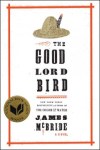
The Good Lord Bird by James McBride

Life After Life by Kate Atkinson

Me Before Youby Jojo Moyes

Mr. Penumbra’s 24-Hour Bookstore by Robin Sloan

Orphan Train by Christina Baker Kline

State of Wonder by Ann Patchett

Three Sisters by Susan Mallery

White Dog Fell From the Sky by Eleanor Morse

We Are Water by Wally Lamb

Romance

Bachelor Firemen (series) by Jennifer Bernard

The Bad Boys of Crystal Lake (series) by Julianna Stone

Bad Boys of Red Hook (series) by Robin Kaye

Cowboy Take Me Away by Jane Graves

Free Fall by Catherine Mann

The Sullivan Brothers (series)by Bella Andre

Thrill Rideby Julia Ann Walker

The Way Homeby Cindy Gerard

What She Wants by Sheila Roberts

Whiskey Creek (series)by Brenda Novak

Science Fiction

Retribution Falls by Chris Wooding

Mystery

A Book Town Mystery (series) by Lorna Barrett

Killer Librarian by Mary Lou Kirwin

The Snowman by Jo Nesbo

A Tea Shop Mystery (series)by Laura Childs

A Witchcraft Mystery (series) by Juliet Blackwell

Christian Fiction

For Every Season by Cindy Woodsmall

The House That Love Built by Beth Wiseman

Pearl In The Sand by Tessa Afshar

Take A Chance On Me by Susan Mary Warren

Adult Non-Fiction

The Autistic Brain: Thinking Across the Spectrum by Temple Grandin

Behind The Beautiful Foreversby Katherine Boo

Drunk Tank Pink by Adam Alter

Lost Empire of Atlantis by Gavin Menzies

The Smartest Kids in the World and How They Got That Way by Amanda Ripley

Biography

Caveat Emptor: The Secret Life of an American Art Forgerby Ken Perenyi

Walden on Wheels: On the Open Road From Debt to Freedom by Ken Ilgunas

Wild: From Lost to Found in the Pacific Coast Trail by Cheryl Strayed

Audiobooks

The Good House by Ann Leary – Read by Mary Beth Hurt

The Mermaid of Brooklyn by Amy Shearn – Read by Hillary Huber

The Orphan Master’s Son by Adam Johnson – Read by Tim Kang, Josiah D. Lee, James Kyson Lee, Adam Johnson

One Summer: America 1927 by Bill Bryson – Read by Bill Bryson

Young Adult

Aristotle and Dante Discover the Secrets of the Universe by Benjamin Alire Saena

Boy 21 by Matthew Quick

The Fault In Our Stars by John Green

Scorpio Races by Maggie Stiefvater

Seraphina by Rachel Hartman

Children

Bugs in My Hair! by David Shannon

The Dark by Lemony Snicket

The Day the Crayons Quit by Drew Daywalt

I’m A Frog! by Mo Willems

Pete the Cat: I Love My White Shoes by Eric Litwin

Foreign Language Books for the Younger Set

Did you know that there is a small collection of nonfiction books, picturebooks, and chapter books in the children’s section in languages other than English? From dictionaries to long time children’s favorites, we have something to interest most readers that either speak two or more languages or want to learn. We also have some DVD’s to teach foreign languages to children, or adults like myself that have trouble learning new language. Here is a small selection of the books from some of the languages we have on the shelf.

French:
ABC x 3 : English, Español, Français by Marthe Jocelyn and Tom Slaughter.
French Phrase Book by Jane Wightwick and Wina Gunn with illustrations by Leila Gaafar and Robert Bowers.
Bonsoir Lune by Margaret Wise Brown with illustrations de Clement Hurd.
Babar a New York by Laurent de Brunhoff.
Le Hibou et la Poussiquette (freely translated into French from the English of Edward Lear’s “The owl and the pussy-cat.”) with illustrations by Barbara Cooney.
Le Bon Lion by Louise Fatio with images by Roger Duvoisin.

Spanish
Nancy la Elegante by Jane O’Connor with illustrations by Robin Preiss Glasser, translation by Liliana Valenzuela.
De Colores (Bright with colors) pictures by David Diaz.
Me llamo Gabito: la Vida de Gabriel García Márquez (My Name is Gabito: The Life of Gabriel García Márquez) by Monica Brown and illustrated by Raúl Colón.
El Ratoncito de la Moto by Beverly Cleary with translation by Lydia Permanyer Netto
La Ardilla Listada by Patricia Whitehouse with translation by Patricia Abello
Te Amo, Bebé, Little One by Lisa Wheeler and illustrated by Maribel Suárez.
La Araña muy Ocupada by Eric Carle.
Harry Potter y la Piedra Filosofal by J.K. Rowling and translation by Alicia Dellepiane

Chinese
Milet Picture Dictionary, English-Chinese text by Sedat Turhan and illustrations by Sally Hagin.
To Grandmother’s House: A Visit to Old-Town Beijing with text and photographs by Douglas Keister.

Hebrew
The Jewish kids’ Hebrew-English Wordbook by Chaya M. Burstein.
Count Your Way Through Israel by James Haskins,

Italian
My First Book of Italian Words by Katy R. Kudela with translation by Translations.com.
Count Your Way Through Italy by Jim Haskins with illustrations by Beth Wright
Italian Bilingual Dictionary: A Beginner’s Guide in Words and Pictures by Gladys C. Lipton and John Colaneri.

Japanese
My First Book of Japanese Words by Katy R. Kudela with translations by Translations.com
Where Are You Going? To See My Friend!: A Story of Friendship in Two Languages by Eric Carle
A Place Where Sunflowers Grow (Sabaku ni Saita Himawari) by Amy Lee-Tai
Count Your Way Through Japan by James Haskins

For even further language resources come check out our foreign language shelf in the children’s room, the instructional DVD’s, or either of the two electronic resources our library offers access to; Muzzy Online and Transparent Language Online.

O, The Oprah Magazine Picks 10 Best Books of 2013

oO, The Oprah Magazine has highlighted some wonderful books throughout the year, but has chosen the following as the 1o Best Books of 2013.

The Isle of Youth by Laura van den Berg – This book explores the lives of women mired in secrecy and deception. From a newlywed caught in an inscrutable marriage, to private eyes working a baffling case in South Florida, to a teenager who assists her magician mother and steals from the audience, the characters in these bewitching stories are at once vulnerable and dangerous, bighearted and ruthless, and they will do what it takes to survive.

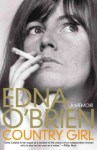
Country Girl: A Memoir by Edna O’Brien – A rich and heady accounting of the events, people, emotions, and landscape that have imprinted upon and enhanced one lifetime.

The Signature of All Things by Elizabeth Gilbert – A story of love, adventure and discovery. Spanning much of the eighteenth and nineteenth centuries, the novel follows the fortunes of the extraordinary Whittaker family as led by the enterprising Henry Whittaker—a poor-born Englishman who makes a great fortune in the South American quinine trade, eventually becoming the richest man in Philadelphia.

Vampires in the Lemon Grove by Karen Russell – A magical new collection of short stores.

The Flamethrowers by Rachel Kushner – The riveting story of a young artist and the worlds she encounters in New York and Rome in the mid-1970s—by turns underground, elite, and dangerous.

The Good Lord Bird by James McBride – The story of a young boy born a slave who joins John Brown’s antislavery crusade—and who must pass as a girl to survive.

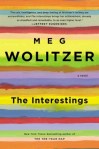
The Interestings by Meg Wolitzer – The summer that Nixon resigns, six teenagers at a summer camp for the arts become inseparable. Decades later the bond remains powerful, but so much else has changed.

The Cuckoo’s Calling by Robert Galbraith – A brilliant mystery in a classic vein: Detective Cormoran Strike investigates a supermodel’s suicide.

Dog Songs by Mary Oliver – A collection of new and favorite poems, celebrating the dogs that have enriched the poet’s world.

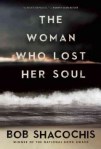
The Woman Who Lost Her Soul by Bob Shacochis – In riveting prose, Shacochis builds a complex and disturbing story about the coming of age of America in a pre-9/11 world.

Susan Reads: The Smartest Kids in The World

America’s schools are abysmal; in the world arena, our students barely break the top 20, ranking down there with Lichtenstein – and private prep schools aren’t significantly better.  In fact, America scores only seven points higher than dead center. We blame poverty, we blame spending, we blame teachers, parents, curricula, lack of diversity – but no one has come up with an actual plan that works.

               In The Smartest Kids in the WorldTime journalist Amanda Ripley follows three American exchange students of different backgrounds to some of the highest-scoring countries in the world – laid-back Finland (#3), the pressure-cooker of South Korea where students are in school more than 14 hours a day (#2), and upcoming Poland (#15), which, despite poor standing as a poverty-stricken, post-communist country, managed to climb from the bottom to the top ranks in only three years because of drastic and ongoing reforms.

                Not everything is rosy in all places; there are still pitfalls to each system, but one thing remains common to all good systems: value the education.  When anyone in America becomes a teacher because they want to be a sports coach, there’s a problem. All top countries made it extremely difficult to become a teacher – thus, only the top teachers actually make it to the classrooms.  Sports are not included in school; they are strictly extra-curricular.  Teachers are paid very well for making it that far – and if their students slide, they can be fired far easier than in America  – why keep a bad teacher?  Seriously – why do we do that? In most of these places, the teacher is not the focus. It is not about holidays, or length of day, or passing endless standardized tests: it’s about imparting learning to the child.  Education is about the child’s learning, and nothing else.

Ms. Ripley’s research illuminates what is wrong with our educational system, and lays out a course  to work towards fixing it. This book is a fantastic wake-up call to educators of all children, from Pre-K to college. It’s a fast, easy read that will leave you very angry with the status quo. – a must-read for anyone concerned about the state of education in America.

Go. Read it. And start bugging your schools.