Susan Reads: The Riddle of the Labyrinth by Margalit Fox

Every now and then a book comes along and all you can say is, “WOW!”

That’s my reaction to The Riddle of the Labyrinth: The Quest to Crack an Ancient Code, by Margalit Fox.

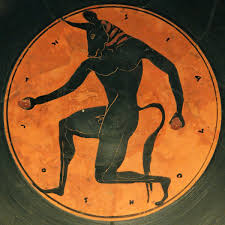
Ever hear of the minotaur, the half-man, half bull that lived in the center of the labyrinth, built by King Minos on ancient Crete?  As with most myths, this was one of those partly based on fact.  There was a palace of Knossos, on ancient Crete (which lies in the middle of the Mediterranean), and there was a King Minos, although the name seems to have been a general title, not a specific person. His palace was huge, hundreds of rooms built, well, in a maze-like fashion. For reasons unknown, the palace burned down sometime between 1450 and 1400 BCE, or about 3400 years ago, and that marked the end of the great Minoan civilization. And this we know for fact because Arthur Evans dug up the palace in Heraklion, Crete, in 1900.
And he found a storeroom.

With more than 2000 written clay tablets, baked by fire, still sitting there.

But what script was it? It wasn’t Egyptian hieroglyphics. It wasn’t Phoenician. It was too old for Ancient Greek. Unraveling the mystery would shed light on Bronze-age European civilization.  Scholars worked on it for years, including one Antiquities professor of Brooklyn College, Alice Kober. Kober, with incredible intelligence, scientific method, and a knack for languages that was almost frightening, through extreme perseverance managed to work out the basics, realizing that the mysterious language – known as Linear B – was written left to right, had different endings for masculine and feminine, and was a syllabary – a language where each symbol (read ‘letter’, if you wish) stood for a syllable of a word, not an individual letter, much like Japanese kana does. Kober poured her life into decoding the script. She came very close, but died before she could finish it.

Enter Michael Ventris, a quirky little upstart twenty years younger, a lonely child prodigy who, like Kober, mastered languages the way a sponge absorbs water (because everyone should know ancient Hittite and Etruscan). Ventris had been intrigued by Linear B since he was 14, if not outright obsessed.  Untrained (he went to a trade school to become an architect, but never took a college class at all), he corresponded with some of the greatest scholars of ancient civilizations, read Kober’s papers, put ideas together, sometimes wrong but sometimes right, and just 18 months – 18 heartbreaking months after Kober’s death, broke through the code of Linear B – a writing system native to Crete, but bent to write an ancient Greek dialect 400 years older than Greek was thought to be. The discoveries of other, similar tablets also written in Linear B on the mainland of Greece and surrounding territories corroborated the information. A whole new era in historical understanding was broken open, and the timeline for civilization had to be pushed back to accommodate it.

This book reads like a fascinating detective novel.  I could not put it down.  It’s like watching the film of Titanic – you know the ending, but you’re gripping your seat the entire time anyway. Fox’s style is extremely easy to follow and to read – she drops little hints about what’s to come and then speeds ahead, and you can’t stop reading.  If you love ancient history, if you love languages, cryptology, biographies of women in science or just a really good story, then read this book. It was truly a pleasure to read it.

Guiding Reading What? (What Kind of Reader is my Child, Part Deux)

So, if you read What Kind of Reader is my Child? you will have a  understanding of the general terminology about reading development and where your child might be in the process.  But what about all those crazy level letters and numbers at the end of each definition? Well, here is some of the basic information and resources that can help you get a handle on that part as well. I am going to toss in an extra one, which I know some local schools are assigning to advanced readers.Screen Shot 2014-01-09 at 4.49.43 PMWhich systems you need to pay the most attention to will vary by school. Most schools do use the DRA testing system. However I know that Cheshire, Southington, and Wallingford also use the Fountas & Pinnell Guided Reading Leveling (GRL) system for classroom use. You can use this chart on the Scholastic website to help understand how the levels correspond. You will note that there are even more leveling systems included on the chart, but I am going to focus on the most used systems in our area.

Fountas & Pinnell Guided Reading Leveling system (GRL) starts with level A, being the easiest, and goes up to Z. These levels are based on benchmark assessments or other systematic observations are used to determine the instructional reading level of each student.  Our library offers a variety of fiction and non fiction books from level A through G labeled and sorted by level for check out. Feel free to browse the collection or help finding books, but if you would like help, please stop by the children’s desk for assistance.
Developmental Reading Assessment system (DRA) also starts with level A for the easiest books, but  switches to numeric levels which run from 1 to 80. A child’s DRA reading level is based on is a standardized reading test.  During the test students read a selection (or selections) and then retell what they have read to the examiner. Most of our area schools use this standardized testing system to help gauge reading skills and comprehension, but many combine the information they get from this system with the GRL system.

A Lexile text measure is based on the semantic and syntactic elements of a text. A Lexile reader measure can range from below 200L for emergent readers to above 1600L for advanced readers.  This system tends to be the hardest translate from skill level and rating to book recommendations, at least for me. Most of the focus on these numbers come into play after children are fluent readers. For charts that break down which Lexile ratings are average by grade and further details, I highly recommend exploring their website. The site offers a search tool that allows you to find books based on Lexile level and then limit by age and interests so that you can find reading material for just about any fluent reader.


For more information on the stages of reading development and encouraging reading check out: Early Literacy by Joan Brooks McLane, Gillian Dowley McNamee, Straight Talk about Reading: How Parents Can Make a Difference During the Early Years by Susan L. Hall and Louisa C. Moats,  Matching Books to Readers: Using Leveled Books in Guided Reading, K-3 by Irene C. Fountas and Gay Su Pinnell (reference book that cannot leave the library), The Book Whisperer: Awakening the Inner Reader in Every Child by Donalyn Miller, Games With Books: 28 of the Best Children’s Books and How to Use Them to Help your Child Learn  by Peggy Kaye, Raising a Reader: Make Your Child a Reader for Life by Paul Kropp, and The Between the Lions Book for Parents: Everything you Need to Know to Help your Child Learn to Read by Linda K. Rath and Louise Kennedy.

Six Picks – Great Environmental Reads

Debating global climate change is as useful as debating whether a tomato is a fruit. The climate has changed before, without man’s help, and it is definitely showing signs of a bad mood swing again. The question we need to think on is how will we survive that change, and what can we do to calm the changes as quickly as possible. Here are six excellent books on a variety of ecological issues currently plaguing us.  You may not agree with all of them, but they are food for thought and quite worthy of debate.

Silent Spring  by Rachel Carson  The grandmama of them all, Rachel Carson’s landmark 1962 epic of how chemicals were destroying the planet. Her work led to a banning of DDT, which had nearly wiped out dozens of bird species such as the American Bald Eagle, by making eggs so brittle chicks could not survive. This is the book that started ecology, Earth Day, and so many other great causes. It was required reading in my high school; if you haven’t read it, it’s high time you did.

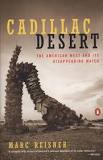
indexCadillac Desert: The American West and its Disappearing Water  by Marc Reisner   The American West has been settled for barely 150 years. It was desert then, and with massive amounts of finite water diverted from rivers and aquifers, we’ve pared back tiny portions to create oases like Phoenix, Reno, Los Angeles, and San Diego. Despite trillions of dollars to build dams, drill wells, and pump water thousands of miles in pipes, the west still remains one of the driest places on Earth.

Plastic: A Toxic Love Story  by Susan Freinkel       Plastic. It’s everywhere. Not only around us, but inside us as well. Freinkel shows us not only the impact plastic has on our daily lives  , but how all that pervasive plastic affects us in ways we don’t realize – such as the soft plastics that leach out of IV lines. Some plastics are more toxic than others: generally the softer the plastic, the more toxic it is.  And every time you heat your food in a plastic dish in the microwave, you put yourself at risk. No plastic ever degrades, it just crumbles, which creates hazards of its own. Plastics have their uses, yes, but at what cost to our health and environment?

Six Degrees: Our Future on a Hotter Planet by Mark Lynas    In 1816, the climate change from the eruption of Mount Tambora was estimated at seven degrees. For 18 months, global weather patterns were upended, resulting in relentless heat in the wrong areas, extreme drought in others, monumental flooding, and snow and freezing temperatures twelve months out of the year as far south as Georgia.  In Six Degrees, Lynas walks the reader through the changes the world can expect to experience with each degree of increase of average daily temperature. The picture is not pretty. If man has difficulty adapting to such major swings in such short times, how can we possibly expect plants and animals to adapt?

The Coming Plague: Newly Emerging Diseases in a World Out of Balance by Laurie Garrett.   Bad drinking water, misuse of antibiotics, deforestation, wars, refugees, poverty, and unsanitary living conditions all factor to create superbugs.  The diseases have always been with us, but it’s the close proximity to carrier animals that allows the diseases to pass to man. Garrett outlines the path these diseases take, and how it’s not too late to prevent another devastating global plague. This book will scare you in all the right ways.

The Lorax  by Dr. Seuss.    Ignore the dayglo movie. The Lorax, first published in 1971, is a wonderful way to introduce ecology and respect for nature to children. When the Trufula forests are in danger of extinction from overuse, it brings out the Lorax, who “speaks for the trees, for the trees have no tongues.”  The Lorax is a fable about caring for nature, sustainability, and never taking more than we need.

10 Books We’re Looking Forward to in February

Every month, librarians from around the country pick the top ten new books they’d most like to share with readers. The results are published on LibraryReads.org. One of the goals of LibraryReads is to highlight the important role public libraries play in building buzz for new books and new authors. Click through to read more about what new and upcoming books librarians consider buzzworthy this month. The top ten titles are:

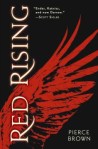
  1. Red Rising by Pierce Brown.
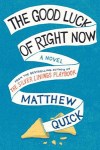
  2. The Good Luck of Right Now by Matthew Quick.
  3. This Dark Road to Mercy by Wiley Cash.
  4. The Martian by Andy Weir.
  5. After I’m Gone by Laura Lippman.
  6. Ripper by Isabel Allende.
  7. The Ghost of the Mary Celeste by Valerie Martin.
  8. The Wife, the Maid, and the Mistress by Ariel Lawhon.
  9. The Winter People by Jennifer McMahon.
  10. E.E. Cummings by Susan Cheever.

What Kind of Reader is My Child? (Part 1)

The language dedicated to explaining reading development and skills can quickly become confusing. Part of the trouble is that there are a number of different systems available to measure reading skills, and they rarely translate to other systems very easily. I am going to do my best to explain some of the terms you are most likely to come across, and offer some resources to help you help your child master and enjoy reading.  Lets start with some of the basic terms that are almost universal about the developmental stages of reading. I will tackle the different systems for measuring the skills in a later post.tumblr_n04cig1apM1rmidh1o1_r1_500Aspiring readers, “Pseudo Readers”, or Pre-readers are just beginning to understand the basic ideas of book, print, and the joy of sharing of a book. They are gaining a command of the alphabet along with the ability to recognize and name letters. They are also developing many phonological awareness skills, such as recognizing phonemes, syllables, and rhyme.  They will often pretend reading and telling the story via the pictures on the pages. Reading picture books and board books to your child is a great way to help children in this stage develop their skills and learn to love books.

Early Emergent Readers are beginning to learn sound/symbol relationships,starting with consonants and short vowels,and are able to read consonant-vowel-consonant words, and a number of high-frequency words. Readers in this stage typically are in Preschool through Grade 1 and test to Guided Reading Levels (GRL) A-C, DRA Levels A-3. Picture books and some easy reader books are good choices to help continue your child’s reading development. Read to them and with them as often as you can.

Emergent Readers are developing a much better grasp of comprehension strategies and word-attack skills. They can recognize the difference between fiction and nonfiction, and recognize that reading has a variety of purposes. Readers in this stage have developed an understanding of the alphabet, phonological awareness, and early phonics. They have command of a significant number of high-frequency words. Readers in this stage typically are in Kindergarten through Grade 1 and test to GRLs D-G, DRA Levels 4-12.  It is time to really encourage your child to read to you and themselves, while continuing to read to them to help increase their vocabulary and comprehension.

For Early Fluent Readers or Transitional readers reading is more automatic, with more energy devoted to comprehension than word attack. Readers are approaching independence in comprehending text. These readers are experiencing a greater variety of text and are able to recognize different styles and genres. Independence often varies with the type of text being read. Readers in this stage typically are in Grade 1-2 and test to GRLs H-M, DRA Levels 14-28.  Your child can read to you and themselves more and more now. Encourage reading independence, but do not be afraid to keep reading to them.

Fluent Readers have successfully moved from “learning to read” to “reading to learn.” Their reading is more automatic and includes expression and proper pauses.  These readers read a wide range of text types and do so independently. For the most part, they are capable of improving their reading skills and selection of materials independently through increased practice. Readers in this stage typically are in Grade 3-4 and test to GRLs N-Z, DRA Levels 30 and higher. Keep encouraging them to read and let them explore a variety of books so that they can find the ones they enjoy in order to keep them interested in reading.


For more information about reading development and helping your child both enjoy and excel in reading check out some of these books: Silly Books to Read Aloud by Rob Reid, The New York Times Parent’s Guide to the Best Books for Children by Eden Ross Lipson, Read With Me: Best Books for Preschoolers by Stephanie Zvirin, How to Get Your Child to Love Reading by Esmé Raji Codell, Connecticut’s Blueprint for Reading Achievement: The Report of the Early Reading Success Panel by the State of Connecticut State Board of Education, Raising Confident Readers: How to Teach your Child to Read and Write by J. Richard Gentry, and Growing a Reader from Birth: Your Child’s Path from Language to Literacy by Diane McGuinness.