
Media has changed warfare. Thanks to Matthew Brady, early photographer, photos of the brutality and hopelessness of war affected people in an entirely new way. At the time, the Civil War was the most documented war in history – yet it had nothing on World War II, just 75 years later. Now movie film captured every last horror of that war, by both those who wanted to document the atrocities and those who wanted to bask in what they saw as glory. By Viet Nam, with Kodak Instamatics fitting in a soldier’s pocket, the grit was documented by everyone, not just official sources. In today’s internet era, conflicts are documented and uploaded to the world live, before officials even know they’ve happened. It will take decades to sort through available data and make viable conclusions on modern conflicts.

But World War II was no slouch. In doing a bit of research the other month on my grandmother’s little-known younger brother (they were 16 years apart), within 10 minutes, my sister and I were able to pull up information that stunned us. All anyone knew had been “Uncle Laurie was on a Coast Guard ship that was presumed lost at sea, possibly due to a German Sub, during World War II.” Well, thanks to unfailing documentation, we found out that Laurie had been a radioman on the USS Muskeget, a weather ship, which was shot at 3 times by the German sub U-755 at 3:15 in the afternoon of September 9, 1942. Two torpedoes hit, killing all aboard. They even had the coordinates off Greenland. Not only that, but there’s a photo of U-755 being sunk by an RAF plane several months later! No one in the family had ever known any of those facts.
With that type of minutiae now available, Ian Toll brings together his final tome on the history of the Asian Theater in WWII, Twilight of the Gods (I know, I just switched from the European front to the Asian one, but our family knows less about the Asian front: Uncle Art was a Marine at Iwo Jima, but not the famous flag raising, and my psychiatrist grandfather was stationed in California as a Navy Captain treating shell-shocked soldiers returning from the lines). In his third installment of the war, Toll covers the months between June of 1944 and the Peace Treaty in 1945, after the dropping of the bomb.
The Asian theater is an anomaly: this is the part of the war that actually attacked US territory, the act of aggression that finally drew us into the war despite the incomprehensible acts going on in Europe, and yet, we tend to teach only the European aspect of the war, beyond the two facts of 1) Pearl Harbor was attacked by the Japanese, and 2) we dropped the first (and only) nukes on them in retaliation. Is it because of the difference of a Navy war vs. an Army land war? It’s easy to follow Maginot lines on a map, but ships bouncing from island to island around a massive ocean isn’t as visual: We can understand where France is, but where exactly is 7.1315° N, 171.1845° E? (It’s the Marshall Islands. Can you picture them? Neither can I.) How can people fight over water, which has no country? Far more people had relatives affected somewhere in Europe, vs no one was taking up collections to send to Vanuatu. Yet the battles were the largest naval battles in history, and the cruelty and aspirations no less than that of Hitler.

Toll spares no fact from his relentless research, and the brutality and heartbreak can inure the reader – much as it did those who lived through it. He covers the infighting among leaders – no one thought highly of Admiral Halsey – and the waste of young men literally being thrown at ships as kamikaze pilots – a tactic that eventually wore thin even among the Japanese. Good or bad, Toll covers it in a narrative style that will give you a far greater appreciation for the lesser-known side of a war that literally covered the world. Whew.
If you don’t have time to sit and read a thousand pages, Twilight of the Gods is now available at CPL on audiobook, to make that commute just a little more interesting!

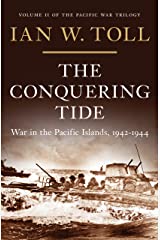
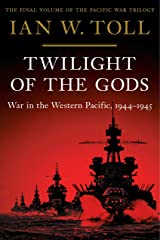
Twilight of the Gods
The Conquering Tide




 I’m no gardener. Sure, I have flowers all over my yard, I grow enough vegetables to bother canning, but I consider that a miracle of nature, not anything I do. I throw some plants in the ground, and if they’re lucky I remember to water them in the heat of summer. If they’re REALLY lucky, I may actually fertilize them. The only thing I try hard to remember to keep fertilized is my tulips, because my soil is two steps shy of toxic, and tulips like sunlight and fertilizer, and my tulips are spectacular (my soil is so bad that the only reason my flowers look good is because in our second year, we scraped away all the soil and replaced it with 5 cubic yards of new soil. Move away from the new soil, and the plants don’t do well).
 gardens will outdo themselves (Not likely. I planted 150 croci, and 8 survived). I pour over the catalogs and dream of a yard landscaped out of a high-end advertisement, wanting to buy 50 of those beautiful flowering plants, only to sigh when the ad says they cost $30. A plant.
 I prefer to purchase my seedlings from local nurseries – they have a much better shot at living – but I dutifully fill a tray or two of seeds with the kids in late winter, hoping to inspire a love of nature, and maybe a greener thumb. It doesn’t take much – a $2 packet of carrot seeds, a glass container, and you can watch roots grow as well as green leaves. Sadly, planting seeds and watching them grow doesn’t always inspire kids to eat that vegetable. Plants can be started in egg cartons, yogurt cups, red Solo cups, even eggshells – seeds, as you can tell from the cracks of pavement, aren’t fussy on where they sprout, though you may have to move them to a bigger cup if you’re using eggshells. If nothing else, it gives the kids something to do on a dreary day.
 cheapskate in me says plant seeds for the most expensive plants you want to grow, but that doesn’t mean the seeds will take. I’ve planted enough catnip seeds for a jungle, and just five plants finally grew – outside, not in a pot. I could mention morning glories, but morning glories are a lifetime commitment; they can be invasive, and even if you plant them only once, you might be yanking up sprouts for the next 10 years. These are some of the best seeds to grow with kids, and some books to help you once they’re past their leafy infancy. Give it a try!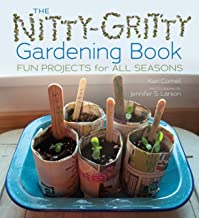
 High-Yield Vegetable Gardening
 atoes
atoes I used to enjoy cooking and baking once, but life happened (as it does), and over the years it evolved from a fun hobby into a chore. I’ve bounced back from my low point of lockdown-era frozen buffalo chicken strips, but cooking is still not something that brings me joy. Even when I try new recipes. No, especially when I try new recipes. There’s too much thinking, too many variables, not enough autopilot. I groan whenever my produce subscription boxes send me yet another unidentifiable root vegetable that requires a consultation with the internet. And if a new recipe starts going sideways – I’m looking at you, butternut squash gnocchi that I made for Christmas – I tend to season the cooking process with a heaping spoonful of expletives.



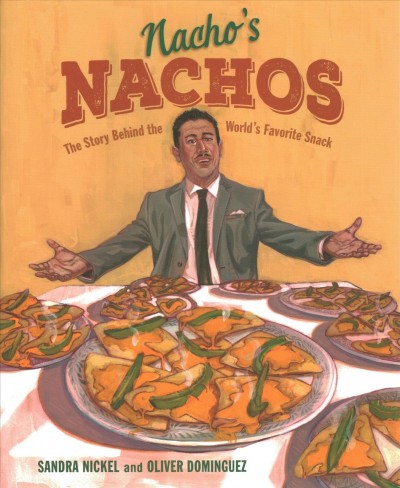 Celebrating 80 Years of Nachos, this book introduces young readers to Ignacio “Nacho” Anaya and tells the true story of how he invented the world’s most beloved snack in a moment of culinary inspiration.


 he Rising Dark




 ith the Afterlife
 The Cheshire Library Blog