Quell the Science Fair Fear with Books for Inspiration!

Is it Science Fair season or do you have a child in the house that simply loves science and conducting experiments? Regardless of whether the science project is assigned or done for fun, it can be scary supervising a science experiment! It can be even worse if you never enjoyed science. However, it is important to help encourage the curiosity and interest of our children in all sorts of subjects, so we all keep trying to quell the fear and support their work. Here are some great books to help pick a project and that offer instructions that make the whole process much more enjoyable, and less stressful, for everyone involved.

1. Last-Minute Science Fair Projects: When your Bunsen’s not Burning but the Clock’s Really Ticking by Sudipta Bardhan-Quallen

2. Weather Projects for Young Scientists: Experiments and Science Fair Ideas by Mary Kay Carson

3. The Kid’s Book of Simple Everyday Science by Kelly Doudna

4. First Place Science Fair Projects for Inquisitive Kids by Elizabeth Snoke Harris

5. Water: Green Science Projects for a Sustainable Planet by Robert Gardner

6. Electricity and Magnetism Science Fair Projects: Using Batteries, Balloons, and other Hair-Raising Stuff by Robert Gardner

7. MythBusters Science Fair Book by Samantha Margles

8. Championship Science Fair Projects: 100 Sure-to-Win Experiments by Sudipta Bardhan-Quallen

9. Goal!: Science Projects with Soccer by Madeline Goodstein

10. Super Sensational Science Fair Projects by Michael A. Dispezio; illustrated by Derek Toye

Did you think I could really stop there? There are plenty of great books to help students, parents, and everyone involved, pick a science experiment or project and get started. Here are some more of the best books on the topic in our collection.

This slideshow requires JavaScript.

You might want to check out: Star Wars: Science Fair Book by Samantha Margles, Energy: Green Science Projects About Solar, Wind, and Water Power by Robert Gardner, Science Fair Winners: Crime Scene Science: 20 Projects and Experiments about Clues, Crimes, Criminals, and other Mysterious Things by Karen Romano Young; illustrations by David Goldin, Janice VanCleave’s Machines: Mind-Boggling Experiments You Can Turn into Science Fair Projects, The Complete Handbook of Science Fair Projects by Julianne Blair Bochinski; illustrations by Judy J. Bochinski-DiBiase, Super Science Projects about Earth’s Soil and Water by Robert Gardner; illustrations by Tom Labaff, Bug Science: 20 Projects and Experiments about Arthropods: Insects, Arachnids, Algae, Worms, and Other Small Creatures by Karen Romano Young, Far-Out Science Projects about Earth’s Sun and Moon by Robert Gardner; illustrations by Tom LaBaff, Ace Your Ecology and Environmental Science Project: Great Science Fair Ideas by Robert Gardner, Phyllis J. Perry, and Salvatore Tocci, Yikes! Wow! Yuck!: Fun Experiments for your First Science Fair by Elizabeth Snoke Harris; illustrated by Nora Thompson, Sure-to-Win Science Fair Projects by Joe Rhatigan with Heather Smith, The Everything Kids’ Science Experiments Book: Boil Ice, Float Water, Measure Gravity- Challenge the World Around You! by Tom Robinson, and 100 First-Prize Make-it-Yourself Science Fair Projects by Glen Vecchione.

Doing Time Waiting for Season 2 of “Orange Is The New Black”? Try These Books About Life Behind Bars

Are you a fan of the critically-acclaimed Netflix series Orange Is The New Black? You may know that it is based on the memoir of the same name by Piper Kerman. Heartbreaking, hilarious, and at times enraging, Orange Is the New Black offers a rare look into the lives of women in prison, why it is we lock so many away, and what happens to them when they’re there.

If you like Orange Is The New Black, try some of these other “prison reads” while you’re waiting for Season 2 to be released in June.

Non-Fiction:

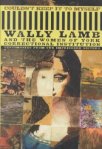
Couldn’t Keep it to Myself : Testimonies From Our Imprisoned Sisters by Wally Lamb.

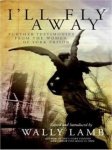
I’ll Fly Away : Further Testimonies From the Women of York Prison by Wally Lamb.

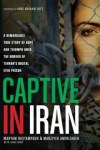
Captive in Iran : a Remarkable True Story of Hope and Triumph Amid the Horror of Tehran’s Brutal Evin Prison by Maryam Rostampour

Prison Baby : a Memoir by Deborah Stein

Women Behind Bars : The Crisis of Women in the U.S. Prison System by Silja J. A. Talvi

A Prison Diary by Jeffrey Archer

Fiction:

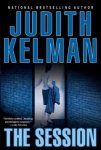
The Session by Judith Kelman

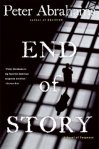
End of Story by Peter Abrahams

Love Her Madly by Mary-Ann Tirone Smith

One Flew Over The Cuckoo’s Nest by Ken Kesey

The Green Mile by Stephen King

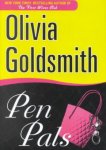
Pen Pals by Olivia Goldsmith

Want to Try A Greener Spring Cleaning?

Are you suffering from Spring Fever? Looking to clean house and purge your closets and cupboards while opening windows and letting the fresh air in? While the cleaning part might not be my favorite, I certainly enjoy the fresh, clean feel of my house when everything is spic and span. I feel even better when I get all that cleaning done without the use of the chemicals found in many commercial cleaners, which can also cost a small fortune.

The smell of a clean house that smells more like citrus and lavender is much more fun than one that smells like chemicals. It also feels a little safer to me when I know I am not using toxic chemicals around my children or pets, or on the things we all touch on a regular basis. If you are getting set to start your spring cleaning marathon, and want to do so a bit greener this year, here are some books that can offer ideas, recipes, and solutions for a greener clean this Spring.

1. Green-Up Your Cleanup by Jill Potvin Schoff

2. Greening Your Cleaning by Deirdre Imus

3. Green Clean: the Environmentally Sound Guide to Cleaning your Home by Linda Mason Hunter & Mikki Halpin

4. Green Housekeeping: in Which the Nontoxic Avenger Shows you how to Improve your Health and that of your Family While you Save Time, Money, and Perhaps your Sanity by Ellen Sandbeck

5. A Guide to Green Housekeeping: Live a Calmer, Healthier Life, Recycle and Reuse, Clean Naturally, Garden Organically by Christina Strutt

6. Sara Snow’s Fresh Living: the Essential Room-by-Room Guide to a Greener, Healthier Family and Home by Sara Snow

7. The Naturally Clean Home: Over 100 Safe and Easy Herbal Formulas for Nontoxic Cleansers by Karyn Siegel-Maier

8. Easy Green Living: the Ultimate Guide to Simple, Eco-Friendly Choices for you and your Home by Renée Loux

9. The Lazy Environmentalist on a Budget: Save Money, Save Time, Save the Planet by Josh Dorfman

10. The Eco-Living Handbook: a Complete Green Guide for your Home and Life by Sarah Callard and Diane Millis

Easter Pets

They’re adorable, all fluff and big watery eyes, but if you’re thinking about getting or giving a live pet for Easter, think twice! According to the Humane Society, 30% of all Easter pets will die in the first few weeks after Easter. Another 60 to 70% will be turned in at shelters, and almost all will not live to see a single birthday. If you’re thinking about adding a pet to your family, take your time and do your research first.
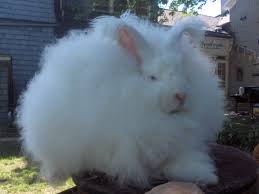
        Rabbits come in all types and sizes, and they live an average of seven to ten years. Their health can be delicate, and simple diarrhea – most often from too many fresh veggies – can kill them. Inside a house, they will dig and chew at everything, so don’t feel bad when your couch gets a hole in it. If you choose a beautiful angora, with long fluffy hair, remember they need to be brushed and combed daily, or at least shaved down. Rabbits love to run and kick up their heels (which is very amusing to watch), so keeping them in a small cage all the time is just plain cruel. They are not hamsters; think of rabbits as your cat’s slow-witted little brother. You wouldn’t cage up a cat all the time, would you?

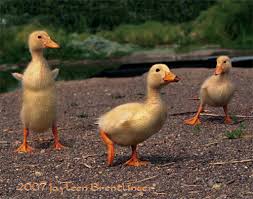
Ducks may live eight to fifteen years, and come in a huge variety of types and colors. Ducks are very social, and you may need more than one to keep your animal happy. Remember, ducks like water and are natural swimmers; keeping them in a dry environment like a dark basement does not result in a happy duck. Remember, ducks shed feathers everywhere, their water-proof feathers may leave grease on your carpets, and they will not be house-trained.


Baby chicks are one of the icons of spring, but they live five to eight years. It is their nature to hunt for bugs in the grass, and they will scratch and peck at whatever flooring is underneath them; they can crater dirt fairly quickly. Chickens (and ducks, too) may be subject to town ordinances, so check with your town first to see if you’re even allowed to keep them! Roosters can cause a ruckus; they don’t just crow at dawn, but any time they feel like it, which may not sit well with your neighbors. Both chicks and ducks have to be kept safe at all time from predators, including hawks.


If you’re not sure a live pet is right for your family, try sponsoring an animal instead. You can buy into a “share” of an animal at a zoo or refuge, and help keep it happy and healthy. You can also “donate” an animal through programs such as Heifer International, which helps people out of poverty by teaching them to raise and sell animals in developing nations.
If you do bring home that cute and fluffy new friend, check out these books to help you keep them around for a long time to come:

The Rabbit Handbook by Karen Parker

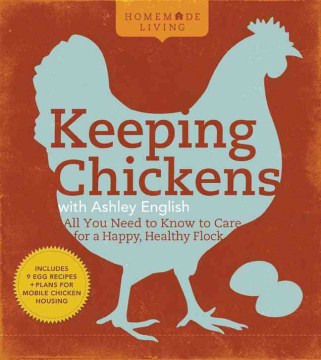
Keeping Chickens by Ashley English

Mini Encyclopedia of Chicken Breeds & Care by Frances Bassom

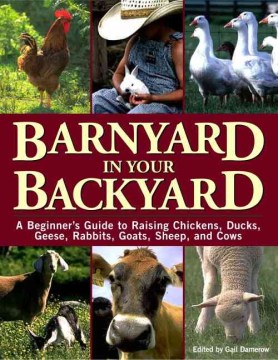
Barnyard in Your Backyard by Gail Damerow


Aliens in Your Back Yard – The Invasion of Non-Native Plants

You’ve seen them around, maybe even in your yard.  You may even think they look pretty. But they’re not. They are aliens, and they are taking over our world.

Oriental Bittersweet

Oriental Bittersweet

The “aliens” in this case are non-native plants, and their invasion is costing us billions – yes, billions with a B – just on golf courses alone, trying to stop them from overtaking and wiping out our natural species. They can choke out the normal wild plants of an area, wiping out the food that birds and wildlife depend on. They can wrap around your electrical wires, pulling them down and causing power outages. They can invade your vegetable gardens, growing faster than you can weed. Most of these plants were introduced as an ornamental addition to gardens, but with no natural insect enemies or animals to eat them, they quickly grew!

Kudzu in action

Kudzu in action

From Alabama to Canada, Japanese Kudzu is a fast-growing vine that forms a thick blanket over grass, trees, wires, and buildings.  It will grow over anything in its path, and it is voracious – growing up to a foot per day – the kind of thing bad science fiction movies are made of.  In Cheshire, especially on the West side near Darcey School, you’ve no doubt seen Oriental Bittersweet growing thick up telephone poles, hanging in sheets from overhead wires, and growing up trees in thick ropes faster than poison ivy. It’s a woody vine that’s almost impossible to break with your hands, and will wrap itself around wire fences until it’s easier to remove the fence than the vine. Even pulling it up doesn’t seem to stall it much.

Purple Loosestrife

Purple Loosestrife

Purple Loosestrife may trick you into thinking it’s just a pretty flower ( I once thought so), and you’re rather happy it chose your yard.  You don’t even have to water it, and it looks nice.  Until it takes over every inch of your lawn, and the more you weed, the more there seems to be. It was brought over from Japan in 1876 as a garden interest, and then spread out of control.

Garlic Mustard

Garlic Mustard sounds tasty – and it is.  It was brought over from Europe as a an herb in the 1860’s, and it quickly took off.  Garlic mustard is so determined, it can even fertilize its own seeds, which is part of the problem.  Deer won’t eat it, and thus will feast too much on other plants instead, endangering them from overgrazing.  Garlic mustard is on the Most Wanted list in more than nine states.

Different plants can require different methods of eradication. On April 7, Cheshire Public Library will be hosting a program called Root Out Non-Native Invasive Plants, where you can learn more about how to identify and eradicate non-native infiltrators without the widespread application of pesticides.. Help support your native plants – and the animals who depend on them – by helping to wipe out these alien invaders. If you don’t already have one in your neighborhood or yard, you will soon.

You can read up further on invasive plants in Invasive Plants: a guide to identification and the impacts and control of common North American species, by Sylvan Ramsey Kaufman.