O, The Oprah Magazine Picks Top Ten Books of 2014

top2

The editors of O, The Oprah Magazine have come up with their list of the top ten books of 2014.  How many did you read?

boneThe Bone Clocks by David Mitchell – A vast, intricate novel that weaves six narratives and spans from 1984 to the 2030s about a secret war between a cult of soul-decanters and a small group of vigilantes called the Night Shift who try to take them down. An up-all-night story that fluentlymixes the super-natural, sci-fi, horror, social satire, and hearbreaking realism.thunder

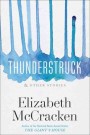
Thunderstruck & Other Stories by Elizabeth McCracken – A collection of stories navigates the fragile space between love and loneliness, including the title story in which a family finds their lives irrevocably changed by their teenage daughter’s risky behavior.

shortThe Short & Tragic Life of Robert Peace by Jeff Hobbs – Presents the life of Robert Peace, an African American who became a brillant biochemistry student at Yale University, but after graduation lived as drug dealer and was brutally murdered at the age of thirty.station

Station Eleven by Emily St. John Mandel – The sudden death of a Hollywood actor during a production of “King Lear” marks the beginning of the world’s dissolution in a story told at various past and future times from the perspectives of the actor and four of his associates.

empathyThe Empathy Exams by Leslie Jamison –  A collection of essays explores empathy, using topics ranging from street violence and incarceration to reality television and literary sentimentality to ask questions about people’s understanding of and relationships with others.boy

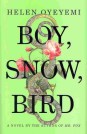
Boy, Snow, Bird by Helen Oyeyemi – A reimagining of the Snow White story set in the United States during the 1950s and 1960s.

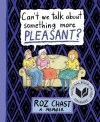
can'tCan’t We Talk About Something More Pleasant? by Roz Chast – A graphic memoir by a long-time New Yorker cartoonist celebrates the final years of her aging parents’ lives through four-color cartoons, family photos and documents that reflect the artist’s struggles with caregiver challenges.lucky

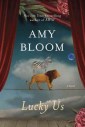
Lucky Us by Amy Bloom – Forging a life together after being abandoned by their parents, half sisters Eva and Iris share decades in and out of the spotlight in golden-era Hollywood and mid-twentieth-century Long Island.

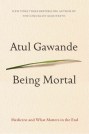
beingBeing Mortal by Atul Gawande – A prominent surgeon argues against modern medical practices that extend life at the expense of quality of life while isolating the dying, outlining suggestions for freer, more fulfilling approaches to death that enable more dignified and comfortable choices.bad

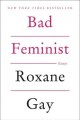
Bad Feminist by Roxane Gay – A cultural examination of the ways in which the media influences self-perception, and discusses how society still needs to do better.


Celebrate Martin Luther King, Jr. Day with Knowledge and Service

January 19, 2015 is Martin Luther King, Jr. Day. In 1994 Congress designated MLK day as a day of service. The MLK Day of Service is the only federal holiday observed as a national day of service. It calls for Americans to work together in order to provide solutions to our most pressing national problems. To learn more about the day check out the official website here.

The titles below include children’s books about Dr. King, fiction and nonfiction books about ordinary people who stand up for what’s right, and stories about helping others and giving back. Then there is a list of books about volunteering, to help choose what avenues we each might want to take in volunteering or service. No matter the day, helping out in the community is rewarding for the volunteer and those it helps. So even if you cannot participate on the designated day, maybe a book can help in finding something you can be passionate about or enjoy while serving the community.

People Who Made a Difference:

1. Child of the Civil Rights Movement by  Paula Young Shelton. A daughter of civil rights activist Andrew Young describes her experiences of growing up in the Deep South at the height of the movement, sharing her witness to the efforts of her father, family friend Martin Luther King, Jr. and thousands of others who participated in the historic march from Selma to Montgomery.


2. March On!: The Day My Brother Martin Changed the World by Christine King Farris.Having led thousands in a march for civil rights to the foot of the Lincoln Memorial on August 28, 1963, Martin Luther King, Jr. made the most of the historical moment by giving a speech that would forever inspire people to continue to fight for change in the years ahead.

3. Through My Eyes by Ruby Bridges. Provides the first-hand factual account of the six-year-old student who made history by having been one of the first black children to attend an all-white, segregated school in the 1960s.

4.Sit-in: How Four Friends Stood Up by Sitting Down by Andrea Davis Pinkney. A picture book celebration of the
50th anniversary of the momentous Woolworth’s lunch counter sit-in, when four college students staged a peaceful protest that became a defining moment in the struggle for racial equality and the growing Civil Rights Movement.

More books on civil rights and how individuals affect change include:The Story of Ruby Bridges by Robert Coles,  I Am Rosa Parks by Rosa Parks, Heroes for Civil Rightsby David A. Adler, Ida B. Wells: Mother of the Civil Rights Movement by Dennis Brindell Fradin and Judith Bloom Fradin, Freedom Riders: John Lewis and Jim Zwerg on the Front Lines of the Civil Rights Movementby Ann Bausum, My Country, ’tis of Thee: How One Song Reveals the History of Civil Rights by Claire Rudolf Murphy, Miles to Go for Freedom: Segregation and Civil Rights in the Jim Crow Yearsby Linda Barrett, The Girl From the Tar Paper School: Barbara Rose Johns and the Advent of the Civil Rights Movement by Teri Kanefield, and Free at Last?: The Civil Rights Movement and the People Who Made Itby Fred Powledge. 

Inspiration to Serve:

1. 50 Ways to Save our Children: Small, Medium & Big Ways You Can Change a Child’s Lifeby Cheryl Saban.Describes how to make a difference in a child’s life, including collecting toys for homeless shelters, donating books to schools and libraries, volunteer work, charitable donations, and starting a scholarship fund.

2. Teens With The Courage to Give: Young People who Triumphed over Tragedy and Volunteered to Make a Difference by Jackie Waldman. Thirty young people tell their stories of overcoming hardship to become volunteers in this inspiring look at a national trend among teenagers.

3. Our Day to End Poverty: 24 Ways You Can Make a Difference by Shannon Daley-Harris and Jeffrey Keenan, with Karen Speerstra.Imagine ending poverty at home and around the globe in our own lifetimes. Imagine your actions combining with others; actions to make poverty history. With originality and imagination, this book invites us to look at our very ordinary days, from waking up in the morning to going to bed in the evening, and to begin to think about poverty in new and creative ways. “Our Day to End Poverty” is organized into 24 “hour/chapter” segments.  Each chapter connects with your day, from breakfast to bedtime, relating these steps to ending poverty to our daily routines. Some times a problem gets to be so big, we feel there is nothing we can do about it. “Our Day to End Poverty” reminds us that if we all do just a little, a lot can get done.

  4. Giving: How Each of us Can Change the World by Bill Clinton. Compiling anecdotes about the diverse charitable efforts of the famous and non-so-famous, the former president looks at the positive influence of such work in every corner of the world and examines the profound benefits of working for the good of others for all humankind.
Looking for more inspiration? Try checking out The Promise of a Pencil: How an Ordinary Person Can Create Extraordinary Change by Adam Braun, Give a Little: How Your Small Donations Can Transform Our World by Wendy Smith, Immersion Travel USA: The Best and Most Meaningful Volunteering, Living, and Learning Excursions by Sheryl Kayne, Green Volunteers: The World Guide to Voluntary Work in Nature Conservation edited by Fabio Asuneda, Volunteering: The Ultimate Teen Guide by Kathlyn Gay, In a Heartbeat: Sharing the Power of Cheerful Giving by Leigh Anne and Sean Tuohy with Sally Jenkins, The Busy Family’s Guide to Volunteering: Do Good, Have Fun, Make a Difference as a Family! by Jenny Friedman, Volunteer Vacations: Short-term Adventures that will Benefit You and Others by Bill McMillon, Doug Cutchins, and Anne Geissinger, or Volunteering: A How-to Guide by Audrey Borus.

Tech Talk And the Really Big TV

Are you one of the lucky ones who got a large-screen TV for the holidays this year? Did you just replace an aging (and heavy) old picture-tube with a nice, light digital flatscreen, or did you go all-out and get that giant 50, 60, or even 80” monster that feels like you’re at the movie theater? Aren’t those digital cable channels amazing crystal clear?
*
And are you upset with the really, really weird picture that makes it look like you’re watching a 1970’s BBC play?

*
Hm. You are not alone. We had a nice 32” digital flatscreen, but when we hit a season-clearance sale the day after Christmas and found a 50” for less than we paid for the 32”, we couldn’t say no. And thus we got hit by what is technically known as “The Soap Opera Effect.”
*
Does your picture look strange, like a live performance of a soap opera, or an old videotape spacing everything out and making it look – well, not like a TV picture? There’s a reason for that. “Normal” TV pictures, those we’ve all grown up with, “refresh” or “run” at a speed of 60 frames per second (if you’ve ever seen a reel-to-reel movie, maybe in school, think of all those still frames whipping through the machine to make the movie move, and think of sixty of those still pictures every second, or 3600 of them every minute). That’s what our brains can process as smooth motion, and makes our TV look like TV.
*
Now enter digital. LCD TVs, because of all those pixels firing on and off, have trouble keeping motion from blurring (or, technically, “juddering”). Some people don’t like that blur, and to combat it that number of “frames” or still pictures has been sped up to 120, or even 240 frames per second . That allows you to see all those Batman action shots in such blinding big-screen clarity it’s almost like stop-motion. Football runners never blur. Car crashes never occur too fast to follow. You can trace the path of every blood spatter when those bullets hit – better than reality. However, there are still only filmed at 60 frames per second – the extra “frames” are “filled in” either by duplicating still frames, or having the computer brain of the TV “manufacture” extra frames between actual ones (frame 1, insert frame 1.5, frame 2, make up a 2.5 to connect to frame 3, etc.) all on a microscopic increment scale.
*
Still follow? In short, to keep the picture smooth, extra non-existent pictures are slipped in to keep the picture from jerking.
*
It’s beautiful, but the price you pay for all that motion smoothing is The Soap Opera Effect. And it has nothing to do with what you’re watching – cable channels, an old DVD, a regular Blu-Ray, or a Super HD format, it’s just the speed the TV runs at. So what can you do if you absolutely positively hate that weird flat Masterpiece-Theater-Meets-As- The-World-Turns look?
*
A little, but not necessarily much. Go to your TV’s “settings” selection. There will be a setting that addresses “motion,” “motion control,” or “motion smoothing,” or some other term usually with the word motion – Google your exact TV model number for the term your TV uses. Most TVs come from the factory with the motion smoothing default setting to ON. Find your TV’s setting and simply turn the control to OFF. Yes, sometimes it’s easier said than done, and in my case it helped a little but not a lot.
*
The easiest solution is 1) buy a smaller TV. Everything is less noticeable on a smaller screen. Being able to count the hairs inside Gandalf’s nose is far more distracting than you think. Remember the days when a 26” TV was REALLY REALLY BIG? 2) Check out the picture in the store on that particular model. ASK to see it with the motion smoothing turned off. If you don’t like it, keep trying different models until you come across one you do. Some are better at it than others, and it is more bothering to some people than others; it’s really a personal preference. I’m learning to live with it, trading in the awe of seamless clarity on special effects (watching the SHIELD helicarrier lift off from the water in The Avengers was jaw-dropping incredible) for the weird teleplay of people speaking. Unfortunately it’s the shape of things to come, and eventually we’re all going to have to adjust.

If You Liked The Book, Unbroken…

unbroken If you enjoyed reading the book, Unbroken by Laura Hillenbrand, here’s a selection of read-alike books that you might also enjoy.

strengthStrength in What Remains by Tracy Kidder – Presents the story of Burundi civil war survivor Deo, who endures homelessness before pursuing an education at Columbia and eventually returning to his native land to help people in both countries.born

Born to Run by Christopher McDougall – Recounts the author’s experiences with the reclusive Tarahumara Indians, whose techniques allow them to run long distances with ease, and describes his training for a fifty-mile race with the tribe and a number of ultra-marathoners.

survivorThe Survivors Club by Ben Sherwood – Draws on inspirational stories about survivors of accidents, crime, and serious illness to investigate why some people succumb to life-threatening hardships while others rally, in a report that includes coverage of the higher survival rates of right-handed people, the science of luck, and emergency room probability rates.broken

Broken Jewel by David Robbins –  Presents a tale of war, love, and survival set against the backdrop of the U.S. 11th Airborne’s raid on the Japanese-run Los Baänos prison in the Philippines–one of the most daring episodes of World War II.

ghostGhost Soldiers by Hampton Sides –  Chronicles the daring mission of the elite U.S. Army Sixth Ranger Battalion to slip behind enemy lines in the Philippines and rescue the 513 American and British POWs who had spent over three years in a hellish, Japanese-run camp near Cabanatuan.kra

Krakatoa by Simon Winchester –  Considers the global impact of the 1883 eruption of the Krakatoa volcano, documenting its cause of an immense tsunami that killed 40,000 people, its impact on the weather for several years, and its role in anti-Western Islamic fundamentalism.

lostLost In Shangri-la by Mitchell Zuckoff –  Describes the 1945 odyssey of three plane crash survivors in New Guinea who endured a harrowing journey through the jungle to seek help, their encounter with a primitive tribe who had never seen white people, and their eventual rescue by a band of paratroopers.ordinary

Ordinary Heroes by Scott Turow – Stewart Dubinsky plunges into the mystery of his family’s secret history when he discovers his deceased father’s wartime letters to his former fiancâee, revealing his court-martial and imprisonment during World World II.

caineThe Caine Mutiny by Herman Wouk – Developments on board an American naval destroyer during World War II compel the crew members to relieve the captain of his command.

pacific

Pacific Glory by P.T. Deutermann – A thrilling, multi-layered World War II adventure following two men and an unforgettable woman, from Pearl Harbor through the most dramatic air and sea battles of the war.


Also, see our display on one of the end caps in our lobby.


Children’s Nonfiction Books about Pets

Do you have a children begging for a new pet, or one that needs to learn a little bit more about the responsibility that comes with the joys of having a pet? Perhaps your youngster just loves all things cute and pet-like and would like to learn a little bit more about them, including some history and wacky facts. Well, which ever inspires you and your child to search for non fiction books about pets, here are some books that you can enjoy together.

1.Presidential Pets: the Weird, Wacky, Little, Big, Scary, Strange Animals that have Lived in the White House by Julia Moberg

2. Pets in America: a History by Katherine C. Grier

3. Oh the Pets You Can Get!: All About our Animal Friends by Tish Rabe

4. Adopting Pets: How to Choose Your New Best Friend by Bill Gutman

5. Pocket Pets by Alvin Silverstein, Virginia Silverstein, and Laura Silverstein Nunn

6. The Royal Treatment: a Natural Approach to Wildly Healthy Pets by Barbara Royal, with Anastasia Royal

7. Underwater Dogs: Kids Edition by Seth Casteel

8. Sneed B. Collard III’s Most Fun Book Ever About Lizards by Sneed B. Collard III

9. 125 True Stories of Amazing Pets: Inspiring Tales of Animal Friendship & Four-legged Heroes, Plus Crazy Animal Antics

10. Why Rabbits Eat Poop and other Gross Facts about Pets by Jody Sullivan Rake

Looking for even more pet fun? Here are a few more books that might fit the bill; My First Guinea Pig and Other Small Pets by Linda Bozzo, Love Your Hamster by Judith Heneghan, Orangutans are Ticklish: fun facts from an Animal Photographer by Steve Grubman with Jill Davis, Do Fishes Get Thirsty? questions answered by Dr. Les Kaufman and staff of the New England Aquarium, How Dogs Really Work!  by Alan Snow, Silkies and other Guinea Pigs, My First Pets Board Book, Safety: with Pets illustrated by Sue Wilkinson, When a Pet Dies by Fred Rogers,  or May I Pet Your Dog?: the How-to Guide for Kids Meeting Dogs (and Dogs Meeting Kids) by Stephanie Calmenson.