Two (More) Reasons to Read Poetry Today

While reading and writing poetry is a fantastic pursuit on any given day, today we have two extra reasons to partake! Not only is April National Poetry Month, but April 28th is also Great Poetry Reading Day. So poetryvoiceI gathered up some poetry books that could be the perfect choice to enjoy on this literary day. Do not feel limited by this tiny look at our poetry collection either! Come and take a look at our poetry display or the 811’s in our nonfiction collection.

1. The Voice That is Great Within Us: American Poetry of the Twentieth Century edited by Hayden Carruth

2. The Trouble with Poetry and Other Poems or Sailing Alone Around the Room: New and Selected Poems by Billy Collinspoetryrevolution

3. Everyman’s Poetry by Elizabeth Barrett Browning; edited by Colin Graham

4. The Spoken Word Revolution: Slam, Hip-Hop & the Poetry of a New Generation edited by Mark Eleveld

poetryjackie5. The Best-Loved Poems of Jacqueline Kennedy Onassis selected and introduced by Caroline Kennedy

6. Sunken Garden Poetry, 1992-2011 edited by Brad Davis

7. The Poetry of Robert Frost: the Collected Poems edited by Edward Connery Lathem

poetrynash8. Anthology of Modern Japanese Poetry Translated & compiled by Edith Marcombe Shiffert & Yūki Sawa

9. Selected Poetry of Ogden Nash: 650 Rhymes, Verses, Lyrics, and Poems

10. The Enlightened Heart: an Anthology of Sacred Poetry edited by Stephen Mitchell

If you are looking for poetry books to interest kids, or adults that simply enjoy reading children’s literature (like myself), then check out this older post; Great Poetry Books to Share with Children.

Or perhaps you would rather an audiobook so you can listen to the poetry? try The Poets Corner: the One-and-Only Poetry Book for the Whole Family compiled by John Lithgow, The Storm King: Stories, Narratives, Poems: Spoken Word Set to a World of Music by Pete Seeger, The Voice of the Poet by E. E. Cummings, The Iliad by Homer, The Odyssey by Homer, William Carlos Williams, The Essential Edgar Allan Poe or,  A Patriot’s Handbook: Poems, Stories, and Speeches Celebrating the Land We Love selected and introduced by Caroline Kennedy.

World Penguin Day – April 25, 2015

Companions_adelie_penguins

World Penguin Day was created by scientists at the McMurdo Station in Antarctica when they noticed a colony of Adelie Penguins returning to the same spot, on the same day, every year.  The scientists decided to create a day of celebration for this annual migration and zoos, parks, and conservationists around the world celebrate this day to bring awareness to the health and conservation of these beautiful creatures.

Some facts about penguins (source: Antarctic Ocean Alliance and Ian Somerhalder Foundation):

  • Penguins may look cute and awkward, but they can adapt to a very harsh environment.  They are also very important to the Antarctic ecosystem.
  • They spend 75% of their lives at sea.  They swim underwater at around four to seven miles per hour.
  • There are 17 species of penguins.  They come in a variety of sizes and, although they are all black and white, they each have distinctive patterns and markings.
  • Most species breed in large colonies for protection, ranging from 200 to hundreds of thousands of birds.  Scientists can locate colonies from space by looking for dark stains on the ice from all that penguin poop!

    Emperor Penguin

    Emperor Penguin

  • Emperors are the largest species – average height is about 45 inches.
  • Most penguins forage for food at depths from 150 to 250 metres, but some dives to 565 metres have been recorded.  An average dive lasts 3-6 minutes, with the longest recorded dive at 22 minutes.
  • Penguins can’t fly, but some species get a little airborne when they leap from the water onto the ice.  Just before taking flight, they release air bubbles from their feathers.  This cuts the drag on their bodies, allowing them to double or triple their swimming speed quickly and launch into the air.
  • The penguin’s ‘tuxedo’ coloring helps them be camouflaged while swimming.  From above, their black backs blend into the dark ocean water.  From below, their white bellies match the bright surface lit by sunlight.  This helps them avoid predators.
If you’d like to learn more about the penguin, the library has an extension collection of materials here.

Here’s a small sampling of what we have to offer:

DVD’s

Mr. Popper’s Penquins

Happy Feet

March of the Penguins

BOOKS

Empire Antarctica: ice, silence & emperor penguins – Gavin Francis

Penguins – Roger Tory Peterson

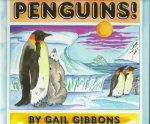
Penguins! – Gail Gibbons

Penguins – Seymour Simon

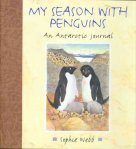
My Season With Penguins: an Antarctic Journel – Sophie Webb

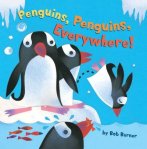
Penquins, penguins, everywhere! – Bob Barner


The Story Behind Draw a Bird Day

2015-04-09 18.27.16In 1943, Dorie Cooper was a 7 year old living in England. Her mother took her to a hospital to visit her uncle who was wounded in the war. While they were there, Dorie’s uncle was very distraught, having lost his right leg to a land mine. In an attempt to cheer him up, she asked him “Draw a bird for me, please.” Even though he was unwell, he decided to do as Dorie asked. He looked out his window and drew a picture of a robin.

On April 7, 2015 the director of the Cheshire Library put a piece of paper into everyone’s mailbox. The page was blank except for one sentence across the top: Wednesday, April 8th is “Draw a Picture of a Bird Day” followed by the line: Here is my picture of a 2015-04-09 18.25.46bird.2015-04-09 18.25.57

What fun, I thought and took my paper home to plan a drawing for the next day. On April 8th when I arrived at work, several staff had created bird drawings. There were all types from simple line drawings to colorful sketches. Owls, doves, robins, swans, and hummingbirds found their way onto the wall of our staff room.

After seeing her uncle’s bird picture, Dorie laughed out loud and proclaimed that he was not a very good 2015-04-09 18.26.34artist, but that she would hang the picture in her room nonetheless. Her uncle’s spirits were lifted by his niece’s complete honesty and acceptance. Several other wounded soldiers also had their day brightened by the event and every time Dorie came to visit thereafter, they held drawing contests to see who could produce the best bird pictures. Within several months, the entire ward’s walls were decorated by bird drawings.

2015-04-09 18.26.12The next evening, as I was standing there looking at the pictures, I became curious about the source of Draw a Bird Day. So, I did some research and discovered the Draw a Bird Day website. I read with interest about Dorie and her uncle. And then came the third paragraph.

3 years later, Dorie was killed after being struck by a car. At her funeral, her coffin was filled with bird images that had been made by soldiers, nurses and doctors from the ward where her uncle had been. Ever since then, those men and women remembered the little girl who brought hope to the ward by drawing birds on her birthday, April 8th.
2015-04-09 18.26.25

I was stunned. Dorie, the girl who had loved bird drawings, died at age ten? That was not the way I was expecting the tale to end. And then I read a little further.

Draw a Bird Day was never declared an official holiday, but it grew through those soldiers and medical personnel and their families. Today, it is celebrated world wide as a way to express joy in the very simplest of things in life.

2015-04-09 18.26.07I went back into the staff room and looked at the bird drawings again. I had enjoyed making my drawing and viewing the drawings of my coworkers. It had lifted my spirits to make that picture and to see the creativity of the people I worked with. It had, in fact, the same effect that it had in that hospital ward all those years ago.

2015-04-07 16.45.35Seventy-two years after a little girl asked her uncle to draw her a bird, people all over the world are still drawing birds on her birthday. Still celebrating hope and happiness. Still celebrating joy in the simple. Still sharing the fun.

Would you like to learn how to draw a bird? Try these titles:

Drawing Birds     Colored Pencil     Laws guide


Titanic Remembrance Day – April 15 2015

the-rms-titanicAt 11:40 PM the night of April 14, 1912 the ‘unsinkable’ RMS Titanic, while on its maiden voyage from Southhampton, England to New York City, hit an iceberg causing the ship to sink on April 15th at 2:20 AM 400 miles from the coast of Newfoundland, Canada.  This tragic event has long captured the titanic-bow-615attention of millions of people, reaching a pinnacle with the discovery of the ship’s remains on the bottom of the Atlantic Ocean in 1985 by Dr. Robert Ballard.  One thousand five hundred lives were lost, almost two-thirds of the people on board.

Some interesting facts:

  • Cost to build – $7,500,000
  • Number of passengers and crew on board that night – 2,223.  There were 13 honeymoon couples.
  • Food on board – 2200 lbs of coffee, 1000 loaves of bread, 16,000 lemons, 40 tons of potatoes, 10001364639539_titanic-sinking lbs of grapes, 36000 lbs of apples, 2500 lbs of sausages, 75000 lbs fresh meat, 40,000 eggs, 1000 bottles of wine, and 8000 cigars.
  • First class accommodations cost $4,350 (today’s value $69,900).
  • Lifeboats – could accommodate 64, was designed for 48, only 20 actually built.  These 20 could hold 1178 people total.
  • There were 6 ice warnings before collision.
  • The iceberg they hit was 100 feet tall and came from Greenland.
  • It took 160 minutes to sink.
  • It took 15 minutes for it to reach the bottom of the ocean.
  • There was a 60 minute delay between the collision and when the first lifeboat launched.
  • Musicians played for 2 hours and 5 minutes as the ship sank.
  • Two of nine dogs were rescued – a Pomeranian and a Pekinese.
  • Milton Hershey, founder of Hershey Chocolates, cancelled his reservation at the last minute due to business matters.
  • Only 306 bodies were found.

Every year in April, people take time to remember the sinking of The Titanic and the lives lost.  To learn more about this tragedy, you can browse the library’s collection of materials here


Did You Know That April is Lawn and Garden Month?

gardeningmanualNow that spring is under way you might be thinking about taking care of your lawn and garden. With April being National Lawn and Garden Month I know I am starting to gather my seeds to start indoors and planning just what I want to do in my yard this year. Whether a landscaping change is in your near future, you are plotting your garden, or you are just preparing for regular mowing, it is a perfect time to get the reading resources you need to do it right.

1. The Lawn & Garden Owner’s Manual: What to do and When to Do It by Lewis and Nancy Hillgardeningcompost

2. The Organic Lawn Care Manual: a Natural, Low-Maintenance System for a Beautiful, Safe Lawn by Paul Tukey

3. The Complete Compost Gardening Guide: Banner Batches, Grow Heaps, Comforter Compost, and Other Amazing Techniques for Saving Time and Money, and Producing the Most Flavorful, Nutritious Vegetables Ever by Barbara Pleasant & Deborah L. Martingardenlawn2

4. All New Square Foot Gardening: Grow More in Less Space! by Mel Bartholomew

5. Decoding Gardening Advice: the Science Behind the 100 Most Common Recommendations by Jeff Gillman & Meleah Maynard

6. The Lawn Bible: How to Keep it Green, Groomed, and Growing Every Season of the Year by David R. Mellor

gardeningsolar7. Lawn Gone!: Low-Maintenance, Sustainable, Attractive Alternatives for Your Yard by Pam Penick

8. Solar Gardening: Growing Vegetables Year-Round the American Intensive Way by Leandre Poisson and Gretchen Vogel Poisson

9. The National Wildlife Federation’s Guide to Gardening for Wildlife: How to Create a Beautiful Backyard Habitat for Birds, Butterflies, and Other Wildlife by Craig Tufts and Peter Loewer

gardeningmini10. Gardening in Miniature: Create Your own Tiny Living World by Janit Calvo

This just scratches the surface for great lawn and garden books in our library. Some more of the best or most unique books I would recommend on the subject include: Vegetable Gardening the Colonial Williamsburg Way: 18th-Century Methods for Today’s Organic Gardeners by Wesley Greene, 1,001 Ingenious Gardening Ideas: New, Fun, and Fabulous Tips That Will Change the Way you Garden-Forever! edited by Deborah L. Martin, Rodale’s Ultimate Encyclopedia of Organic Gardening edited by Fern Marshall Bradley, Barbara W. Ellis, and Ellen Phillips, Gardening Without a Garden by Gay Search, Water Gardening Basics by Helen Nash & Marilyn M. Cook, Taylor’s Master Guide to GardeningHeirloom Vegetable Gardening: a Master Gardener’s Guide to Planting, Growing, Seed Saving, and Cultural History. by William Woys Weaver, and Lawn Care for Dummies by Lance Walheim & the editors of the National Gardening Association.

This slideshow requires JavaScript.

Love (or hate) gardening and want to get some kids involved? Well then don’t forget to check in the children’s room for: Kids’ Container Gardening: Year-Round Projects for Inside and Out  by Cindy Krezel, Gardening with Children by Monika Hannemann and others, Roots, Shoots, Buckets & Boots: Gardening Together with Children by Sharon Lovejoy, It’s Our Garden: from Seeds to Harvest in a School Garden by George Ancona, How Does Your Garden Grow?: Great Gardening for Green-Fingered Kids by Clare Matthews, or Gardening Projects for Kids: 101 Ways to Get Kids Outside, Dirty, and Having Fun by Whitney Cohen and John Fisher.