What Do Your Kids Want To Be?

Ask any young child what they want to be and you could get a variety of answers. Some want to be doctors or nurses, others want to be firefighters or police officers. Some answer with more entertaining answers like ‘rich’ or ‘a giraffe’. (Yes, I have heard that answer.)

CAREERMost kids have big dreams. It is important that we encourage them to explore the wide variety of options available. A great way to foster those dreams, and how important school and responsibility are to achieve them, is to help them learn about the actual careers. My daughter is set on becoming a wild animal veterinarian, and my son is determined to either hunt monsters or write books and graphic novels. In both cases I get to focus that interest in reading certain books, and the importance of certain subjects and willingness to dive in to the subjects that interest them most. I also get to teach them about related careers, and what paths their interests might take them.

I always wanted to be an astronaut or archaeologist, but I learned early on that I was much better with words and thinking about the big things rather than doing the math, engineering, and physical labor necessary for either. It was not long before I decided that books and the written word was a much better focus for my energieCAREER2s and aptitudes.

Here are some great resources for researching different careers, and the education paths and experience that can help your kids test if they are really interested and if the interest will last. These resources can also be used to encourage studying particular subjects or give some career ideas for those that enjoy one subject over others.

Dinosaur Scientist: Careers Digging up the Past by Thom Holmes
Unusual and Awesome Jobs Using Technology: Roller Coaster Designer, Space Robotics Engineer, and Moreby Linda LeBoutillier
Talking with Adventurers: Conversations with Christina M. Allen, Robert Ballard, Michael L. Blakey, Ann Bowles, David Doubilet, Jane Goodall, Dereck & Beverly Joubert, Michael Novacek, Johan Reinhard, Rick C. West and Juris Zarins compiled and edited by Pam Cummings and Linda Cummings
Have you Seen this Face?: the Work of Forensic Artists by Danielle Denega
Unusual and Awesome Jobs Using Science: Food Taster, Human Lie Detector, and More by Jennifer Wendinger
Dusted and Busted!: the Science of Fingerprinting by D.B. Beres
Unusual and Awesome Jobs in Sports: Pro Team Mascot, Pit Crew Member, and Moreby Jeremy Johnson
Scuba Divers: Life Under Water by John Giacobello
Unusual and Awesome Jobs in Math: Stunt Coordinator, Cryptologist, and More by Lisa M. Bolt Simons

This slideshow requires JavaScript.

CAREER10For the youngest readers I would recommend the easy nonfiction series’ by Patricia Hubbell or Heather Adamson. Here are some of those titles; Police: Hurrying! Helping! Saving!, Teacher!: Sharing, Helping, Caring, Firefighters!: Speeding! Spraying! Saving!, Check it Out!: Reading, Finding, HelpingA Day in the Life of a Police Officer, A Day in the Life of a Firefighter, A Day in the Life of a Construction Worker.

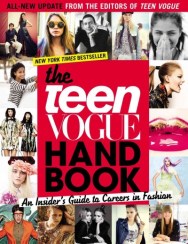
CAREER12There are even more resources for the older readers and young adults, including; Cool Careers Without College for Animal Lovers by Chris Hayhurst, Exploring Careers: a Young Person’s Guide to 1,000 Jobs from the editors at JIST, The Teen Vogue Handbook: an Insider’s Guide to Careers in Fashion, Careers for Environmental Types & Others Who Respect the Earth by Michael Fasulo and Jane Kinney, College Majors and Careers: a Resource Guide for Effective Life Planning by Paul Phifer, and Great Careers in 2 Years: the Associate Degree Option: High-Skill and High-Wage Jobs Available Through Two-Year Programs by Paul Phifer.

June is National Rose Month

rose

Roses have a long and colorful history. They have been symbols of love, beauty, war, and politics. The rose is, according to fossil evidence, 35 million years old. In nature, the genus Rosa has some 150 species spread throughout the Northern Hemisphere, from Alaska to Mexico and including northern Africa.

November 20, 1986, President Ronald Reagan signed a resolution making the rose the national floral emblem.  Americans have communicated their feelings through roses for years.

rose redRose Color Meanings:


Red:  love, beauty, courage, respect

Yellow:  joy, gladness, friendship

Red and yellow:  jovial, happy

Yellow with red tips:  falling in love

White:  purity, innocence

Pink:  appreciation, thank you, admiration

Orange:  desire, enthusiasm

Peach:  appreciation, sincerity, gratitude, closing the deal

Lavender:  love at first sight

Coral: desire

2 rosesRoses by the Number:


A single rose of any color:  utmost devotion

Two roses entwined:  ‘marry me’

Six roses:  a need to be loved or cherished

Eleven roses:  receipient is truly and deeply loved

Thirteen roses:  secret admirer

Roses make an appearance in many books.  To connect to our catalog for all things roses, click here.  Below are a few fiction books referencing roses.

winter rosesWinter Roses – Diana Palmer – Ranch owner Stuart York is at the mercy of Ivy Conley, his younger sister’s best friend, when she, upon returning home, is determined to prove that she is no longer a little girl, but a woman who wants him more than anything.
chalice of rosesChalice of Roses – Jo Beverley – Four novellas about quests for the Holy Grail, including a woman who must use it to bring peace to England and a Regency lady who must protect it from Napoleon’s spies.


rosesRoses – Leila Meacham – Having not married in spite of their true feelings, cotton tycoon Mary Toliver and timber magnate Percy Warwick struggle with deceit, secrets and tragedies that challenge their children and grandchildren in their small east Texas community.

for the rosesFor The Roses – Julie Garwood – Discovered abandoned as a baby in a New York City alley and raised by the Clayborne brothers, four urchin boys, Mary Rose Clayborne remains fiercely loyal to her misfit family until an English lord reveals a shocking secret that sends her into a confrontation with her past.

coming up rosesComing Up Roses – Catherine Anderson – Widow Kate Blakely, who is wary of love after her failed first marriage, nonetheless falls for her new neighbor, Zachariah McGovern, after he rescues her four-year-old daughter, Miranda, from a well.
bed of rosesBed of Roses – Nora Roberts – Florist Emma Grant despairs of ever finding Mr. Right, until she develops feelings for Jack Cooke, an architect who works closely with her and her colleagues at Vows wedding planning.
summer of rosesSummer of Roses – Luanne Rice – Lily Malone is forced to confront the events and relationships of the past as she deals with the man who has separated her from everything she has ever loved, but who could hold the key to her young daughter Rose’s future.
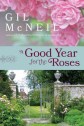
good year for rosesA Good Year for the Roses – Gil McNeil – Recently divorced and struggling to support her three boys, Molly is stunned when she inherits her aunt’s manor house, a house that includes her eccentric old uncle, an ailing bed-and-breakfast, and a beautiful rose garden.
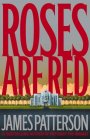
roses are redRoses Are Red – James Patterson – Facing a particularly vicious breed of killer in his latest investigation, Alex Cross finds his family targeted by the vengeful Mastermind, a situation that is complicated by tension in his relationship with his girlfriend Christine and his daughter Jannie’s unexplained seizures.

the care and handlingThe Care and Handling of Roses With Thorns – Margaret Dilloway – Enduring a strict schedule that balances her teaching job with the hospital regimen required by her kidney disease, Gal Garner devotes her spare hours to cultivating a new rose variation before her world is upended by the arrival of her teenage niece.


If you’re interested in the growing and care of roses, we have a great selection of nonfiction books under 635.9337.
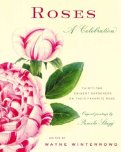
roses a celebrationRoses: a celebrationA unique book on roses gathers together the wisdom of thirty-two well-known rose gardeners, including Rosie Atkins, David Austin, Thomas Christopher, Ken Druse, Joe Eck, Allen Lacy, Anthony Noel, Michale Pollan, David Wheeler, Christopher Lloyd, Anne Raver, and Graham Stuart Thomas, among others.
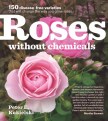
roses without chemicalsRoses Without ChemicalsA former curator at the New York Botanical Garden describes 150 different varieties of roses that can be grown without the use of pesticides, fungicides or fertilizers and provides information on planting, pruning and caring for these gorgeous blooms.

everyday rosesEveryday RosesA guide to growing roses dispels common myths, offers advice on selecting the right roses for one’s landscape, provides information on disease and chemical-free pest control, and includes suggestions for garden design and maintenance.
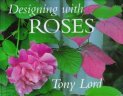
 

designing with rosesDesigning With RosesExplores the versatility of roses and offers advice on planting, feeding, and pruning.


coffeeCoffee For RosesAccompanied by full color photographs, a garden expert reveals the truth behind 71 common garden practices, in this delightful combination of practical advice and gardening history.

complete guide to rosesComplete Guide to RosesAn innovative, lavishly illustrated series of authoritative gardening books from the experts at Miracle-Gro takes the mystery out of horticulture for home gardeners of all skill levels with essential information on plant selection, cultivation, garden maintenance, pest control, soil preparation, climate, landscape design, and more.

How to Keep Summer Reading From Being a War

Summer, and in turn the dreaded summer reading list, is on the way. Even the most eager readers are rarely thrilled to be told what to read, and this seems to be especially true in the summer months. Kids are thinking about the fun they want to have over summer vacation, rather than checking off a to-read list.summer-reading-topMost schools offer suggested reading lists; usually vague offerings mentioning award winners, well known writers, and some nonfiction. Other schools require a certain number of books, a list of genres or subjects that need to be read, or particular books that need to be read. The more general the requirements the more likely parents and librarians are to keep everyone reading and enjoying it. However, sometimes trudging through a book that is not something your kids would pick on their own is necessary. I have some tips and tools to help make the  process more enjoyable for everyone.

summerread3My first suggestion is to start increasing the pleasure reading now and try to get a firmer grasp of which books will keep your readers happy over the summer. Check with the kids about how much they liked a certain book, or if they like a particular author or genre more than others and why. If there is an obsession in the house, Disney movies, superheroes, Minecraft, horses, Star Wars, or whatever, then start with books on those topics to spark interest. Perhaps a star or sticker chart to help figure out the pattern of what they enjoyed most will help your selections of reading materials hit the mark even more often. I need to start this myself, because even though my two children request certain books and proclaim that they love them, rarely do I see them actually reading the books in question.

summereadIt would also be a good idea to get a routine in place. Whether the whole family troops to the library together (one day a week, once a month, or what ever works for you), you bring a selection of materials home, or you browse the e-book offerings from home, it would be great to get a dependable routine in play. My children know that every Monday I bring whatever books they are done with or did not want to read back to the library and bring home a new batch of books and movies. I try to bring home a few fun or silly books that I know will capture their attention. However, I also bring home a few nonfiction books and books that I think they would enjoy while stretching their reading skills a little. I still strike out with some of my picks, but the regularity and wide variety of reading choices help to keep them reading.

SUMMERREADGOVIt is very important that you don’t make reading a chore. I know there is pressure to get the reading done in a timely manner. I also know that you won’t like everything your child might want to read. However, putting pressure on anyone to do something is more likely to cause push back rather than happy reading. So lets keep reading fun. Join the library’s Summer Reading program so your kids have fun goals to reach and some rewards for their efforts. If there are particular reading requirements that need to be met, particularly if it includes books they aren’t looking forward to reading, alternate those with their favorites or light, silly reads. Don’t be afraid of letting them enjoy something a little easier than their current reading level, such as graphic novels, magazines, audio books, or a repeat read.

My final suggestion is to model the behavior you want to see in your children. In other words, if you want your children to see reading as something fun, valuable, and worth doing regularly then they need to see you treating reading the same way. This doesn’t mean that you need to start assigning yourself classic or acclaimed books to read. I suggest that parents do exactly what I suggest they let their children do. Read what interests you, what makes you happy. Whether that is enjoying graphic novels from Hoopla, magazines from Zinio, the newspaper, the latest New York Times best seller, the same books your children are reading, or something completely different, it really doesn’t matter. If your children see that you put some time into reading and get something out of it, they are going to be more willing to keep reading as well.summerread2

The Narcissism Epidemic

Jacket.aspxMerriam-Webster Dictionary defines narcissism succinctly: “Caring too much about yourself and not about other people.”

What that definition doesn’t spell out are all the ramifications of such self-absorption.

In the book The Narcissist Next Door, the author, Jeffrey Kluger, writer and science editor at Time magazine, uses the word “monster” in the sub-title: Understanding the Monster in Your Family, in Your Office, in Your Bed–in Your World.

Are narcissists monsters? Consider these examples of typical narcissist behaviors:

  • Your narcissist mother constantly belittles you but denies she is doing any such thing. There is always an excuse for what she says and does. She is oh so thoughtful. Her selfish manipulations are for your own good. Nasty comments mean she is concerned about you. She only wants to help you.
  • Your narcissist boss criticizes and demeans you. He lets you know he thinks less of you than he does of your coworkers. If you complain, he will treat the matter as a non-issue. He doesn’t care about your complaints. He just wants to let you know that you’re never right.
  • Your narcissist sibling ignores all boundaries. She goes through your things regularly. She asks nosy questions, snoops into your email, room, and conversations. She digs into your feelings, particularly painful ones, and is always looking for negative information that can be used against you.
  • Your narcissist spouse tries to make you look like the crazy one. He will claim not to remember events, flatly denying they ever happened. He will tell you that you’re unstable, otherwise you wouldn’t believe such ridiculous things. You’re over-reacting, like you always do.

Sound like someone you know? Probably, because the number people with this personality disorder doubled over the last 10 years just in the United States. Some refer to it as the Celebrity Epidemic, where outrageous, selfish behavior is rewarded with fame and money, while others blame it on the American emphasis on the importance of the individual. Still others think it is genetic, an inheritable trait that has always been prevalent but is now rampant because of lack of social consequences. Whatever the cause, the cult of self is thriving.

How do you spot a narcissist? First, remember narcissism is not an all-or-nothing disorder. It is a continuum, with some mild behaviors, such as always steering the conversation back to yourself, to more extreme forms, such as those who demean and torment you when no one is watching and then act simply darling in public. Extreme narcissistic behavior includes:

  • Comments that diminish, debase, or degrade someone else
  • Feelings of entitlement
  • Envy that tries to either take or spoil someone else’s pleasure
  • Lying, constantly about everything
  • Emotional manipulation
  • Constantly seeking to be the center of attention
  • Extreme defensiveness and sensitivity, especially about imagined insults
  • Lack of empathy
  • Will never admit to being wrong
  • Bragging and exaggerating achievements
  • Denial of any of the above behaviors

So what to do if you live or work with a narcissist?

Save yourself. Experts overwhelmingly say to leave any relationship where extreme narcissism is present. Most narcissists will never acknowledge they have a problem. It is always everyone else, not them. Getting a narcissist to see a counselor or doctor is nearly impossible, and even when they do, they seldom admit responsibility and so never change. Make your feelings known, but if the narcissist cannot understand or acknowledge your pain, then it’s time to move on.

Here are some resources to help you deal with the narcissist in your life.


Jacket.aspxThe narcissism epidemic : living in the age of entitlement / Jean M. Twenge, PhD and W. Keith Campbell, PhD


Jacket.aspxThe mirror effect : how celebrity narcissism is seducing America / Drew Pinsky and S. Mark Young with Jill Stern


Downloadable Audiobooks


Jacket.aspxWill I ever be free of you? : how to navigate a high-conflict divorce from a narcissist, and heal your family / Karyl McBride

Taming the Epidemic

51DfIYszbDL._SX326_BO1,204,203,200_I have tried writing this several times, but I need 8,000 words instead of 800. I didn’t want to write about a politically charged topic at a time when politics are tearing the country apart. There is so much here you should read, need to read, that I cannot emphasize how important these books are, on such a difficult topic. And yes, if you’re living in this very town, they are relevant to YOU.

I read Chasing the Scream by Johann Hari in January – that’s how long it’s taken me to write this. I was skeptical – yeah, yeah, failed war on drugs. We know. But the information she presents is hard-core, well-documented, and agonizing. You can check it yourself. It blew my mind and changed my outlook not only on drug addiction, but my outlook on life. Hari shows – starting with Billie Holiday – that the war on drugs began early in the 1900’s as a method to exert control on “undesirables” – Mexicans, Blacks, Irish, Chinese. It blew up into a witch hunt, reinforced by Nixon to control war protestors. In the early 1900’s, drugs were legal. People could buy a small amount, get their controlled fix, and carry on. When the drugs were banned, junkies were forced to go underground, for huge amounts of money and unknown quality. People died. Crime exploded. Gangs took over. We knew this would happen, because we saw the exact pattern in Prohibition. The U.S. put a gag on every other country in the world – you want our aid, you make these drugs illegal. Now we control all the cartels.

And most of our addicts are addicts because…. they have psychological issues. Soldiers with PTSD. Rape and abuse victims. Homeless. Mentally ill. People with trauma. People without hope. And we have spent billions jailing them, punishing them, and sometimes killing them, because after all, they’re junkies, who cares.

But what happens when junkies (who make up only 10% of people who have used illegal drugs: 90% walk away fine) are not jailed, but treated as mentally ill, counseled, given a purpose? People tend to get clean and stay clean. What happens when illegal drugs are decriminalized – or even legalized, as in parts of British Columbia, or Portugal? Even heroin? Crime drops. Gangs fail. People become productive. And eventually, people get off the drugs themselves because it’s not who they are anymore. It’s a frightening concept, and against everything we have ever been brainwashed with.

Move on to Dreamland: The True Tale of America’s Opiate Epidemic, by Sam Quinones. 51pEBowSD9L._SX327_BO1,204,203,200_Quinones traces the perfect storm of the modern heroin epidemic: a false assumption, a powerful painkiller, a drug marketing lie, and a whole new method of peddling Mexican heroin. Oxycontin was touted as an addictionless drug because it was time-released, at a time when pain management was the rage in medicine. In reality, Oxycontin was very chemically similar to heroin, just as addictive, and pain “clinics” sprang up that did nothing but pump millions of addiction pills into the country. As people fought to get oxycontin, enter the Mexicans, who broke the rules by delivering drugs to your door. No guns. No violence. All under the radar. And their heroin was uncut Black Tar. Competition brought the price down to $6 a fix – cheaper than the $1/milligram Oxy. Washington State finally made the connection when their drug overdose fatalities were higher than their auto accident fatalities. Purdue Pharma paid more than $630 million dollars in fines for faking their addiction data. Pfizer paid more than $3 Billion for misrepresenting their drugs – less than 3 weeks take of their sales from them. Oxycontin was changed to help prevent abuse, but no one has yet put a dent in Mexican heroin sales.

51h74NFYq2L._SX331_BO1,204,203,200_A slightly older book to read is Methland, which shows the damage done to the Midwest with the rise of Meth, which is so easy to produce you can manufacture it while riding a bicycle around town. Why does everything seem to start in the Midwest? These are the areas hardest hit economically by the collapse of American industry. When people are hopeless, with no jobs, or if you are injured on the job, the doc will write you a pain prescription. You stretch it out to a disability claim, get on payments, and you no longer worry about money, or how to pay for prescriptions. You sell those pain pills for three times what you were charged. For students, it’s often sports. Children are pushed to excel, to work through the pain, given pain pills to take the field and win this one, and they get hooked. Most teens start with sports injuries.

If you think drug users are minorities in deepest urban ghettos, you’re wrong. They’re here. At least two students in this very town died this school year from overdoses. We don’t talk about them. They don’t make the paper. But the students know. It’s bad enough that there is now a clinic in this town. Let’s stop pretending. It’s the kid on the sports team. It’s the kid behind the register. Your hairdresser. The PTA mom.

These books are thought provoking in their information and ideas. Though I’m – thankfully – not directly affected by the drug epidemic, I feel I dodged a bullet when my daughter was only 13 (2006). A heavy jar fell on her foot and I took her to the ER. It wasn’t broken, but badly bruised. They offered her Oxycontin or Percocet for the pain. I said no, something less strong. They gave me scripts for both, and I could fill which I wanted (dead truth). A thirteen year old. I tore up both of them. She did fine with Motrin.index

If you can read one book this year, read Chasing the Scream. If you can read two, read Dreamland as well. Even if you don’t agree with them, let’s get a national dialogue going. And if you want something a little more technical but utterly fascinating about the chemical aspects of addiction, track down How Drugs Influence Behavior: a Neurobehavioral Approach by Jaime Diaz. I was – still am – amazed at the information, and it’s not so technical a layman can’t understand it. Never have I seen a medical book with opinions like this.