The Write Stuff: 9 Books to Make You a Better Writer

Books require readers, but they also require writers. And not just books – writers are required for things you never think of, from greeting cards to the labels on your cough syrup and face cream jars. Writers put words in the comic book superhero’s mouth. Writers help K-Mart ship their pants, the Geico Cavemen get insurance, and made Downton Abbey so intriguing.

For a small town, Cheshire has a large number of published writers, and for every published author, we have at least four who are either dreaming of writing, or struggling with the actual task. Good writing – like acting, like music, like fine art, like athletics – starts with a natural talent. You have an ear for speech. You have a knack for conversation. Grammar was easy for you. This doesn’t mean that if you’re dyslexic, or can’t spell, or have no idea when to use a semicolon, that you can’t be a writer. That’s what an editor is for. What’s important is getting that idea out.

But how? How do you know what you need to do, when you haven’t had an English class in 20 years? You don’t remember a past perfect subjunctive case? And what do you mean by third person unreliable narrator? I just want to write a story – why is this so complicated?

Writing a story your mom loved is a good start, but to reach a larger audience, you will need grit, determination, skill, and a steel spine. But I don’t know any writers! you wail. Workshops are so expensive! I can’t take three weeks off my job for a retreat in Washington State!

Few people can, and that’s why libraries are so important! Ray Bradbury – Pulitzer winner, multiple Hugo-award winner, Emmy winner, and more – told the story of how he was too poor to afford college, so instead he read every book in his hometown library – every one – and got the education he needed that way. There are so many good books out there to help you with writing, depending on what level you’re at, what you want to know, and how you need to do it. Let’s explore a few of the best ones:

Writer’s Digest Magazine

This is a great resource if you’re just starting out. You’ll find helpful hints, articles by authors, agents, publishers, and vague contests (caution: most cost money to enter, which is how they get the prize money. They aren’t exactly a scam, but your chances of winning are low). You’ll learn about genres and what other authors are doing. This is great for a year, but after that, you realize they run the same information over and over again every year.

Sol Stein: Stein on Writing

To this day, my favorite book on writing. If you only have the patience to read one book on writing, read this one. Stein will walk you through every aspect of writing, from making the characters real to creating tension to love scenes, and he does it in everyday language you will understand. This is your college class on writing. If you’re starting out or still in school, this book will turn you into a writing powerhouse.

Ursula LeGuin: Steering the Craft  

This is probably the best book on the practice of writing I’ve ever read. LeGuin states this isn’t for beginners – she’s not going to give you the basics like Stein does; she digs a level deeper. This is your Writer’s Workshop in a box. LeGuin will walk you through the various aspects of writing, from multiple points of view, to tense, to use of adjectives and adverbs, dialogue, and the rest. She will assign you writing exercises, some easy, some not. Find a buddy, even online, and do the exercises. This is a full creative writing class for zero cost . I wound up buying myself a copy (a whopping $7).

Donald Maass: Writing the Breakout Novel 

I went into this one with a swagger, and landed on my butt. Donald Maass, owner of one of the premiere literary agencies in the country, sent me crawling back to my manuscript like it was fit for nothing but lining the litter box. Maass discusses the death of the mid-level writer, and takes you point by point illustrating what makes a novel not just good, but brilliant. I ran right back to my manuscript and dug deeper, and was so pleased with the result. This was far more useful than I’d ever hoped, and I read it with actual interest. This is a must-read, but, published in 2001, some of it is woefully dated: He says The Handmaid’s Tale is not believable, no one can follow more than one subplot (he obviously never read Game of Thrones), and to never submit by email, when that’s all agents and publishers accept today.

Annie Dillard: The Writing Life

Dillard’s another Pulitzer Prize winner, with lofty prose that requires a lot of thinking. If you are a beginner, just starting out, trying to see if this is the career you want, this is not the book for you. You’re not going to get the deeper story. If writing is burning your soul with a searing pain that keeps you awake night and day, if you can think tangentially and in leaps and in metaphors, then you will appreciate this book and take comfort in it. In short, writing is not a straight line, and the story you think you want to write will probably not be the one you wind up with as the story twists out of your control. It’s a book for the writer’s soul. 

Ray Bradbury: Zen in the Art of Writing

Bradbury, as a short story writer more than a novelist (he said the goal is to write one short story a week; going by the law of averages, at least 10 a year should be really good), isn’t going to bore you with “Do This.” Instead, this is a collection of essays delving into how he writes, and his thought processes. It’s painless and inspirational, will boost your creativity, and is one you should be reading.

Anne Lamont: Bird by Bird: Some Instructions on Writing and Life

This is another surprise book I wound up purchasing. Lamont frees you from the guilt of writer’s block by giving you permission to write one word at a time. That’s how books are written: one word at a time. She’ll drag you through all the pitfalls of writing while holding your hand, patting you on the back, and inspiring you all at the same time. 

John Mullan: What Matters in Jane Austen

Okay, this isn’t a book on writing – but if you ignore the fact that it’s Austen, and the fact some of it dates from the late 1700’s, and PBS has ground the stories into the dirt, there is a LOT of writing advice to be found in this book. Mullan picks apart Austen’s stories, discussing how she shows characterization, dialogue, even class in between the lines, describing things without ever coming out and saying them. Whether or not you’re an Austen fan (I’ve only read one, and that was 40 years ago), this is a treasure-trove of writing information if you don’t mind feeling like a total failure in her shadow.

Stephen King: On Writing

This is the first book everyone runs to, and then squeals about. I’m going to commit heresy here: Don’t bother. This book is not going to help you become a writer. It’s going to help you sympathize with King for having all the same highs and lows and writer’s blocks that you do, but primarily, this is a book on King’s journey into writing. It’s not a self-help guide. It’s a biography.

Want to improve your writing? Track down Sol Stein, Ursula LeGuinn, and Donald Maass. They will not fail you. Dean Koontz’s book, How to Write Best Selling Fiction is widely regarded as an excellent book, but is out of print and used copies go as high as $500(?!?). However, you CAN access the material (or other bits on Youtube and such) through a PDF here on Scribd.com (beware of frequent ads).

Tales of Shipwreck & Survival

Everyone knows about the Titanic since they found the wreckage and made a movie about it, but shipwreck is usually the last thing on anyone’s mind when they book a cruise. In reality, only 24 cruise ships have ever sank, and many of those had been pressed into service as warships at the time. Cruise ships, despite their top-heavy appearance, are quite safe. 

There are an estimated 3,000 shipwrecks off the coast of the Outer Banks, NC

There are an estimated three million shipwrecks under the waters, not counting small craft. Some of these date back as far as 2500 BCE, when the Mediterranean Sea was a hotbed of trade from Egypt and North Africa to the coasts of Italy, Greece, and Spain. The rate of commercial shipwrecks has been declining throughout this century, from 200 in 2000 to only 26 in 2023, and most of those are cargo ships, which are often in poor repair, overloaded, badly balanced, and cross some of the most difficult waters (releasing rubber ducks and sneakers). This does not include the fishing industry, which is nearly unregulated, especially in Asia and South America. It is estimated there are 100,000 deaths from fishing each year, due to poor industry standards and almost no oversight.

When we think about historical ships, we think back to Roman biremes, Viking longboats, and primitive rafts like Thor Heyerdahl’s Kon Tiki long before we come to the glory days of Spanish, British, French, and Portuguese galleons vying for naval power, leading to spectacular – and expensive – shipwrecks. The Bermuda Triangle, The Skeleton Coast, The Cape of Good Hope, and several rocky coastal areas around the continents were famous for wrecking ships, let alone the risk – then and now – for icebergs in the North Atlantic, and the real though rare possibility of rogue waves – lone giant waves of up to 100 feet, with no warning and no precursors, which have been implicated in a number of wrecks. There’s also the 1958 Lituya Bay, Alaska tsunami, which, due to the funneling nature of the bay, created a wave 1700 (yes, one thousand seven hundred) feet high, lifting a fishing boat, whose crew miraculously survived.

Like all natural disasters, ship disasters make for fascinating reading and occasionally a great movie. Here are some excellent works on the misfortunes of ocean-bound ships, some of which you may not have heard of, but really happened.

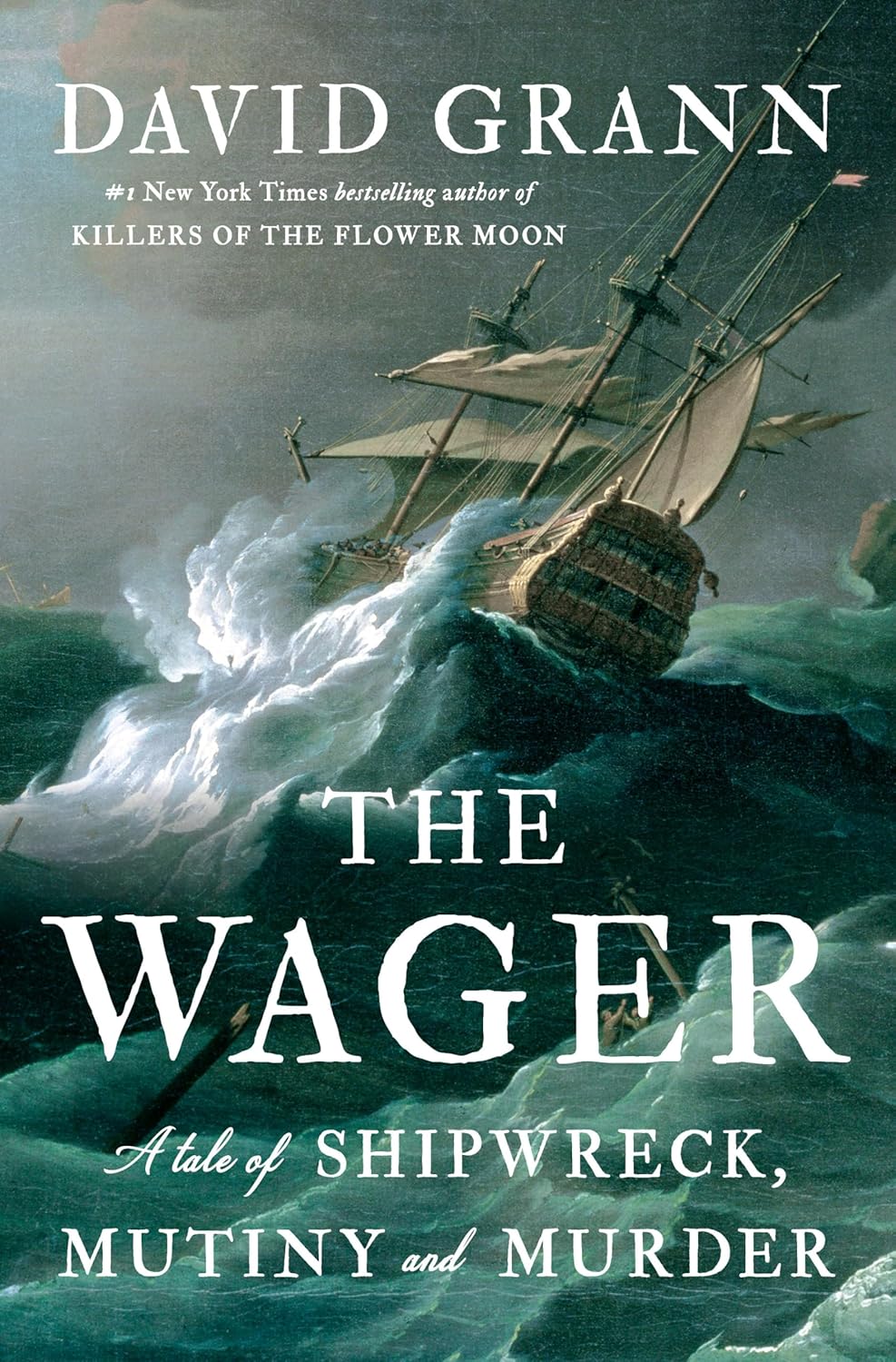
The Wager, by David Grann

If you haven’t yet read The Wager, you need to. A true tale of murder, mutiny, greed, heroism, and unbelievable survival in the harshest of conditions. Against better judgment, the Wager tries to round the dangerous Cape Horn in 1741, smashing against rocks in a gale. In a barren wasteland, with nothing to eat, the crew splits, half commit mutiny, some commit murder, and half of them will make it back to tell the riveting tale. A must read.

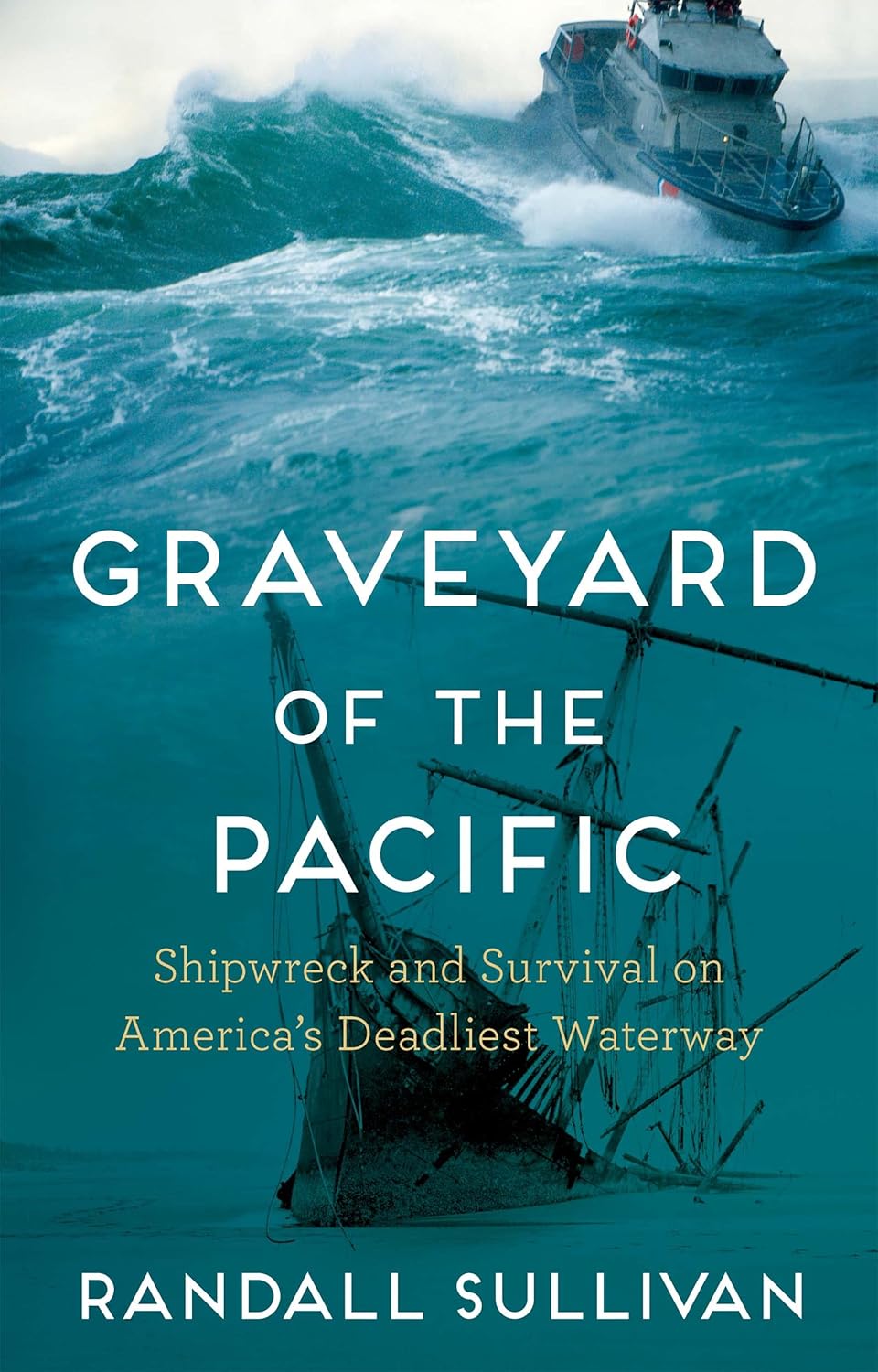
Graveyard of the Pacific, by Randall Sullivan

Who knew that more 2000 ships have been wrecked on the corner of the Oregon/Washington coast? Fierce storms, fog, reefs, sandbars, and tidal rips from the incoming flood of the Columbia river are so bad that there are specific ships and captains who must steer commercial ships through the area. While the book is partially taken up by one man’s quest to kayak through this deadly area, the rest of the book is quite fascinating.

Ghost Ship, by Brian Hicks   

There are many theories as to why the ship Mary Celeste was found abandoned at sea in 1872, with no clue as to what happened. The lifeboat was missing, and the crew abandoned ship so rapidly that food was still on the table and a sleeping child’s form was still outlined on the captain’s bed. Hicks combs through details to provide a solid, scientific reason, the best theory anyone has come up with yet, and the horrible fate of the crew.

In the Heart of the Sea, by Nathaniel Philbrick. 

The foundering of the whaleship Essex in 1820 became the inspiration for Melville’s novel Moby Dick. The Essex was sunk by a sperm whale in the Pacific, killing most of the crew. A handfull survived in a whaleboat for five months, surviving on cannibalism and rainwater. Melville allegedly met the son of survivor Owen Chase while at sea, and later met surviving Captain Pollard, who was considered bad luck after two lost ships, and no one would hire him. The combined diaries of the survivors were later made into a film.

When the Dancing Stopped, by Brian Hicks.

If Ghost Ship wasn’t enough, Hicks covers the perfect storm of disaster on the Morro Castle, a top of the line 1934 cruise ship traveling between Cuba and New York’s Pier 13. With horrific odds, the ship faced a tropical storm gaining on them, a nor’easter barreling toward them from the opposite direction, a murdered captain, an arsonist’s chemical fire underneath a ceiling filled with gunpowder, a crew that had never performed a fire or lifeboat drill, lifeboats whose launch mechanisms were painted closed, and a crew that fell apart at the first sign of trouble. How anyone survived (besides the crew, who abandoned ship without helping passengers) is a miracle. A book that reads like a novel, and is very hard to put down.

Deadliest Sea: The Untold Story Behind the Greatest Rescue in Coast Guard History, by Kalee Thompson

More fish are caught in Alaskan waters than almost everywhere else, yet many fishing boats remain virtually unregulated as to safety, and there are powerful political groups that push against it. In 2008, the Alaska Ranger meets with bad weather and too much ice, loses its rudder, and starts to sink. As in every disaster, few are trained, shortcuts were taken, lifeboats don’t work properly, wetsuits have holes, and they are more than 200 miles from the Coast Guard rescue planes. Thompson creates a tense tale of survival and aggravatingly poor working conditions as the Coast Guard rushes to save the crew. A lot of names, but hard to put down.

Futility, or, The Wreck of the Titan, by Morgan Robertson

Okay, this one is short fiction, and because it’s so old it’s hard to get a copy of (you can read it for free on Project Gutenberg, here), but it’s mentioned in so many memes as “The Titanic Foretold!” that I wanted to include it here. Published in 1898, the book, yes, involves an “unsinkable” ship called the Titan, that, in its second collision in two days, hits an iceberg and capsizes. The unlikable protagonist rescues a little girl in order to get a seat on a lifeboat, then plots to use her to extort money from her family, and most of the book is about him whining about being stuck with the kid. There is almost nothing in this novella that compares with the Titanic, beyond a name (common enough. It would have been more compelling if the name was Carpathia or something) and an iceberg (also common in those waters). It’s short, you can read it, but it’s trite, simplistic, outdated, boring, and sometimes painful to read. But, truly, it in no way predicted the wreck of the Titanic.

If you’d prefer, check out these films of ocean disasters:

In the Heart of the Sea

The Perfect Storm

Finest Hours

The Poseidon Adventure

Titanic

The Life of Pi

All is Lost

Lifeboat

Serial Solving

I never know what I’ll read next. What ever sparks my interest, either by title, by book cover, or by subject. I have no special direction or particular interest, but if I found one book on a subject interesting, I’m far more likely to read another on the subject, or by the same author.  Hence I’ve read an inordinate amount of books on Ebola, fast fashion, tea, books on the making of various movies, and, well, serial killers.

We know the names. Son of Sam. Ted Bundy. Green River Killer. BTK Killer. Long Island Killer. 

I have no fascination with them, find most of them repellent and frightening beyond description, and did not shed a tear when Jeffery Dahmer died in prison, but I find the psychological processes and forensics involved in tracking them down utterly intriguing. The science end, not the murder end. And there is SO much to be fascinated about. 

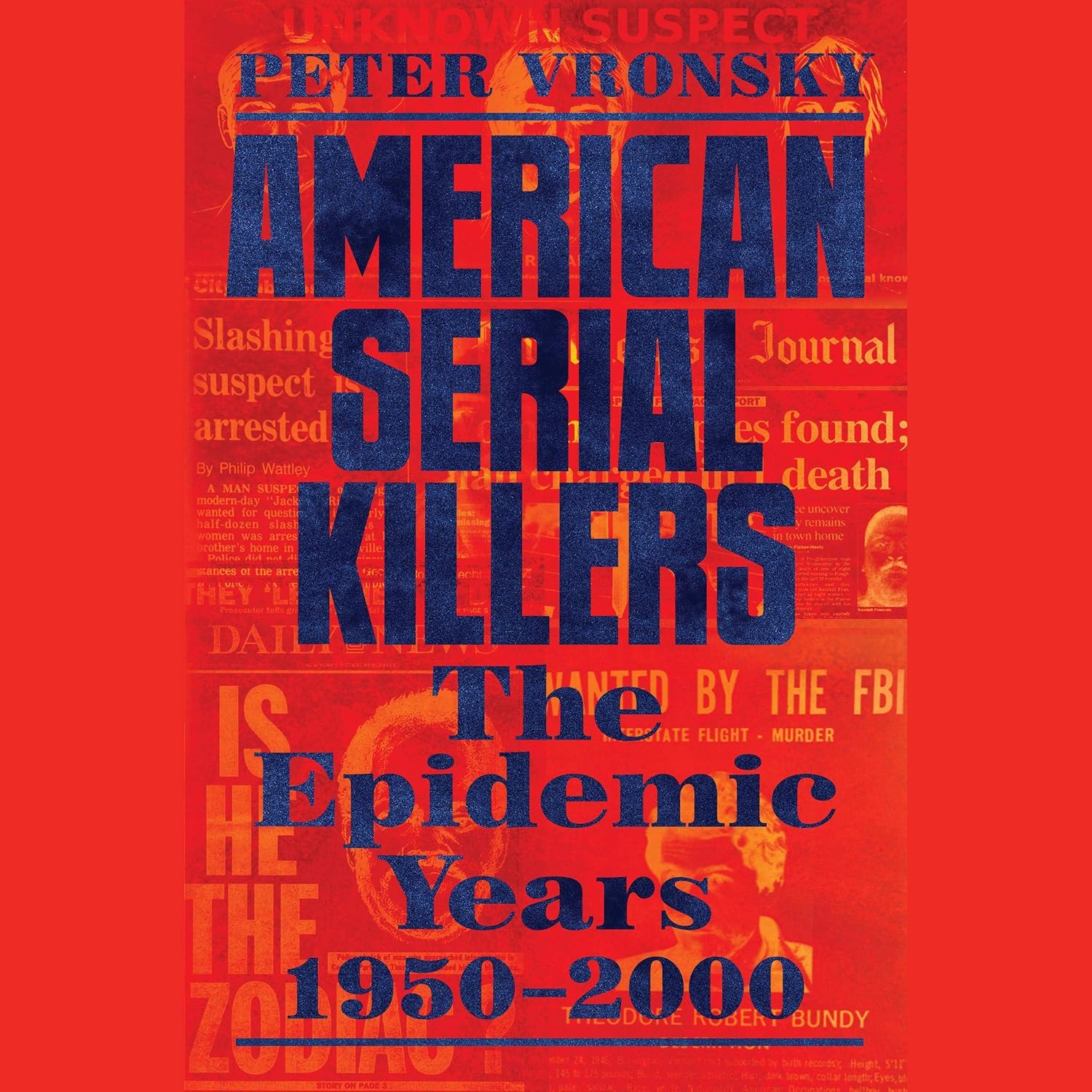
Most recently, I read the book American Serial Killers: The Epidemic Years, by Peter Vronsky, and I was blown away by the premise. America – which has more serial killers than any other country (well, that are reported and connected. Other countries have mass murders by corrupt governments, so maybe we’re better off) – had a major epidemic of serial killers (those that intermittently kill more than three people, as opposed to a spree all at once) from around 1970 to the mid 1990’s – more than 600 a year, and then it tapered off sharply. Why? Why did we have terrible trails of serial murders for 25 or 30 years, and then few?  Vronsky makes a very strong, documented  case for the fact that most of these killers were born in the late 40’s and early 50’s (25 or 30 by 1975) and their fathers fought in World War II. Vronsky documents that many of these fathers came back damaged from the war – PTSD, violent, depressed, alcoholic, received no help, and were unable to nurture their children. These boys – coming of age with violent sex images in men’s magazines, pulp fiction novels, and comics – grew up with attachment issues, poor self-image, and violent fantasies about sex, which they slowly began to work up the nerve to carry out. Why did things taper off? Most of those killers were either dead, in prison for other crimes, or had worn themselves out and were living a quiet life until something might trigger them again, unknown to their neighbors. Vietnam Vets received more services than soldiers in the 40’s, there was more public support, it wasn’t as big a deal to divorce a man, and those children did not have the same issues their grandfathers did. Those children of Vietnam vets would have been 25-30 in 1990-95 – years when serial killers were in decline.

Another utterly fascinating book – one that sent me down a long, long wormhole of research – is Barbara Rae-Venter’s I Know Who You Are: How an Amateur DNA Sleuth Unmasked the Golden State Killer and Changed Crime Fighting Forever. The Golden State Killer was alleged to have killed 13 people and committed more than 50 rapes across California between 1974-1986. Because police departments didn’t talk to each other or share information, no one was ever able to piece together all the information. Enter Rae-Venter. Rae-Venter spent her days helping people trace their genealogy and find their families using her home computer. Asked if she could do the same for a suspect, Rae-Venter needed 63 days and $200 to make a genetic profile of the killer from her dining room – something 30 years and $10 million of taxpayer money had never been able to do, leading directly to the apprehension of the killer. Since Rae-Venter, a huge number of backlogged, dead-end cases have been solved and cleared (like the Long Island Killer) due to the methods she used.

Spurred on by her methods, I fell down a rabbit-hole of genealogical research, aided by ancestry.com (free at the library), and in a week was able to trace my mother’s ancestry back 12 generations, connect some gaps, discover my grandmother had an older sister we never heard of (probably because she died at 5 months), and my grandmother’s younger sister was four when she died, not the two my grandmother remembered. Sometimes books are dangerous!

Through both of these books, several names kept popping up, and I realized I’d already read books by both men. John Douglas was the first real FBI criminal profiler, starting in the 1980’s, creating many of the procedures we use today. His book, Mindhunter, chronicles how he began, in a time where every department wanted the glory of solving the case, and thus no one ever shared information, and no one ever solved the cases. 

Unmasked: My Life Solving America’s Cold Cases by Paul Holes, is another. Holes learned the business under Douglas, pursuing cold-case investigations from the 1990’s into the 2000’s.  Some of the cold cases that perplexed them the most and they were never able to solve were later solved by Barbara Rae-Venter’s methods, like the Long Island Killer and the Golden State Killer.

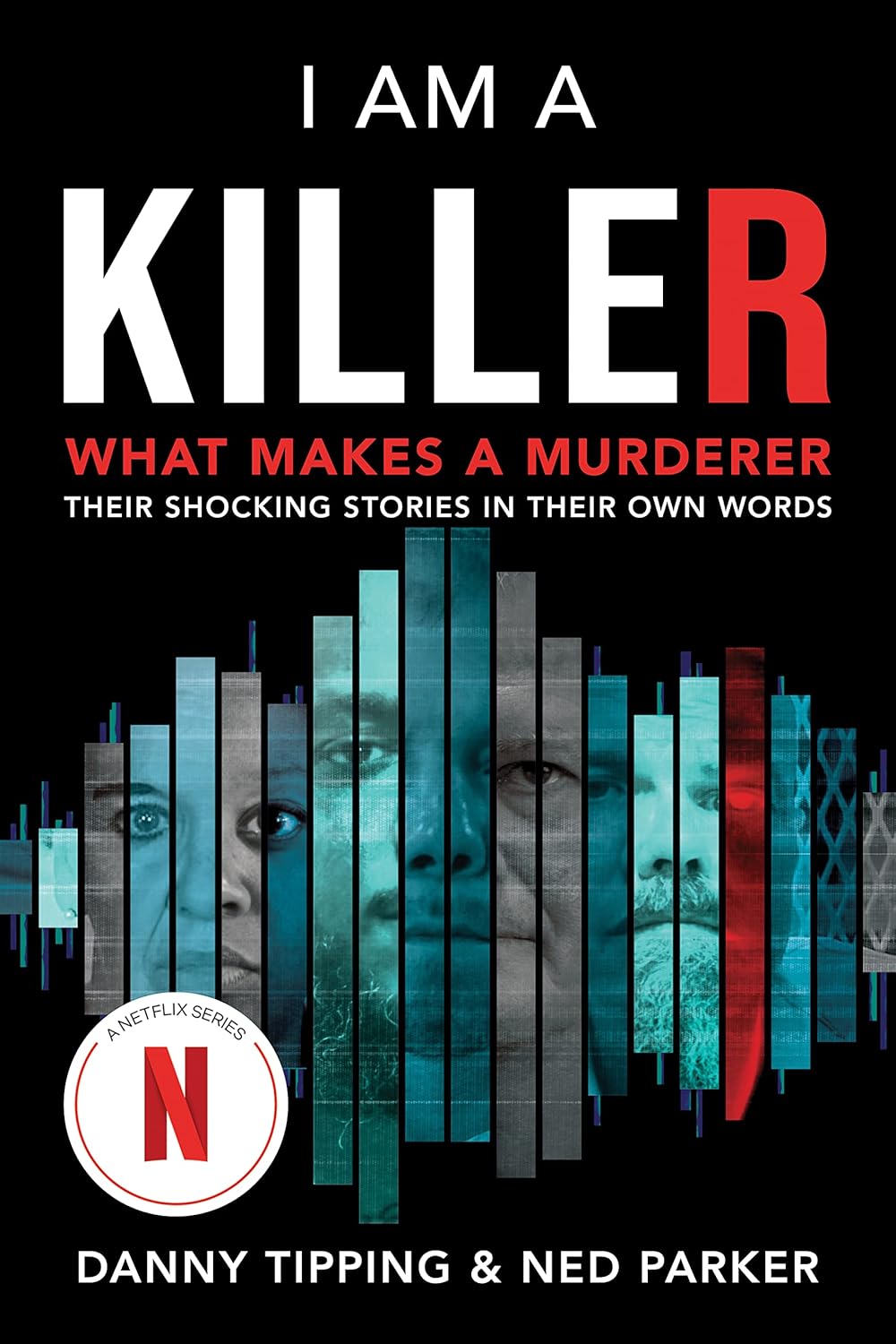
If you don’t care so much about crime but like psychology and sociology, and want to find out why people kill, try I Am a Killer, by Danny Tipping.  It’s a sad book that dwells on the murderers and not so much the crime. Time after time, the horrific backgrounds of these killers are revealed (one father, to hide the bruises and welts on his kid when Social Services was coming, tied him to a mattress, poured lighter fluid on him, and set his back on fire). Many did not deserve the sentences they received, responding to unimaginable abuse. There are no winners in this book. 

Though he technically didn’t kill anyone, if you want local flavor, read Incendiary: The Psychiatrist, The Mad Bomber, and the Invention of Criminal Profiling, by Michael Cannell. Many people claim to have invented criminal profiling, but this was an early case. In the 1940’s, a bomber went around exploding devices all over New York City, then teasing the police through letters. After twenty years, he was determined to be George Metesky – from Waterbury, Connecticut, and the criminal profiling was eerily correct.

If you like crime stories and investigations, these are excellent books. If you like psychology and deviant behavior, these are also excellent books. The difficult part is that they had to be written at all.

The Library of Congress Needs Your Help!

I recently took a class on archives and manuscript management- as one does- and learned about a problem in the world of museums and archives. Many of them have large numbers of old documents they have scanned into their digital collections for preservation, but they’re not searchable. What do I mean by “searchable?” Let’s say you’re doing research online, looking for information on feral pigs in North America in the 19th century. Now, it turns out the Library of Congress had a bunch of letters donated to them that discuss precisely this, and you could read all about the problems Matilda had on her farm in Cheshire as she writes to Cletus in Middletown. Unfortunately, you’re not likely to find these letters by blindly sorting through the images that make up the archives’ massive collection. Those letters first need to be transcribed, where someone looks at the pictures taken of the letters and types what is written there. Once this text has been typed, the computer is able to match your search for “feral pigs, North America, 1800s” with the text that was entered via transcription.

Here’s the problem: it takes a lot of time to transcribe all those old historical records. The solution? You.

That’s right! There are all kinds of archives and other historical organizations looking for volunteers to transcribe and review old documents. What does this look like in action? Here’s an example from a transcription I did on the Library of Congress’s We the People website:

Above is an article written by Frederick Law Olmsted, the “father of landscape architecture in the United States,” best known for designing Central Park in New York City. Here, he enthuses about the “Lungs of London,” another term for London’s Royal Parks. Even within this brief two-page document, there is so much to sink your teeth into. He describes the necessity of public parks that do not exclude the working class:

Money, and their legs, will carry [genteel people] whither they will; but with the poor artisan or labouring man it is not so. He cannot afford time or means to set out with his wife and children on a Sunday voyage of discovery – and to find the shades of night, perhaps, falling around him just as he has succeeded in refreshing his eyes with a bit of anything green.

Poetic! And relevant 185 years later… When opening up a new document to transcribe, there’s no telling what you may find.

This kind of project is perfect for history buffs, puzzle hounds, those interested in volunteering their time, or anyone who has ever thought, “Gee, I bet I’d make a good code cracker.” Each organization has slightly different guidelines for transcription, so definitely peruse those before you get started. Generally, these institutions want to make it easy for volunteers to provide their help, so it doesn’t take more than a few minutes before you’re transcribing your first document.

Here are a few of my favorites:

The Library of Congress– Probably the quickest to get started, with the easiest-to-use interface. You don’t have to have an account to transcribe, but if you create one (it’s free), you can track your hours.

National Archives– Volunteers here are called “Citizen Archivists,” and have more options outside of straightforward transcription like their “Outside the Box Missions.” This one wins for coolest branding.

Historic New England– They’re focusing on transcribing the Casey Family Papers right now, and from what I can tell this is a family with decent handwriting, great for beginners.

There are also many other smaller institutions looking for transcription help, along with international archives. Try googling “archives transcription volunteers” or “digital transcription volunteers” if none of the above suggestions tickle your fancy.

Questions? Did you try it? What did you think?

Books and Shows to Confirm Your Growing Technological Anxiety

“Have I told you all about the time that I got sucked into a hole through a handheld device?” asks the narrator of a song from the Arctic Monkeys’ 2018 album Tranquility Base Hotel and Casino. Technological ambivalence (or perhaps anxiety?) is a recurring theme. I can relate. I spend too many nights sitting down to unwind for just a few minutes, and somehow two hours pass by, during which I’ve clicked link after link on my phone while the dirty dishes sit neglected in the sink and my toddler’s toys are still strewn across every floor. If you’ve ever lost an evening of your life to Wikipedia or Youtube, or ever looked up from staring at a screen to wonder if you still have long-distance vision, you can relate, too. 

While I can’t give you advice on how to stop the vicious cycle of passive consumption – every time I delete a time-sucking app, I seem to replace it with another one – what I can do is suggest some slightly more cerebral time-killers to add to your queues. 

To Read/Listen to:

The Shallows: What the Internet Is Doing to Our Brains by Nicholas Carr 

As we enjoy the Internet’s bounties, are we sacrificing our ability to read and think deeply? The printed book served to focus our attention, promoting deep and creative thought. In contrast, the Internet encourages rapid, distracted sampling of small bits of information. As we become ever more adept at scanning and skimming, are we losing our capacity for concentration, contemplation, and reflection? 

The Anxious Generation: How the Great Rewiring of Childhood Is Causing an Epidemic of Mental Illness by Jonathan Haidt 

Social psychologist Jonathan Haidt lays out the facts about the epidemic of teen mental illness, then investigates the nature of childhood, including why children need play and independent exploration to mature into competent, thriving adults. Haidt shows how the “play-based childhood” began to decline in the 1980s, and how it was finally wiped out by the arrival of the “phone-based childhood” in the early 2010s. He presents more than a dozen mechanisms by which this “great rewiring of childhood” has interfered with children’s social and neurological development. Most important, he describes steps that parents, teachers, schools, tech companies, and governments can take to end the epidemic of mental illness and restore a more humane childhood. 

Fahrenheit 451 by Ray Bradbury

Many folks would point to Aldous Huxley’s Brave New World as fitting in best with this post’s theme, but those screen-covered parlor walls in front of which Mildred parks herself in Bradbury’s book-burning dystopia come to my mind more often than the Shakespeare-quoting John. Plus, Bradbury’s foretold degradation of the human attention span has supposedly come true. 

Amusing Ourselves to Death: Public Discourse in the Age of Show Business by Neil Postman 

It’s hard to believe this book is almost 40 years old, but the thesis is just as relevant now as it was back when Family Ties and 60 Minutes were among the top television shows. Postman posits that the visual medium of television has led to the decay of rational discourse by turning information into entertainment. On paper (or screen) it might sound like Postman is a technophobic curmudgeon, but one need only think back to how often misinformation under the guise of “news” has spread like wildfire via social media over the last ten years to see his point. 

Stolen Focus: Why You Can’t Pay Attention – And How to Think Deeply Again by Johann Hari 

Like so many of us, Johann Hari was finding that constantly switching from device to device and tab to tab was a diminishing and depressing way to live. So he went on an epic journey across the world to interview the leading experts on human attention – and he discovered that everything we think we know about this crisis is wrong. He introduces readers to Silicon Valley dissidents who learned to hack human attention, and veterinarians who diagnose dogs with ADHD. Crucially, Hari learned how we can reclaim our focus, if we are determined to fight for it. 

Dopamine Nation: Finding Balance in the Age of Indulgence by Anna Lembke 

This book is about pleasure. It’s also about pain. Most important, it’s about how to find the delicate balance between the two, and why now more than ever finding balance is essential. We’re living in a time of unprecedented access to high-reward, high-dopamine stimuli, and we’ve all become vulnerable to compulsive overconsumption. Dr. Anna Lembke, psychiatrist and author, explores the exciting new scientific discoveries that explain why the relentless pursuit of pleasure leads to pain . . . and what to do about it. 

To Watch:

2001: A Space Odyssey 

Stanley Kubrick’s classic film, and its sentient computer that turns murderous, has been so influential that even AI voice assistants will often respond back with a knowing reply if you quote the film at them. This is a film that tells its story mostly through the visual medium with little dialogue, so you’ll have to put aside from time to watch this one without compulsively scrolling on your phone. 

Black Mirror (available on Netflix) 

Twilight Zone for the information age. This Channel 4 / Netflix drama is composed of standalone episodes where technology complicates, or more likely completely destroy, the lives of the characters. In one story they can store, replay, and delete memories via an implanted device in their skin. In another, social interactions are given ratings, and they affect one’s socioeconomic status. Every once in a while you’ll have a happy ending, but you’re usually buckling in for a dystopian take on the computer-based tools we already use. Watch it via Netflix or purchase episodes through Amazon Prime. 

The Social Dilemma (available on Netflix) 

This docu-drama explores the dangerous human impact of social networking, with tech experts sounding the alarm on their own creations. It’s no mistake that Google’s own (former) design ethicist is a key narrator in this Emmy-winning documentary. Watch it via Netflix.