Top 10 Best Selling Non-Fiction Books Of All Time

Since books are so expensive these days, do you wonder what titles people are willing to spend their money on?  Amazon has compiled a list of their all time top selling non-fiction books.  Luckily for those who don’t want to shell out the money, our library owns most of them.

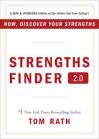
strengthStrengths Finder 2.0 – Tom Rath (ebook).  To help people uncover their talents, Gallup introduced the first version of its online assessment, StrengthsFinder, in 2001 which ignited a global conversation and helped millions to discover their top five talents.


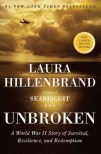
unbrokenUnbroken: A World War II Story of Survival, Resilience, and Redemption – Laura Hildebrand. Tells the gripping true story of a U.S. airman who was the soul survivor when his bomber crashed into the sea during World War II and had to face thousands of miles of open ocean, leaping sharks, a foundering raft, thirst and starvation, enemy aircraft, and, beyond, a trial even greater.

who moved my cheeseWho Moved My Cheese – Spencer Johnson. Relates a highly meaningful parable intended to help one deal with change quickly and prevail, offering readers a simple way to progress in their work and lives.


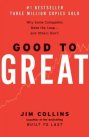
good to greatGood to Great: Why Some Companies Make the Leap and Others Don’t – Jim Collins. The author uses his research on the Fortune 500 to create a blueprint for turning good companies into spectacular ones.


steve jobsSteve Jobs – Walter Isaacson. Draws on more than forty interviews with Steve Jobs, as well as interviews with family members, friends, competitors, and colleagues to offer a look at the co-founder and leading creative force behind the Apple computer company.


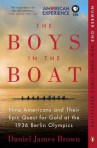
boys in the boatThe Boys in the Boat – Daniel James Brown. Traces the story of an American rowing team from the University of Washington that defeated elite rivals at Hitler’s 1936 Berlin Olympics, sharing the experiences of such contributors as their enigmatic coach, a visionary boat builder and a homeless teen rower.

life changing magicThe Life-Changing Magic of Tidying Up – Marie Kondo. Presents a guide to cleaning and organizing a living space, discussing best methods for decluttering and the impact that an organized home can have on mood and physical and mental health.

7 habitsThe 7 Habits of Highly Effective People – Stephen Covey.  A leading management consultant outlines seven organizational rules for improving effectiveness and increasing productivity at work and at home.
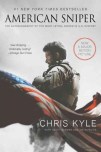
 

american sniperAmerican Sniper –  Chris Kyle.  A member of Navy SEAL Team 3 describes his life as a father and husband, and as the serviceman with the most confirmed sniper kills in the history of the United States military while serving in Iraq and Afghanistan.


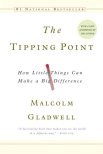
The Tipping Pointtipping point – Malcolm Gladwell.  An introduction to the Tipping Point theory explains how minor changes in ideas and products can increase their popularity and how small adjustments in an individual’s immediate environment can alter group behavior.


The next 10 top selling titles are:  Lone Survivor – Marcus Lutrell; Killing Lincoln – Bill O’Reilly; How to Win Friends & Influence People – Dale Carnegie; Proof of Heaven – Eben Alexander; The Glass Castle – Jeannette Walls; Quiet: The Power of Introverts in a World That Can’t Stop Talking – Susan Cain; Bossypants – Tina Fey; Outliers – Malcolm Gladwell; Lean In: Women, Work and the Will to Lead – Sheryl Sandberg

September 7th is National Beer Lovers Day!

Many of us are in denial about the fact that Summer is coming to a close. Soon barbecues and outdoor parties will be a little cooler, and likely a little less frequent. This makes it a perfect time to celebrate a staple to many picnics (for the adults anyway) beer and other adult beverages. September 7th is National Beer Lovers Day, and a great day to explore all things beer related.

How about some history of beer, and Connecticut beer specifically:
Connecticut Beer: a History of Nutmeg State Brewing by Will Siss
The Craft Beer Revolution: How a Band of Microbrewers is Transforming the World’s Favorite Drink by Steve Hindy
A History of the World in 6 Glasses by Tom Standage
Microbrewed Adventures: a Lupulin-filled Journey to the Heart and Flavor of the World’s Great Craft Beers by Charlie Papazian
The War on Alcohol: Prohibition and the Rise of the American State by Lisa McGirr

Or maybe you want to cook with beer or try your hand at home brewing:
Beer-Can Chicken: and 74 Other Offbeat Recipes for the Grill by Steven Raichlen
The Craft Beer Cookbook: From IPAs and Bocks to Lagers and Porters, 100 Artisanal Recipes for Cooking with Beer by Jacquelyn Dodd
Mastering Homebrew: The Complete Guide to Brewing Delicious Beer by Randy Mosher
How to Brew: Ingredients, Methods, Recipes, and Equipment for Brewing Beer at Home by John J. Palmer

Save

The Day I Forgot My Phone

taber-No-Cell-Phones-AllowedI left the house without my smartphone and didn’t realize it until I arrived at work.

It felt funny at first. I had become used to carrying my phone with me. But as the day went on, I noticed something peculiar. I felt calmer.

There were no texts interrupting my concentration. No buzzing of a phone set to silent to distract me during a meeting. No notifications from apps warning me of impending weather fronts.

I didn’t text my husband with thoughts the second I had them. I didn’t send any “how are you” or “where are you” messages to my daughter.

Jacket.aspxAs if to reinforce the strange but not bad quiet of my day, I saw a book on the new book cart that caught my minimalist eye. The Joy of Less: 101 Stories about Having More by Simplifying Our Lives, a book in the Chicken Soup for the Soul series. Flipping through the pages, I discovered, by a great cosmic coincidence, a section titled “Joyfully Unplugged”.

This section has stories about taking a sabbatical from Facebook, going without television, and generally disconnecting from electronics in order to reconnect with life. One of my favorites is titled, “Why I Gave My Smartphone a Lobotomy” by Nicole L. V. Mullis. It is simply a short essay about a woman who began to pay more attention to her phone than to those around her and cured herself by deleting all her apps.

I’m not quite ready to do that, but I am ready to lay my phone aside and forget about it from time to time. I don’t need to be available 24/7. I don’t want to be available 24/7.

The quiet of my phoneless day was an unexpectedly nice surprise. I realized with a shock that quiet is now a treat, something that needs to be planned. And, I have decided, it is something worth planning.

Interested in the effects being constantly online? Try these titles, which explore the bad and the good sides of being online:

Jacket1          Jacket.aspx          Jacket.aspx

Downloadable Audiobooks:

 Jacket.aspx          distraction

Save

Save

Save

Save

Save

Understanding Urban Issues

Here is a group of books – some of them very good – that are sure to fuel political fire, no matter which fence you sit on regarding the issues of the blighted inner cities.

indexGhetto is a brand-new book by Mitchell Duneier on the term “ghetto,” which dates back to the 1400’s when Jews were forced to live in isolation from Christians. They were free to come and go, except at night, and anyone could do business with them. This led to a flourishing if separate culture for hundreds of years. Enter the Nazis, who isolated Jews into Ghettos with barbed wire. No one was allowed in or out. Here, people had no jobs, severe overcrowding, no public services, and as the ghettos decayed and residents grew desperate, people accepted the fact that Jews lived like animals, and it helped fuel antisemitism. Why would people live like that if they didn’t deserve it, forgetting that to cross the wire was not just banishment, but death. By the 1940’s the term expanded to the narrow neighborhoods that African-American people were allowed to live in. There was no barbed wire, but an invisible barrier that they weren’t allowed to cross except for work. As their neighborhoods became overcrowded because no one could move out, they fell victim to the same issues faced in Germany. Duneier presents facts throughout the last century – the 40’s, the 60’s, the 80’s, and today, on the current use of the term vs. the historical one, and how the stagnation and forced living creates the discord we see today. The book is far too long and detailed – it could be half and still be excellent – but even if you have to skim it, it is serious food for thought.

Easier to read, if not more infuriating, is Family Properties:  Race, Real Estate, and the5190mOD8p3L._SX329_BO1,204,203,200_ Exploitation of Urban Black America by Beryl Satter. Satter details the blatant racist policies of 1940’s Chicago, where Real Estate agents were threatened if they sold houses to African Americans past the “White” line, and people who did buy in would find the houses disassembled by the neighbors to prevent it. It took many years and many lawsuits to get things to change. This book will make you angry.

514dyV2l3KL._SY479_BO1,204,203,200_A head scratcher is All Souls: a Family Story from Southie by Michael Patrick McDonald. Mrs. McDonald is Irish, unmarried, and pumps out children like party favors (11 in all), living in the infamous projects of South Boston – an area run by no less than Whitey Bulger himself. Michael tries to sort out his childhood as his siblings fall victim to gangs and drugs and forced busing. Entertaining and tragic, even if you can’t relate to their lifestyle.

Death at an Early Age, Savage Inequalities, and Fire in the Ashes, all by Jonathan Kozol, are heart-rending books about the disparities in Urban and Suburban education. They are excellent reading that will break your heart. The realities of urban living will block most of these kids from ever achieving, and it is not their fault.

Jacket.aspxI cannot recommend the book The Corner: A Year in the Life of an Inner-City Neighborhood by David Simon and Edward Burns enough. I could not put it down. It covers the grim streets of Baltimore, a place so bad it’s where trauma surgery originated. It is compelling and reads like a novel. And they made a TV Miniseries out of it. One of my top-50 favorite books.

51BHwvQwVbL._SX331_BO1,204,203,200_If you’re really, really, really into sociology, then go back to the original: How the Other Half Lives by Jacob Riis. This is one of the first sociological studies on the slums of 1886 New York City, and the issues seen there – discrimination, overcrowding, street children,  gangs, alcoholism, domestic violence, prostitution – paint a familiar story as European immigrants try to find a way to survive in a hostile new world. It’s dry reading at times, but interesting in the patterns that appear.

Lyndon Johnson took decisive moves to improve our urban areas; 50 years later, not much has changed. The issues brought up in these books are just as relevant today as then, and we have more than enough information to make positive changes. These books will open your eyes.

Learn about Xeriscaping

Jacket.aspx

Water is a precious resource. As the planet warms and the weather changes, more and more gardeners are turning to xeriscaping as a water-conserving alternative to traditional gardens.

So, the big question is, what is xeriscaping?

Basically, it is landscaping that reduces or eliminates the need for supplemental water. In an age when weather extremes are becoming the norm, gardens that are indifferent to the amounts of water they receive are a good idea.

Xeriscaping uses drought-tolerant plants and non-plant elements. Crushed stone, boulders, large urns, and decorative pieces of sculpture are often the backbone of xeriscapes. Plants such as cacti, low-water grasses, and succulents add a touch of green.

New to xeriscaping? We have the resources you need to get started.

Jacket1.aspxThe Water Saving Garden:  how to grow a gorgeous garden with a lot less water by Pam Penick


lawngoneLawn Gone! Low-maintenance, sustainable, attractive alternatives for your yard by Pam Penick


Jacket4.aspxRock Garden Design and Construction by by the North American Rock Garden Society; edited by Jane McGary


Jacket9.aspxDesigning with Succulents by Debra Lee Baldwin