I feel terrible for only squeezing in 27 books this year, a new low for me, but considering I wrote or edited three books in between, I don’t feel so bad. I am an unforgivable nerd, wallowing in science, history, psychology, and biography to the point I read almost no fiction at all anymore. I feel bad when people ask me to recommend something and I have no clue what to offer because the last really good book I read was on the histology of Ebola, or they’re looking for romance recommendations and my idea of a great romance is the novelization of Raiders of the Lost Ark. Here are the best and worst I read this year, not counting a reread of Chris Wooding’s Retribution Falls, which I love so much I gave out ten copies at Christmas:
#
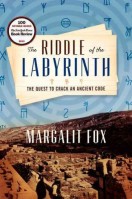 The Riddle of the Labyrinth: the Quest to Crack an Ancient Code, by Margalit Fox. Fox covers the work by Michael Ventris, who eventually untangled the mystery of the early Greek/Mycenean Linear B glyphs, but spends much of the book discussing Alice Kober’s work, so much of it uncredited yet without which Ventris would not have succeeded. When Kober – who spent the majority of her life working on the syllabary – dies just a year before the pieces fall into place, you want to cry for her. If you love a good detective novel – this is a true story that shook the history world. (I warned you about the nerdism).
#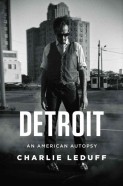
Detroit: An American Autopsy, by Charlie LeDuff. An incredible book about the decay of Detroit, a city so far gone America has forgotten it exists, while the people still try to survive in a place without – well, anything. No jobs, no police, no grocery stores, and most recently, no water. Made me incredibly angry to see America left to rot like this.
#
#
W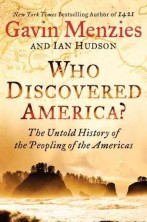 ho Discovered America? by Gavin Menzies. Ever read a book that makes you feel like you woke up on an alien world, that everything you were ever told about history was wrong? This book takes Thor Heyerdahl to a whole new level, pointing out overwhelming scientific evidence that Asian, African, and European peoples were routinely coming to America long before Columbus was born. Utterly fascinating. Even if Menzies is only 10% right, it still changes everything we know about history. Easy to read, and you won’t be able to put it down.
#
#
Nothing to Envy: Ordinary Lives in Northern Korea, by Barbara Demick. This book is so touching and so sad, you cannot help but be moved by people who have so little control over their lives that even their food and clothing is doled out by the government, and if they say you will starve, then you starve, because they will not give you more. People risking death to swim to China, or pay for an underground railroad to South Korea, where they have extreme culture shock that defies the propaganda they have been fed for generations. Hate the leader, but love the people. I love Gavin Menzies, but I think this gets my vote for Best Book of the Year.
#
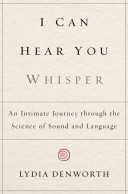 I Can Hear You Whisper: An Intimate Journey Through the Science of Sound and Language, by Lydia Denworth. Denworth’s youngest son is born profoundly deaf; this is her story not only of trying to decide how to educate him (as a lip-reader, a signer, or hearing w/ a cochlear implant). Interspersed with her journey is the science behind hearing and language, and the history of deafness, and it is utterly fascinating how much hearing and learning are interconnected, and why many deaf people never read beyond a fourth-grade level.
#
#
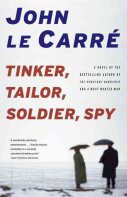
Tinker, Tailor, Soldier, Spy, by John LeCarré. I needed to read a couple of spy novels as research for a book I was writing. Every list I looked at said this was the best. I have no doubt they are right. A spy novel that will keep you guessing until the very end, it makes James Bond look like a pampered fool. Very British, but very, very good.
#
#
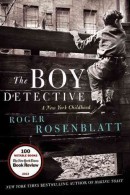 Worst book I read this year? There were a couple of stinkers, but I think the worst I read was The Boy Detective: A New York Childhood, by Roger Rosenblatt. I don’t care how many awards he’s gotten. I almost never abandon a book half-way through, but I just couldn’t finish this. It has a boy, and he’s in New York, but the rest is just a single run-on sentence of chapterless rambling. You know how your brain wanders foggy from topic to topic when you’re lying in bed half asleep? That’s this book. I read some clunkers, but I made it to the end of them. This one I couldn’t get past 50 pages. No, thank you.
What did you like/dislike this year?




 Are you one of the lucky ones who got a large-screen TV for the holidays this year? Did you just replace an aging (and heavy) old picture-tube with a nice, light digital flatscreen, or did you go all-out and get that giant 50, 60, or even 80” monster that feels like you’re at the movie theater? Aren’t those digital cable channels amazing crystal clear?
 ng out and making it look – well, not like a TV picture? There’s a reason for that. “Normal” TV pictures, those we’ve all grown up with, “refresh” or “run” at a speed of 60 frames per second (if you’ve ever seen a reel-to-reel movie, maybe in school, think of all those still frames whipping through the machine to make the movie move, and think of sixty of those still pictures every second, or 3600 of them every minute). That’s what our brains can process as smooth motion, and makes our TV look like TV.
 A little, but not necessarily much. Go to your TV’s “settings” selection. There will be a setting that addresses “motion,” “motion control,” or “motion smoothing,” or some other term usually with the word motion – Google your exact TV model number for the term your TV uses. Most TVs come from the factory with the motion smoothing default setting to ON. Find your TV’s setting and simply turn the control to OFF. Yes, sometimes it’s easier said than done, and in my case it helped a little but not a lot.
 e you do. Some are better at it than others, and it is more bothering to some people than others; it’s really a personal preference. I’m learning to live with it, trading in the awe of seamless clarity on special effects (watching the SHIELD helicarrier lift off from the water in The Avengers was jaw-dropping incredible) for the weird teleplay of people speaking. Unfortunately it’s the shape of things to come, and eventually we’re all going to have to adjust.
 The Cheshire Library Blog