Pride Month (also known as LGBT Pride Month) is celebrated each year in the month of June to honor the 1969 Stonewall riots in Manhattan. The Stonewall riots were a tipping point for the Gay Liberation Movement in the United States. In June of 1969, patrons and supporters of the Stonewall Inn staged an uprising to protest the police harassment and persecution to which LGBT Americans were commonly subjected. This began of a movement to outlaw discriminatory laws and practices against LGBT Americans.

The American Library Association has also named June GLBT Book Month, celebrating the authors and writings that reflect the lives and experiences of the gay, lesbian, bisexual, and transgender community. Whether you are a part of the LGBT community or not, finding your self in one of these books or going outside your comfort zone, these books about the LGBT experience can help to foster a greater understanding of the diverse world we live in.
Lovers at the Chameleon Club, Paris 1932 by Francine Prose. At the Chameleon Club in Paris, Lou Villars, a star athlete and scandalous cross-dressing lesbian, finds refuge among its patrons, and as time passes, she experiences a transformation that warps her earnest desire for love and approval into something dangerous.
When Katie met Cassidy 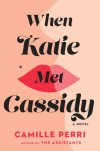 by Camille Perri. A romantic comedy about gender and sexuality follows the experiences of a traditionally minded Midwesterner who, in the aftermath of an ended engagement, finds herself in a transformative relationship with a self-assured New York businesswoman.
Middlesex by Jeffrey Eugenides. In the spring of 1974, Calliope Stephanides, a student at a girls’ school in Grosse Pointe, Michigan, finds herself drawn to a chain-smoking strawberry blond classmate with a gift for acting. The passion that furtively develops between them – along with Callie’s failure to develop – leads Callie to suspect that she is not like other girls. In fact, she is not really a girl at all.
The Danish Girl  by David Ebershoff. Set in 1920s Copenhagen, this tender tale of love and marriage in the midst of fundamental crisis introduces a man who discovers he’s a woman and the woman who will do anything for him.
The Lauras  by Sara Taylor. A thirteen-year-old girl on the run with her mother from her father revisits her mother’s former foster care homes to repay old debts and keep promises, learning astonishing truths along the way, in a novel that strikes at the heart of a mother-child bond and the exploration of gender identity.
If I was Your Girl  by Meredith Russo. Amanda Hardy only wants to fit in at her new school, but she is keeping a big secret, so when she falls for Grant, guarded Amanda finds herself yearning to share with him everything about herself, including her previous life as Andrew.
Will Grayson, Will Grayson  by John Green & David Levithan. When two teens, one gay and one straight, meet and discover that they share the same name, their lives become intertwined as one begins dating the other’s best friend, who produces a play revealing his relationship with them both.
Prudence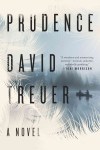 by David Treuer. A haunting and unforgettable novel about love, loss, race, and desire in World War II–era America, about the secrets we choose to keep, the ones we can’t help but tell, and who—and how—we’re allowed to love.
Becoming Nicole : the Transformation of an American Family 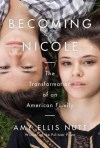 by Amy Ellis Nutt. The true story of a transgender girl, her identical twin brother, and an ordinary American family’s extraordinary journey to understand, nurture, and celebrate the uniqueness in us all.
Believe Me : a Memoir of Love, Death, and Jazz Chickens  by Eddie Izzard, with Laura Zigman. Writing with the same candor and insight evident in his comedy, Eddie Izzard reflects on a childhood marked by the loss of his mother, boarding school, and alternative sexuality, as well as a life in comedy, film, politics, running and philanthropy.
 In January 1969, off the shores of
  Earth in 1970 was a very sorry place. We knew we were in trouble since Rachel Carson’s
  1972. Leaded gasoline was phased out in 1973. Lead-based household paint was banned in 1978. Flame retardants were phased out of infant clothing (because babies have such capacity to spontaneously combust after sunset). Pesticides were examined, and many were quickly banned from use. And amazingly, the Earth began to recover. Today the Bald Eagle is off the endangered species list, with more than 5,000 nesting pairs noted – I almost drove off the highway when I saw one sitting on a light post in the Catskills. A living, wild, Bald Eagle. A few California Condors have been re-released into the wild, with more than 400 individuals now living wild or in captivity. New trucks and buses have 99% fewer emissions than those in 1970. The Hudson River now has fish again.
 little things, combined, make a big impact. Recycling aluminum cans saves 95% of the energy needed to produce new ones from ore. One ton of recycled paper saves 17 trees, lessening the greenhouse effect. One ton of recycled plastic saves 16 barrels of oil – $1,000 per ton. Multiply that by all the people in your town, your state, your region – and think how that snowballs. So celebrate your cleaner environment on April 22. Plant a tree. Pick up garbage on the side of the road. Recycle your bottles. Take a walk and look at all the diversity of trees and flowers and birds around you, and breathe deep of air that doesn’t burn your nose and eyes and make you cough (does anyone else remember the stink of the





 I am a deep introvert. I’m perfectly fine talking only to the cat or TV. Hence, when my son was born, I figured if I didn’t start talking to him, he’d never learn to talk (my first mistake), and thus began thirty years of talking to myself and narrating what I’m doing.
 Based on these studies, along comes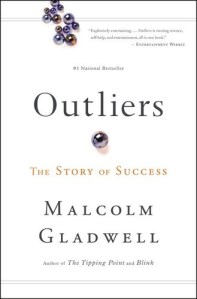
 It’s almost impossible to get through the winter without hearing about the flu. While we often use the word flu to describe any miserable feverish head cold, a cold (rhinovirus) is NOT the same as the flu (influenza). A head cold is 10 days of misery. Flu will disable you for weeks, if not outright kill you.
 H2N3’s, H6N4’s. Now, not all of these can be caught by people (some are limited to animals), but viruses can mutate and change very rapidly. With all those combinations, the Centers for Disease Control have to make a best guess at what flu will prevail that winter, and make enough vaccine a year in advance. If your shot is for N1H1, and you catch H2N3 – you’ve got flu. Better flu shots (called trivalent or quadravalent) will give you immunity to the top three or four likely flus, quadrupling your chances of staying healthy. Even if you do manage to get a flu, your partial immunity will give you a much milder case.
 people, chickens, and pigs are often living in close or crowded conditions, and many Asian cities are very densely populated. Pigs are very similar to people in their genetic makeup (surgeons can use pig organs in people for short times). A bird flu can mutate and jump to pigs, and from pigs it doesn’t take a lot of mutation to become a Human flu. This is why scientists worry every time there’s a breakout of swine flu or bird flu, and millions of animals may be slaughtered to keep it from spreading. All it takes is a new mutation to start a mega-deadly 1918-style pandemic.




 The Cheshire Library Blog