Screen-Free Week is coming – can you go a week without screens?

Today’s post is by Children’s Librarian Lauren:

“Have I told you all about the time that I got sucked into a hole through a handheld device?” So goes a lyric on the Arctic Monkeys’ technologically ambivalent album Tranquility Base Hotel and Casino. This line repeats in my head every time I find an hour of my life has been lost to compulsively scrolling through Instagram or following clickbait articles. So much of our lives is mediated through screens, and the side effects aren’t always as light as lost time and an earworm. Night-time screen use has been linked to insomnia, and studies are linking excessive social media use to anxiety and depression.

For kids too young for Snapchat, studies have tied screen use to developmental delays. The American Association of Pediatrics recommends no screen time for kids under 18 months and 1 hour max for kids under 5 years old. The more time toddlers spend silently watching screens, the less time they spend talking, playing, moving, and learning. Likewise, the more time parents and caregivers spend with screens, the less time we have to facilitate those crucial experiences for our kids.

To combat the negative effects of screen-based entertainment, some folks came up with Screen-Free Week, an annual week of unplugging and re-discovering the joys of real life fun. From Monday, April 29 to Sunday, May 5, families and individuals will be closeting the iPads and shutting off the backseat DVD players. Sound like something your family could try? Here’s some ideas on how to amuse yourselves while the screens are away:

Be bored! Boredom provides kids with an opportunity to get creative. Lin-Manuel Miranda – the creator of Hamilton and one of the most creative folks around – fondly recalls being left to his own non-screen devices. If you’re not up to writing an award-winning musical, though, provide your family with open-ended materials like art supplies, the contents of the junk drawer, and your backyard. Here are a few ideas to get you started:

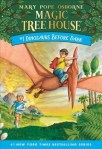
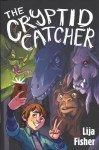
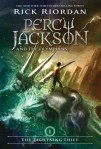
Clash your clans in a fantasy book! Look in the kids section for the blue sticker with a unicorn. Magic Tree House and Percy Jackson are classics that work as family read-alouds, or check out a new book like The Cryptid Catcher. We also love us some Neil Gaiman, especially Coraline, a delightfully creepy tale that begins with a super-bored girl who, to put it mildly, finds a way to amuse herself.

Go outside for a walk! This is one of the best times of year to hang out around the canal trail, when birds who migrated south are coming back and starting to make nests for the spring. You can see turtles, beavers, and snakes at Lock 12, and in the last couple weeks I saw diving kingfishers, big herons, and colorful wood ducks in the new section of trail north of West Main Street. Sleeping Giant State Park is still closed from tornado damage, but nearby Brooksvale Park has salamanders, frogs, and even farm animals, as well as easy hiking trails. The library has free maps of local trails, as well as wildlife guides for kids and adults to borrow.
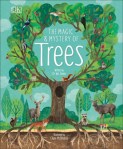
Take advantage of the spring birds & blooms that are popping up all over this time of year, as close as your own back yard! Ask little kids to point out colors, compare sizes, and count petals on flowers. Explain pollination and photosynthesis to big kids – or, better yet, let them explain it to you. See how many different kinds of birds you can spot.

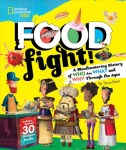
Take a break from Allrecipes and Epicurious, and follow a recipe from a book! Whether tacos or teiglach are more your speed, you can find a ton of family-friendly recipes in cookbooks designed especially for kids. Some cookbooks specialize in classics and others offer a history of food. Wherever your interests lie, head to the 641s for your cooking needs.

After you’ve cleaned up the kitchen and the kids are busy writing their own history-based raps, you might have a few minutes during Screen-Free Week for some adults-only reading:

Will you be participating in screen-free week from April 29 to May 5?

Earth Day and the Environment

Today’s post is by Bill, Head of Adult Services.

The first Earth Day was celebrated on April 22, 1970, with the intention of bringing awareness to environmental issues.  The first Earth Day events drew millions of participants across the U.S. and around the world.  This was the scene in New York City. Since 1970, celebrations have grown, with Earth Day becoming a global event in 1990.

2019 marks the 10th year that Cheshire Public Library has commemorated Earth Day by offering programs on the environment, outdoor activities, gardening, wildlife and more.  This year we offer six programs in April, among them, speakers who are highly esteemed in their fields – from butterflies to birds to “gardening as if the world depends on us.”

The library is a vital place for citizens to become educated and informed about environmental issues, from fracking, to plastic bags and straws, to carbon emissions, so that that they may approach their elected representatives with their concerns.  The environmental impact of plastic straws is a topic that has been in the news a lot recently: The Last Plastic Straw websiteShoreline Town to Consider Banning Plastic Bags, Straws, State of Connecticut Research Report ‘Banning Plastic Straws.
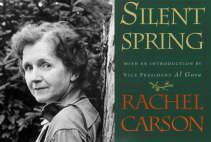
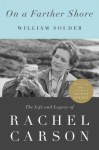
Rachel Carson’s book, Silent Spring, published in 1962 and available in multiple formats at Cheshire Library,  expressed her passionate concern with the future of the planet and all life on Earth, and inspired the modern environmental movement.  In addition, CPL also offers many other materials for those interested in learning more about taking care of our environment:


We’ll end this post with an audio link to Before the Deluge by Jackson Browne.  The song was released 45 years ago and remains relevant today.


March is Women’s History Month

Today’s post comes to us from Bill, Head of Adult Services.
100 years ago, in 1919, women DID NOT have the Constitutional right to vote.  That’s right – your grandmothers or great-grandmothers were second class citizens!  The 19th Amendment to the Constitution – which granted women the right to vote, would not be passed until the following year – 1920.  Yet today there are 102 women serving in the House of Representatives, 25 serving in the Senate, and 3 seated on the Supreme Court.
<
Read – listen – watch and learn the stories of the women of today – and yesterday – whose strong, influential, and groundbreaking actions impacted our country.  The lives of the famous and not so famous paint a picture of women’s experiences in America and how they helped build our nation.
>
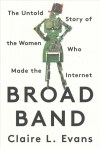
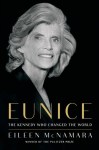
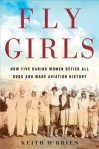
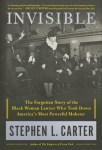
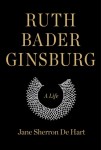
Explore more about the role of women in shaping our history with these books from our shelves:
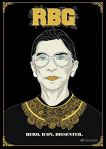
And these titles available to Cheshire Library cardholders in multiple formats:
Learn more about women in history: https://www.biography.com/tag/womens-history
Learn more about Women’s History Month: https://womenshistorymonth.gov/about/

Leading Ladies in Literature – Strong Female Reads for International Women’s Day (March 8)

When asked to write a post about strong female protagonists, it took me longer than I’d like to admit to think of my favorites. Even if I’ve read hundreds of books over the course of my life, only a handful stand out in their portrayal of a female lead. Most often, the most interesting characters I’ve come across are varied, flawed, and human, filled with errors and quirks that I find easy to relate to in my day to day life. These are the women I find myself relating to (even if I do wish I could be as perfect as Hermione Granger) and rooting for. I’ve compiled a list of a few of my favorites, which barely scratch the surface of the wonderful and wide world of women in books, but hey, we all have to start somewhere.

If I’ve missed your favorites, please feel free to leave a comment down below, I’m always looking to add books to my reading list.                                                    

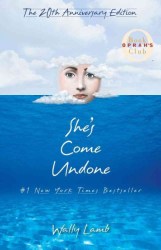
She’s Come Undone by Wally Lamb. First off, this is a book I swore to never read again, ironically,  just because of how much it hurts to read. Wally Lamb is a master of creating a character you physically hurt for after getting to know them, and Dolores Price is no different. At once a fragile girl and a hard-edged cynic, so tough to love yet so inimitably lovable, Dolores is as poignantly real as our own imperfections. Through rough edges and rougher trials, including assault, mental institutions, absentee parents and lonely adulthood, Lamb shapes a character you find yourself cursing at, wincing for, and holding close.

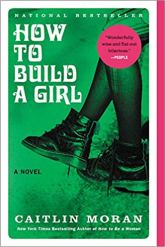
519bogs1ivl._sx330_bo1,204,203,200_How to Build a Girl by Caitlin Moran. After she shames herself on local TV, 14-year-old Johanna Morgan reinvents herself as Dolly Wilde–a fast-talking, hard-drinking Gothic hero and full-time Lady Sex Adventurer. Watching Johanna stumble through her rebirth into a plucky more confident version of herself made me look back fondly (and lets be honest, not that fondly) on my high school years. Trying to re-brand yourself, whether it be with new fish net stockings, a streak of pink in your hair, or a new favorite band, is a rough process. How to Build A Girl highlights how surface level all of these additions are, and asks the question, how far will one really go to re-imagine themselves? I found myself wanting to hug the pivotal character Johanna, and tell her it gets better, if not by action, then by time. It seems like even if she’s struggling, Johanna is a character you find yourself egging on, and even being somewhat jealous of at times.

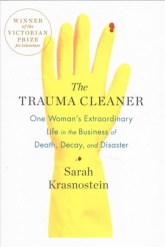
The Trauma Cleaner by Sarah Krasnostein.  I brought this book on vacation thinking I’d enjoy a pulpy novel about crime scene clean up. I’m a true crime fan myself, and my interest in forensic science has led me down an interesting path in terms of books in the past year. This book turned out to be the opposite of pulp, and had very little to do with crime scene clean up after all. Sandra Pankhurst is a titan in the industry of Specialized Trauma Cleaning, she does her job and she does it well. Before she began professionally cleaning up their traumas, she experienced her own. First, as a little boy, raised in violence and excluded from the family home. Then as a husband and father, drag queen, gender reassignment patient, sex worker, small businesswoman, and trophy wife. The true life story of Sandra left me wounded in ways I didn’t expect. In a world that profits of making jokes of hoarders and death, this book, and Sandra, treat these people with dignity. She bags up their postcards, their books, their recipe cards tucked into binders, and saves them from the despair of dirt and mold. She returns them to their family, and gives the people effected by it hope to start their life over. She never once jokes at their expense, or teases them for their situation behind closed doors. After going through such a violent and unforgiving life, Sandra shows grace and humility, mixed in with grit and sarcasm I find comforting.

51cbsqw0cbl._sx331_bo1,204,203,200_Annihilation by Jeff VanderMeer.  If you’re looking for a strange, otherworldly novel, that expands into two more books, then the Southern Reach trilogy is for you.  A group of female scientists, ignoring the high mortality rate of the previous missions, travels into an area only known as “Area X” to research a strange phenomenon.  Their mission is to map the terrain, record all observations of their surroundings and of one another, and, above all, avoid being contaminated by Area X itself.  The narrator, the biologist of the group,  is a strange and difficult character to get a hold on. You don’t know her motives until they uncover themselves, slowly and methodically throughout the text. She seems driven by knowledge and the unknown alone, until it’s revealed that she had a husband who also went into the reach, but who came back strange and unrecognizable. I think one of my favorite parts of this character is that she’s not a broken record throughout the story. She doesn’t repeat over and over her need to find her husband in the Reach, if anything, she loses that goal almost immediately. Her goals become more abstract, her position as a narrator is unreliable at best, which makes her all the more interesting.

Some other books with strong female protagonists worth checking out: The Hunger Games by Suzanne Collins, Postmortem by Patricia Cornwell, Little Women by Louise May Alcott, The Girl With the Dragon Tattoo by Steig Larsson, Anne of Green Gables by L.M. Montgomery, Daughter of Fortune by Isabel Allende, A Wrinkle in Time by Madeleine L’Engle.

More Than Oprah

Many people are aware that Oprah Winfrey is the richest black woman in America, with a net worth of more than 2.8 billion dollars (which still doesn’t put her in the top 10 richest American women). She is, however, in the top 10 richest self-made billionaire American woman – and the only African-American woman to make the cut. But long before Oprah, there was Sarah Breedlove.

Success Started Early

Breedlove was America’s first self-made female millionaire. Born in 1867, she was an orphan by the age of 7, a domestic by the age of ten, and married her way out at 14. After several marriages that ended in widowhood or divorce, in 1905 Breedlove began her own line of beauty and hair care products for African American women (under the name Madame C.J. Walker), many of whom were going bald because of the harsh lye soaps of the era. The need was great, her products worked, and she went on to become an American philanthropist.

To a degree. Marjorie Joyner was one of her employees. Marjorie became the first African American woman to be issued a patent – for the first machine to permanently wave hair (no Toni kits back then!). However, she never saw a dime for her creation – the royalties and rights went to Madame C.J. Walker! Next time you go to a salon or use a home perm kit, remember to think of Marjorie Joyner.

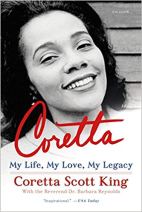
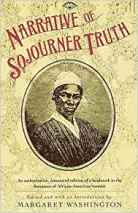
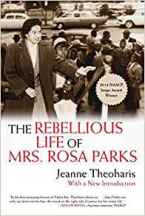
When we think of African-American women in history, we seem to get stuck on Harriet Tubman, Rosa Parks, Sojourner Truth, and Coretta Scott King, but they are just the very tip of the iceberg.

The Long Hard Climb for Recognition

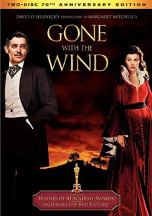
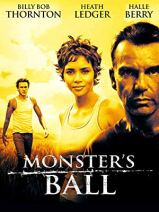
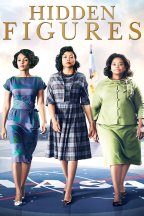
It’s been a slow, hard climb for African-American women. While Hattie McDaniel won a Best-Supporting Actress Oscar for Gone With the Wind in 1939 (the first African American to do so), a Best Actress award didn’t come until Halle Berry won in 2001 for Monster’s Ball. That’s a long wait. While the first white woman to win the Nobel Prize for Literature was in 1909, the first African-American woman wasn’t until the great Toni Morrison won in 1993. Although actress Nichelle Nichols of Star Trek fame showed African-American women as educated members of space crews in 1966 (and gave television’s first interracial kiss), Mae Jemison, the first African-American woman astronaut, didn’t make it to space until 1992. To this day, African American women are disproportionately victims of more violent crimes than any other group of women – by more than double. While more African-American women are enrolled in college than any other group (9.7%), they make up only 8% of the workforce, and earn only 64¢ on the dollar compared to 78¢ for white women; 21% of African-American women live in poverty, compared to just 9% of white women. Only now, decades later, are we beginning to appreciate the remarkable contributions of African-American women in the fields of science and math, such as Katherine Johnson, Dorothy Vaughan, and Mary Jackson, who helped launch NASA’s space program by doing the math in their heads.

Making Strides

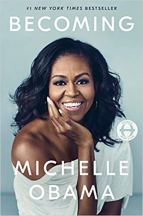
While there is still so far to go in equalizing opportunities for minority women, the 21st century has shown remarkable gains, with not only Condoleeza Rice becoming National Security Advisor and then Secretary General under President Bush, but with Michelle Obama becoming the First Lady of the United States.  African-American women continue to enter politics, with record wins in 2018, including the first African-American women elected to Congress from Minnesota, Massachusetts, and Connecticut. So grab a novel, a biography, a great DVD on the lives and achievements of African American women, and catch up on some of the great history you never learned about in school.