Today’s post comes from our Technology Coordinator, Jared:

When was the last time you visited a record store? For that matter when was the last time you purchased an album from anywhere? Depending on your generation, there may not even be a time you remember paying for music at all. With Spotify, Youtube, Apple Music and the like, your tunes are just one click away and (if you don’t m ind a few ads) free as well. So I was surprised when a patron at our circulation desk recently asked me where we kept our new CDs. On my way to show him our selection it occurred to me that we don’t really have a section for “new” CD’s. Like most libraries and retail stores today, our CD selection has been downsized to one shelving unit, with most genres melded together in a section labeled “popular”.
The change happened subtly. Stereos and computers stopped catering to compact discs. The old 5-disc CD changers became harder to find. New carmakers stopped installing cd players and went exclusively bluetooth. It seems that CDs are on their way to the dead format cemetery, ready to be laid to rest next to cassette tape and laser disc. We have seen so many of these changes in musical mediums over the years that this just feels like a natural progression, and many would agree these changes are a good thing (after all, not many today would want a car with an 8-track player). But something about this particular change feels different. The move from physical to digital takes something tangible away from the listener, and that is the record collection.
 Until recently, having unlimited access to a song meant owning a copy of it. Even a casual listener would find themselves with five or ten of their favorites in the car’s center console. The avid collectors on the other hand, would be filling up half their homes with shelving and crates, still on the hunt for that one rare gem. Whether it’s vinyl, tapes or CDs, someones collection (or lack there of) would speak volumes about them, in a way that a playlist wouldn’t. Even a few albums could act as a tell-all autobiography. Collections like these were also a window into the past. Sifting through a grandparent’s dusty old jazz records, or vinyls from the Woodstock era was like cracking open a musical time-capsule.
Nowadays if you ask anyone under 30 how they listen to music, the answer will no doubt be the name of a streaming service. For those who aren’t familiar, companies  like Spotify and Apple Music, offer unlimited access to a massive music library on any computer or smartphone for a monthly subscription cost. Essentially it’s like leasing your music the way you may lease a car. For many people, this is the better option. The cost is low and any song you’ve ever heard is at your fingertips. It’s a no-brainer from an economical standpoint. Companies make more money if they can hook you on a monthly subscription over a one-time purchase. But it raises some important questions about how we experience music. Does the music enthusiast derive joy solely from the listening? For myself that’s only half of it. The rest comes from tracking down discontinued albums, completing a band’s discography in my collection, flipping through the liner notes to learn more about an artist. These little achievements are something that just can’t be replicated through the streaming process. And so I wonder about kids growing up in the post-Napster era. Will they feel the same connection to their music when it’s only rented to them from a corporation? Will future generations really get the same sense of nostalgia by pulling up grandpa’s old Spotify playlist?
As our library’s Technology Coordinator, it’s my job to research the latest and greatest in the tech world, so as not to be left in the digital dust. In a nutshell: newer, faster, and simpler is almost always better, but there are those occasions when the analog world seems to have some magic that the latest 8-core processor just can’t reproduce. So if you’ve ever thought about dedicating a bookcase to the music that tells your story, now is a great time. The beautiful thing about deprecated mediums like CDs is that they tend to be cheap! CDs at the Friends Of The Library Book Sale are only .25 cents and we usually have some for sale year round. If you want to sample before you buy, don’t forget the library still has some great classics in multiple genres on the shelf.
 Terrific Tweens
 New Movie Thursday: Bohemian Rhapsody
 Game Night : Dominion
 From Jazz to Soul with Rhonda Denet and her trio
 Art in the Afternoon: A Cheshire Public Library & Artsplace Collaboration
 “Headin’ Home” St. Patrick’s Day concert
 Italy: A Cultural Journey
 Historic Homes of Cheshire
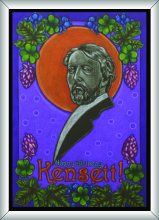 Kensett Birthday Party Celebration
 Cuba: More Than Rum and Revolution
 Kids Yoga
 Renovation Celebration! Concert & Reception featuring the CONN-MEN
 My
My  needle and dust scratches ruining the fidelity of a record, and even better, you could carry that music with you wherever you went, just like a tape cassette but without all the mess and rewinding. Not all musicians jumped on it, though. Just as John Phillip Sousa hated the invention of the record,
  And here’s why: MP3-CDs use what’s called
  most a third of a mile, they played more than 20 minutes of music per side, with a much higher sound quality. Stereo, which recorded two channels and put one on each side of the same groove, giving you that left and right sound, came in 1957. In a vinyl record, the sound waves from the microphone are transferred directly by needle to a core, which is transferred to a metal master, which is then pressed into vinyl. A needle then rides the groove, transferring those same exact soundwaves to the speakers. With proper speakers and tuning, the result is a rich, deep, acoustic sound much more like live music. Listen to enough LPs, and you really can hear the canned music effect on a CD recording. There is no comparison if you are a music purist.
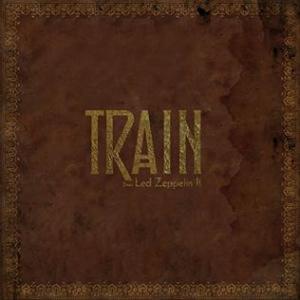
 liked Drops of Jupiter, their biggest hit, and I liked Led Zeppelin. I love, love, love Iron Horse’s bluegrass version of Zep,



 of smooth jazz, more in line with a Las Vegas lounge act than a hot New York club scene. While Manilow is no Petula Clark, his mashup of “Downtown/Uptown” is quite likeable. My only issue with the closing track of “NYC Medley” is that he starts with a cut of Billy Joel’s “New York State of Mind”; I wish he’d sung the entire song. He does end with a vibrant rendition of “New York, New York,” which is both fitting and energizing, reminding you exactly why he is so popular.
 The Cheshire Library Blog