What’s Happening at Cheshire Library in November

Lots of things to be thankful for this month at Cheshire Public Library. We begin our Sunday hours (1-5) with a new free performance every week! Lots of other great programs on the calendar, as well. Here’s a sampling:

Deanna-as-soldier-dollThe Nutcracker by the Brass City Ballet

Sunday Nov 1, 2015, 3:00 PM

Where else but in the magical ballet, The Nutcracker, will you see Snowflakes drifting, Flowers waltzing, Mice & Soldiers battling, and Sugarplums dancing? Brass City Ballet brings excerpts of this classic Christmas tale to life with a shortened version of the beautiful classic.  No registration required.


GalvinHannahMikeWeddingGenetic Genealogy

Monday Nov 2, 2015,  6:30  –  8:00 PM

Certified Genealogist Nora Galvin will examine the use of DNA analysis by those researching their family history. This lecture will discuss the types of tests available, explain what can be learned from each test and identify the companies that offer the tests. There will be discussion of strategies for figuring out relationships based on DNA data. Seating for this event is limited.  Please register online or call 203-272-2245, ext. 4.  This program is funded by the Friends of the Cheshire Public Library.


CRamaColor Yourself Calm

Wednesday Nov 4, 2015,  6:00  –  8:00 PM

De-stress with a night of relaxing activities for adults. Drop in any time from 6pm to 8pm and enjoy coloring pages, soothing music, warm drinks, and other calming crafts. All the necessities will be provided, but feel free to bring your own favorite coloring books, coloring supplies, yarnwork, or other projects. This program will take place on the library’s Upper Level.


Hypnosis Works! Hypnosis for Stress Reduction and Relaxation

Thursday Nov 5, 2015, 6:30  –  8:00 PM
Join James M. Vera,  CH.t Certified hypnotist, for an evening of stress reduction and relaxation. Discover what hypnosis is and what hypnosis is not and experience a group relaxation session using mindfulness. Hypnosis can be used to help manage pain, reduce anxiety and stress, increase sports performance, improve scholastic performance, and control bad habits. Please register online.
*

It’s Time For Tea

Saturday Nov 7, 2015, 2:00  –  3:30 PM

Come join us for a presentation by R.C. Bigelow Tea on the history and benefits of tea.  Bring a friend and your favorite tea cup for this fun event.  A cup of tea and light refreshments will be served.  Space is limited, please register early. Please register online  or call 203-272-2245 ext.4.


Lion-Witch-Wardrobe-bookThe Lion, Witch, and the Wardrobe

Sunday Nov 8, 2015, 2:00 PM

Step with us through the door of an old wardrobe and enter a snowy world laced with fantasy and wonder. This delightful play is entertainment for the whole family, while still providing insight about the emotional climate of childhood during World War II.  Additionally, the play uses elements of traditional English folklore, Greek mythology, and of course 20th century literature to educate the audience. No registration required.


crimeForensics

Thursday Nov 12, 2015, 6:30 PM

Are you curious about forensic science? crime scene investigations? blood pattern analysis? Join Peter Massey, Training Coordinator for the National Crime Scene Training and Technology Center at the Henry C. Lee Institute of Forensic Science at UNH for an evening of forensic science. Please register online  or call 203-272-2245 ext.4.


1435717727_11699081_10207343782177567_122972672310354247_oHard Tango Chamber Band

Sunday Nov 15, 2015, 2:00 PM

Experience tango as you’ve never heard it before as five members of JP Jofre HTCB – JP Jofre, bandoneon, Eric Silberger, violin, Amy Kang, cello, Chris Johnson, bass and Pablo Cafici, piano – come to Cheshire Public Library.  No registration required.


black-bear-0012Black Bears in Connecticut

Tuesday Nov 17, 2015,  6:30  –  8:00 PM

Felicia Ortner, who’s been involved in bear research in Connecticut for 25 years, will describe the resurgence of this remarkable survivor that once was extinct here and is now rapidly increasing, numbering in the many hundreds of individuals. There are bear sightings throughout the year in Cheshire and surrounding towns. Ortner, a Connecticut Master Wildlife Conservationist and a bear enthusiast, provides education about bears and helps dispel misunderstandings. Please register online  or call 203-272-2245 ext. 4.


silk-n-soundsSilk’n Sounds

Sunday Nov 22, 2015, 3:00 PM
Silk’n Sounds is the Greater New Haven’s premier women’s a cappella chorus.  The chorus recently took 2nd place in the 2015 Harmony Inc. Area 2 Contest, qualifying to compete in the International Competition in November, and winning multiple awards.  This concert is free and open to the public, no registration required.
*

imagesQuilts of Valor

Tuesday Nov 24, 2015, 7:00 PM

The mission of the Quilts of Valor Foundation is to cover service members and veterans touched by war with comforting and healing quilts of valor. Please join us to learn more about the QOVF and to see and touch some beautiful quilts.  Please register online  or call 203-272-2245 ext. 4.
In the Public Domain

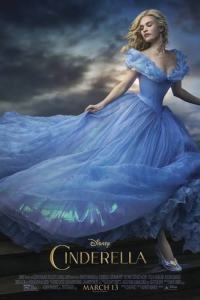
 dressIn the past few years we’ve seen a sudden resurgence of fairy tales, bombarded by big-screen live-action versions of Snow White and the Huntsman, Mirror, Mirror (which came out the same year, just for overkill), Maleficent, Cinderella, Oz the Great and Powerful, the soon-to-be released Peter Pan (October 9), Alice Through the Looking Glass (spring 2016, reprising the 2010 cast of Alice in Wonderland), Beauty and the Beast (2017 release date) and so many more. While some of these have been spectacular (who can forget Cinderella’s dress!), did you ever wonder why?

It’s more than just the fact Hollywood can’t seem to come up with anything original lately, or that remakes are a fad. Movies cost huge coin to produce – truly, hundreds of millions of dollars, from pre-production through movie rights to scripting, set design, music, choreography, lighting, costuming, and advertising. One of those big costs is often acquisition of rights – buying the rights to the material from the original author. In the case of fairy tales, the cost of that right is Zero, and that is a producer’s favorite number. Zero means you can do whatever you want with the material. Yes, you could feasibly make (and I’m sure it’s been done) a very dirty film of Snow White, Cinderella, and Ariel and no one can stop you, as long as you don’t reference anyone else’s version.

We’re accustomed to believing that Disney or Touchstone or some other major Alice in Wonderland.jpg.653x0_q80_crop-smartcompany created Snow White, Sleeping Beauty, Cinderella, Rapunzel, Beauty and the Beast, The Little Mermaid, Peter Pan, and so many other cherished films. In fact the answer is no, they did not. They only made their own version of them. Many of Disney’s greatest tales were old folk tales and fairy tales, borrowed from collections by Hans Christian Anderson or the Brothers Grimm, or bought way back when from J. M. Barrie or Rudyard Kipling. The original tales were often a bit different and usually very dark (Mermaid is a very murderous tale; the Little Match Girl freezes to death, etc). They all have one thing in common however: they are all in what’s called the Public Domain. That means they are not copyrighted, and anyone can make their own version of the tale. The stories don’t have to be bought, no author has to be fought with, and a producer can do whatever he or she wants to the story.

panIn the United States, copyright is generally good for the life of the author plus seventy years (in some instances, it is extended to as much as 120 years). If the author has good descendants and they renew on behalf of the estate, it can continue further. This is how Peter Pan is now in the public domain: J.M. Barrie died in 1937; his copyrights have expired. Treasure Island is a free e-book, because it’s in the public domain. Gone With the Wind will enter into public domain in 2031. Many of the early silent films are also free for making use of. This also holds true with music: that’s why so much classical music is used in movie and TV soundtracks: no one has to pay a penny to use it. You can tour the country playing Beethoven and Mozart all you want, and you never have to pay them a dime. Their works, like Shakespeare, and Byron, and even the Bible are all available for public use and performance.

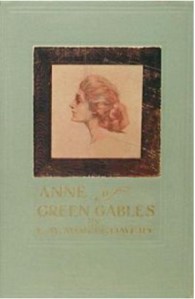
Yes, Anne is now the public's darling, too.

Yes, Anne is now the public’s darling, too.

Now, that’s not to say you can pick up a copy of a play and start performing it for money. While the play and its characters are not under copyright, the person who planned out/composed/wrote the playbook or libretto has a copyright on the booklet or sheet music you are using – their “version” – which is why school plays cost so much (the same way “Snow White” is a public domain tale, but “Disney’s Snow White” is most definitely under copyright). Unless you’ve taken the idea of Romeo and Juliet and written up your own version, you’re going to wind up having to pay someone somewhere for your performance of the material.

Here’s one list of free public-domain books available on ebook, including both adult and children’s classics: https://www.goodreads.com/list/tag/public-domain.

So whether you look forward to some of the new, spectacularly beautiful versions of old tales coming out, or grumble about how much more money does Disney need rehashing their own blockbusters, remember the reason: movie studios are cheapskates, and copyrights don’t last forever.

Fairy tale fact: Cinderella is the most universal fairy tale. Almost every culture has a version of it. The very first known “Cinderella” story can be traced back to the story of Rhodopis, a real Greek slave girl from Thrace who married the King of Egypt. That story is from 7 BC! Our current version of Cinderella (Cendrillon) goes back to the late 1600’s France, a French version by Charles Perrault.

July 13 is Barbershop Music Appreciation Day

Once in a while, the librarians at CPL get a special treat, we get serenaded! My husband belongs to the Barbershop Harmony Society, and on special occasions like Valentines Day, his Barbershop Quartet will often stop by the library and sing.

1Barbershop music is a uniquely American art form. While its songs can seem old fashioned and simplistic, the arrangements are actually quite technical and precise. While all Barbershop music is A Capella music, not all A Capella music is Barbershop music.

2The defining characteristic of the barbershop style is the “ringing chord”. This is an acoustic effect achieved by blending specific notes. In Barbershop harmony, four singers combine their voices in such a way as to produce a “fifth voice”. This is also sometimes referred to as “expanded sound”.

4How did the Barbershop style come about? In the late 19th century, barbershops often served as gathering places for men. What we now think of as barbershop quartets actually started with African American men socializing in barbershops; they would harmonize while waiting their turn, vocalizing all different types of songs. Later on, white minstrel singers adopted this new style of unaccompanied, four-part, close-harmony singing. It became quite popular, and in the early days of the recording industry their performances were recorded and sold.

3There is now an organization devoted to preserving this truly American art form. The Barbershop Harmony Society (otherwise known as Society for the Preservation and Encouragement of Barber Shop Quartet Singing in America), has hundreds chapters all over the US,  encouraging most anyone with the desire to learn to sing Barbershop. In Connecticut alone there are 9 chapters: Danbury, Enfield, Hartford, Manchester, Meriden, New Haven, New London, Norwich, and Waterbury/Derby. Check out the Barbershop Harmony website if you are interested in learning more about Barbershop music.


May Music

More than sixty new CD albums have been added to CPL’s music collection in the last month alone! Here’s a few highlights of things you shouldn’t overlook:

#
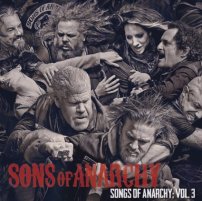
81Xe6zj4unL._SX425_If you didn’t get your fill on the first two volumes of Songs of Anarchy, the fabulous soundtrack to the TV series Sons of Anarchy, volumes Three and Four are here, and are they ever beautiful! Do not miss Maggie Siff’s heartbreakingly gorgeous a capella rendition of “Lullaby for a Soldier,” or if you’re in a more upbeat mood, “Love is My Religion.” “Dock of the Bay” is a rendition worthy of Otis Redding himself. On Four, be dazzled by an off-beat and wild version of “Bohemian Rhapsody” that will stick in your head. “Aquarius” is catchy, and Katey Sagal’s updated “Greensleeves” remains touching. While the albums are utterly delightful71G6L0Sox0L._SX425_ on their own, each covering a wide variety of musical styles (Joshua James’s “Crash This Train” is sublime), at times it is gut-wrenching to hear them, if you know the context from the show in which each song is played. I cannot recommend the four albums enough.

#
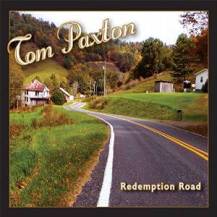
If you’re into something completely different, give Grammy Award winner Tom Paxton’s new album Redemption Road a try. Paxton is old-style folk; not quite country, not quite bluegrass, not quite modern, but it is music indexthe entire family can enjoy without having to worry about language or content. He is Raffi, for grown-ups, and if you can’t imagine that, then check out his song “Skeeters’ll Gitcha.” Like a true folk singer, his songs are observations about humanity and the absurdities of modern culture. “If the Poor Don’t Matter” is a haunting tune in the best tradition of folk music. “If the poor don’t matter, then neither do I.” If you like calm, soothing music that’s worth singing to without being overpowered by loud orchestration, if you like music that feels as if you’re sitting around a campfire and the guitar is playing just for you, you’ll enjoy this album.

#
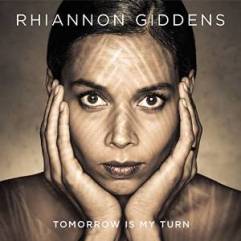
A third album you don’t want to overlook is Rhiannon Giddens first solo foray, Tomorrow is My Turn.index You last heard Giddens as the lead singer for the Carolina Chocolate Drops, where she wowed listeners with her pure tones and perfect pitch. Here she takes center stage in what isn’t so much an album as a resumé. Each song is different, from folk to blues to country to more popular beats such as Dolly Parton’s “Don’t Let it Trouble Your Mind,” and the easy-listening vibes of “Tomorrow is My Turn.” It’s not an album to blow you away, but a solid repertoire that says “Here’s what I can do, come see where I go.” If you like female vocalists who never fail to hit their mark, you will love her. My only wish is that she’d pick a direction: I think she’d be a fantastic blues singer with her throaty, clear style, and I would love to hear an entire album of her belting out some of the traditional songs, or even some Broadway tunes. She’s a delight on the ear.

Remembering Leonard Nimoy 1931-2015

MV5BMTIzMzY1MzEyNV5BMl5BanBnXkFtZTYwNjU4MTg1._V1_SY317_CR8,0,214,317_AL_Actor, writer, poet, photographer and folk singer Leonard Nimoy, most famous for his acting role in the television series Star Trek as the iconic half-breed alien Mr. Spock, died on February 27th from chronic obstructive pulmonary disease.#

Most famously known as the cool and logical half-Vulcan first officer on Star Trek, Nimoy shot to fame and popularity beyond anything ever seen in television. Initially he resented his fame and the type-casting it brought him, which he discussed in his 1975 book, I Am Not Spock, but by 1995, in his sequel, I Am Spock, he had come to grips with both the character and how it had effected his life.

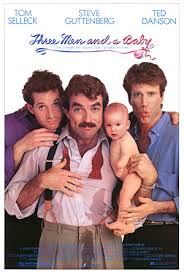
In addition to Star Trek, Nimoy also had a recurring role as Paris in season four and five of the indexoriginal Mission: Impossible, and voiced the paranormal exploration documentary series, In Search Of… , in addition to countless television guest roles and films such as A Woman Called Golda and the remake of Invasion of the Body Snatchers. Nimoy had an extensive theater career, starring on Broadway in Equus and Vincent, a play he himself adapted about van Gogh. He became a successful director, directing not only the third and fourth installments of the Star Trek franchise, but Three Men and a Baby, the highest grossing film of 1987.

Nimoy had a life-long love of photography, one of his greatest passions. He had several books published, as well as exhibits at the R. Michelson Galleries in Northampton, Massachusetts and the Massachusetts Museum of Contemporary Art. (Nimoy was born in Boston, and remained faithful to the area.) In addition he published several volumes of poetry, the most recent being 2002, A Lifetime of Love: Poems on the Passages of Life.

Following theindex poetry angle, Nimoy tried to make a singing career, putting together albums as early as 1967. He wrote the song “Maiden Wine” that he sang in the Star Trek episode “Plato’s Stepchildren.” To be dreadfully honest, some of the songs live in infamy as being so painfully bad, they’re camp. Perhaps it was just the songs chosen, or the musical direction. I was part of a room skyping with Nimoy last August, during which he sang a song for us that he had written, and not only were the lyrics beautiful, he sang it beautifully as well. Perhaps Nimoy’s voice just needed to mellow with age, but I wish I had a recording of that. Nimoy mourned the fact that even though he had quit smoking thirty years before, his COPD was a direct result of having smoked, and urged everyone to quit immediately, and better yet, never even to start.

I had seen Nimoy in person at least twice, three counting the skype, and he never failed to please a crowd. He was honest and sincere, speaking about science, space exploration, and philosophizing about it all. He never displayed the arrogance of some television stars, and never spoke poorly about costars, as others have. If he had gripes, he kept them politely to himself. The world has lost not just a television icon, but a well-rounded artist of film, theater, television, photography, voice, and print. Truly, he was someone who lived long – and prospered.

images