 Legend has it “It” girl Lana Turner was “discovered” at a soda counter in 1937. Outside of perhaps Hedy Lamar, who invented some heavy military tech in WWII, most of the actors in the “glory days” of Hollywood were not known for smarts but for looking glamorous. Hollywood was the way for good-looking people from the back fields of America to break free and become wealthy and “cultured.” They had to speak well, dress well, stay thin, know their lines and marks, and obey the studio.
Times have changed. While good looks are nice, there are plenty of successful actors  who have never been considered heart-throbs (Steve Buscemi, Clint Howard, Vincent Schiavelli, Mike Smith, Linda Hunt, etc). Hollywood may have its mega-cash flow (A-listers make $15-20 million per film; Dwayne Johnson had 9 films 2016-2018), but many stars aren’t afraid to flaunt their smarts and get that college degree, knowing how fickle the acting business is. Jodie Foster has a degree from Yale, Natalie Portman from Harvard, Emma Watson from Brown, Mayim Balik has a PhD in Neuroscience, Gerard Butler a law degree, James Franco is finishing a PhD from Yale, and more.
Smart AND Talented
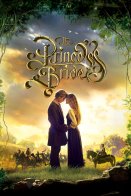
Recently, I had the extreme pleasure of meeting actor Wallace Shawn, listening to him speak and interviewing him briefly. Never heard of him? I’ll bet you have. Perhaps most famously he is known for the Inconceivable role of Vizzini in the cult classic, The Princess Bride. Currently, he plays the Professor on the TV show Young Sheldon. He’s had roles in Woody Allen’s Manhattan, Bob Fosse’s All that Jazz, Bojack Horseman, and if you had children any time in the last 20 years, he’s the voice of Rex in Toy Story. You might not know his name, but you probably do know his face and voice.
And what an interesting man he is! Soft spoken and humble, he loves to chat, and was charmed by all the happy faces he met. Shawn graduated from no less than Harvard, with a degree in history and the hope of becoming a diplomat – so far as spending a year in India teaching English. Acting was never on his radar – in fact, he was known far more for being a playwright, with such well-received plays as Grasses of a Thousand Colors, Marie and Bruce, My Dinner with Andre, A Master Builder, and Evening at the Talk House. His acting career came about due to a friendship with play director Andre Gregory, with whom he collaborated on the semi-autobiographical My Dinner with Andre, and he’s never stopped working since.
He’s also published books of essays, including one titled simply Essays, and his 2017 collection entitled Night Thoughts, which he admits is a bit political. Although biographies will give more clues to his opinions, in person Wallace treads a neutral line, doesn’t give many clues as to his feelings, and tries to keep many of his opinions private. Originally he considered writing to be selfish and self-indulgent, but then realized it was a satisfying creative outlet.
Heavy Reader

photo: Dawn Swingle
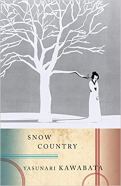
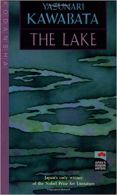
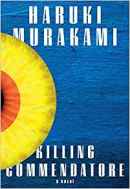
So what does a highly educated actor and playwright like to read? What authors does he favor? Wallace preferred to side-step the question a bit, citing that he likes to keep those things private. In the past, his favorite book was The Idiot by Dostoevsky, because it contained just about everything you could ever want to know about the human condition – not the kind of answer I expected, far heavier than I would have imagined. He admitted to liking Japanese literature, including Yasunari Kawabata and Haruki Murakami. The man is far deeper, and a deeper thinker, than I ever would have imagined.
Time with Wallace Shawn is like spending time with a favorite uncle who comes to Sunday dinner. While his movie and television roles may portray him otherwise, he’s sweet, personable, and down to earth. He admires Woody Allen, spent much time with him, and does not believe the accusations against him. His environmentalism showed when asked what he would have liked to have told his younger self, and he remarked he never realized “when he was young that the most destructive animal on Earth was ourselves, that what we put into our cars would destroy everything not only locally, but globally, that butterflies and bees would be dying, and only a handful of people would even care about it.”
Wallace Shawn: actor, voice actor, playwright, author. If you can’t catch one of his plays, check out his movies and TV shows. Truly, a man who is much greater than the sum of his roles!




 Terrific Tweens
 New Movie Thursday: Bohemian Rhapsody
 Game Night : Dominion
 From Jazz to Soul with Rhonda Denet and her trio
 Art in the Afternoon: A Cheshire Public Library & Artsplace Collaboration
 “Headin’ Home” St. Patrick’s Day concert
 Italy: A Cultural Journey
 Historic Homes of Cheshire
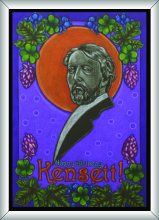 Kensett Birthday Party Celebration
 Cuba: More Than Rum and Revolution
 Kids Yoga
 Renovation Celebration! Concert & Reception featuring the CONN-MEN
 Many people are aware that
  the era. The need was great, her products worked, and she went on to become an American philanthropist.
 century has shown remarkable gains, with not only




 Dramatic Reading : Darcy and Elizabeth
  Create Valentine’s Cards
 Tai Chi
 Library After Hours: Chinese New Year Celebration
 Sunday, February 10, 2019, 2:00 – 3:30PM
 The Romance of Jane Austen
 Create Zentangle
 The Importance of Tea in Chinese Culture
 Silk’n Sounds A Capella Concert
 Regency Dance Lesson
 Shades of Jane Austen
 January began as one of the last months of year, not the first. The start of the Roman calendar (and the astrological one) was March. Back then there were only ten months to the year, totaling 304 days. Between was a miasmic 66 monthless days of “winter.” According to legend, Numa Pompilius, the second King of Rome (after Romulus himself), added January and February to codify that winter term (along with a catch-up month every other year of 22 days).
 to have lived somewhere between 386 CE and 620 CE (if you’re not up on your history, Common Era has replaced the Anno Domini). She takes her aging father’s place in the army, and serves for twelve years without her fellow soldiers realizing she’s a woman. Depending on the source, her name might be

 The steel-driving

 under control of the Habsburgs, a magistrate put his hat on a pole and demanded all citizens bow before it, or be imprisoned. While in town with his son, Tell refused to bow, was arrested and sentenced to death – though, since he was such a marksman, the Magistrate would let him go if he could shoot an apple off his son’s head. Tell did so, was arrested anyway, escaped, and the people rose up in rebellion, in an act considered the founding of the Swiss Confederacy, around 1307. Some historians believe Tell is merely a new twist on an old Danish fable.





 The Cheshire Library Blog