Whale of a Tail

whole-body-of-a-sperm-whaleThe Book of Lists – a wonderful book of eclectic knowledge by David Wallechinsky – lists Moby Dick, by Herman Melville, as the Number One Most Boring Classic of all time.

I can’t disagree.

It’s not an easy read, combining flowery Miltonian prose, poems, sea shanties, Shakespearean asides, and some detailed exposition on whaling. The only way I made it through at all was by looking for the thematic and quote references used in Star Trek: The Wrath of Khan for a term paper (and there are a long list of them).

Don’t judge me. An easy English credit with an A is still an English credit.51K5TZOIvtL._SX318_BO1,204,203,200_
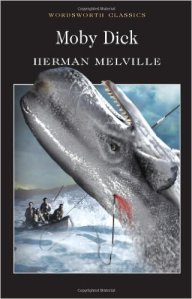
Moby Dick, the story of Captain Ahab’s obsessive pursuit to revenge the loss of his leg to a white whale, was based on a number of true stories – an actual white whale named Mocha-Dick, and the sinking of the whaling ship Essex in the Southern Pacific in 1820. The book was first published in 1851, but never gained ground. By the time of Melville’s death more than 30 years later, only 3,000 copies had been sold.

When cut up and rehashed to a sensible, modern vernacular, Moby Dick is a good, straight adventure novel at heart, the story of a man who feels wronged by a whale and will do anything, risk anything or anyone, to have his revenge, and a giant marine mammal who’s been around enough not to fear a wooden fish filled with pesky mariners. And there have been a number of decent movie adaptions to capture that fatal showdown.

imagesThe most recent, and most intriguing, is In the Heart of the Sea. This one gives the story a twist by going back further, to tell the tale of the Essex, as Melville is learning the facts and trying to write Moby Dick. Starring Chris Hemsworth, current action-hero, it’s a worthy film that covers all the points without getting bogged down in Melville. It’s the story behind the story, so to speak.

The “classic” Moby Dick tale comes from 1956, starring Gregory Peck, with a screenplay by Ray Bradbury. A masterpiece of its time, it’s dated for today’s audiences.0027616862945_p0_v1_s192x300
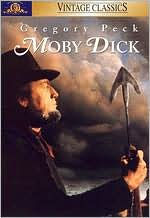
A longer but more modern version is 1998’s Miniseries, starring Patrick Stewart as Ahab (and Gregory Peck as Father Mapple, originally played by Orson Welles). Running four hours, it won Gregory Peck an Emmy award for Best Supporting Actor.

If you’ve hacked through Moby Dick, or enjoyed watching one of the films, there are similar books and films certain to keep your whaling interest. Leviathan, by Eric Jay Dolin, will give you a history of whaling in America. In the Heart of the Sea began as a book by detailed historian Nathaniel Philbrick.  War of the Whales by Joshua Horwitz uncovers the true story of an ultrasonic submarine detection program run by the US Navy that was causing whales to beach themselves. To learn more about several different types of whales, try The Grandest of Lives : Eye to Eye with Whales by Douglas H. Chadwick. For stories that mimic Moby Dick but aren’t about whales, try Ray Bradbury’s Leviathan 99, or, of course, Star Trek: The Wrath of Khan. If you want to go for the thematic stretch, you could include the musical Sweeney Todd here, too. “To seek revenge may lead to Hell/ but everyone does it and seldom as well.” Of course, the perfect summer trip is to recreated whaling village Mystic Seaport, where you can walk the decks of the whaler Charles W. Morgan and feel the wind of the sea in your hair.

Whales Charles_W_Morgan_2008aren’t fish. They’re aquatic mammals: they breathe air, give birth to live young (ones that weigh a full ton), and feed them off milk just like any other mammal. They are known to be intelligent, and the scenario of Moby Dick, of such a mammal remembering who may have harmed it and seeking out revenge of its own, is entirely in the realm of possibility.

All’s Faire in Fall

bristol-Renaissance-FaireFall is here again, and with it comes Fair season – Church Fairs, Grange Fairs, State Fairs, Harvest Festivals, and perhaps the most fun of all – The Renaissance Faire.
Renaissance Faires are  newer than you think. The first official “Renaissance Faire” traces back to Los Angeles in 1963, when a school teacher named Phyllis Patterson put one on for a weekend fundraiser for radio station KPFK, and more than 8,000 people showed up. A fall staple was born (because, let’s face it, NO ONE wants to be buried under that many yards of wool, satin, and leather in the middle of July).

Why the Renaissance? Why not Roman Bacchanalias with chariot races? Why not the 1363839072Dark Ages? Why not Pompeiian pageants? Celebrating the gruesome deaths of a city of people might be just a tad morbid. The Dark Ages were – well, Dark. We don’t know much about them, because following the fall of Rome civilization was illiterate, spread out, and little was going on beyond warfare and survival. And Rome? Rome certainly had a lot going for it, but not many speak Latin anymore, and togas, while simple and fun for frat parties, just don’t have the suave flair of swashbuckling boots, rapiers, and villains’ pointed beards and mustaches. The Renaissance has far more possibilities.

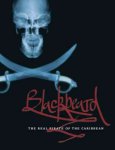
Robin-Hood-Men-In-Tights-dracula-and-robin-hood-in-tights-and-loving-it-22205932-320-240Rising up out of the depths of the Black Plague, the Renaissance means, literally, a rebirth. Disenchanted with a church that did not save them from the plague, men turned to science to keep them safe, resulting in great advancements in learning, science, art, music, and warfare. Stretching from 1300 to 1600, the Renaissance saw the rise of DaVinci, of Galileo, Columbus, Martin Luther, the printing press, Magellan, Henry VIII, William Harvey,  the advent of gunpowder, muskets, and the waning of armor and swords. Most Renaissance Faires throw in the likes of Robin Hood (earliest tales date to 1377), and sometimes evejeffpiraten King Arthur, who, although Malory’s history of Le Morte D’Artur is published in 1470, the story from which The Once and Future King is taken,  is believed to have lived, if he’s not merely legend, sometime between 600 and 800. Herein lie the tales of valor, not long before the Three Musketeers, the tales of actual pirates Barbossa and William Kyd, of Dutch corsairs and privateers, and let’s not forget Shakespeare (though Shakespeare’s plays, though written and performed around 1600, were often taken from history much older: King MacBeth actually lived in the 1000’s). That’s a lot of romanticized history to be able to play with, a lot of possibilities for actors to delve into. Hence Renaissance Faires are full of LARPers (live-action role players) and SCA (Society for Creative Anachronism, hard-core medieval recreationists) members running about. Your inner Dragon Master can run amok, and no one will ever know.

unspecifiedSo pull on your hose, strap on your broadsword, lace your corset, and get ready for an imaginative adventure back in time, and if you’re not careful, you just might learn something. Faires can offer a diversity of activities such as Birds of Prey shows, sword forging, glass blowing, theater, jousting, live chess tournaments, musicians, and more, as well as authentic foods, drink, clothing, crafts, and entertainments.  Check out the Connecticut Renaissance Faire, or if you like a drive, try the larger ones like King Richard’s Faire in Massachusetts, or my favorite, The New York Renaissance Faire in Tuxedo, New York. They’re worth the trip!  For a more in-depth experience, check these great books out as well:
Unsung Heroes: The Soundtracks of Your World

Think of your favorite movie or television program. Now think about watching it with the sound turned off. It’s just not the same, is it?

amiv9s537f2i3cn7y4noEvery film, starting with the advent of the movie theater, has some sort of background music that adds to the drama of the moment. You know many of these tunes without even thinking, like Chopin’s Sonata No. 2 in B-flat Minor. Say what? You might know it better as the iconic Funeral March, parodied in umpteen cartoons and shows. Even if you’ve never seen the films, you can probably recognize the theme from Rocky, or Star Wars, Raiders of the Lost Ark, or Purple Rain. Remember the hits Ghost Busters, Saturday Night Fever, or 9 to 5? Those all began as movie songs. Think of na-na’ing with Batman or to Jaws, Hawaii Five-O, or Bad Boys, the theme from the white-T-shirt-promoting TV show Cops. Soundtrack songs stick in your head, sometimes without you wanting them there.
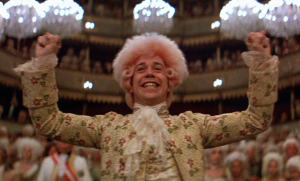
Sometimes a soundtrack can introduce you to music you wouldn’t normally listen to11avneu. My chances of cranking Mozart in my car are close to zero, but I’ll watch the film Amadeus over and over, reveling in “Salieri’s” moving descriptions of Mozart’s music, and I’ll feel every note of its beauty. I’m not too much into old-timey twangy folk, but the soundtrack to the 30’s-era epic Oh Brother, Where Art Thou? adds an earthy realism to the film. Stand By Me is chock full of pop hits from the early ’60’s. Ditto for Forrest Gump, whose soundtrack is pretty much a history of modern American music. Sometimes the music seems to have nothing to do with the movie but we love it anyway, such as Simon and Garfunkel’s top hits from The Graduate. The folky acapella track of Katniss singing “Hanging Tree” in Mockingjay hit number one on the charts in England. Philadelphia has a nice variety of music, from Oscar-winning pop hits to opera. The old British comedy series Young Ones used to spotlight different songs, and got me hooked on the group Madness.
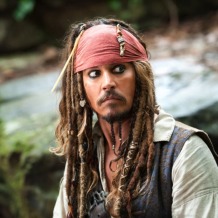
10-jack-sparrow-pirates-of-the-carribean.w529.h529There are times, however, that the orchestral music in the background of a film or TV series is so beautiful it can distract you from the film itself. The soundtrack to Thor did that to me; the movie was engaging, but the music drew your ear away. Pirates of the Caribbean is another – what is Jack Sparrow without his sneaky tiptoe music? Like Star Wars, the music themes give away what’s coming next. The soundtrack to The Lord of the Rings is majestic, speckled with sung tracks by Bjork, Annie Lennox, and the vastly underrated voice of Billy Boyd – Pippin himself. If you want to find a good one fast, John Williams is probably the undisputed King of Soundtrack music, but also look for Hans Zimmer, Danny Elfman, Howard Shore, and the late James Horner. Every one of them makes soundtrack music look effortless. You may not like “classical” music, but these orchestral arrangements – “modern classical” – can put a different voice to the genre.
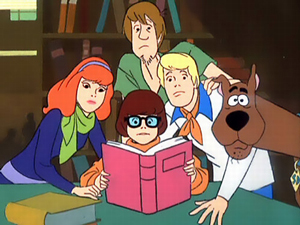
Soundtrack music can make or break a film or TV show. I’ve never seen 1981’s ChariotsScooby-gang-1969 of Fire, but that darned theme is still stuck in my head. Whether or not you liked the shows, the title themes from The Brady Bunch, Gilligan’s Island, The Addams Family, and The Mickey Mouse Club remain cultural icons, still widely recognized decades later. It was a song in the middle of the movie version of M*A*S*H* that later became the opening theme for the television series. Forty years later we still know the theme song to Scooby Doo, a show that originally ended in 1976, or The Flintstones (ended in 1966), but no one remembers the theme from Holmes and Yoyo, Dharma and Greg, Eureka, or even Monk. Half of Malcolm in the Middle’s charm was the catchy theme by There Might Be Giants.

Having a “soundtrack” album isn’t just for Hollywood musicals – those are a class by themselves – but for every film or TV series, and most of them, good or bad, have released one, though some may be hard to find (took me years to find the soundtrack to Ladyhawke, a poorly filmed but underrated movie). Check out the film, then check out the soundtrack. You may be delightfully surprised.

What movie or TV music rocks your world?

Mississippi Grind

indexThe movie Mississippi Grind is a little bit of a sleeper. An independent film released at the Sundance Film Festival in 2015, it was never released in theaters but went straight to on-demand and video distribution.

This does not mean it is unworthy.

Mississippi Grind tells the tale of Gerry (Ben Mendelsohn), a down-and-out guy who has lost everything to his gambling addiction, including his wife and six year old daughter. Gerry will lie, cheat, and steal from anyone, good or bad, trusted or not trusted, to gain money for his next bet – and the toll of his addiction has certainly left a mark of depression on him. Curtis (Ryan Reynolds) is also a traveling gambler, but unlike Gerry, he has nothing to lose, and claims he remains untouched by it because he just likes people; he has nothing emotionally invested in his gambling. When they meet up, you might as well pour gasoline on Gerry’s fire. Between Gerry’s contacts and Curtis’s contacts, they go off on a gambling spree to try and earn the megafortune both seek, hitting up smaller gambling deals on their way to a mythical place of gambling on the Mississippi river.

Of course things go well and things go bad for them. While you feel bad for Gerry, at A1EWEItW27L._SY355_the same time you’d like to hit him with a brick and say “Enough already!”, but Gerry is truly addicted to gambling. Curtis isn’t as good a player, but he’s (slightly) more in charge of himself. In many ways, the down-and-out style of their relationship reminded me of Voigt and Hoffman in “Midnight Cowboy.” I will not spoil the ending.
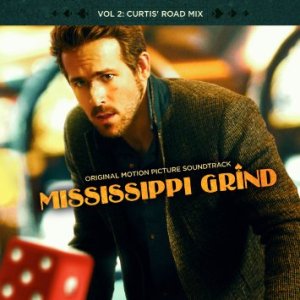
The movie is slow, a character study far more than an action film, but what truly stands out is its score. Ignoring the start of the film in the mid-West, the movie overflows with languinous tracks of hardcore blues songs evocative of Mississippi and the deep south. Fast or slow, modern or old folk, it is worth watching the movie for its A1zNzWVzk6L._SY355_soundtrack alone. You know some of the singers – Odetta, John Lee Hooker, and some of the songs – a reworking of Frankie and Johnny, for instance, but together they lend an unforgettable undercurrent to the movie that will stick with you long after the credits finish rolling.  It is so chock full of music, the soundtrack was released on two albums (Gerry’s Road Mix; Curtis’s Road Mix), so if there’s one certain song you’re looking for, you’ll have to check for which one you need. Amazon won’t help you; they sell the albums but don’t list the tracks, but you can find them by Googling it.

And it makes you wonder – why wasn’t this ever put to theater release?

Dark Justice

       4810718-7340774645-the-b_Arl6x9k I don’t read comic books; the drawings v. words are too visually distracting for me. The ones I hold tight in my file cabinet you’ve probably never heard of. But I love Batman. Adam West Batman. Super Friends Batman. Keaton, Clooney, Kilmer, Bale, I like them all. And yes, I had no problem with Affleck’s performance. Nine Batman films have raked in a combined profit of more than $2.2 Billion – no small change. I like Wonder Woman, and Spiderman, and don’t get me started on how much I love the Avengers.

Jacket.aspx
But I don’t like Superman. Never did. My favorite would be Super Friends Superman, and after that it’s Chris Reeve or nothing. Perhaps he’s too squeaky-clean – far more than Captain America, and too powerful. Krypton is one of the rarest gases, one part per million of our atmosphere. You would have to sift an awful lot of air to gain enough Krypton to affect him. Barring Lex Luthor, Superman is more or less invincible, and no one likes a prissy Lawful Good (this is the same problem fought in the X-Men series, Watchmen, and Captain America: Civil War). What good is a hero who has no faults and can’t be harmed?

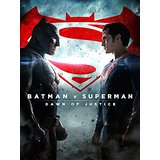
51omO8G3K-L._AC_US160_Batman v. Superman: Dawn of Justice – due on DVD July 16 – didn’t grab me from the start, but I went to see it because – well, Batman. If you haven’t seen the last reboot of the Superman franchise, Man of Steel, be prepared for confusion, for BvS takes up right where Man of Steel left off. Batman is mighty ticked at Superman for all the damage he wrought in lives and property, and takes it upon himself to curtail Superman in a surge of animosity that seems to come out of nowhere. Batman’s good for a simmering revenge, not a sudden “You need to be taken down, I don’t like you” petty vindictiveness. Batman, a mere mortal with cool toys, tries to take down a superbeing who cannot be stopped. Needless to say, it does not go well.

Batman v. Superman seems lost in its own purpose. It’s a fair Batman film, a wooden and flat Superman film (Spider-Man has more lines in Civil War than Superman did in BvS), and if Batman-V-Superman-Zack-Snyder-Trinitythere’s any shining hero here, it’s Wonder Woman. If anything, it’s merely a clunky prequel to 2017’s Wonder Woman movie. In fact, you probably could have cut the whole rivalry down to 30 minutes, then began the Wonder Woman movie, and had a much better film.

My biggest gripe with the film, writing and directing aside, is that Batman breaks character. Guns are not Batman’s forte. Batman does not carry them, Batman does not shoot them. Batman is about outsmarting the villain and bringing them TO justice, not carrying it out himself. Batman is the thinking man’s hero. Batman never even kills the Joker. But here’s  Batman, shooting and killing like Rambo. That was my breaking point. And it is quite established that Batman is well-versed in martial arts; Batman’s moves in BvS are poor at best; slow and unconvincing.

batman-vs-superman-dawn-of-justice-movieIf you hunt for it, there are enough good bits to make the film worthwhile; all the Wonder Woman scenes among them. It is certainly nowhere near the abysmal level of 1992’s Batman Returns, with Danny DeVito as a deformed demented Penguin – surely the lowpoint of his career. Forbes magazine nails the issues with the film quite nicely here: http://www.forbes.com/sites/insertcoin/2016/05/09/captain-america-civil-war-shows-exactly-why-batman-v-superman-failed/#6dda5e6446bb.

If you really love the superhero genre, then by all means watch it. There are far worse superhero films out there – Green Lantern and Eric Bana/ Incredible Hulk (2003) come fast to mind. But if you really want to see superheroes eating their own and winning at it, wait for Captain America: Civil War.