Disappearing Authors

Barbara Newhall Follett was a writer who disappeared. Not fell out of favor or faded out of print, but disappeared. Considered a child genius who published a successful novel at the age of 12, The House Without Windows (it helped, of course, that her father was an editor at Alfred Knopf publishers), Follett was emotionally destroyed by her father’s divorce when she was 14, and never did much more. In 1939, Follett had a fight with her husband, walked out her door in Boston, and was never seen again…

Some authors are known for being extremely reclusive – J. D. Salinger, for one. Salinger had numerous personal and family issues, many, his daughter believed, stemming from PTSD from serving in World War II, and he hid from the intense fame he acquired from Catcher in the Rye. He seldom gave interviews or made appearances.

Thomas Pynchon is another, not having given an interview or even having a photo published in more than fifty years. He has no media accounts. In his late 80’s, it’s believed he’s living in Mexico, but no one except perhaps his publisher knows for certain.

Some authors aren’t lost, they’re just taking forever on that next novel – sometimes 10 years or more (staring right at you, George R. R. Martin). There are only a handful who have actually disappeared, becoming their own mystery.

Agatha Christie is perhaps the most famous. The Queen of Mystery herself disappeared in 1926, after a fight with her husband over his request for a divorce. Her car was discovered, empty. More than 15,000 people turned out to look for her, with Sir Arthur Conan Doyle going so far as to hire mediums. Eleven days later, she turned up in a hotel, 185 miles away, with no memory of what happened. Some publicists called it revenge against her husband that backfired when so many people got involved, while doctors said she had a nervous breakdown from the strain.

Solomon Northup is a name you may be familiar with. His memoir was made into an Oscar-Winning film, Twelve Years a Slave. Northup, who was born free in upstate New York but kidnapped and sold into slavery, wrote and published his memoir in 1853. Then, in 1857, he seems to disappear from historical records. Some thought he may have been kidnapped again, but his age at the time (around 50) made it unlikely. A Methodist minister in Vermont claimed to have worked with him in the early 1860’s, and last saw him in 1863. It’s assumed he died sometime between 1863 and 1864.

Elena Ferrante is a well-known author of more than 30 books, some of which have been made into movies or TV series, such as My Brilliant Friend. It’s also a pseudonym. Her true identity is a secret and almost nothing is known about her, except that she was born in Naples. In interviews, she claims it’s from shyness and fear of coming out of her shell. Speculation claims the author is actually Anita Raja, or her husband. Both people, and Ferrante’s publisher, deny it emphatically.

Antoine de St. Exupery is most famous for the timeless classic, The Little Prince, which was partly based on an airplane crash he and his navigator survived in the Libyan Desert. St. Exupery became a pilot in the 1920’s, joining the French Army, and later the French Air Force. Much of his writing has an aviation theme. When France was pulled into World War II, St. Exupery was assigned to reconnaissance missions, as an experienced pilot. On July 31, 1944, he left the airbase on Corsica in a Lockheed P-38, and was never heard from again. It wasn’t until 1998 – 54 years later, that a fisherman found a bracelet with his name on it. No one believed it, as it was some distance away from his intended flight plan. In 2000, a diver near the same area discovered wreckage of a Lockheed P-38. In 2003, the pieces were recovered and tested, proving indeed it was St. Exupery’s plane, downed in the war, though the details remain a mystery.

Ambrose Bierce was a short story writer and Civil War veteran, most famous for the story An Occurrence at Owl Creek Bridge. His stories influenced Stephen Crane and Ernest Hemingway, and he is considered one of America’s best satirists. At the age of 71, he went on a trip to visit his old Civil War battlegrounds, crossed over into Mexico, and wound up joining Pancho Villa’s army, documenting the battles. His last letter is dated December 26, 1913. His secretary believed he threw himself into the Grand Canyon in a suicide move, but witnesses saw him in Chihuahua in January of 1914.  Mexican legend has it he was executed by a firing squad.  Either way, it’s a great story!

Jack Black is one rough figure- no, not the actor! A drifter and burglar born around 1871, his 1926 autobiography You Can’t Win described his life of crime on the road. Disenchanted with both “genteel” life and that of the judicial system, he spent 30 years as a traveling criminal (15 of which he spent in prison). The book was influential for William S. Burroughs, a pioneer of the Beat Generation. Another odd fact: The author who helped him with his autobiography was none other than Rose Wilder Lane, the daughter of Laura Ingalls Wilder. You Can’t Win was adapted into a movie starring Michael Pitt and Jeremy Allen White, but has been in a liminal post-production stage for years. Black himself disappeared in 1932, and is believed to have committed suicide.

Returning to Barbara Newhall Follett’s story, there is something of a conclusion. After her disappearance, her husband didn’t report her missing for two weeks. The police eventually put out a bulletin – four months later. They used her married name, not her maiden name. A body was found, then determined not to be hers but a woman who had been missing years before. Thirteen years later, her mother insisted the police look harder, but nothing new was found. In 2019 – eighty years later – writer Daniel Mills proposed a theory that her body had been found in 1948, just not properly identified. The body had been found in New Hampshire – just a half mile from where she had a rental property and not terribly far from her home in Boston. The possessions found with the body were things Follett was known to have. The cause of death was barbiturate overdose, a substance Follett had taken before. The police in New Hampshire had no idea she’d been missing.

Authors, even the most famous ones, are still people, with the same dramas as everyone else. Does art imitate life, or does life create the art?

For books on “prodigies” who turn away from their potential, check out Outliers by Malcolm Gladwell, or Off the Charts: The Hidden Lives and Lessons of American Child Prodigies by Ann Hulbert.

This Must Be the Place: New Books and Documentaries to Stoke Your Musical Nostalgia

There’s this article from The Onion that my husband and I keep chuckling over. The joke headline is “Cool Dad Raising Daughter on Media That Will Put Her Entirely Out of Touch with Her Generation,” and it’s followed by a photo of a middle-aged man presenting a girl with a vinyl copy of the Talking Heads Remain in Light as she regards the album in her hands with utter skepticism. We may or may not have played that very album for our kids before heading to New Haven to watch former Talking Heads members—now septuagenarians—perform it live. That joke article is about us.

Anyone who’s interrupted a Disney playlist to subject their progeny to a few excruciating minutes of A Very Important Music Thing can relate. We want to share the things we love with the people we love. We want them to know who we are. It could be music or movies, hobbies, sports teams, longtime vacation spots. For me, it’s reggae and Joni Mitchell’s Blue and Neil Young’s Harvest, all of which I heard as a kid on weekend mornings. It’s hurtling down the interstate in a car full of teenagers scream-singing along to Jimmy Eat World’s “Sweetness” or Jay-Z’s “Dirt Off Your Shoulder” or Underworld’s “Born Slippy.” It’s the first two Decemberists albums, played as my future husband and I aimlessly wandered the backroads near the town we were so very desperate to leave. This music is as much me as the cells in my body. So now I sing “Heart of Gold” and “The Crane Wife” to my kids as bedtime lullabies, and for background noise I play Bob Marley and classic R&B songs that were sampled by rappers.

Until the kids are old enough for evening concerts, I’m passing my limited free time by reading and watching documentaries about music, especially the scenes and artists that have dimmed the stage lights for the last time. Did you know that emo was a product of the suburbs? (Thanks, Andy Greenwald!) Or that Carrie Brownstein, half of the hilarious duo on Portlandia, was part of Olympia’s feminist Riot Grrrl movement in the early 90’s? Here’s some recent media if you’re feeling nostalgic for the sounds of the past.

Night People: How to be a DJ in ’90s NYC by Mark Ronson (2025)

From the publisher: Organized around the venues that defined his experience of the downtown scene, Ronson evokes the specific rush of that decade and those spaces—where fashion folks and rappers on the rise danced alongside club kids and 9-to-5’ers—and invites us into the tribe of creatives and partiers who came alive when the sun went down. A heartfelt coming-of-age tale, Night People is the definitive account of ’90s New York nightlife and the making of a musical mastermind.

Tonight in Jungleland: The Making of Born to Run by Peter Ames Carlin (2025)

From the publisher: From the opening piano notes of “Thunder Road,” to the final outro of “Jungleland”—with American anthems like “Born to Run” and “Tenth Avenue Freeze Out” in between—Bruce Springsteen’s seminal album, Born to Run, established Springsteen as a creative force in rock and roll. With his back against the wall, he wrote what has been hailed as a perfect album, a defining moment, and a roadmap for what would become a legendary career. Peter Ames Carlin, whose bestselling biography, Bruce, gave him rare access to Springsteen’s inner circle, now returns with the full story of the making of this epic album. Released in August, 1975, Born to Run now celebrates its 50th anniversary.

Hip-Hop Is History by Questlove (2024)

From the publisher: Questlove traces the creative and cultural forces that made and shaped hip-hop, highlighting both the forgotten but influential gems and the undeniable chart-topping hits-and weaves it all together with the stories no one else knows. It is at once an intimate, sharply observed story and a sweeping theory of the evolution of the great artistic movement of our time. Questlove approaches it with both the encyclopedic fluency of an obsessive fan and the unique expertise of an innovative participant. Hip-hop is history, and also his history.

Psst: If you prefer to watch a documentary, Questlove’s Hip-Hop Evolution (2016) runs along similar lines. It’s available on Netflix.

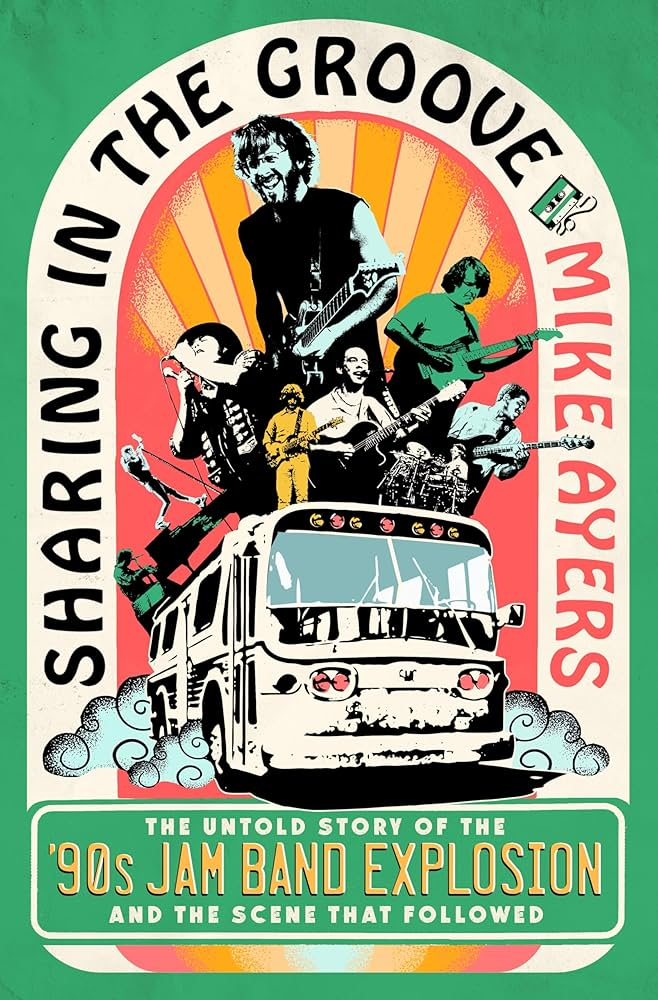
Sharing in the Groove: The Untold Story of the ’90s Jam Band Explosion and the Scene that Followed by Mike Ayers (2025) 

From the publisher: Sharing in the Groove is a rich examination of an underdog genre that helped define the 1990s musical landscape―a scene that paved the way for modern-day cultural institutions such as the Bonnaroo Music Festival and kept the Grateful Dead ethos alive. It was also a world with its own values and its own unique interactions with fame, record labels, MTV, drugs, and success.

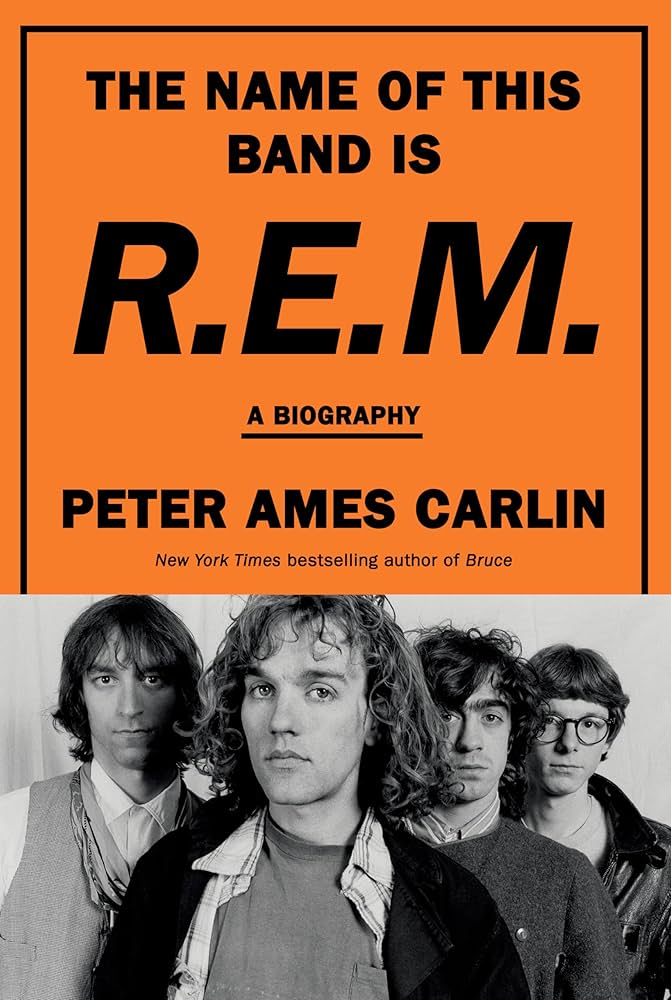
The Name of This band is R.E.M.: A Biography by Peter James Carlin (2024)

From the publisher: Deeply descriptive and remarkably poetic, steeped in 80s and 90s nostalgia, The Name of This Band is R.E.M. paints a cultural history of the commercial peak and near-total collapse of a great music era, and the story of the generation that came of age at the apotheosis of rock.

The Harder I Fight the More I Love You by Neko Case (2025)

From the publisher: Case brings her trademark candor and precision to a memoir that traces her evolution from an invisible girl “raised by two dogs and a space heater” in rural Washington state to her improbable emergence as an internationally-acclaimed talent. In luminous, sharp-edged prose, Case shows readers what it’s like to be left alone for hours and hours as a child, to take refuge in the woods around her home, and to channel the monotony and loneliness and joy that comes from music, camaraderie, and shared experience into art.

How Women Made Music: A Revolutionary History from NPR Music edited by Alison Fensterstock (2024)

From the publisher: Drawn from NPR Music’s acclaimed, groundbreaking series Turning the Tables, the definitive book on the vital role of Women in Music—from Beyoncé to Odetta, Taylor Swift to Joan Baez, Joan Jett to Dolly Parton—featuring archival interviews, essays, photographs, and illustrations.

The Jazzmen: How Duke Ellington, Louis Armstrong, and Count Basie Transformed America by Larry Tye (2024)

From the publisher: This is the story of three revolutionary American musicians, the maestro jazzmen who orchestrated the chords that throb at the soul of twentieth-century America… What is far less known about these groundbreakers is that they were bound not just by their music or even the discrimination that they, like nearly all Black performers of their day, routinely encountered. Each defied and ultimately overcame racial boundaries by opening America’s eyes and souls to the magnificence of their music. In the process they wrote the soundtrack for the civil rights movement.

Rebel Girl: My Life as a Feminist Punk by Kathleen Hanna (2024)

From the publisher: An electric, searing memoir by the original rebel girl and legendary front woman of Bikini Kill and Le Tigre… As Hanna makes clear, being in a “girl band,” especially a punk girl band, in those years was not a simple or safe prospect. Male violence and antagonism threatened at every turn, and surviving as a singer who was a lightning rod for controversy took limitless amounts of determination. But the relationships she developed during those years buoyed her–including with her bandmates, Tobi Vail, Kathi Wilcox, and Johanna Fateman; her friendships with Kurt Cobain and Ian MacKaye; and her introduction to Joan Jett- were all a testament to how the punk world could nurture and care for its own.

Music by John Williams (2024) Produced and directed by Laurent Bouzereau

My favorite music documentaries fill me to the brim with joy (see: Twenty Feet from Stardom)  and this journey through the most iconic music in cinema history does just that. Williams wrote the scores for Star Wars, Jurassic Park, Indiana Jones, E.T., Harry Potter, Jaws, and lots of other movies that are memorable in part due to Williams’ mastery. It’s only available on Disney+, but it’s worth a trial if you aren’t already a subscriber.

Summer of Soul: (…Or, When the Revolution Could Not Be Televised) (2022) Directed by Questlove

I’m cheating a little here when it comes to “recent” releases, but this is another piece of joy. It follows the 1969 Harlem Cultural Festival, which was overshadowed by Woodstock and hardly made a blip on the radar. You’ll get the context of the almost-forgotten festival, along with footage of Stevie Wonder, Nina Simone, the 5th Dimension, and Sly and the Family Stone (rest in peace) doing what they do best. If you don’t start moving to Gladys Knight and the Pips’ upbeat rendition of “I Heard It Through the Grapevine,” then I can’t help you. Borrow the DVD from the library or stream it from your preferred service.

Recent Reads for Hesitant Historians

I am surrounded by history lovers. My husband is a history professor who uses me as a sounding board when he’s talking through new articles. A good friend does deep dives into English monarchs, and she shares memes that mash current events together with Medieval art. And I have to confess: I have no idea what they’re talking about.

I’m very useful when you want to assemble some IKEA furniture, or if you want to differentiate between an American crow and a common raven, but listening to me explain the American Revolution is like watching an episode of Drunk History (and sadly, without the negronis). I don’t dislike history. It’s just that the kind of history you get in school – politics, wars, rich people – does nothing for me. What I want is an exhibit of decorative arts, a reconstructed peasant house, a display of medical instruments. Maps of migrations laid over topography or ecological changes. A poster. A piece of metal. I want something that’s alive with meaning and has a story to tell.

If a relaxing evening involves hooks, needles, or rippers:

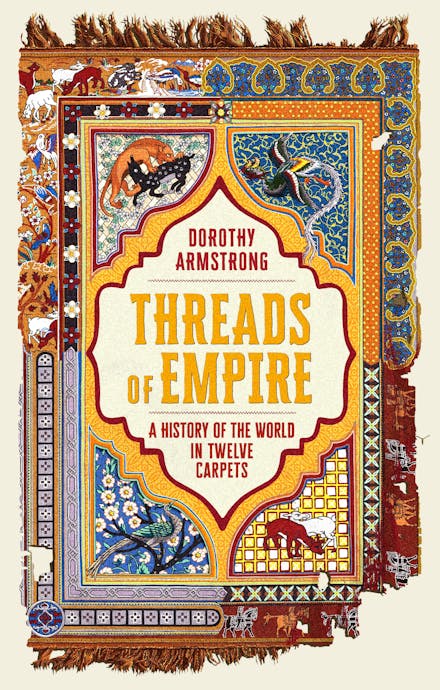
Threads of Empire: A History of the World in Twelve Carpets by Dorothy Armstrong (2025)

I can’t get through biographies of monarchs, but give me a book on how their clothing was constructed and I will drink it up like a chocolate fountain in Versailles. Threads of Empire tickles the same part of me that loves dresses and chain mail at art museums. This isn’t just about who owned history’s beautiful rugs, but the people that made them, the materials and techniques they were working with, and what was going on in their world.

Related read:

Silk: A World History by Aarathi Prasad (2024)

This is another great read that takes a close look at how a prized textile is made, then zooms out to examine its place in time and geography.

If you never got past your childhood fascination with pirates:

The Wager: A Tale of Shipwreck, Mutiny, and Murder by David Grann (2023)

We’re attracted to stories of things gone wrong, whether it’s hikes or music festivals. As you can guess from the subtitle of this book, there are quite a few things that went wrong with the HMS Wager in 1741. This is a true crime novel, a survival tale, and a look into 18th century British naval life – did you know expeditions routinely sailed with dedicated scientists on board? – with a little dusting of world politics. Grann crafts an engaging narrative well worth the hype. 

Related read:

The Wide Wide Sea: Imperial Ambition, First Contact and the Fateful Final Voyage of Captain James Cook by Hampton Sides (2024)

If you can’t get enough of the British Navy, you can circumnavigate again with Hampton Sides’ bestseller from last year. Sides’ narrative doesn’t move with the same momentum as Grann’s book, but it’s a voyage well worth taking.

If you can’t look away from technological disasters:

Challenger: A True Story of Heroism and Disaster on the Edge of Space by Adam Higginbotham (2024)

Nobody synthesizes story and science quite like Adam Higginbotham. Last year he released this book on the Challenger space shuttle, which exploded during liftoff in 1986. He’s on par with the best thriller writers in terms of building suspense, and he’s just as adept at breaking down complex engineering concepts.

This book has haunted me: not only in its emotional impact, but in how amazing it is that we’ve accomplished space travel at all. It compelled me to make a pilgrimage to the Intrepid Museum in Manhattan to get an up-close look at the Enterprise, the very first orbiter NASA made for the space shuttle program.

Related read: 

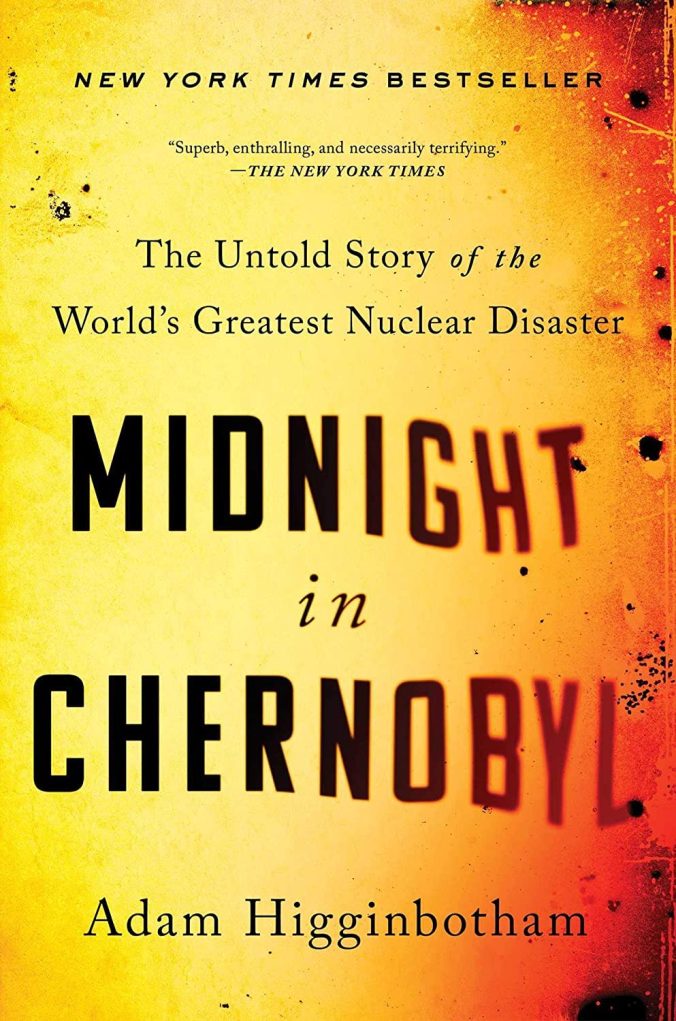
Midnight in Chernobyl: The Untold Story of the World’s Greatest Nuclear Disaster by Adam Higginbotham (2019)

Higginbotham is making quite a name for himself writing about 1980s technological disasters. His award-winning debut focused on the Chernobyl nuclear meltdown, and it’s just as good (and horrifying) as Challenger.

If you’re a news junkie:

Looking at Women Looking at War: A War and Justice Diary by Victoria Amelina (2025)

“I have just bought my first gun in downtown Lviv,” starts the diary of this Ukrainian novelist and mother turned war documenter. Amelina’s diary tells the story of how she and other women – librarians, lawyers, writers – were experiencing the war in Ukraine and participating in the resistance. She was killed by a Russian missile in 2023, and this book collects her unedited and uncompleted notes. It’s a chilling reminder that her life was suddenly cut short at 37 years old.

Related read:

Secondhand Time: The Last of the Soviets by Svetlana Aleksievich (2017)

Alexievich is well-known for her oral histories of the Soviet Union, and this book is an accessible look at how people in Russia experienced the fall of the Soviet period and the emergence of a new Russia. The experiences and viewpoints are as diverse as if you’d selected a random group of Americans and asked them how they viewed the 2024 election. If you’re looking to understand modern Russia, this is a really great place to start.

If David Attenborough narrates your inner thoughts:

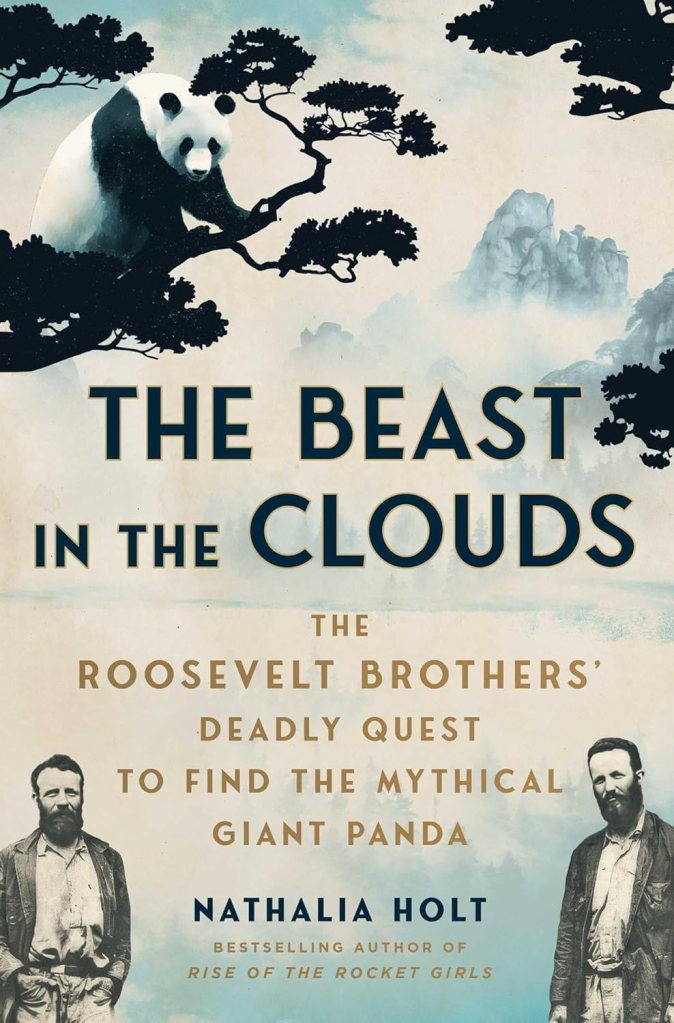
The Beast in the Clouds: The Roosevelt Brothers’ Deadly Quest to Find the Mythical Giant Panda by Nathalia Holt (2025)

Can you imagine a world in which people think pandas are imaginary creatures? Apparently, it was only a century ago. This book chronicles the sons of Teddy Roosevelt (who lent his name to a different type of bear) as they explored the Himalayan mountains in search of this very real animal.

Related read:

Every Living Thing: The Great and Deadly Race to Know All Life by Jason Roberts (2024)

You’ve probably heard of Carl Linnaeus, one of the most famous Enlightenment-era catalogers of the natural world. But have you heard of mathematician and fellow naturalist Georges-Louis Leclerc, Comte de Buffon? There are reasons for one man’s obscurity and the other’s fame, Roberts argues, including the convenience of Linnaeus’ theories of racial hierarchies and Leclerc’s aristocratic status (probably not the best thing to be in 1780s France).

If you’re fascinated by architecture and buildings:

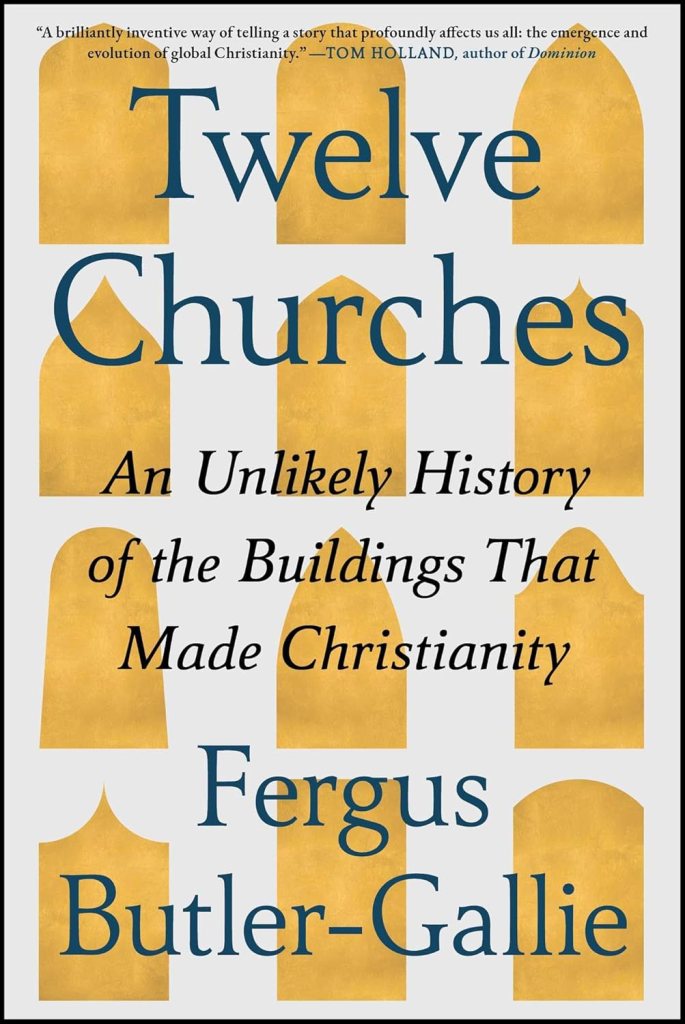
Twelve Churches: An Unlikely History of the Buildings That Made Christianity by Fergus Butler-Gallie (2025)

Butler-Gallie presents a fun and often funny history of the world’s largest religion by focusing on twelve buildings in particular. You’ll visit an amazing church complex in Ethiopia that was carved into volcanic rock with medieval tools, Japan at the cusp of its isolationist Edo period, and the site of a tragic bombing during the Civil Rights movement. Religion is a fascinating way to view world history, and this book has something for everyone regardless of your personal faith.

Related read:

The Bookshop: A History of the American Bookstore by Evan Friss (2024)

From the publisher: “Evan Friss’s history of the bookshop draws on oral histories, archival collections, municipal records, diaries, letters, catalogs, and interviews with leading booksellers to offer a fascinating look at this institution beloved by so many–not just as a merchant, but as a gathering place for like-minded people who cherish books.”

If you held onto your science textbooks from college:

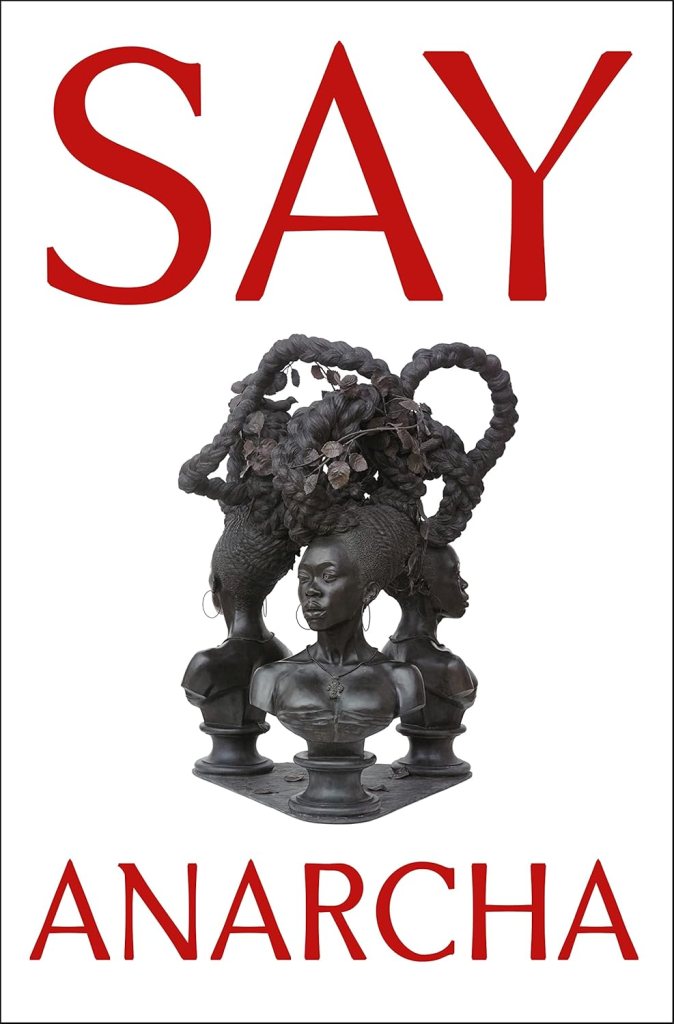
Say Anarcha: A Young Woman, a Devious Surgeon, and the Harrowing Birth of Modern Women’s Health by J. C. Hallman (2023)

If you enjoyed Rebecca Skloot’s The Immortal Life of Henrietta Lacks or the many fistulas in Mary Roach’s Gulp, then this one is for you. Modern gynecology and obstetrics are relatively recent innovations, and their development was due to experimentation on poor and enslaved women, such as Anarcha. This books covers what we know about her, including her life beyond the operating table.

Related read: 

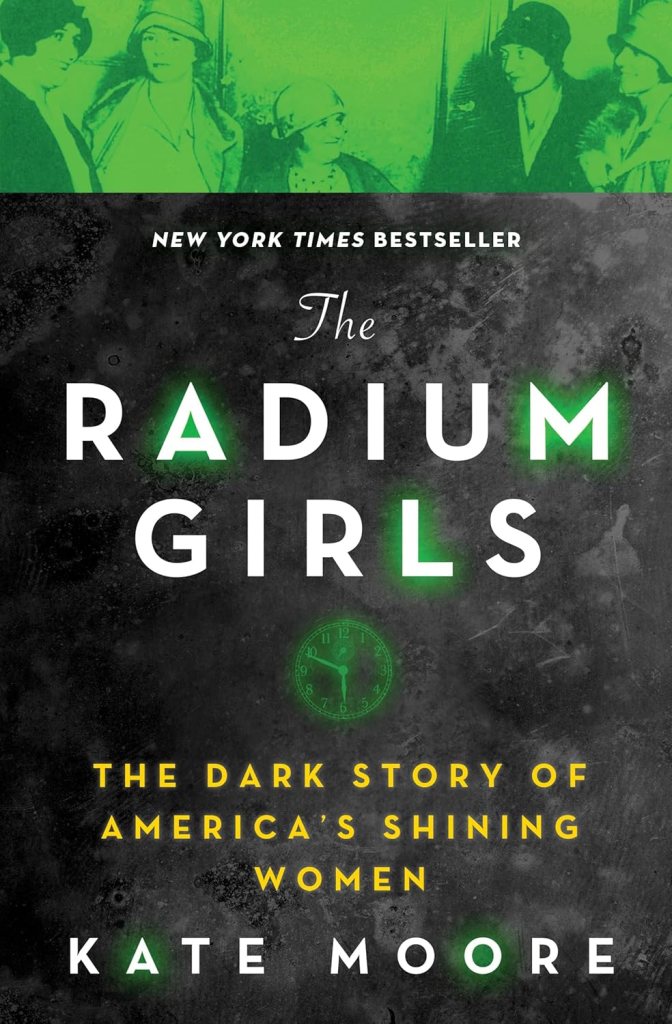
The Radium Girls: The Dark Story of America’s Shining Women by Kate Moore (2017)

Imagine you’re a young woman who just found a great-paying job painting glowing watch faces in Waterbury. Now, imagine you and your coworkers start getting too sick to work – and your employers try to paint you as a promiscuous partier. This is the horrifying true story of the radium girls, factory workers in the early 20th century who were exposed to radioactive material while business owners looked the other way. It’s also the story of the uphill battle for worker protections and safety standards.

And another one just for fun:

A People’s History of the United States by Howard Zinn (1980)

Instead of a triumphant story of great mens’ achievements, Zinn’s history looks at everyday people, such as workers in early factories, immigrants, women, native Americans, slaves, and servants – those whose exploitation arguably fueled the power of those great figures. It’s been republished several times since its release in 1980, and it has influenced hundreds of works (including titles on this list) that take a more critical look at our national narratives.

Able and Willing

Disability is a loaded word. 

I won’t debate the semantics of the term, what the current politically correct term is, or how to make your workplace more variant friendly.

Let’s talk about something far more inflammatory. The rights of the disabled to carry out adult relationships. At best, a disabled person is able to find a partner despite their difficulties, marry (or not), and live a happy adult life together, with or without kids (popular example: the TV show Little People, Big World). Sometimes, it’s disabled people fighting in court for the right to marry or raise their own children (the movie I Am Sam). At the very worst, it’s vulnerable people being preyed upon, taken advantage of, or controlled to the point of involuntary sterilization.

I grabbed the book Hunchback, partly because it was short, and partly because I’ve been in the field of disabilities for 40 years. Hunchback, a novella by Saou Ichikawa, was not the book I’d expected, despite winning multiple awards. Ichikawa’s character, Shaka, suffers from congenital myopathy (same as the author—write what you know), which has left her with progressively weak muscles. Her back is so hunched over she can’t breathe when holding a book, and she spends half the day using a ventilator. She can walk short distances, but her body is twisted and one leg is far shorter than the other. She has a tracheostomy, which makes talking difficult, so she uses a lot of alternative communication devices. Shaka spends her time writing erotica online, the money from which she spends on food for poor people and women. 

Winner of several Japanese awards, Hunchback calls out ableism on many levels. Ichikawa considers it political: Disabled people are hidden away by society, never considered because they’re never seen. People in wheelchairs are rarely mentioned in literature at all, unless they’re being “cured,” like in Heidi or A Secret Garden. Disabled people are portrayed as a drain on society, dependent on charity, so by making a wealthy disabled character (who generates income through pornography), she pokes a hornet’s nest.

Another book that touches on the subject of sexual autonomy is James Cole’s Not a Whole Boy. Cole was born in the 60’s with a severe case of exstrophy – most of his organs were born outside his body, and his pelvis malformed. Most babies with this condition do not survive. Due to Cole’s mother’s determination and a great team of doctors, Cole managed to thrive despite severe obstacles. While he seemed more or less normal to other kids, Cole hid the fact that he had double ostomies – all his waste was collected in bags, as he didn’t have the needed parts and couldn’t use a toilet. As he got older and puberty kicked in, it became necessary to undergo multiple surgeries just to have a sense of comfort, normalcy, and proper biological function. Cole’s book documents his struggles with medieval children’s hospitals, lack of pain management, and his eventual success with a career in art and film – certainly not hidden away.

A book that took me by complete surprise was Riva Lehrer’s Golem Girl, a golem being a creature formed from dirt or clay. Riva was born with Spina Bifida in 1958, a time when most afflicted infants did not survive, and almost certainly didn’t walk. She suffers dozens of painful surgeries to keep her mobility, most of which do nothing to ease her issues – she’s just a guinea pig for the surgeons. Although she attends a grade school for the disabled (disability laws hadn’t been written yet), she attends a mainstream high school, then university, where she gets a degree in fine art, all while dealing with surgeries and intense feelings of revulsion toward herself. Amplifying it is her mother’s overprotective codependency, spitting out helpful comments such as “You don’t need a nose job. No one wants to marry a cripple,” and “You shouldn’t have children; pregnancy will just mess up your spine worse,” – culminating in an involuntary hysterectomy at 15 on the mother’s order. 

Riva goes on to have multiple affairs with both men and women. While some relationships work out, many times she’s still hit with prejudice – “I can’t love a cripple.” Riva remains unstoppable. She becomes more comfortable with herself through meeting up with other people – often activists – with disabilities. As an artist, she gains renown (and awards) through her paintings of disabled people (and others) she has met. 

This book was so hard to put down, and read like you were in the middle of a conversation with her. Lehrer doesn’t go into detail on her disability or surgeries; she talks about herself, not her medical issues. After doing time as an anatomical artist, she sees people not so much as disabled, but as human variants – no one is “normal,” there is no “normal,” just human variations. But everyone has a right to love and happiness.

At the heart of it, people with physical disabilities are still people. It doesn’t mean they don’t have the same dreams, desires, or feelings as people who aren’t. All of these books will give you deep new insights into the strength of humanity.

Put Some Alto in Your Voice: New Books About Women Who Wouldn’t Be Quiet

Maybe I should have been a scientist.

I mean, setting aside that my library degree has the word “science” in it, I could have been very happy with the hard stuff like biology and physics. My recent reading of Adam Higginbotham’s Challenger has me considering a parallel life as an engineer designing parts for the aerospace industry. Hope Jahren’s Lab Girl brought me back to college anatomy and physiology, which I took for fun. What self-respecting English major memorizes squamous cells and zygomatic processes for fun? And why didn’t I pursue this thing that obviously called to me?

Answer: literature and the arts simply sat closer and sang louder. We had lots of books at home, but the mystery of a story’s meaning or a certain chord or color called to me more than the mystery of what existed in outer space or beneath the soil. By the time I was thinking about my future, I could more easily conceptualize myself creating worlds than uncovering the world that already existed. But, if I ever change my mind and decide to implode my professional life, it’s easy enough to channel Suzanne Simard and fill out an application for forestry school.

Many women in history never had the benefit of choice that I do, the ability to see a path beyond their sex. Their dreams – if they were even allowed to dream – were crushed because women weren’t supposed to be scientists, or run businesses, or be leaders and advocates. They were supposed to keep quiet. Well, for this Women’s History Month, I’m sharing some brand new books about women that put some alto in their voice and let themselves be heard.

The Cure for Women: Dr. Mary Putnam Jacobi and the Challenge to Victorian Medicine That Changed Women’s Lives Forever by Lydia Reeder (2024)


After Elizabeth Blackwell became the first woman to graduate from medical school, more women demanded a chance to study medicine. Their success spurred a chilling backlash from male physicians who distorted Darwin’s evolution theory and proclaimed that women should never be allowed to attend college or enter a profession because their menstrual cycles made them perpetually sick. Into the midst of this turmoil marched Mary Putnam Jacobi, daughter of a New York publisher and the first woman to be accepted into the world-renowned Sorbonne medical school in Paris. Aided by other prominent women physicians and suffragists, Jacobi conducted the first-ever data-backed, scientific research on women’s reproductive biology. The results of her studies shook the foundations of medical science and higher education.

She-Wolves: The Untold History of Women on Wall Street by Paulina Bren (2024)


Award-winning historian Paulina Bren tells the story of the first generations of women who fought their way into the bad-boy culture and lavish opulence of the finance world. If the wolves of Wall Street made a show of their ferocity, the she-wolves did so with tough-as-nails persistence. Starting at a time when “No Ladies” signs hung across the doors of Wall Street’s clubs and unapologetic sexism and racism were the norm at top firms, Bren chronicles the remarkable women who demanded a seat at the table. She-Wolves is an engaging and enraging look at the collision of women, finance, and New York from the go-go years to ground zero.

American Poison: A Deadly Invention and the Woman Who Battled for Environmental Justice by Daniel Stone (2025)


The untold story of Alice Hamilton, a trailblazing doctor and public health activist who took on the booming auto industry—and the deadly invention of leaded gasoline, which would poison millions of people across America. Hamilton had New England connections, too – she attended Miss Porter’s Finishing School in Farmington, became the first woman faculty member of Harvard, and she retired to live out her days in Hadlyme, CT.

The Dragon from Chicago: The Untold Story of an American Reporter in Nazi Germany by Pamela D. Toler (2024)


Toler draws on extensive archival research to unearth the largely forgotten story of Sigrid Schultz’s years spent courageously reporting the news from Berlin, from the revolts of 1919 through the Nazi rise to power and Allied air raids over Berlin in 1941. At a time when women reporters rarely wrote front-page stories and her male colleagues saw a powerful unmarried woman as a “freak,” Schultz pulled back the curtain on how the Nazis misreported the news to their own people, and how they attempted to control the foreign press through bribery and threats.

Fearless and Free: A Memoir by Josephine Baker (2025)


Published in English for the first time, this is the memoir of the fabulous, rule-breaking, one-of-a-kind Josephine Baker. After stealing the spotlight as a teenaged Broadway performer during the height of the Harlem Renaissance, Josephine then took Paris by storm, dazzling audiences across the Roaring Twenties. When World War II broke out, Josephine became a decorated spy for the French Résistance. Her celebrity worked as her cover, as she hid spies in her entourage and secret messages in her costumes as she traveled. She later joined the Civil Rights movement in the US, boycotting segregated concert venues, and speaking at the March on Washington alongside Martin Luther King Jr.

The Elements of Marie Curie: How the Glow of Radium Lit a Path for Women in Science by Dava Sobel (2024)


Dava Sobel approaches Marie Curie from a unique angle, narrating her remarkable life of discovery and fame alongside the women who became her legacy–from France’s Marguerite Perey and Norway’s Ellen Gleditsch to Mme. Curie’s elder daughter, Irène, winner of the 1935 Nobel Prize in Chemistry. For decades the only woman in the room at international scientific gatherings that probed new theories about the interior of the atom, Marie Curie traveled far and wide to share the secrets of radioactivity before her death at 66 from aplastic anemia.

Daughter of Daring: The Trick-riding, Train-leaping, Road-racing Life of Helen Gibson, Hollywood’s First Stuntwoman by Mallory O’Meara (2025)


Helen Gibson was a woman willing to do anything to give audiences a thrill. Advertised as “The Most Daring Actress in Pictures,” Helen emerged in the early days of the twentieth-century silent film scene as a rodeo rider, background actor, stunt double, and eventually one of the era’s biggest action stars. Her exploits on motorcycles, train cars, and horseback were as dangerous as they were glamorous, featured in hundreds of films and serials–yet her legacy was quickly overshadowed by the increasingly hypermasculine and male-dominated evolution of cinema in the decades that would follow her. Through the page-turning story of Helen’s pioneering legacy, Mallory O’Meara gives readers a glimpse of the Golden Age of Hollywood that could have been: an industry where women call the shots.

When Women Ran Fifth Avenue: Glamour and Power at the Dawn of American Fashion by Julie Satow (2024)


The twentieth century American department store: a palace of consumption where every wish could be met under one roof. It was a place where women, shopper and shopgirl alike, could stake out a newfound independence. In the 1930s, Hortense Odlum of Bonwit Teller came to her husband’s department store as a housewife tasked with attracting more shoppers like herself, and wound up running the company. Dorothy Shaver of Lord & Taylor championed American designers during World War II–before which US fashions were almost exclusively Parisian copies–becoming the first businesswoman to earn a $1 million salary. And in the 1960s Geraldine Stutz of Henri Bendel re-invented the look of the modern department store. This stylish account captures the department store in all its glitz, decadence, and fun, and showcases the women who made that beautifully curated world go round.

Sisters in Science: How Four Women Physicists Escaped Nazi Germany and Made Scientific History by Olivia Campbell (2024)


In the 1930s, Germany was a hotbed of scientific thought. But after the Nazis took power, physicists like Hedwig Kohn, Lise Meitner, Hertha Sponer, and Hildegard Stücklen had no choice but to flee due to their Jewish ancestry or anti-Nazi sentiments. Their harrowing journey out of Germany became a life-and-death situation that required herculean efforts of friends and other prominent scientists.