Able and Willing

Disability is a loaded word. 

I won’t debate the semantics of the term, what the current politically correct term is, or how to make your workplace more variant friendly.

Let’s talk about something far more inflammatory. The rights of the disabled to carry out adult relationships. At best, a disabled person is able to find a partner despite their difficulties, marry (or not), and live a happy adult life together, with or without kids (popular example: the TV show Little People, Big World). Sometimes, it’s disabled people fighting in court for the right to marry or raise their own children (the movie I Am Sam). At the very worst, it’s vulnerable people being preyed upon, taken advantage of, or controlled to the point of involuntary sterilization.

I grabbed the book Hunchback, partly because it was short, and partly because I’ve been in the field of disabilities for 40 years. Hunchback, a novella by Saou Ichikawa, was not the book I’d expected, despite winning multiple awards. Ichikawa’s character, Shaka, suffers from congenital myopathy (same as the author—write what you know), which has left her with progressively weak muscles. Her back is so hunched over she can’t breathe when holding a book, and she spends half the day using a ventilator. She can walk short distances, but her body is twisted and one leg is far shorter than the other. She has a tracheostomy, which makes talking difficult, so she uses a lot of alternative communication devices. Shaka spends her time writing erotica online, the money from which she spends on food for poor people and women. 

Winner of several Japanese awards, Hunchback calls out ableism on many levels. Ichikawa considers it political: Disabled people are hidden away by society, never considered because they’re never seen. People in wheelchairs are rarely mentioned in literature at all, unless they’re being “cured,” like in Heidi or A Secret Garden. Disabled people are portrayed as a drain on society, dependent on charity, so by making a wealthy disabled character (who generates income through pornography), she pokes a hornet’s nest.

Another book that touches on the subject of sexual autonomy is James Cole’s Not a Whole Boy. Cole was born in the 60’s with a severe case of exstrophy – most of his organs were born outside his body, and his pelvis malformed. Most babies with this condition do not survive. Due to Cole’s mother’s determination and a great team of doctors, Cole managed to thrive despite severe obstacles. While he seemed more or less normal to other kids, Cole hid the fact that he had double ostomies – all his waste was collected in bags, as he didn’t have the needed parts and couldn’t use a toilet. As he got older and puberty kicked in, it became necessary to undergo multiple surgeries just to have a sense of comfort, normalcy, and proper biological function. Cole’s book documents his struggles with medieval children’s hospitals, lack of pain management, and his eventual success with a career in art and film – certainly not hidden away.
A book that took me by complete surprise was Riva Lehrer’s Golem Girl, a golem being a creature formed from dirt or clay. Riva was born with Spina Bifida in 1958, a time when most afflicted infants did not survive, and almost certainly didn’t walk. She suffers dozens of painful surgeries to keep her mobility, most of which do nothing to ease her issues – she’s just a guinea pig for the surgeons. Although she attends a grade school for the disabled (disability laws hadn’t been written yet), she attends a mainstream high school, then university, where she gets a degree in fine art, all while dealing with surgeries and intense feelings of revulsion toward herself. Amplifying it is her mother’s overprotective codependency, spitting out helpful comments such as “You don’t need a nose job. No one wants to marry a cripple,” and “You shouldn’t have children; pregnancy will just mess up your spine worse,” – culminating in an involuntary hysterectomy at 15 on the mother’s order. 

Riva goes on to have multiple affairs with both men and women. While some relationships work out, many times she’s still hit with prejudice – “I can’t love a cripple.” Riva remains unstoppable. She becomes more comfortable with herself through meeting up with other people – often activists – with disabilities. As an artist, she gains renown (and awards) through her paintings of disabled people (and others) she has met. 

This book was so hard to put down, and read like you were in the middle of a conversation with her. Lehrer doesn’t go into detail on her disability or surgeries; she talks about herself, not her medical issues. After doing time as an anatomical artist, she sees people not so much as disabled, but as human variants – no one is “normal,” there is no “normal,” just human variations. But everyone has a right to love and happiness.

At the heart of it, people with physical disabilities are still people. It doesn’t mean they don’t have the same dreams, desires, or feelings as people who aren’t. All of these books will give you deep new insights into the strength of humanity.

Put Some Alto in Your Voice: New Books About Women Who Wouldn’t Be Quiet

Maybe I should have been a scientist.

I mean, setting aside that my library degree has the word “science” in it, I could have been very happy with the hard stuff like biology and physics. My recent reading of Adam Higginbotham’s Challenger has me considering a parallel life as an engineer designing parts for the aerospace industry. Hope Jahren’s Lab Girl brought me back to college anatomy and physiology, which I took for fun. What self-respecting English major memorizes squamous cells and zygomatic processes for fun? And why didn’t I pursue this thing that obviously called to me?

Answer: literature and the arts simply sat closer and sang louder. We had lots of books at home, but the mystery of a story’s meaning or a certain chord or color called to me more than the mystery of what existed in outer space or beneath the soil. By the time I was thinking about my future, I could more easily conceptualize myself creating worlds than uncovering the world that already existed. But, if I ever change my mind and decide to implode my professional life, it’s easy enough to channel Suzanne Simard and fill out an application for forestry school.

Many women in history never had the benefit of choice that I do, the ability to see a path beyond their sex. Their dreams – if they were even allowed to dream – were crushed because women weren’t supposed to be scientists, or run businesses, or be leaders and advocates. They were supposed to keep quiet. Well, for this Women’s History Month, I’m sharing some brand new books about women that put some alto in their voice and let themselves be heard.

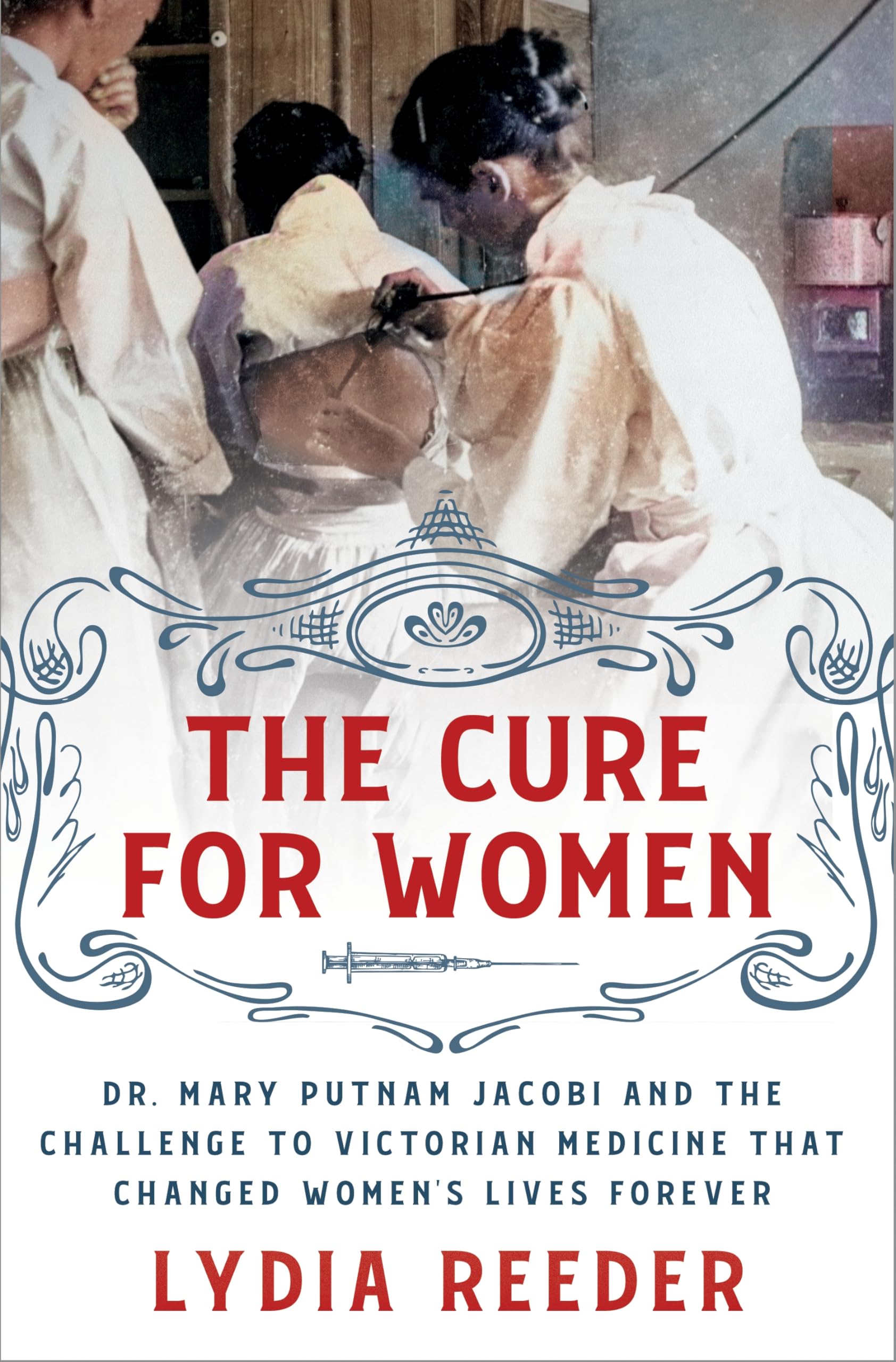
The Cure for Women: Dr. Mary Putnam Jacobi and the Challenge to Victorian Medicine That Changed Women’s Lives Forever by Lydia Reeder (2024)


After Elizabeth Blackwell became the first woman to graduate from medical school, more women demanded a chance to study medicine. Their success spurred a chilling backlash from male physicians who distorted Darwin’s evolution theory and proclaimed that women should never be allowed to attend college or enter a profession because their menstrual cycles made them perpetually sick. Into the midst of this turmoil marched Mary Putnam Jacobi, daughter of a New York publisher and the first woman to be accepted into the world-renowned Sorbonne medical school in Paris. Aided by other prominent women physicians and suffragists, Jacobi conducted the first-ever data-backed, scientific research on women’s reproductive biology. The results of her studies shook the foundations of medical science and higher education.

She-Wolves: The Untold History of Women on Wall Street by Paulina Bren (2024)


Award-winning historian Paulina Bren tells the story of the first generations of women who fought their way into the bad-boy culture and lavish opulence of the finance world. If the wolves of Wall Street made a show of their ferocity, the she-wolves did so with tough-as-nails persistence. Starting at a time when “No Ladies” signs hung across the doors of Wall Street’s clubs and unapologetic sexism and racism were the norm at top firms, Bren chronicles the remarkable women who demanded a seat at the table. She-Wolves is an engaging and enraging look at the collision of women, finance, and New York from the go-go years to ground zero.

American Poison: A Deadly Invention and the Woman Who Battled for Environmental Justice by Daniel Stone (2025)


The untold story of Alice Hamilton, a trailblazing doctor and public health activist who took on the booming auto industry—and the deadly invention of leaded gasoline, which would poison millions of people across America. Hamilton had New England connections, too – she attended Miss Porter’s Finishing School in Farmington, became the first woman faculty member of Harvard, and she retired to live out her days in Hadlyme, CT.

The Dragon from Chicago: The Untold Story of an American Reporter in Nazi Germany by Pamela D. Toler (2024)


Toler draws on extensive archival research to unearth the largely forgotten story of Sigrid Schultz’s years spent courageously reporting the news from Berlin, from the revolts of 1919 through the Nazi rise to power and Allied air raids over Berlin in 1941. At a time when women reporters rarely wrote front-page stories and her male colleagues saw a powerful unmarried woman as a “freak,” Schultz pulled back the curtain on how the Nazis misreported the news to their own people, and how they attempted to control the foreign press through bribery and threats.

Fearless and Free: A Memoir by Josephine Baker (2025)


Published in English for the first time, this is the memoir of the fabulous, rule-breaking, one-of-a-kind Josephine Baker. After stealing the spotlight as a teenaged Broadway performer during the height of the Harlem Renaissance, Josephine then took Paris by storm, dazzling audiences across the Roaring Twenties. When World War II broke out, Josephine became a decorated spy for the French Résistance. Her celebrity worked as her cover, as she hid spies in her entourage and secret messages in her costumes as she traveled. She later joined the Civil Rights movement in the US, boycotting segregated concert venues, and speaking at the March on Washington alongside Martin Luther King Jr.

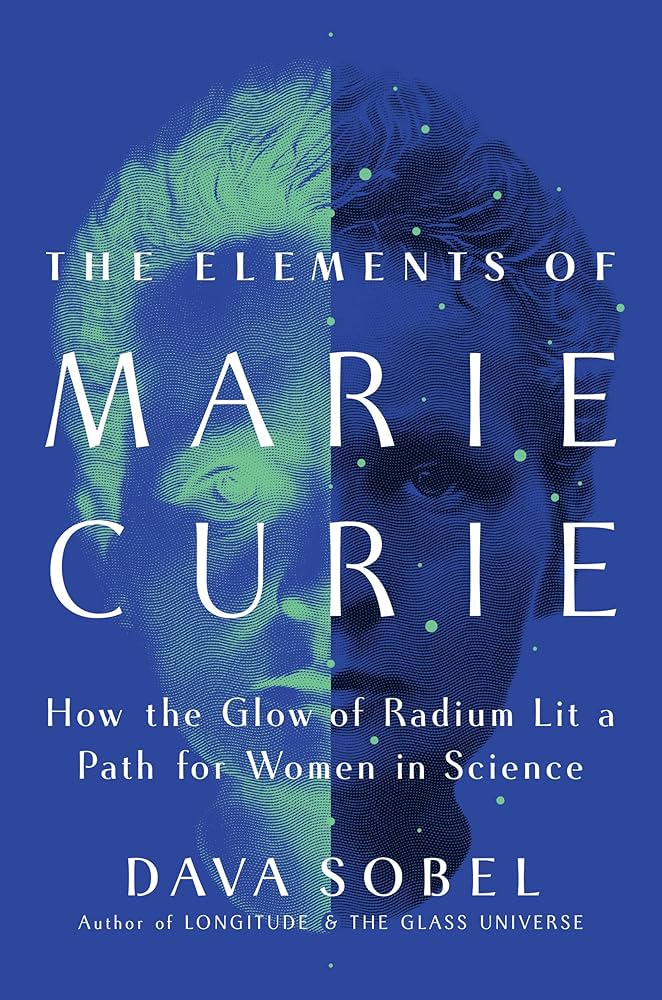
The Elements of Marie Curie: How the Glow of Radium Lit a Path for Women in Science by Dava Sobel (2024)


Dava Sobel approaches Marie Curie from a unique angle, narrating her remarkable life of discovery and fame alongside the women who became her legacy–from France’s Marguerite Perey and Norway’s Ellen Gleditsch to Mme. Curie’s elder daughter, Irène, winner of the 1935 Nobel Prize in Chemistry. For decades the only woman in the room at international scientific gatherings that probed new theories about the interior of the atom, Marie Curie traveled far and wide to share the secrets of radioactivity before her death at 66 from aplastic anemia.

Daughter of Daring: The Trick-riding, Train-leaping, Road-racing Life of Helen Gibson, Hollywood’s First Stuntwoman by Mallory O’Meara (2025)


Helen Gibson was a woman willing to do anything to give audiences a thrill. Advertised as “The Most Daring Actress in Pictures,” Helen emerged in the early days of the twentieth-century silent film scene as a rodeo rider, background actor, stunt double, and eventually one of the era’s biggest action stars. Her exploits on motorcycles, train cars, and horseback were as dangerous as they were glamorous, featured in hundreds of films and serials–yet her legacy was quickly overshadowed by the increasingly hypermasculine and male-dominated evolution of cinema in the decades that would follow her. Through the page-turning story of Helen’s pioneering legacy, Mallory O’Meara gives readers a glimpse of the Golden Age of Hollywood that could have been: an industry where women call the shots.

When Women Ran Fifth Avenue: Glamour and Power at the Dawn of American Fashion by Julie Satow (2024)


The twentieth century American department store: a palace of consumption where every wish could be met under one roof. It was a place where women, shopper and shopgirl alike, could stake out a newfound independence. In the 1930s, Hortense Odlum of Bonwit Teller came to her husband’s department store as a housewife tasked with attracting more shoppers like herself, and wound up running the company. Dorothy Shaver of Lord & Taylor championed American designers during World War II–before which US fashions were almost exclusively Parisian copies–becoming the first businesswoman to earn a $1 million salary. And in the 1960s Geraldine Stutz of Henri Bendel re-invented the look of the modern department store. This stylish account captures the department store in all its glitz, decadence, and fun, and showcases the women who made that beautifully curated world go round.

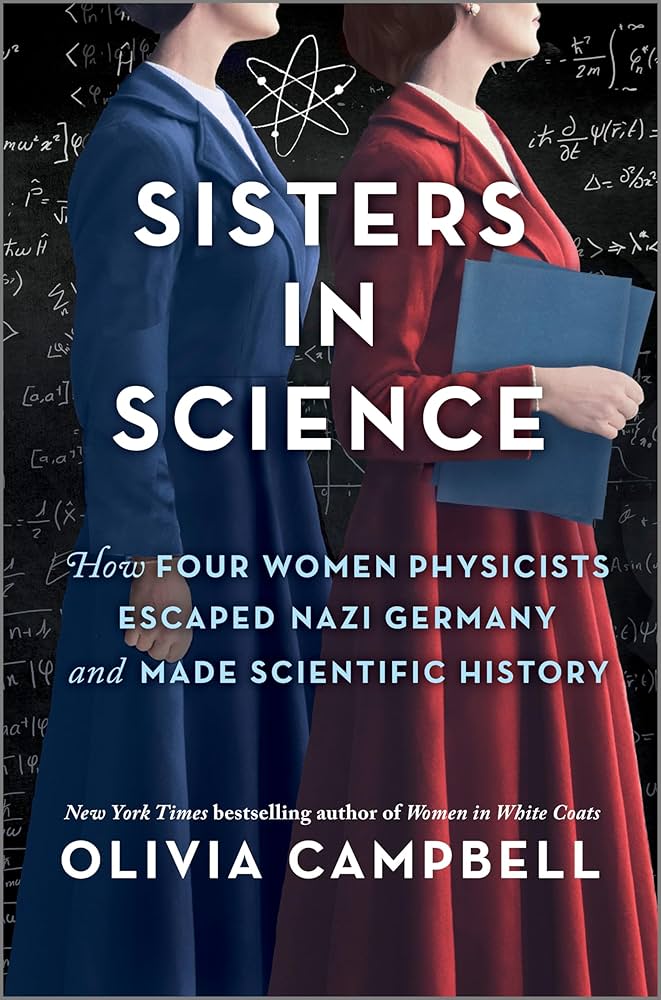
Sisters in Science: How Four Women Physicists Escaped Nazi Germany and Made Scientific History by Olivia Campbell (2024)


In the 1930s, Germany was a hotbed of scientific thought. But after the Nazis took power, physicists like Hedwig Kohn, Lise Meitner, Hertha Sponer, and Hildegard Stücklen had no choice but to flee due to their Jewish ancestry or anti-Nazi sentiments. Their harrowing journey out of Germany became a life-and-death situation that required herculean efforts of friends and other prominent scientists.

Recent Reads for Black History Month

February is a month of opposites. Love (Valentine’s Day) and hatred (New England winters) and apathy (NFL championships). There’s also the forgetting of the very recent past (last month’s resolutions) and the remembrance of our longer past: presidential birthdays and Black History Month. For the latter, we celebrate the contributions of members of the African diaspora to the culture and history of the United States. There’s been a recent flurry of books related to African American history, and I’m excited to share them with you this month.

But first, I’m gonna tell you about something that is 1) not a book 2) not about America. It is the excellent BBC documentary series, A History of Africa, which you can view for free on YouTube. The African continent has a diverse and fascinating history that deserves way more attention than it gets. This documentary is a great starting point to enrich your knowledge of Africa’s diasporic daughters and sons.

If you prefer to start your journey in print, though, first on our list is the book equivalent of the aforementioned documentary.

An African History of Africa: From the Dawn of Humanity to Independence by Zeinab Badawi (2025)

Badawi (the host of A History of Africa) is a Sudanese-British journalist who worked for Channel 4 and the BBC before her current gig as President of the prestigious SOAS University of London. Her sweeping historical survey traces Africa’s rich legacy from prehistory to the present, exploring ancient civilizations, medieval empires and colonialism’s impact, while highlighting African voices and perspectives to offer a long-overdue account of the continent’s global significance.

Somewhere Toward Freedom: Sherman’s March and the Story of America’s Largest Emancipation by Bennett Parten (2025)

A groundbreaking account of Sherman’s March to the Sea—the critical Civil War campaign that destroyed the Confederacy—told for the first time from the perspective of the tens of thousands of enslaved people who fled to the Union lines and transformed Sherman’s march into the biggest liberation event in American history.

Sharks Don’t Sink: Adventures of a Rogue Shark Scientist by Jasmin Graham (2024)

You never forget your first shark. For Jasmin Graham, it was a little bonnethead, a type of hammerhead shark. Jasmin fell in love with sharks and with science, but the traditional academic path wasn’t for her. So, she joined with three other Black women to form Minorities in Shark Sciences (MISS), an organization dedicated to providing support and opportunities for young women of color who were pursuing the fascinating and environmentally essential work of marine studies. Jasmin became an independent researcher: a rogue shark scientist, learning how to keep those endangered but precious sharks swimming free – just like her.

Last Seen: The Enduring Search by Formerly Enslaved People to Find Their Lost Families by Judith Giesberg (2025)

Drawing from an archive of nearly five thousand letters and advertisements, this is the riveting, dramatic story of formerly enslaved people who spent years searching for family members stolen away during slavery.

John Lewis: A Life by David Greenberg (2024)

Born into poverty in rural Alabama, John Lewis rose to prominence in the civil rights movement, becoming second only to Martin Luther King, Jr. in his contributions. Greenberg’s biography, a New York Times Book Review Top 100 Book of 2024, follows Lewis’s journey beyond the civil rights era, highlighting his leadership in the Voter Education Project and his ascent in politics.

The Stained Glass Window: A Family History As the American Story, 1790-1958 by David Levering Lewis (2025)

Sitting beneath a stained-glass window dedicated to his grandmother in the Atlanta church where his family had prayed for generations, it struck Lewis that he knew very little about those ancestors. And so, in his mid-80s, the esteemed historian began to excavate their past and his own, from white slaveholding families to a mulatto slaveholding family to an up-from-slavery black family. Lewis previously won two Pulitzer Prizes, one for each volume of his biography of W.E.B. DuBois.

The First and Last King of Haiti: The Rise and Fall of Henry Christophe by Marlene Daut (2025)

Haiti has the amazing distinction of being home to history’s most successful slave revolt, which led to its independence from France in 1804 and its establishment as a sovereign republic. Its significance looms large in the consciousness of African American thinkers and writers, with figures like Langston Hughes spending time on its soil. This book is the essential biography of the controversial rebel, traitor, and only king of Haiti, Henry Christophe (1767-1820).

Growing Up Urkel by Jaleel White (2024)

An incisive and insightful memoir by Jaleel White, the actor who portrayed Steve Urkel on the hit sitcom Family Matters. You may wonder what place this has among serious history books, but Family Matters remains one of the longest-running live action sitcoms starring a mostly African American cast. Join Jaleel as he invites you to relive the unforgettable ride of nineties nostalgia, while uncovering the personal growth behind the iconic suspenders and the lasting impact of his journey as one of America’s favorite sitcom stars.

Further Reading

Who Better Than You?: The Art of Healthy Arrogance & Dreaming Big by Will Packer (2025)

In Open Contempt: Confronting White Supremacy in Art and Public Space by Irvin Weathersby Jr (2025)

Talk to Me: Lessons from a Family Forged by History by Rich Benjamin (2025)

Holler Rat: Kentucky Meets Connecticut in Anya Liftig’s Memoir

Meet the author! Anya Liftig will come to the library on Thursday, August 1 at 6:30 pm for a conversation about her memoir. Cheshire residents can borrow the audiobook with Libby, and physical copies will be available for sale at the event. Reserve your spot for August 1st!

Anya Liftig grew up in Westport and graduated from Yale. She was an artist living in Brooklyn before it was cool. You wouldn’t expect her memoir to begin with a relative lying dead in a shack in rural Kentucky, cleaved in half by a piece of construction equipment. But as I learned from my recent reading (audiobook listening, really) of her memoir Holler Rat, Liftig defies expectations.

Liftig’s mother hails from that ramshackle home in Kentucky, and her father is from an upper-middle-class Jewish family in Connecticut. When school ends each year in Westport, the family drives down to the holler to spend summers with Mamaw, the family matriarch. The book initially caught my interest because it straddles the vastly different worlds of rural poverty and New England affluence. I’ve got my own history between those worlds, so I wondered how much of this book would resonate with me personally. Liftig’s narrative was so engrossing that from the first paragraph, I completely forgot about my search for parallels and just settled in to enjoy the ride.

She details medical traumas, cringeworthy adolescent romances, and her family’s quirks (her father plays the bagpipes and her grandmother won’t sell the old Studebaker that’s decaying in the middle of a potato field). Also, there was that time she made out with a dead fish in front of an audience and then put it in a blender and drank it. If it sounds both horrifying and hilarious, that’s a pretty good way to describe the memoir. Liftig moves from story to story with a masterful sense of pace, and her brilliant placement of her performance art pieces within the narrative helped me interpret and appreciate this art genre, which I knew only from parodies. The lead-up to the last chapter is heavy, and you don’t know how it’ll end until you reach the very last word. It’s the best memoir I’ve read recently, and I’m really looking forward to having a conversation with her at the library program on August 1!

It’s worth mentioning a book by another Yale alum and descendant of poor Kentuckians: Hillbilly Elegy, the 2016 memoir by J.D. Vance. This Ohio senator was announced as Donald Trump’s pick for VP candidate only a few days ago. Hillbilly Elegy was a bestseller upon release, but it was criticized for painting broad generalizations and reinforcing negative stereotypes about the rural poor. Now in 2024, it’s not hard to see Elegy as a calculated move from an aspiring politician. (It’s standard political playbook – Barack Obama made a similar move in 1995 when he released his memoir Dreams from My Father right before he ran for senate in Illinois.) Vance’s book is great if you want to better understand his politics, but if you’re looking for a more sympathetic and arguably more accurate portrayal of Appalachia, Holler Rat’s tight personal narrative from a longtime artist is a better pick.

The Legacy of MLK

It’s hard to live in America and not know who Martin Luther King Jr. was. If you’re reading this from out of the country, MLK was a black Baptist minister who became the driving force in the 1960’s fight for civil rights, and for the equal treatment of black citizens in America. His call was for peaceful protest and non-violence – always non-violence – and he was awarded the Nobel Peace Prize in 1964. For his outstanding efforts, Mr. King was assassinated on April 4, 1968. James Earl Ray was charged with the murder, a white troublemaker with a 7th grade education and a long rap sheet. Ray admitted to the crime, had a strong timeline leading up to the crime, had fingerprints on the weapon, but because he lied numerous times and changed pleas and facts all over the place, conspiracy theories abound.

Kings death no doubt played a major role in the passage of the 1968 Civil Rights Act, just a week later, in an effort to help quell the riots that followed his death. His examples reached into South Africa and Northern Ireland, areas of long hostilities, and a statue of him stands in Westminster Abbey in London.

King’s beliefs and activities created as many conflicts as they tried to solve. While the racially charged South saw him as too progressive, so far as to call him a communist, many in the black community, such as Malcolm X, thought he didn’t go far enough and demanded radical action, not peaceful protests. King alienated himself from the US government by opposing the war in Vietnam. Herbert Hoover, head of the FBI, considered King a radical and sent him threatening letters. It wasn’t until 1986 that Ronald Reagan enacted Martin Luther King Day as a Federally recognized holiday.

Biographies will give the standard information on Martin Luther King, and while White Trash (warning: FaceBook will jail you for discussing this book) and Caste are excellent books which will open your eyes to issues you never considered, they’re heavy on sociology and can be difficult to slog through at times. If you’d rather read about the issues he fought against, and where we stand today on Civil Rights in an easier fashion, check out these non-fiction books that will give you a good perspective of the issues. If non-fiction isn’t your thing, try these novels about modern issues as well, and realize we still have a long way to go. 

The Hate U Give

The Immortal Life of Henrietta Lacks

Small Great Things

My Brother Moochie

The Help

Evicted

Native Son

Born a Crime

Sing, Unburied, Sing

A Raisin in the Sun

Long Way Down

The Autobiography of Martin Luther King Jr.

Dear Martin

My Life With Martin Luther King Jr

Survival Math

How We Fight for Our Lives