Hanukkah is here! Here are 8 fun books for kids and adults to celebrate the season.
KIDS:
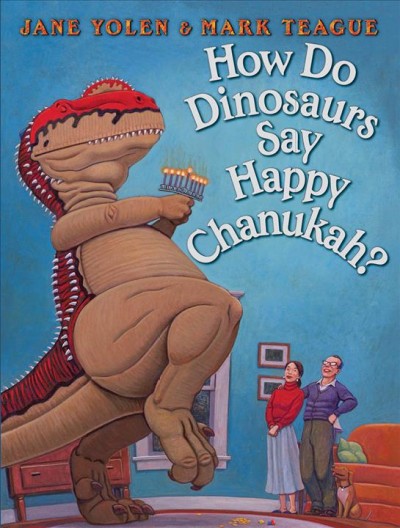
How Do Dinosaurs Say Happy Chanukah? by Jane Yolen and Mark Teague. Illustrations and rhyming text present some of the different ways a well-behaved dinosaur can celebrate the eight days and nights of Chanukah. By the award-winning team behind the internationally best-selling How Do Dinosaurs…? series.
Meet the Latkes by Alan Silberberg. Lucy Latke’s family is a family of potato pancakes. After lighting the menorah and gobbling the gelt, Grandpa Latke tells everyone the Hanukkah story, but it’s up to the Latke family dog to set the record straight.
The Ninth Night of Hanukkah by Erica S. Perl. It’s Hanukkah, and Max and Rachel are excited to light the menorah in their family’s new apartment. Unfortunately, their Hanukkah box is missing! Luckily, their neighbors happily help, offering thoughtful, often humorous, stand-ins each night. Just as Hanukkah is nearly done, Max and Rachel, inspired by the shamash (‘helper’) candle, have a brilliant idea: to celebrate the Ninth Night of Hanukkah as a thank you to everyone!

The Golden Dreidel by Ellen Kushner. After receiving a one-of-a-kind Chanukah gift—an enormous golden dreidel—Sara discovers that there’s much more to the dreidel than meets the eye when she spins herself into a whole new world and must rely on her courage to find her way back home.
Chelm for the Holidays by by Valerie Estelle Frankel. Celebrating Jewish holidays has never been sillier than in Chelm, the Village of Fools! While the Chelmites try to solve problems—like outsmarting bees to get Rosh Hashanah honey, and keeping Hanukkah menorah candles lit without enough oil—their foolishness causes even more chaos.
ADULTS
Holiday by Candlelight by Laurel Greer. Is a Hanukkah miracle right around the corner? This year, Dr. Caleb Matsuda could do without holiday cheer. After an avalanche robbed him of his ability to practice surgery, he struggles to make it through each day. He may be intrigued by new colleague Garnet James, but she’s also a search-and-rescue volunteer who could be in danger at any moment. If only she wasn’t perfect for the man he used to be…
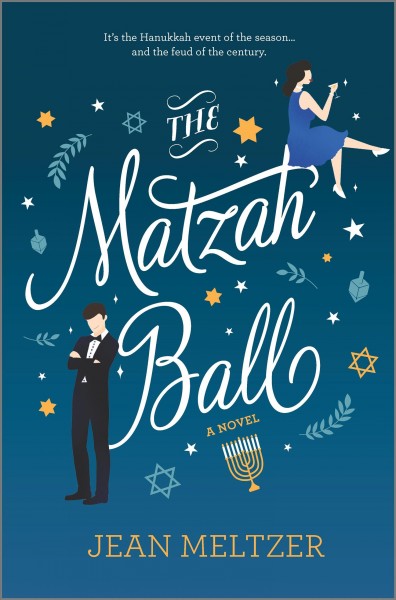
The Matzah Ball by Jean Meltzer. When her publisher insists that she write a Hanukkah romance, Rachel Rubenstein-Goldblatt, a Jewish woman with a secret career as a Christmas romance novelist, unexpectedly finds inspiration when she encounters a childhood acquaintance at the Matzah Ball, a Jewish music celebration on the last night of Hanukkah.
The Intimacy Experiment by Rosie Danan. The co-founder of a popular sex-education platform joins forces with a young rabbi who would save his cash-strapped synagogue to host a seminary series on modern intimacy. This book includes a thoughtful look at faith, and a romance featuring a rabbi!







 During the next week many people will celebrate the Jewish holiday of Passover (April 8-16) or the Christian holiday of Easter (April 12). Some will celebrate both, some neither. Either way, they are both prominent holidays on the calendar, and have more in common than you may have thought.
 ry a bit to understand the connection. Historically, the events of Holy Week (the week leading up to Easter Sunday) are are believed to have


 In a bizarre coincidence, Thomas Jefferson and John Adams both died on July 4, 1826 — the nation’s 50th birthday. The two founding fathers and political adversaries died within five hours of each other.
  The Declaration of Independence wasn’t signed on July 4, 1776.
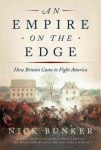
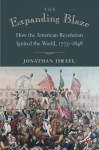
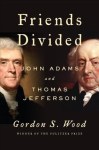

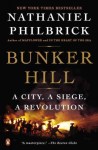






 In January 1969, off the shores of
  Earth in 1970 was a very sorry place. We knew we were in trouble since Rachel Carson’s
  1972. Leaded gasoline was phased out in 1973. Lead-based household paint was banned in 1978. Flame retardants were phased out of infant clothing (because babies have such capacity to spontaneously combust after sunset). Pesticides were examined, and many were quickly banned from use. And amazingly, the Earth began to recover. Today the Bald Eagle is off the endangered species list, with more than 5,000 nesting pairs noted – I almost drove off the highway when I saw one sitting on a light post in the Catskills. A living, wild, Bald Eagle. A few California Condors have been re-released into the wild, with more than 400 individuals now living wild or in captivity. New trucks and buses have 99% fewer emissions than those in 1970. The Hudson River now has fish again.
 little things, combined, make a big impact. Recycling aluminum cans saves 95% of the energy needed to produce new ones from ore. One ton of recycled paper saves 17 trees, lessening the greenhouse effect. One ton of recycled plastic saves 16 barrels of oil – $1,000 per ton. Multiply that by all the people in your town, your state, your region – and think how that snowballs. So celebrate your cleaner environment on April 22. Plant a tree. Pick up garbage on the side of the road. Recycle your bottles. Take a walk and look at all the diversity of trees and flowers and birds around you, and breathe deep of air that doesn’t burn your nose and eyes and make you cough (does anyone else remember the stink of the






 The Cheshire Library Blog