Today’s post comes to us from Bill, Head of Adult Services.

100 years ago, in 1919, women DID NOT have the Constitutional right to vote. That’s right – your grandmothers or great-grandmothers were second class citizens! The 19th Amendment to the Constitution – which granted women the right to vote, would not be passed until the following year – 1920. Yet today there are 102 women serving in the House of Representatives, 25 serving in the Senate, and 3 seated on the Supreme Court.
<
Read – listen – watch and learn the stories of the women of today – and yesterday – whose strong, influential, and groundbreaking actions impacted our country. The lives of the famous and not so famous paint a picture of women’s experiences in America and how they helped build our nation.
>
Explore more about the role of women in shaping our history with these books from our shelves:
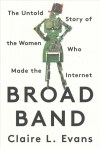





- Broad Band : The Untold Story of the Women Who Made the Internet by Claire L. Evans.
- It’s My Country Too : Women’s Military Stories From the American Revolution to Afghanistan edited by Jerri Bell & Tracy Crow.
- The Woman’s Hour : The Great Fight to Win the Vote by Elaine Weiss.
- Visionary Women : How Rachel Carson, Jane Jacobs, Jane Goodall, and Alice Waters Changed Our World by Andrea Barnet.
- Eunice : The Kennedy Who Changed the World by Eileen McNamara.
- Women of the Blue & Gray : True Civil War Stories of Mothers, Medics, Soldiers, and Spies by Marianne Monson.
- Jefferson’s Daughters : Three Sisters, White and Black, in a Young America by Catherine Kerrison.
And these titles available to Cheshire Library cardholders in multiple formats:




- Becoming by Michelle Obama. (Available formats: BOOK, LARGE PRINT BOOK, CDBOOK, OVERDRIVE AUDIO, OVERDRIVE EBOOK)
- Code Girls : The Untold Story of the American Women Code Breakers of World War II by Liza Mundy. (Available formats: BOOK, CDBOOK, OVERDRIVE AUDIO)
- Fly Girls : How Five Daring Women Defied All Odds and Made Aviation History by Keith O’Brien. (Available formats: BOOK, HOOPLA AUDIO, OVERDRIVE EBOOK)
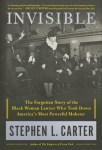
- Invisible : The Forgotten Story of the Black Woman Lawyer Who Took Down America’s Most Powerful Mobster by Stephen L. Carter. (Available formats: BOOK, CDBOOK)
- Hidden Figures by Margot Lee Shetterly. (Available formats: BOOK, LARGE PRINT BOOK, CDBOOK, HOOPLA AUDIO, OVERDRIVE EBOOK). See also: DVD, BLU-RAY
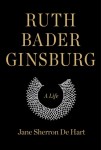
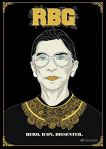
- Ruth Bader Ginsburg : A Life by Jane Sherron de Hart. (Available formats: BOOK, OVERDRIVE EBOOK). See also: RBG / directed and produced by Betsy West & Julie Cohen. (Available formats: DVD, BLU-RAY, HOOPLA VIDEO)
Learn more about women in history: https://www.biography.com/tag/womens-history
Learn more about Women’s History Month: https://womenshistorymonth.gov/about/
 Many people are aware that
  the era. The need was great, her products worked, and she went on to become an American philanthropist.
 century has shown remarkable gains, with not only








 You may also find these websites helpful:
 January began as one of the last months of year, not the first. The start of the Roman calendar (and the astrological one) was March. Back then there were only ten months to the year, totaling 304 days. Between was a miasmic 66 monthless days of “winter.” According to legend, Numa Pompilius, the second King of Rome (after Romulus himself), added January and February to codify that winter term (along with a catch-up month every other year of 22 days).
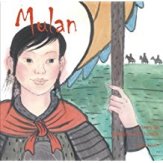
 to have lived somewhere between 386 CE and 620 CE (if you’re not up on your history, Common Era has replaced the Anno Domini). She takes her aging father’s place in the army, and serves for twelve years without her fellow soldiers realizing she’s a woman. Depending on the source, her name might be
 The steel-driving

 under control of the Habsburgs, a magistrate put his hat on a pole and demanded all citizens bow before it, or be imprisoned. While in town with his son, Tell refused to bow, was arrested and sentenced to death – though, since he was such a marksman, the Magistrate would let him go if he could shoot an apple off his son’s head. Tell did so, was arrested anyway, escaped, and the people rose up in rebellion, in an act considered the founding of the Swiss Confederacy, around 1307. Some historians believe Tell is merely a new twist on an old Danish fable.





 The Cheshire Library Blog