 When the Enola Holmes movie was recently released on Netflix, I decided to read the book that it was based on (The Case of the Missing Marquess by Nancy Springer) before watching the movie. As I read the book, I was struck by two things. #1, though this book series is found in the Children’s Room, it has surprisingly sophisticated themes and I found it very appealing as an adult reader. #2, the protagonist, Enola Holmes, precociously adept at solving mysteries, reminded me of another young sleuth I loved, the delightfully quirky Flavia de Luce from Alan Bradley’s series.
I quickly devoured The Case of the Missing Marquess, and immediately checked out the rest of the series. I’m happy to report that all six books are wonderful, quick reads that will appeal the fans of dear Flavia, or cozy mysteries in general. Let’s take a look at the young protagonists from each series.
 Enola Holmes is the much younger sister of Mycroft and Sherlock Holmes, whom she admires but rarely sees. Raised by her mother in a very unconventional way, and often left to her own devices for extended periods of time, Enola has a skill set not normally found in young ladies of her era, with a particular talent for cryptology. In 1900, on her 14th birthday, her mother mysteriously disappears, leaving coded clues behind. Enola sets out to solve the mystery of her disappearance, much to the consternation of her brothers, who want to put her into boarding school and make a proper lady out of her. She is in hiding from them for most of the series, and it’s fun to watch Enola outsmart the brothers who think themselves so much smarter than her.
 Flavia de Luce is an 11-year-old girl in 1950 who lost her mother when she was a baby. She lives with her largely-absent father and two annoying older sisters on an English country estate that’s seen better days. Flavia’s upbringing is also quite unconventional, and she spends much of her time indulging her passion for chemistry, becoming quite an expert in poisons through the many experiments she conducts in her laboratory. Flavia’s obsession with the gruesome and deadly along with her need to get to figure out why things happen is a by-product of losing her mother at such an early age; indeed Harriet de Luce remains a presence in the sad little family throughout the series. While this could be maudlin, it is never overdone, and Flavia’s determination to make sense of events in the world around her drives everything she does. She is the definition of “pluck”.
Both girls are motherless and do not follow the social norms of their times. Both have older siblings who are the banes of their existence. Both are whip-smart and often underestimated by the adults around them. And both have the uncanny knack for landing in the middle of trouble, over and over again, and are able to survive largely by their wits.
The Flavia de Luce stories are longer and a bit more complex than the Enola Holmes stories, but watching both of these unconventional sleuths get to the bottom of each mystery they land into is pure delight. I’ll add an additional plug for the audiobooks, the narrators of each series are pitch-perfect in their portrayals, and really bring the characters to life.
It’s recommended to read the books in both series in order, as each book builds off the previous one. Get a double dose of girl power with these terrific mysteries!
Flavia de Luce Mysteries:



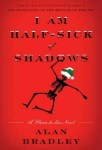


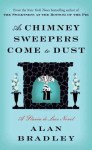


- The Sweetness at the Bottom of the Pie
- The Weed That Strings the Hangman’s Bag
- A Red Herring Without Mustard
- I Am Half-Sick of Shadows
- Speaking from Among the Bones
- The Dead in Their Vaulted Arches
- As Chimney Sweepers Come to Dust
- Thrice the Brinded Cat Hath Mew’d
- The Grave’s a Fine and Private Place
- The Golden Tresses of the Dead











 In a bizarre coincidence, Thomas Jefferson and John Adams both died on July 4, 1826 — the nation’s 50th birthday. The two founding fathers and political adversaries died within five hours of each other.
  The Declaration of Independence wasn’t signed on July 4, 1776.















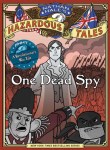





 January began as one of the last months of year, not the first. The start of the Roman calendar (and the astrological one) was March. Back then there were only ten months to the year, totaling 304 days. Between was a miasmic 66 monthless days of “winter.” According to legend, Numa Pompilius, the second King of Rome (after Romulus himself), added January and February to codify that winter term (along with a catch-up month every other year of 22 days).
 to have lived somewhere between 386 CE and 620 CE (if you’re not up on your history, Common Era has replaced the Anno Domini). She takes her aging father’s place in the army, and serves for twelve years without her fellow soldiers realizing she’s a woman. Depending on the source, her name might be

 The steel-driving

 under control of the Habsburgs, a magistrate put his hat on a pole and demanded all citizens bow before it, or be imprisoned. While in town with his son, Tell refused to bow, was arrested and sentenced to death – though, since he was such a marksman, the Magistrate would let him go if he could shoot an apple off his son’s head. Tell did so, was arrested anyway, escaped, and the people rose up in rebellion, in an act considered the founding of the Swiss Confederacy, around 1307. Some historians believe Tell is merely a new twist on an old Danish fable.


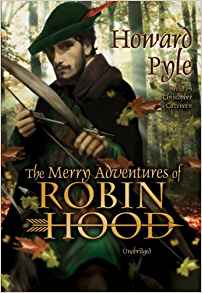


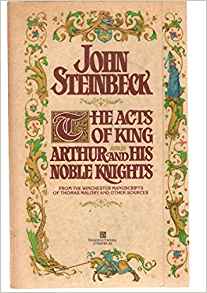

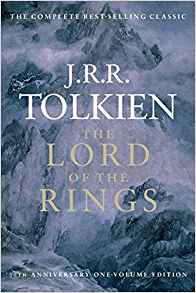

 Westerns are not my bag. They cover a very short piece of history (usually post-Civil War to the early 1900’s), they’re often trite, and too many of them bore me. You can run down a checklist for almost every one: Horse? Check. Damsel? Check. Angry Indian? Check. Sheriff? Check. Big shootout? Check.
 never seen the entire