What, I ask you, is better that curling up inside with good book when it’s cold and blustery outside? So grab a blanket and a hot beverage, throw another log on the fire, and grab a couple of library books to cozy up with during the long winter nights ahead.
Here are ten to tempt you:
Beartown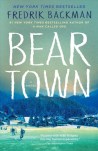 by Frederik Backman. People say Beartown is finished. But down by the lake stands an old ice rink, built generations ago by the working men who founded this town. And in that ice rink is the reason people in Beartown believe tomorrow will be better than today junior ice hockey team is about to compete in the national semifinals.
Winter Solstice by Rosamunde Pilcher. Five people, buffeted by life’s difficulties, come together at a rundown estate house in Northern Scotland during a revelatory Winter Solstice.
 by Josie Silver. Tells the story of Jack and Laurie, who meet at a bus stop and continue to circle each other’s lives seemingly fated to be together, except not actually managing it, for a ten years.
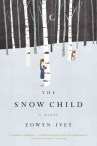 by Eowyn Ivey. A childless couple working a farm in the brutal landscape of 1920 Alaska discover a little girl living in the wilderness, with a red fox as a companion, and begin to love the strange, almost-supernatural child as their own.
 by Jo Nesbø. In Oslo, after the first snow of the season has fallen, a woman disappears, and a sinister snowman is left in her wake. Detective Harry Hole realizes that this is only one of multiple disappearances, he begins to think a serial killer may be at work.
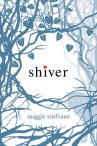 by Maggie Stiefvater. Sam has lived two lives: In winter, the frozen woods, the protection of the pack, and the silent company of a fearless girl. In summer, a few precious months of being human . . . until the cold makes him shift back again.
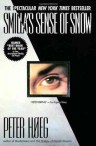 by Peter Høeg. Isaiah, the son of one of Smilla Jasperson’s neighbors, is found face-down in the snow outside her Copenhagen apartment building. Smilla quickly rejects the official verdict of accidental death when she observes the footprints the boy left in the snow, and starts investigating.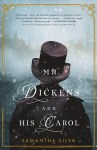
Mr. Dickens and His Carol by Samantha Silva. After poor reviews about his latest book, writer Charles Dickens is given a one-month ultimatum by his publisher to write a successful, nostalgic Christmas book, a challenge that is complicated by self-doubt and the hardships of an impoverished young woman and her son.
Little Women by Louisa May Alcott. The classic tale chronicles the joys and sorrows of the four March sisters as they grow into young ladies in nineteenth-century New England.
 The Golden Compass by Philip Pullman. In an alternative world in which every human being is accompanied by an animal familiar, the disappearance of several children prompts Lyra and her bear protector to undertake a journey to the frozen Arctic in pursuit of kidnappers.

 In a bizarre coincidence, Thomas Jefferson and John Adams both died on July 4, 1826 — the nation’s 50th birthday. The two founding fathers and political adversaries died within five hours of each other.
  The Declaration of Independence wasn’t signed on July 4, 1776.








 January began as one of the last months of year, not the first. The start of the Roman calendar (and the astrological one) was March. Back then there were only ten months to the year, totaling 304 days. Between was a miasmic 66 monthless days of “winter.” According to legend, Numa Pompilius, the second King of Rome (after Romulus himself), added January and February to codify that winter term (along with a catch-up month every other year of 22 days).
 to have lived somewhere between 386 CE and 620 CE (if you’re not up on your history, Common Era has replaced the Anno Domini). She takes her aging father’s place in the army, and serves for twelve years without her fellow soldiers realizing she’s a woman. Depending on the source, her name might be
 The steel-driving

 under control of the Habsburgs, a magistrate put his hat on a pole and demanded all citizens bow before it, or be imprisoned. While in town with his son, Tell refused to bow, was arrested and sentenced to death – though, since he was such a marksman, the Magistrate would let him go if he could shoot an apple off his son’s head. Tell did so, was arrested anyway, escaped, and the people rose up in rebellion, in an act considered the founding of the Swiss Confederacy, around 1307. Some historians believe Tell is merely a new twist on an old Danish fable.





 Westerns are not my bag. They cover a very short piece of history (usually post-Civil War to the early 1900’s), they’re often trite, and too many of them bore me. You can run down a checklist for almost every one: Horse? Check. Damsel? Check. Angry Indian? Check. Sheriff? Check. Big shootout? Check.
 never seen the entire




 The Cheshire Library Blog