From our Deputy Director Deb, who is is also our gardening expert:
 Late last summer I visited the Charlotte Rhoades Park Butterfly Garden in Southwest Harbor, Maine. Full of color from both the flowers and the many butterflies it was designed to support, this garden was an inspiration. I thought of it often in the ensuring months but a major gardening project seemed like more than I would be able to manage at this point in my life.
The came the coronavirus. Remember March when the state shut down? Then there was April with empty shelves and Governors Cuomo and Lamont’s daily news briefings. May didn’t bring a lot of relief. It was starting to seem obvious that we would be in this situation for the long haul. I needed to do something positive and thought again about the Charlotte Rhoades garden. Maybe this would be the year to pull this off. To plan a garden is to plan for the future, a future that exists outside of the news cycle. The world was a mess and I couldn’t do anything about it, but I could create a garden that would support and nurture the wildlife in my small corner of the world.
Each night for weeks I fell asleep thinking about plants and butterflies and birds. If I started to worry about the coronavirus, I turned my thoughts instead to the Jersey Tea shrub I had just ordered. Or those beautiful fall-blooming asters that would be covered with bees and butterflies come September and October. Or the big clumps of Verbena bonariensis I planned to scatter throughout my garden.
 I read books and looked at websites about creating pollinator gardens and sketched out a plan for an irregularly shaped garden about 50 feet long and between 12 and 20 feet wide. There was an existing spruce and 2 shrubs from an earlier planting scheme. And I wanted to incorporate a number of plants from another garden. A 50-foot garden may sound large
  but it wasn’t nearly big enough for the dozens of plants that I wanted to include. I made list after list. And then crossed out most of the plants on the lists until I had a workable plan. At this point, it was late April and time to get busy.
There were challenges, as there are with any garden. My location was a sandy hillside next to our driveway  that turned out to have been a town dumping ground for road sand and hunks of old macadam from long–ago repaving projects. We had to remove the sand and junk from the planting area for each shrub or perennial (there were dozens) and replace it with decent topsoil. This was hard work! Luckily for me (though not for him), my 28-year-old son was stuck at home and was willing to help. He did mo
 st of the heavy excavating and moving of soil, alI I had to do was plant, mulch, weed and water. Months later, my garden is taking shape. It has been full of bees in all shapes and sizes as well as butterflies. As I write this, a flock of goldfinches is busy pulling the seeds out of the fading liatris and coneflowers. And I am busy thinking about how to improve the bloom sequence and plant variety in the garden. As any gardener knows, a garden is never completed.
Want to plant your own wildlife garden? There are many wonderful resources online. Check out the website for the Xerces Society for information and plant lists. American Beauties Native Plants, a wholesale nursery partially located in Connecticut, also has great plant lists.
Many of our area nurseries carry native plants such as coneflowers, liatris, asters and goldenrods. Some natives can be more difficult to find. Natureworks, the organic nursery in Northford, had a great selection of milkweeds and asters earlier in the season. Their website also offers lots of excellent information on gardening to support pollinators and butterflies. If you can’t find the plants you need locally, try Prairie Moon Nursery in Minnesota. They have been around for 40 years and supply over 700 North American species.
Consider joining a local gardening club. Members are knowledgeable and experienced gardeners who are happy to share their experience. Many clubs offer a wide range of educational programs. Cheshire has 2 garden clubs, the Cheshire Garden Club and the Suburban Garden Club.
Gardening has benefits beyond improving the beauty and utility of your yard. Check out this recent New Yorker article on the therapeutic power of gardening.
The library has numerous books on planning gardens for pollinators, butterflies and birds. Search the catalog using keywords such as “pollinators”, “native plants”, “xeriscaping”and “gardening for birds” .
Here are a few :




100 Plants to Feed the Bees : provide a healthy habitat to help pollinators thrive by the Xerces Society
The Wildlife-friendly Vegetable Gardener : how to grow food in harmony with nature by Tammi Hartung
Native Plants for New England Gardens by Mark Richardson
Attracting Birds and Butterflies : how to plant a backyard habitat to attract winged wildlife by Barbara Ellis
Garden Secrets for Attracting Birds : a bird-by-bird guide to favored plants by Rachael Lanicci
The National Wildlife Federation’s Guide to Gardening for Wildlife : how to create a beautiful backyard habitat for birds, butterflies, and other wildlife by Craig Tufts and Peter Loewer
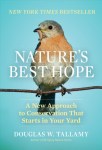
For inspiration and specific suggestions for what you can do in your own yard to support wildlife (hint: it involves planting more natives), read Douglas Tallamy’s books Bringing Nature Home and Nature’s Best Hope: A New Approach to Conservation That Starts in Your Yard.
 Spring is here! As we put those tender seedlings into the ground, up sprouts the constant question: should I go Organic, or should I show up my neighbors by using Miracle Grow? Will I poison my children if I use it on my tomatoes? Is my neighbor’s cancer due to Round Up™, and did it blow over into my yard? If a lawncare company treated my grass, are my grass clippings poisoning my compost?
 strewn with mulch and recycled orange peels, when in reality it just means the land cannot have been treated with synthetic pesticides, fertilizers (including Miracle Grow), or GMOs for three years. Sounds nice, right? Except that two of the three companies licensed by the USDA to certify organic farms are for-profit (Oregon Tilth is not). The farmer wanting to be certified pays the company to license them. That’s like paying a teacher to give you a grade. The problem is worse overseas: 100 countries export “organic” produce to the USA, and though they are supposed to abide by US law, the countries inspect and license their own. And let’s not forget that a good percentage of “organic fertilizer” in many countries is
  Won’t chemical fertilizers like Miracle Grow poison me? No. Plants don’t care where the nutrients come from, horse manure or a green and yellow box. Plants use them the same way. The issues with Miracle Grow are 1) the concentration of ammonium phosphate may be too high for some plants. MG makes different formulas for roses, tomatoes, azaleas, etc. Choose the one you need. 2) The greatest issue for chemical fertilizers is that heavy rains can wash a recent fertilizing away. If twelve homes get washout, and it flows into the brook behind them, too high a concentration in water systems can cause algal blooms that suck up oxygen and kill wildlife.
 (chemical: glyphosate), and while the courts have said yes, Round Up causes cancer, the US maintains it does not. And there’s the difference: In Europe, you must prove a chemical is safe before it hits the market, and that’s hard to do. In the US, chemicals are presumed innocent and you must prove they’re harmful – which is really easy to sidestep even with math and science. In America, it is up to the manufacturer to show their product is harmful, not the government (Got that? The man making and marketing the product must show that what he’s selling is harmful.) When the people with highest exposure to Round Up were studied (ie, farm workers), they had a
 So, is organic worth it? Depends on what you’re willing to pay. The
  growing your own, organic or not, is a fun (and tasty) experiment anyone can do anywhere. Try growing some popcorn, or a yellow or brown or purple heirloom tomato. Pole beans are great for kids, because they grow incredibly fast and are very prolific, as are grape tomatoes (so why are they so expensive?).
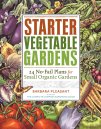 able Gardens : 24 no-fail plans for small organic gardens
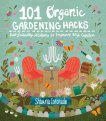 101 Organic Gardening Hacks : eco-friendly solutions to improve any garden


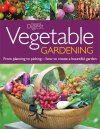

 Northeast Fruit & Vegetable Gardening : plant, grow, and eat the best edibles for Northeast gardens
 The concept of Outdoor Rooms isn’t new. The idea of expanding living space to the exterior of our homes has been around a while but planning and building an outdoor space can be a challenge!



 Rose Color Meanings:
 Roses by the Number:
 Winter Roses
  Chalice of Roses
  Roses
Roses  For The Roses
  Coming Up Roses
  Bed of Roses
  Summer of Roses
  A Good Year for the Roses
  Roses Are Red
  The Care and Handling of Roses With Thorns
  Roses: a celebration
 Roses Without Chemicals
 Everyday Roses
 Designing With Roses
 Coffee For Roses
 Complete Guide to Roses
 The Cheshire Library Blog