The Legacy of MLK

It’s hard to live in America and not know who Martin Luther King Jr. was. If you’re reading this from out of the country, MLK was a black Baptist minister who became the driving force in the 1960’s fight for civil rights, and for the equal treatment of black citizens in America. His call was for peaceful protest and non-violence – always non-violence – and he was awarded the Nobel Peace Prize in 1964. For his outstanding efforts, Mr. King was assassinated on April 4, 1968. James Earl Ray was charged with the murder, a white troublemaker with a 7th grade education and a long rap sheet. Ray admitted to the crime, had a strong timeline leading up to the crime, had fingerprints on the weapon, but because he lied numerous times and changed pleas and facts all over the place, conspiracy theories abound.

Kings death no doubt played a major role in the passage of the 1968 Civil Rights Act, just a week later, in an effort to help quell the riots that followed his death. His examples reached into South Africa and Northern Ireland, areas of long hostilities, and a statue of him stands in Westminster Abbey in London.

King’s beliefs and activities created as many conflicts as they tried to solve. While the racially charged South saw him as too progressive, so far as to call him a communist, many in the black community, such as Malcolm X, thought he didn’t go far enough and demanded radical action, not peaceful protests. King alienated himself from the US government by opposing the war in Vietnam. Herbert Hoover, head of the FBI, considered King a radical and sent him threatening letters. It wasn’t until 1986 that Ronald Reagan enacted Martin Luther King Day as a Federally recognized holiday.

Biographies will give the standard information on Martin Luther King, and while White Trash (warning: FaceBook will jail you for discussing this book) and Caste are excellent books which will open your eyes to issues you never considered, they’re heavy on sociology and can be difficult to slog through at times. If you’d rather read about the issues he fought against, and where we stand today on Civil Rights in an easier fashion, check out these non-fiction books that will give you a good perspective of the issues. If non-fiction isn’t your thing, try these novels about modern issues as well, and realize we still have a long way to go. 

The Hate U Give

The Immortal Life of Henrietta Lacks

Small Great Things

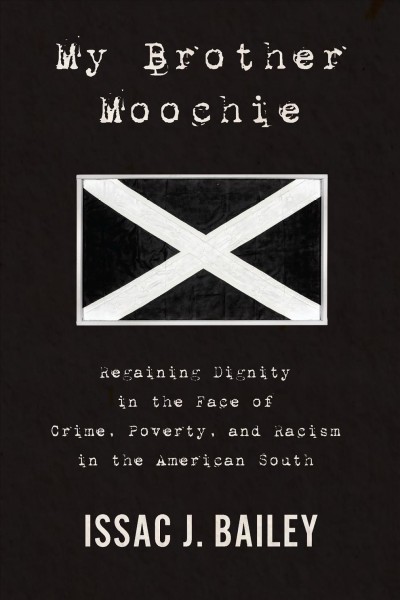
My Brother Moochie

The Help

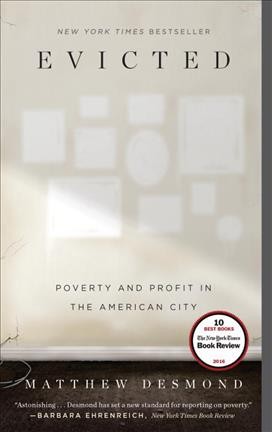
Evicted

Native Son

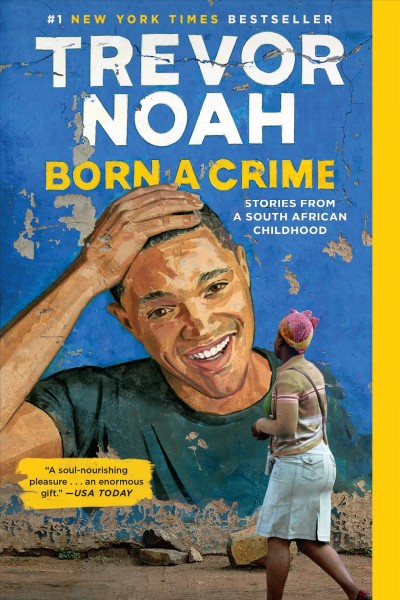
Born a Crime

Sing, Unburied, Sing

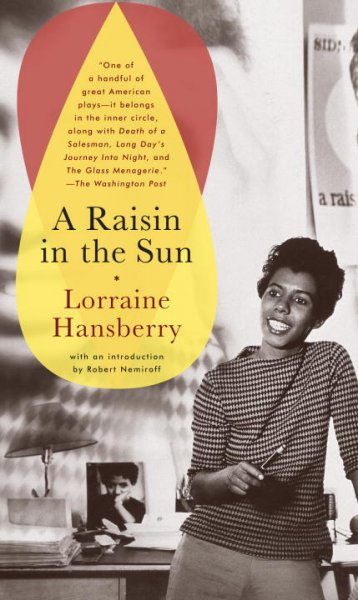
A Raisin in the Sun

Long Way Down

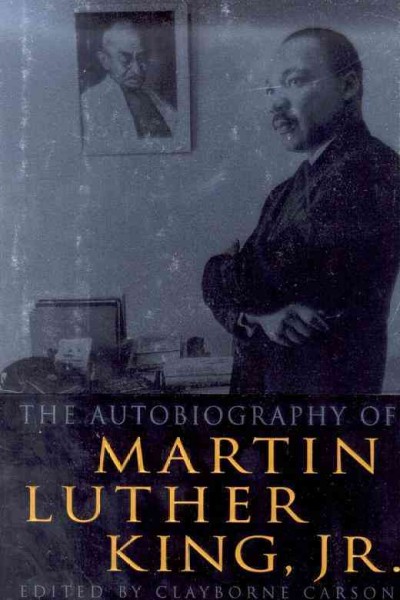
The Autobiography of Martin Luther King Jr.

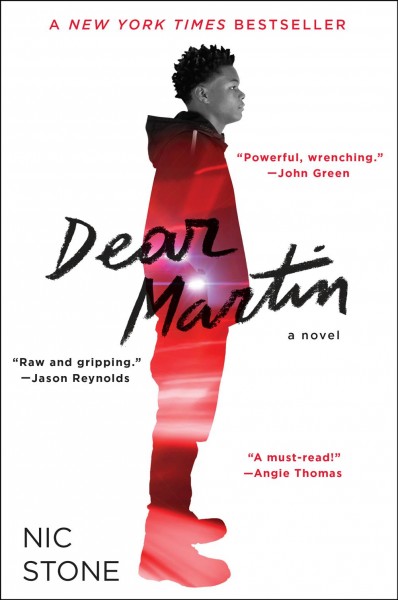
Dear Martin

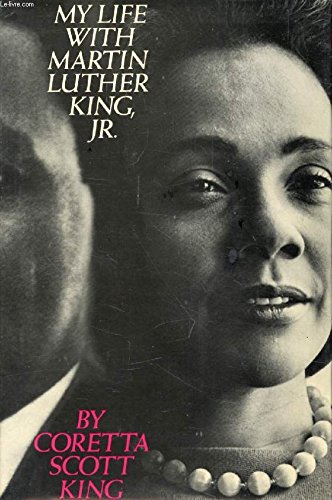
My Life With Martin Luther King Jr

Survival Math

How We Fight for Our Lives

Shifting Dunes

When it comes to epic book series impossible to film, first came Lord of the Rings, (which was done marvelously at last but needed more than 10 hours of screen time).

Then came Dune.

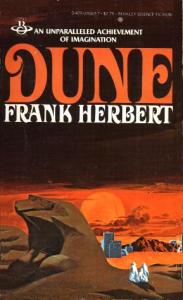
Dune, by Frank Herbert, is considered the best-selling Science-Fiction novel of all time (though it’s far more Game of Thrones than space ships), with more than 12 million copies sold in 14 languages. It tied for the 1966 Hugo Award. And like Lord of the Rings, getting it to film is a Holy Grail of filmmakers.

Dune tells the far-distant-future story of Duke Leto Atreides, who is given the stewardship of the desert planet Arrakis, also known as Dune. Dune is the only place in the universe where the spice Melange exists – a spice that not only can alter your mind, in some species it lets them fold time and space, creating almost instant space travel. “He who controls the spice, controls the universe.” Thus, Dune is a hotbed of politics and backstabbing. When the Duke is murdered, his son Paul, deemed an abomination by a powerful religious group, is seen as a prophesied savior by the natives of Dune. So begins the battle for control of Dune. The book is an immersive, detailed, visionary epic of grand scope (there’s a dictionary in the back). When you read the book, you are on Dune. This is a book that sticks with you for years to come.

Herbert wrote five books to the series; his son Brian added another twelve after his death. Dune – even just the first installment – is a novel of such grand scope (like GOT and LOTR) that putting it to film has been almost laughable – think of Rankin Bass’s 90-minute adaption of The Hobbit. Game of Thrones took 8 years and more than 73 hours to tell – can you imagine it as a three-hour theater film and have it make sense? It was tried in the 70’s, but after 3 years of attempts, the budget just couldn’t be managed. In 1984, David Lynch did make it, condensing much of the book to ethereal voiceovers, changing major points to condense action, and adding some now-cheesy early computer effects (the blue contacts of the Fremen didn’t work, and every frame of the film had to be colored by hand). It’s a film you either love or hate, with musician Sting as Feyd Rautha famously flexing in a winged bikini.

In 2000, SyFy channel did two Dune mini-series, which were much better received, won several awards, yet seemed to fade into obscurity faster than Lynch’s version, with the chief complaint it stuck too close to the source material, and dragged. Now, thanks to Warner Bros and HBO, we have a $165 million dollar spectacle by Denis Villeneuve that covers – only half the book, with a sequel (hopefully the second half) due in 2023. 

While the film has been viewed favorably, the scenery and cinematography spectacular, Villeneuve took many liberties with the material that once again changes the focus and depth of the story. To modernize it, he gender-swapped characters (which goes against the society Herbert wrote) and changed the roles of other women (no, the Bene Gesserit. He left out much of the religious aspect, the mysticism, even avoided the word jihad, used by the Fremen. It gives a sanitized, whitewashed view of the story, afraid of offending anyone. Herbert believed that modern societies will always decay back to a feudalistic society, and that the desert cultures, especially those of the Middle East, were more prone to messianic complexes and religious wars (remember, he’s writing in 1964 or so, when the Middle East was still rather bland politically. Think Star Wars and Tatooine, or The Great Humongous in Road Warrior, etc. There’s a lot to be said for that theory). To remove the root of the story – is it still the same story? Can anyone ever make a decent, book-abiding video version of Dune?

If you can’t wait for the new film to come out on DVD (or, rather, the first half of the book), check out the book series itself. Few things are better than the source material.

I can give up Sting in his bikini (though I thought he was a perfect Feyd), but there is no better Gurney Halleck than pre-Captain Picard Patrick Stewart. That’s my opinion, and I’m sticking to it!

Dune

Dune Messiah

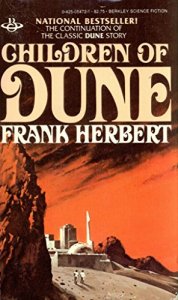
Children of Dune

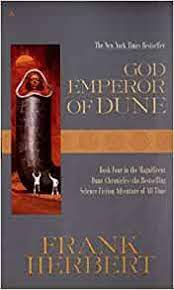
God Emperor of Dune

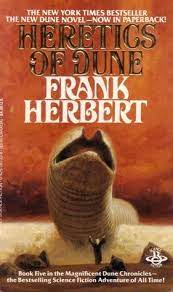
Heretics of Dune

Sandworms of Dune

Dune: House Atreides

Dune: House Harkonnen

Dune: House Corrino

Dune: The Machine Crusade

Dune: The Lady of Caladan

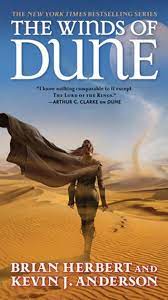
The Winds of Dune

The Sisterhood of Dune

Paul of Dune

Mentats of Dune

Navigators of Dune


Teen Book Reviews: The Absolutely True Diary of a Part-Time Indian and Holes

Teens: did you know that you can earn community service credit for writing a book review and submitting it to us? Today, we’ll hear from a teen who did just that. Find out more about how to earn community service hours from home at cheshirelibrary.org/teens/.

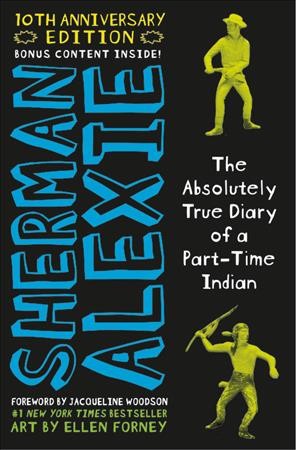
The Absolutely True Diary of a Part-Time Indian by Sherman Alexie, reviewed by Ali A.

The Absolutely True Diary of a Part-Time Indian is a book about a Native-American boy named Arnold Spirit. Arnold was born with “water in his brain” and lives in the Spokane Indian Reservation in Washington. His reservation is full of drunk and violent people who often die to alcohol overdose. In fact, Arnold said he had been to 42 funerals by the age of 14. Everyone in the reservation has accepted the fact that they are poor and that there’s no hope for them, except Arnold. Arnold realizes that the only way to make it out of his sad life is to go to a predominantly white school in Rearden.

However, things aren’t easy when Arnold begins his high school life in Rearden. Rearden High School is 22 miles away from Arnold’s home, so his dad can only afford to drive Arnold only once or twice a week due to gasoline prices, so Arnold has to dangerously hitchhike with strangers to get to his school. Occasionally, Arnold can’t find anyone to drive him so he has to walk the full 22 miles! And once Arnold gets to school, he has no friends and everyone mocks him. After Arnold finally starts sticking up for himself and fights Roger, the school’s football star, Arnold feels more respected at Rearden and Arnold thinks that he can put his reservation days behind him. He quickly starts making friends with the school brainiac, Gordy, and even Roger becomes friendly with him. Arnold then tries out for the basketball team and actually becomes a starter for the varsity team and their best shooter.

Everything seems to be going well, until the reservation turns on him. People from the Spokane Indian Reservation label him as a traitor and his former best friend, Rowdy, starts hating him. Arnold’s grandmother and sister both die, and Arnold begins to feel depressed. Finally the reservation starts to accept Arnold after he had to endure those tragic losses. Humorous, heart-breaking and amazingly written, The Absolutely True Diary of a Part-Time Indian reflects the life of an teen attempting to break away from the hopeless life he was destined to live.

4 Stars.

Holes by Louis Sachar, reviewed by Ali A.

Holes one of my favorite books and I’d recommend it to readers who enjoy adventure books. Holes is about a kid named Stanley Yelnats who is wrongfully accused of stealing a pair of shoes from a famous baseball player named Clyde “Sweet Feet” Livingston. Clyde Livingston’s shoes were supposed to be donated to charity, but instead Stanley found the old shoes on his way home from school. Stanley was unaware that those shoes belonged to the baseball player so he instead brought them home for an experiment his father was conducting. Once the police found out that Stanley was in possession of the shoes, they arrested him and sent him to Camp Green Lake, which is actually a dessert where the prisoners dig holes from dawn to dusk.

Stanley starts making friends, and one of them is Hector “Zero” Zeroni. Stanley is finds it strange that Zero keeps trying to excessively help him dig holes, until he finds out that Zero was the one who stole Clyde Livingston’s shoes and dumped them on the sidewalk to avoid getting caught. Stanley forgives Zero and they both decide to escape the harsh conditions on Camp Green Lake. As Stanley and Zero make their journey, they make discoveries about Camp Green Lake and why the counselors force the prisoners to dig holes all day long in the desert heat.

I’d rate this novel a 5/5 because of all the details Louis Sachar incorporates into Holes. This book also makes me think about all the people around the world that are wrongfully accused and jailed for things they didn’t do, except that they were in the wrong place at the wrong time. If you enjoy Holes, I’d also recommend Small Steps, which is a book about what happens to some of the boys after they leave Camp Green Lake.

5 Stars.
Bundle Up With a Good Book

Do you like certain types of books – stories about dogs, or maybe vacations in Italy? Perhaps you like adventure stories, or space opera, or a good forensic mystery, but don’t know what to read next.  Do you like binge-reading a good series? 

Have you noticed the case of bound books in the middle of the lobby?

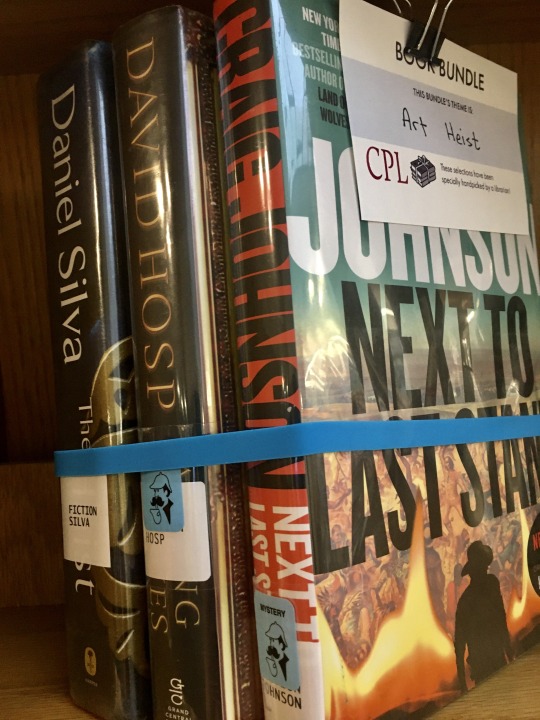
Take a closer look at our Book Bundles.

Book bundles are three books of a common theme bound together, so you can binge-read on a topic you enjoy. It might be outdoors, kidnappings, or WWII stories. It could be autism, award winners, westerns, Book Club Favorites, art heists, robots, or gothic horror. There’s always something new on the shelf, so check it frequently. Intrigued by a category? Check out the bundle and explore!

But not all of the titles seem interesting to me – what if I only want to check out one or two?

You can check out one or all three, whatever you’d like. Just return the unwanted ones to the desk and we’ll find them new partners. 

Don’t see anything to your liking? Prefer existentialist graphic novels? Right now you’re only reading novels that have cats in them? Trying to catch up on real-life medical stories? Let us know! We’d be happy to take requests!

There’s nothing like finding a good book, and it’s even better when you find three new favorites at once. A whole new world of reading adventures awaits!

Teen Book Reviews: Darius the Great is Not Okay and Divergent

Teens: did you know that you can earn community service credit for writing a book review and submitting it to us? Today, we’ll hear from a teen who did just that. Find out more about how to earn community service hours from home at cheshirelibrary.org/teens/.

Darius the Great Is Not Okay by Adib Khorram, reviewed by Ali A.

I really enjoyed Darius the Great Is Not Okay and feel like it’s a must-read for teens. The main character of this novel is Darius Kellner, a white-washed Persian living in the United States who is diagnosed with depression. He feels disconnected from his relatives in Iran, and doesn’t even get along well with his own father. His father, Stephen Kellner, is always disappointed in Darius and wishes Darius could be more normal instead of an overweight loner with funky hair. Darius gets teased at school and only finds peace at the tea shop he works in, the Tea Haven at the Shoppes at Fairview Court. Darius and his family then finds out that Darius’s grandfather, Babou, has a brain tumor and would die soon so Darius’s mother plans a family trip to Iran. It’s Darius’s first trip to Iran so he’s excited but is also worried. Darius knows barely anything about his Persian culture and heritage and doesn’t know if any of his family will like him, especially since Darius doesn’t even know the language of Farsi. However, when Darius gets to Iran, his life changes. He quickly makes friends with a neighborhood boy named Sohrab and Darius discovers more about the Persian culture. Darius’s relationship with his father also becomes tighter and they enjoy each other more. One thing is for sure- Darius is a different person by the time he returns to America. He is no longer lazy, lonely, or as teased as before. I loved this book because I share a lot in common with Darius Kellner. My grandparents and extended family live in India whereas I live on a whole different continent. Also, I only see my grandparents through awkward Skype calls and it’s tough to communicate with them because I don’t know Urdu which is the language that they speak. Adib Khorram did a wonderful job writing this empathetic novel that many teens including myself can relate to and love.

5 Stars.

Divergent by Veronica Roth, reviewed by Ali A.

Normally I hate science fiction books. They are usually about aliens, robots, or people trying to take over the world. Most of the stuff in science fiction books are too complicated for readers to understand and visualize in their minds and science fiction books are usually boring. However, Divergent is the only science fiction book that I have ever fully read and loved. Most science fiction books go overboard on crazy futuristic ideas, but Divergent keeps it real. The Utopian land that the citizens live on is divided into 5 difference groups, which are called factions. The 5 factions are Abnegation, Dauntless, Erudite, Candor, and Amity. Each of the 5 factions prioritizes a special aspect. Abnegation prioritizes selflessness, Dauntless prioritizes bravery, Erudite prioritizes brilliance, Candor prioritizes honesty, and Amity prioritizes tranquility. The main character of the book is Beatrice “Tris” Prior. Beatrice was born into Abnegation and loved her parents and her brother. When everyone is 16 years old, the students are required to take the Aptitude Test, which helps the students discover which faction they should join. Beatrice takes the test and receives a horrid result. Her results revealed that she was Divergent, meaning she doesn’t really fit with one faction but rather a mix of all of them. Beatrice doesn’t understand why being Divergent is so bad or different, but no one explains that to her. On the Choosing Day, where each 16 year old chooses which faction they want to join for the rest of their lives, her selfless brother chooses to join Erudite. Beatrice knew she wasn’t as selfless as her brother so she thought that if he didn’t fit in Abnegation, then she didn’t either. So at the last second, Beatrice chooses to join Dauntless. In Beatrice’s training she has to work hard and do cruel things such as fight her peers for fun and learn to shoot guns. Although the pain is overwhelming, it makes her stronger. Beatrice soon finds out that Erudite is making plans with Dauntless leaders to declare war on her old faction, Abnegation. Veronica Roth did a wonderful job with the plot of Divergent and keeps the readers hooked with plot twists after plot twist.

5 Stars.